Budding splits the colony
Where a species has many queens, a repellent spray causes budding rather than death. Part of the colony, queen included, moves elsewhere, and you have doubled the problem.

Ant Control in Lower Portland 2756 — local technicians, fixed prices and a written report. Ant treatment starts from $89.
Real, verified feedback from people we've helped — straight from Google.
Where Lower Portland sits, who covers it and what it costs.
Postcode 2756 covers Lower Portland and the streets immediately around it. At about 56.5 km north-west of the CBD it falls in the Hawkesbury & the Rural North-West, where we have vans out daily. We travel out to Lower Portland on planned runs through the Hawkesbury & the Rural North-West, so booking a day ahead gets you the best slot.
Much of our Lower Portland work is in the streets around Comleroy Flora Reserve.
Lower Portland is in the Hawkesbury area, and we cover Sackville North, Leets Vale and Maroota on the same runs - handy if you own more than one property or your ant problem has come from next door. Bigger properties mean sheds, stables and stacked timber to check as well as the house.
Lower Portland jobs tend to be larger blocks where the shed or the woodpile turns out to be the source. Let us know which when you ring and we will plan the visit around it.
The whole of 2756 is on our regular run.
Your appointment is confirmed the day before with a real arrival time. Because Sackville North and Leets Vale are covered on the same round, 2756 often has an earlier slot available.
If trails appear in winter, or in a first-floor bathroom with no outdoor route, the nest is probably inside the building.
People assume a trail means something was left out. Around Lower Portland it is just as likely to be the bathroom, because water is the scarcer resource in summer.
The reason the trail returns to the same spot in a Lower Portland kitchen is that it is marked chemically. Wiping it buys hours. Treating the colony that maintains it is the only thing that ends it.
Each of these behaves differently, so the bait and the placement change too. Two photos come from our own jobs.
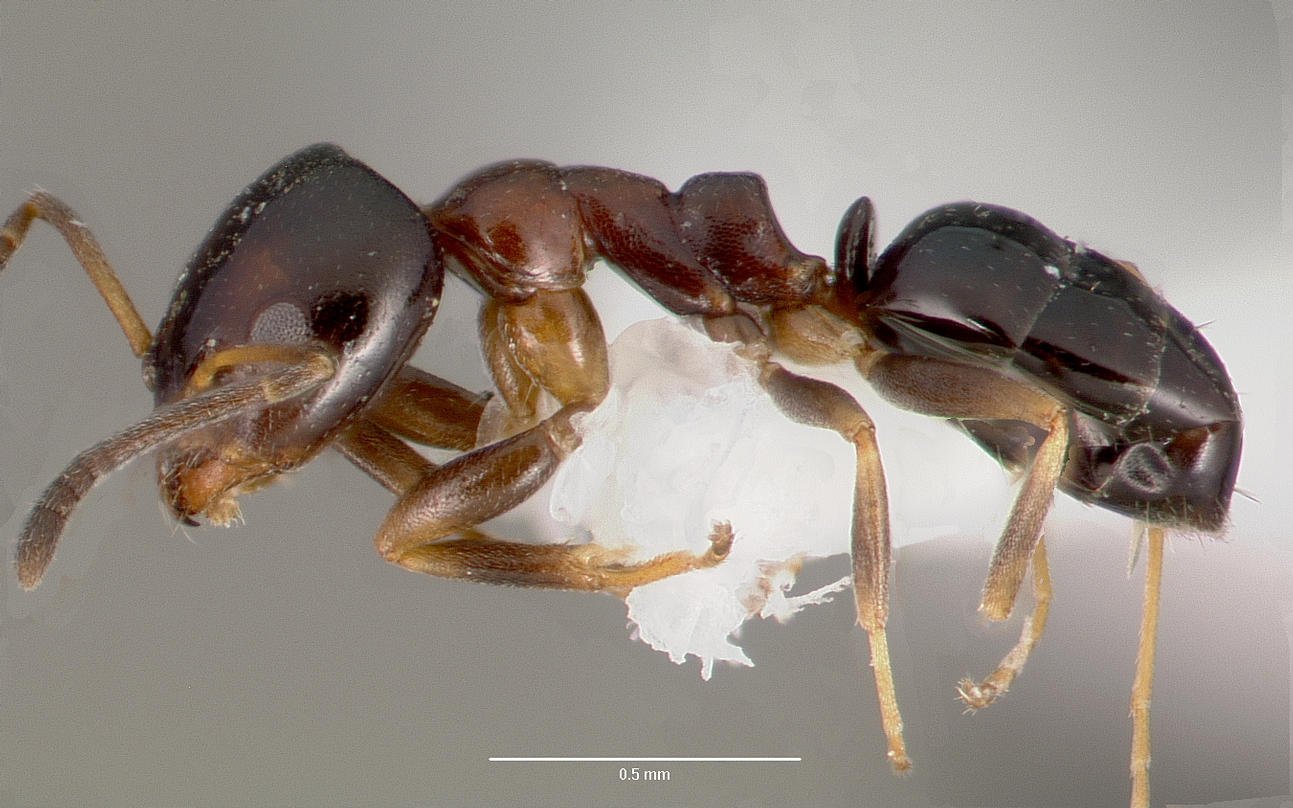
Small, shiny and black, and one of the most common kitchen ants in Sydney. It trails along skirting boards, window frames and power cables, and nests in wall voids, roof spaces and garden edges. It readily takes sweet baits.
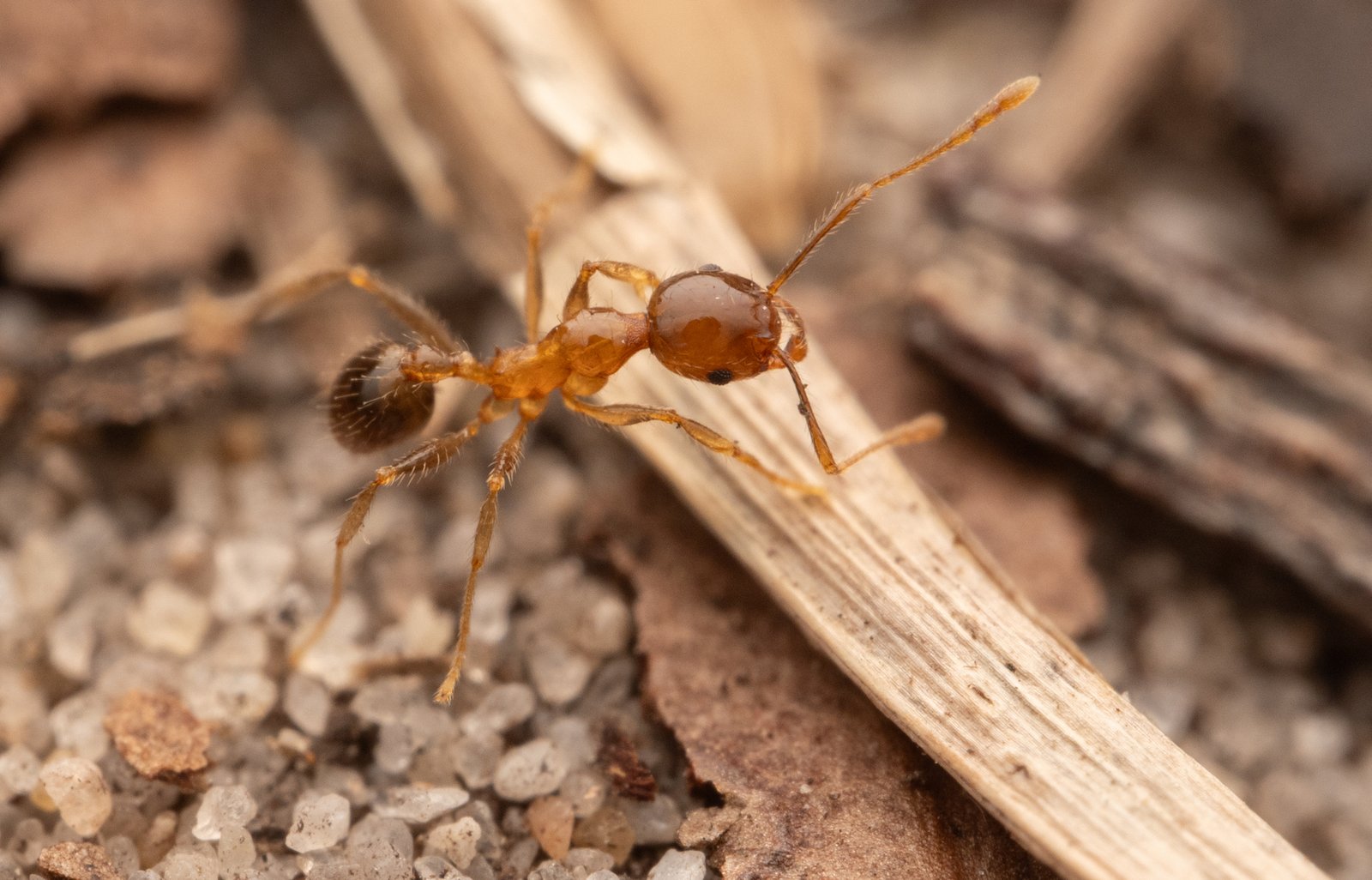
Minute brown ants with larger-headed soldiers among them. Fine sand in paving joints, at slab edges and in grout is the tell. Because a colony holds many nests, oil-based granular baits are the right approach.
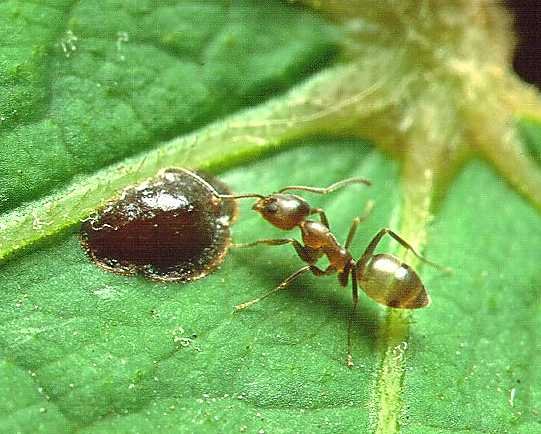
Fast-moving, small and dull brown, in thick trails. Its nests are multi-queen and interconnected with neighbouring nests, so it spreads across properties - and repellent sprays accelerate exactly that.
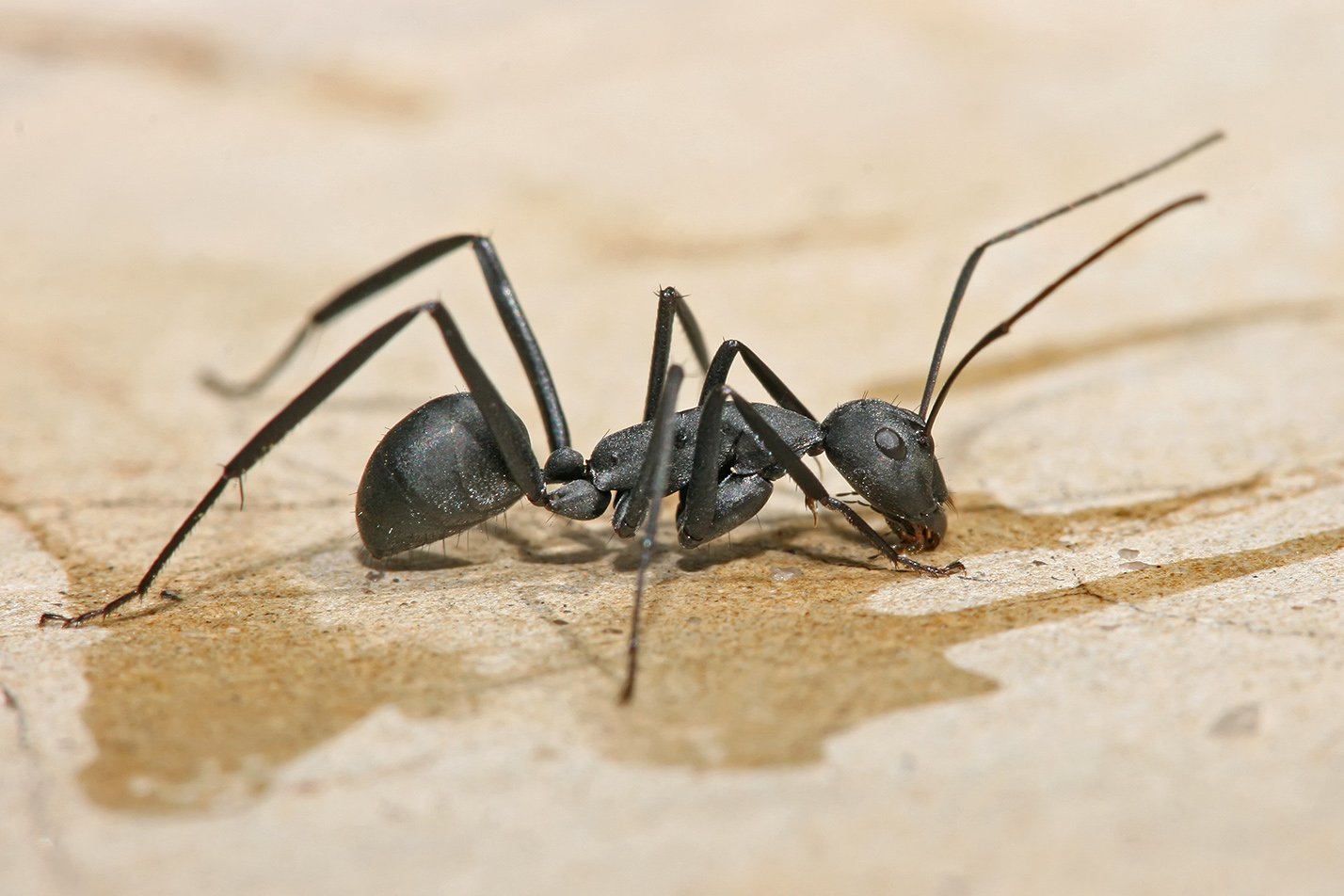
Large and mostly nocturnal, nesting in soil, hollow trees and damp or softened timber. They rarely damage structure here, though a nest inside a wall is a reliable sign of moisture that needs attention.
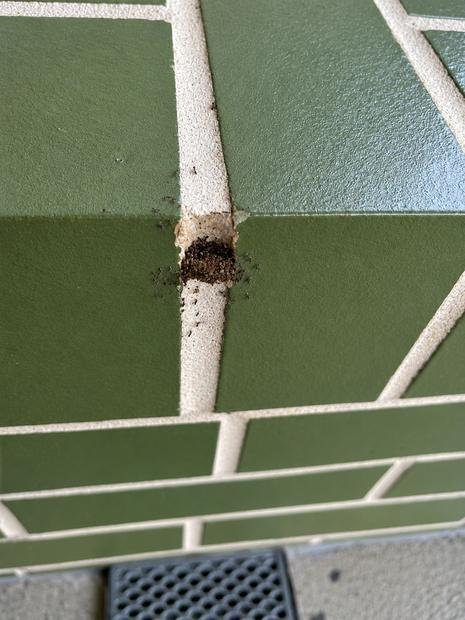
Taken on an Elite job: a mortar joint with a nest behind it. Weep holes and failed mortar are a direct path into the cavity, where many black house ant colonies establish.
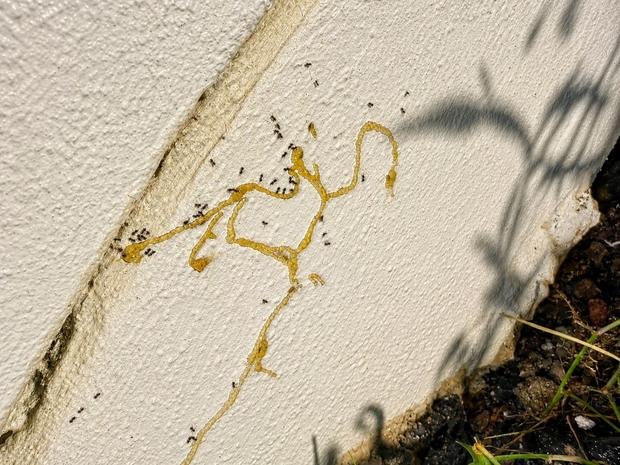
An Elite job photo: gel placed directly on an active trail. Leave it be - the ants feeding there are the ones delivering it to the colony.
Where ants appear usually tells us where the nest is and which species we are dealing with.
A trail coming in from the external wall normally means a nest in the cavity or at the garden edge, and that entry point is where the tracing begins.
Loose fine soil along paving, driveway joints and the slab edge means coastal brown ants have nested underneath.
Warmth is what draws them into switches and electrical fittings. Never spray into a power point - tell us instead and we will treat it safely.
Winged ants swarming in the warmer months are reproductives on a mating flight. Indoors, that can indicate an established colony within the structure.
Trails around the shower, vanity or toilet often mean moisture in the wall or a colony drinking from a slow leak.
Bull ants and jumper ants nest in lawns and garden beds. Their stings hurt and can cause serious allergic reactions in some people.
One call to a licensed Sydney technician gets you straight advice and a fixed quote within 30 minutes.
Where a species has many queens, a repellent spray causes budding rather than death. Part of the colony, queen included, moves elsewhere, and you have doubled the problem.
The difference matters. Retail sprays are repellent - ants sense them and avoid the treated area. Non-repellent products cannot be detected, so foragers cross them, pick up the active and take it back to the nest.
If the bait is not what they want today, they will walk past it. Preference moves between sugar and protein with brood demand, so we test and change as needed.
Results come over days as the bait spreads. Spray the trail the next morning and you have killed the ants that were carrying it home. Our blog explains budding in more detail.
Tracing first, then baits and non-repellent products that do the work after we leave.
Identification comes first. Then we trace the trails to the entry points and the nests themselves, whether those are in walls, paving, garden edges or the roof.
A test with small amounts of each bait type - sweet, protein, oil-based - tells us what the colony wants at this point in its cycle.
Indoor placements are gel on the trail - skirting, window frames, travel routes - sited away from children and pets.
We treat the foundation line, weep holes, door frames and paths with a non-repellent so incoming ants carry it with them.
Under-paver and lawn-edge nests are handled with granular bait, or treated directly where that is better.
You receive the job summary in writing, guidance on what to leave alone, and 6 months of warranty on the general treatment.
The same bait does not suit every ant. This is how we choose.
| Species | Usually feeding on | Treatment approach | Common mistake |
|---|---|---|---|
| Black house ant | Honeydew and sugary liquids, switching to protein when there is brood | Sweet gel on active trails and a non-repellent perimeter at frames and weep holes | Washing the trail down each day, which only relocates the foraging route |
| Coastal brown ant | Protein and oils | Oil-based granular bait on paving and lawn edges | Pouring boiling water or insecticide into one pile while dozens of nests remain |
| Argentine ant | Chiefly sugars, with protein at intervals | Slow-release baits plus a non-repellent treatment along the property line | Repellent sprays at the boundary, which make a multi-queen colony bud |
| Sugar ants (Camponotus) | Sweet foods and insects, mostly at night | Night-time trail inspection, bait near the nest, fix moisture in timber | Treating only in daylight when the ants are not active |
| Bull ants and jumper ants | Nectar and insects taken outdoors | Direct nest treatment wherever it is in the lawn or beds | Trying to dig it out yourself and getting stung |
| Time of year | What is happening | What to watch for |
|---|---|---|
| Early spring (Sept to Oct) | Activity resumes and brood rearing starts, so the colony wants protein | Trails appearing indoors again, and fresh sand piles in the paving |
| Late spring to summer (Nov to Feb) | Peak foraging, mating flights after warm humid weather | Winged ants, heavy trails after storms and heatwaves |
| Autumn (Mar to May) | Colonies reach full size and start stocking up ahead of the cold | Trails heading for the pantry and the pet food bowl |
| Winter (Jun to Aug) | Outdoor activity slows, but nests in heated walls keep going | Ants around heaters, hot water units and kitchens |
Most failed ant treatments come down to what happens in the week after.
The Hawkesbury & the Rural North-West pattern is a surge after the first warm fortnight, then steady pressure into March. A colony treated in September is a fraction of the job it is in January.
Mulch against the wall, a shrub touching the eaves and a damp garden bed along the footings all put ants within reach of the building. In Lower Portland we routinely find the colony is in the garden, not the house.
A column of ants going in and out of a weep hole means they are nesting in the cavity, not the garden. Treating the garden bed in that case does nothing at all for a Lower Portland home.
Finding the nest is the job - following the trail to it, not treating the visible end of it.
Baits are matched to the species and the season rather than used as a default.
Nothing repellent, because that causes budding. Non-repellent products get carried home instead.
General treatments come with 6 months. Ants back within that window means we come back too.
Everything you need to know before you book. Still unsure? Call us — we're happy to help.
Get a Free QuoteAnt treatment starts from $89. The fixed price depends on the size of the property and how far the problem has spread, and we confirm it before we start - there is no call-out fee in Lower Portland 2756. Every general treatment carries a 6-month warranty.
We cover it on scheduled runs, so a day's notice gets you the best slot. Our Hawkesbury & the Rural North-West technicians cover Lower Portland daily, and you get a confirmed arrival time when you book.
The house is usually the last place ants reach, not the first. On acreage the outbuildings and the stored timber are where it starts, and where the treatment has to go.
Rural-residential stock - house plus outbuildings - and both get looked at.
We do. A lot of our Lower Portland work is rentals and strata, so the report, the products used and the areas treated are all recorded in writing for whoever needs them.
It is, as long as you follow what we tell you on the day - usually keeping off treated surfaces for a couple of hours. Let us know at booking about young children, pets or an aquarium.
Most of the time you can carry on as normal. If a particular area needs to be empty we will flag it when we arrive and it is rarely more than a couple of hours.
Allow one to two hours for a typical Lower Portland property. Larger homes, or ones where the problem has spread, take longer and we will say so when we quote.
Every general treatment carries a 6-month warranty. A return visit within the warranty period costs you nothing.
We do. Lower Portland and Sackville North, Leets Vale, Maroota and South Maroota are all on the same route, which helps if you own more than one property in the area.
Photographs from Elite jobs across Sydney — not stock imagery.
Fast and fully insured, with a no-obligation quote back to you within 30 minutes.