Budding splits the colony
Argentine ants and a number of house ants carry multiple queens. Spray them with a repellent and a queen plus a few hundred workers simply moves out and starts again nearby.

Ant Control in North Ryde 2113 — local technicians, fixed prices and a written report. Ant treatment starts from $89.
Real, verified feedback from people we've helped — straight from Google.
What we cover in North Ryde, and how quickly we can get there.
Our Ryde & the Northern District technicians cover North Ryde and the rest of 2113 as a matter of course - it is only about 11.8 km north-west of the city. We run North Ryde on a regular route, and same-day attendance is usually available.
Our North Ryde work takes in the streets by North Ryde station and Greenwood Park, through to North Ryde Common at the other end.
Macquarie Park, Denistone East and Marsfield are all on the same route as North Ryde. Terraces, semis and converted blocks share cavities and risers, which is why a single-unit treatment often does not hold on its own.
North Ryde jobs tend to be apartments and converted blocks where the kitchen backs onto a service riser. Let us know which when you ring and we will plan the visit around it.
We also work the streets near Coxs Road Mall and across toward Midway Shopping Centre - the whole of 2113 is covered.
When you book, we confirm the 2113 run the day before and give you an arrival time rather than a window. If we are already out at Macquarie Park or Denistone East that morning, we will usually offer you the earlier slot.
Indoor nests sit in wall cavities, behind splashbacks, under baths and in roof insulation. Finding them is most of the work on a North Ryde job.
Ants will defend aphids and scale from predators because that honeydew is their sugar supply. Deal with the scale on the plants near the house and the ant pressure drops with it.
Some species excavate soft, damp timber rather than eat it. Finding them in a North Ryde window frame or bathroom wall usually means moisture has been getting into that timber for a while.
Each of these behaves differently, so the bait and the placement change too. Two photos come from our own jobs.
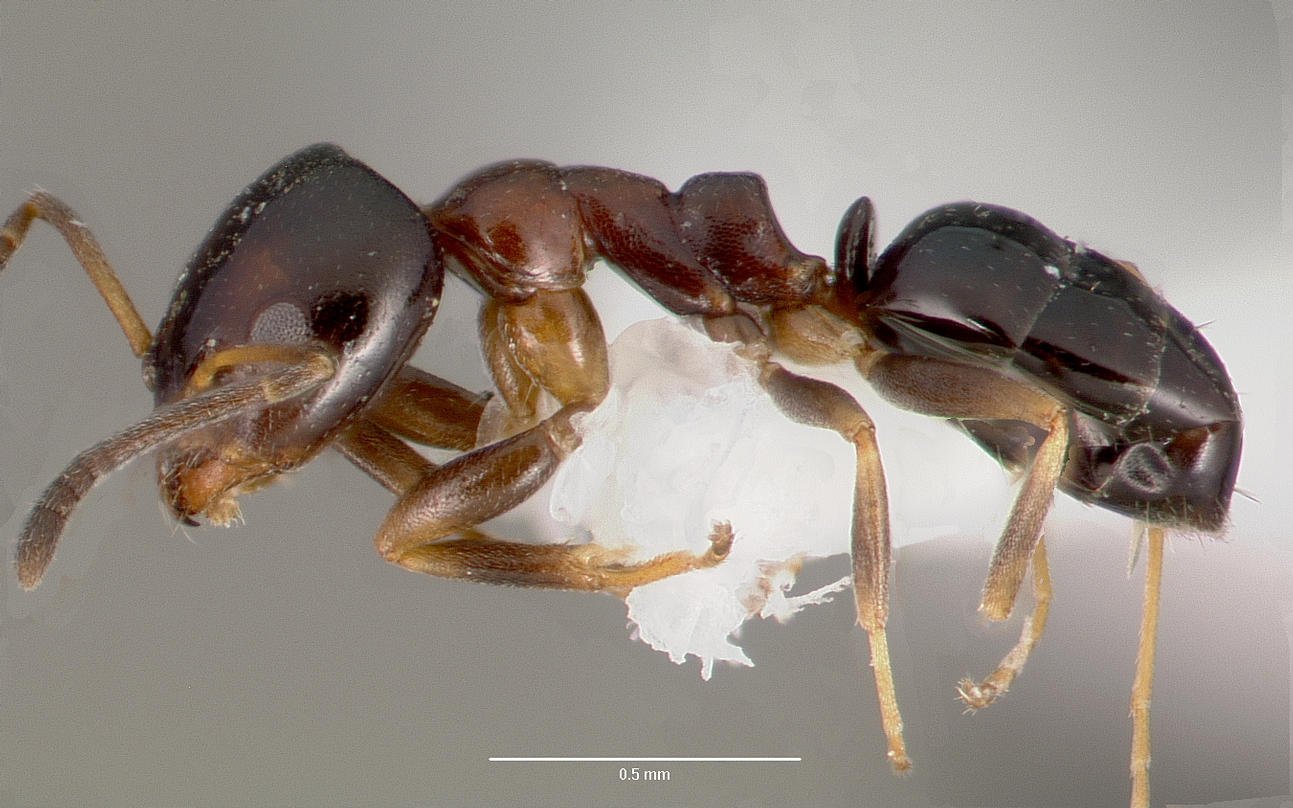
Shiny, black and small - Sydney's most common indoor ant. Trails follow skirting boards, window frames and power cables back to nests in wall voids, roof spaces or garden edges. Sweet baits work well on it.
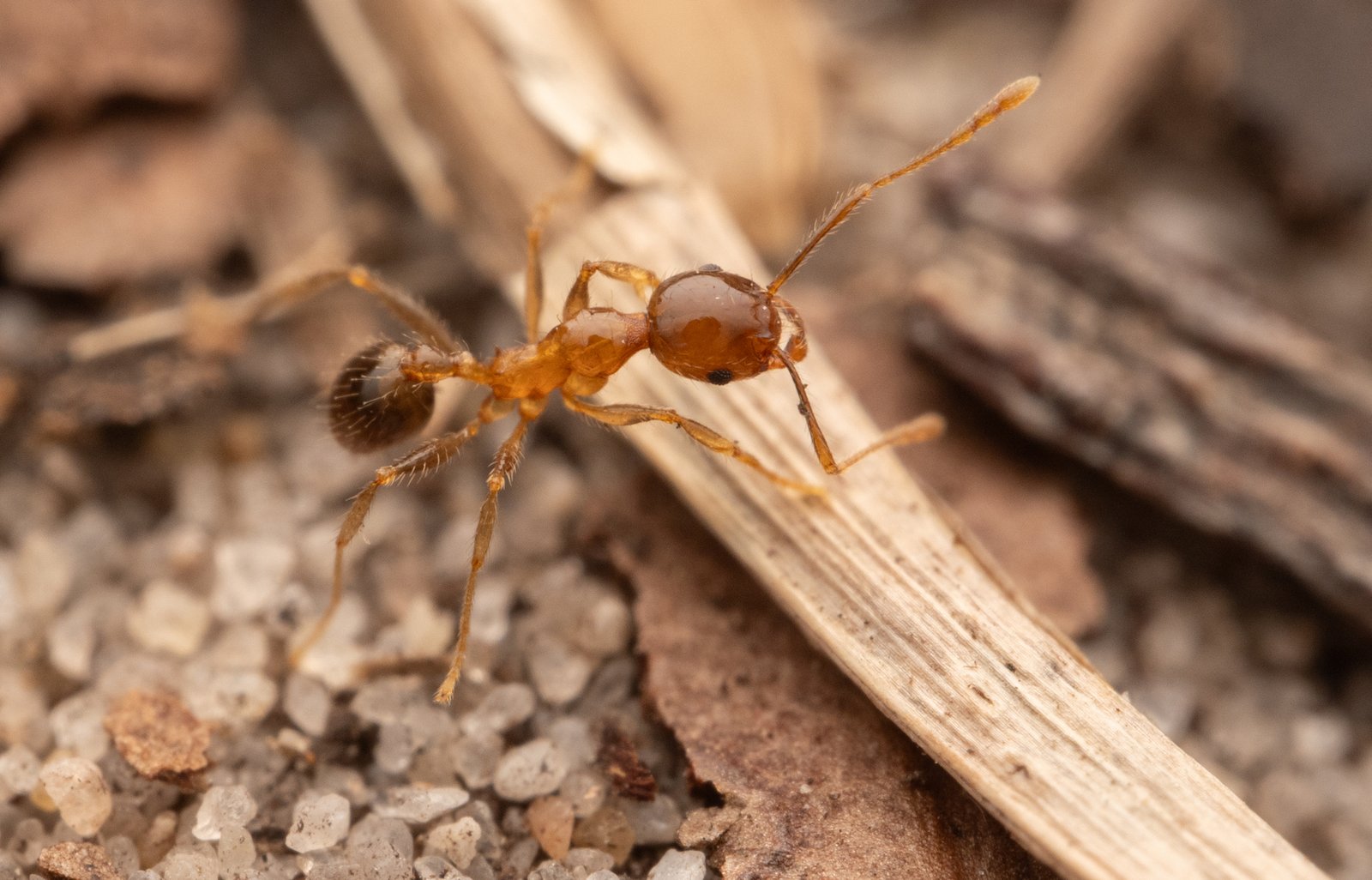
Minute brown ants with larger-headed soldiers among them. Fine sand in paving joints, at slab edges and in grout is the tell. Because a colony holds many nests, oil-based granular baits are the right approach.
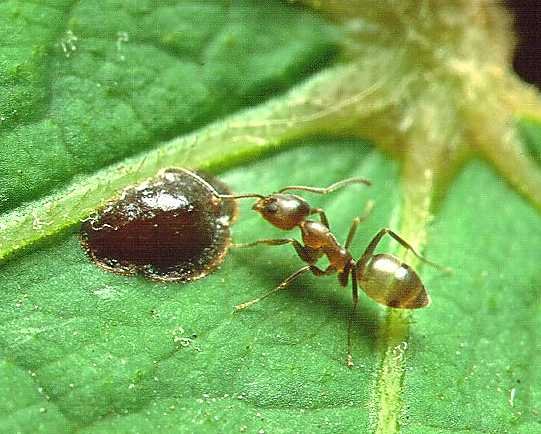
Dull brown, small, and noticeable for the thickness and speed of its trails. Multi-queen nests connect to neighbouring ones, which is how an infestation covers several properties. Repellents make it markedly worse.
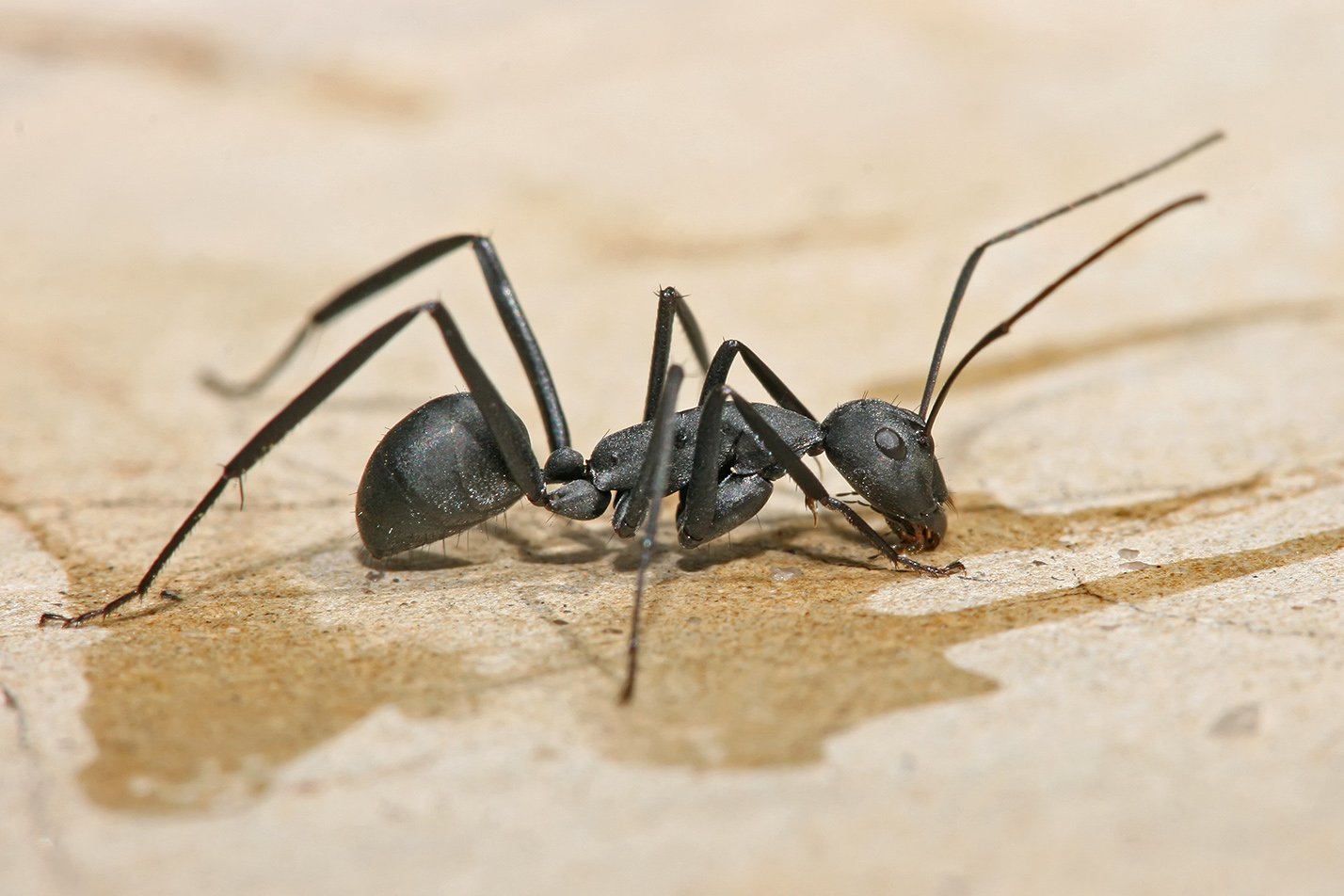
Large ants, often active at night, that nest in soil, hollow trees and softened or damp timber. Unlike the notorious overseas species they are rarely a structural pest, but a nest in a wall often points to a leak worth fixing.
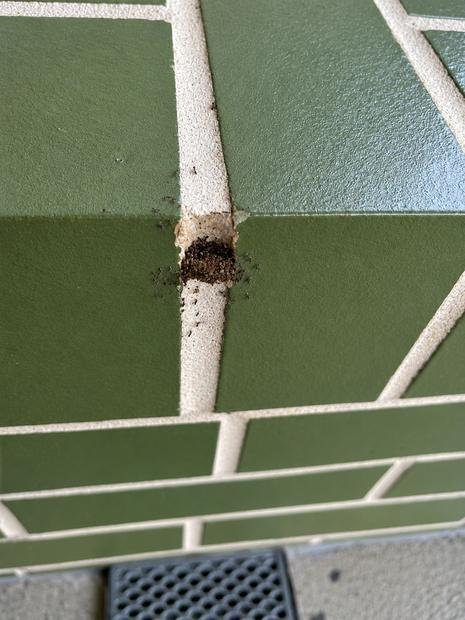
From an Elite job - a nest coming out of a mortar joint. Cracked mortar and weep holes open directly into the wall cavity, and that cavity is where a lot of black house ant colonies sit.
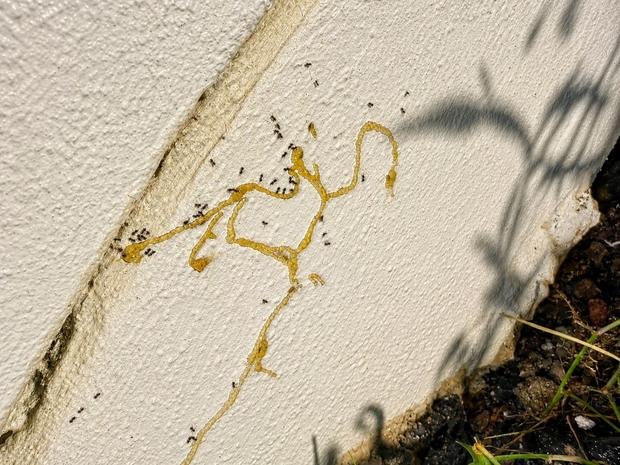
An Elite job photo: gel placed directly on an active trail. Leave it be - the ants feeding there are the ones delivering it to the colony.
Where ants appear usually tells us where the nest is and which species we are dealing with.
A trail in from the outside wall means the colony is in the cavity or the garden edge - the entry point is what we follow.
Fine sand pushed up through paving, driveway and slab joints is coastal brown ants underneath, almost without exception.
Warmth is what draws them into switches and electrical fittings. Never spray into a power point - tell us instead and we will treat it safely.
Swarming winged ants in spring or summer are a mating flight. Seen inside the house, it often means the colony is mature and in the building.
Ant trails at the shower, vanity or toilet usually come down to moisture - either damp in the wall or a slow leak they are drinking from.
Bull ants and jumper ants nest in lawns and garden beds. Their stings hurt and can cause serious allergic reactions in some people.
One call to a licensed Sydney technician gets you straight advice and a fixed quote within 30 minutes.
Argentine ants and a number of house ants carry multiple queens. Spray them with a repellent and a queen plus a few hundred workers simply moves out and starts again nearby.
Repellent means detectable, and detectable means avoided. Non-repellent products let foragers walk through and transfer the active to the rest of the nest.
Ants will ignore bait that does not suit their current needs. Because they alternate between sugar and protein depending on the brood, we test preference rather than assume.
Bait takes days to work through a colony. If you spray the trail the day after we leave, you kill the couriers. Our blog explains budding in more detail.
Tracing first, then baits and non-repellent products that do the work after we leave.
We work out which ant it is and follow the trails back, which is what locates nests in wall cavities, under paving, along garden edges and in roof spaces.
Before committing, we offer a little of each bait type and let the colony tell us which one it is on.
We run gel along the active trails, window frames and skirting, keeping every placement out of reach of children and animals.
Outside, a non-repellent goes around the foundation, weep holes, door frames and paths, so ants coming in pick it up on the way.
Under-paver and lawn-edge nests are handled with granular bait, or treated directly where that is better.
You get a summary, advice on what not to spray, and a 6-month warranty on the general treatment.
The same bait does not suit every ant. This is how we choose.
| Species | Usually feeding on | Treatment approach | Common mistake |
|---|---|---|---|
| Black house ant | Sugary liquids and honeydew, plus protein when raising brood | Sweet gel bait on trails, non-repellent perimeter at weep holes and frames | Wiping trails with detergent daily, which keeps the colony foraging elsewhere |
| Coastal brown ant | Oils and protein rather than sugars | Granular bait with an oil base, spread on paving and at the lawn edge | Boiling water down one hole - there are dozens of other nests |
| Argentine ant | Sugar for the most part, with periodic protein demand | Slow baits and a non-repellent applied along the property line | Using a repellent barrier spray - it divides the multi-queen colony |
| Sugar ants (Camponotus) | Nocturnal, on sweet foods and insects | Trails inspected at night, bait placed near the nest, timber moisture fixed | Only ever treating during the day, when there is nothing to see |
| Bull ants and jumper ants | Nectar and insects taken outdoors | Direct nest treatment wherever it is in the lawn or beds | Trying to dig it out yourself and getting stung |
| Time of year | What is happening | What to watch for |
|---|---|---|
| Early spring (Sept to Oct) | Activity resumes and brood rearing starts, so the colony wants protein | Trails appearing indoors again, and fresh sand piles in the paving |
| Late spring to summer (Nov to Feb) | Peak activity, with swarming flights triggered by warm humid conditions | Flying ants, and trails that thicken noticeably after storms and heat |
| Autumn (Mar to May) | Colonies peak in size and stock up for the cooler months | Trails into the pantry and around pet bowls |
| Winter (Jun to Aug) | Outdoor activity slows, but nests in heated walls keep going | Ants around heaters, hot water units and kitchens |
Most failed ant treatments come down to what happens in the week after.
Mulch against the wall, a shrub touching the eaves and a damp garden bed along the footings all put ants within reach of the building. In North Ryde we routinely find the colony is in the garden, not the house.
A storm is the most reliable trigger for an indoor ant problem. Nests in soil and paving flood, and the colony relocates somewhere dry, meaning your building.
Activity climbs from early spring as colonies start brood-rearing, peaks through the hot months and tails off in autumn. Treating in early spring around North Ryde gets ahead of it rather than chasing it.
Trails are traced to the colony, not just sprayed where you saw them.
The bait is chosen for the species and the time of year - sweet, protein or oil-based.
Nothing repellent, because that causes budding. Non-repellent products get carried home instead.
General treatments come with 6 months. Ants back within that window means we come back too.
Everything you need to know before you book. Still unsure? Call us — we're happy to help.
Get a Free QuoteAnt treatment starts from $89. The fixed price depends on the size of the property and how far the problem has spread, and we confirm it before we start - there is no call-out fee in North Ryde 2113. Every general treatment carries a 6-month warranty.
Same-day attendance is usually available. North Ryde sits roughly 11.8 km north-west of the CBD, inside our Ryde & the Northern District run, so we book a time and keep to it.
Older inner suburbs combine shared structure with ageing drainage, and ants exploit both. Rear courtyards that have been paved over make it worse by trapping damp against the walls.
Joined housing with ageing drainage. That combination decides where product goes far more than the floor plan does.
We do. A lot of our North Ryde work is rentals and strata, so the report, the products used and the areas treated are all recorded in writing for whoever needs them.
Yes, applied correctly. Products are registered for this use, placed out of reach rather than across open surfaces, and you will know what to stay off and for how long.
You do not normally need to leave. Anything requiring an empty room is short, and you will know about it before the work starts.
Allow one to two hours for a typical North Ryde property. Larger homes, or ones where the problem has spread, take longer and we will say so when we quote.
Every general treatment carries a 6-month warranty. So if they turn up again within the warranty, ring us and we will attend.
We cover the whole of North Ryde, from the streets around Coxs Road Mall out to the suburb boundary and on into Macquarie Park.
Photographs from Elite jobs across Sydney — not stock imagery.
Insured, licensed technicians and a straight quote within 30 minutes - no obligation either way.