Budding splits the colony
A repellent does not kill a multi-queen colony, it divides it. A queen and several hundred workers shift to a new site, leaving you with two nests instead of one.

Ant Control in Winston Hills 2153 — local technicians, fixed prices and a written report. Ant treatment starts from $89.
Real, verified feedback from people we've helped — straight from Google.
Where Winston Hills sits, who covers it and what it costs.
Winston Hills is part of the Hills District, 24 km or so north-west of the GPO, and 2153 is a postcode we know well. We run Winston Hills on a regular route, and same-day attendance is usually available.
The Winston Hills addresses we attend cluster around Winston Hills Mall and Max Ruddock Reserve. Impeesa Reserve is another part of the suburb we are called to often.
We cover Constitution Hill, Toongabbie and Northmead on the same runs as Winston Hills, which helps when ant problems are moving between neighbouring properties. Backing onto bush means re-entry is the issue, so proofing and the perimeter do the real work here.
Most Winston Hills bookings come in as houses backing onto a reserve, where the pressure is constant from outside. Say which one applies when you call 1300 313 373 and the technician will have the right products on the van.
Wherever you are in 2153, you are inside the area our technicians cover.
When you book, we confirm the 2153 run the day before and give you an arrival time rather than a window. If we are already out at Constitution Hill or Toongabbie that morning, we will usually offer you the earlier slot.
In a dry spell ants move indoors looking for moisture, which is why a spotless Winston Hills kitchen still gets trails in January. The sink, the pet bowl and the shower recess are the attractions.
What you are looking at is a supply line, not a population. Treat the line and the colony sends another one tomorrow along a slightly different route.
Ants will defend aphids and scale from predators because that honeydew is their sugar supply. Deal with the scale on the plants near the house and the ant pressure drops with it.
Each of these behaves differently, so the bait and the placement change too. Two photos come from our own jobs.
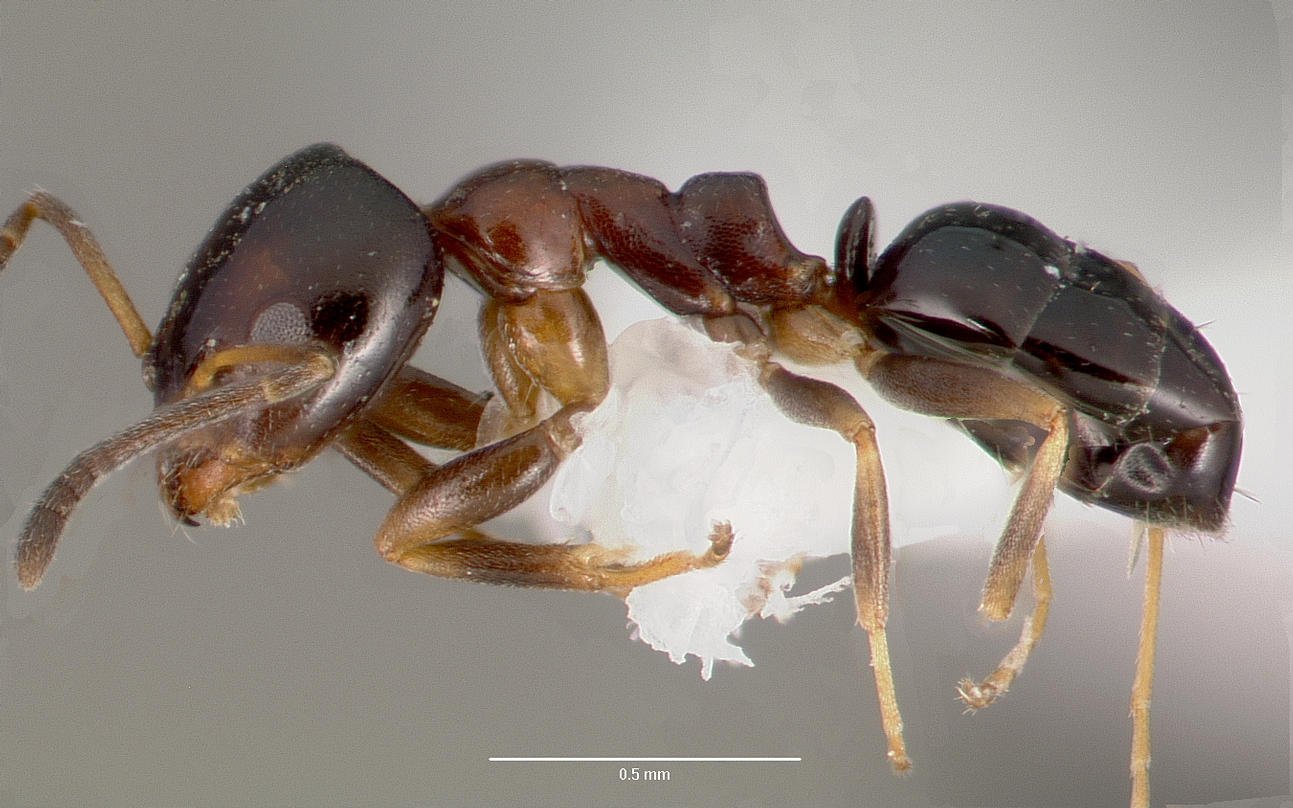
The small glossy black one you find in the kitchen. It runs along skirtings, window frames and cabling, nesting in wall cavities, roof voids and the edges of garden beds, and it takes sweet bait without much persuading.
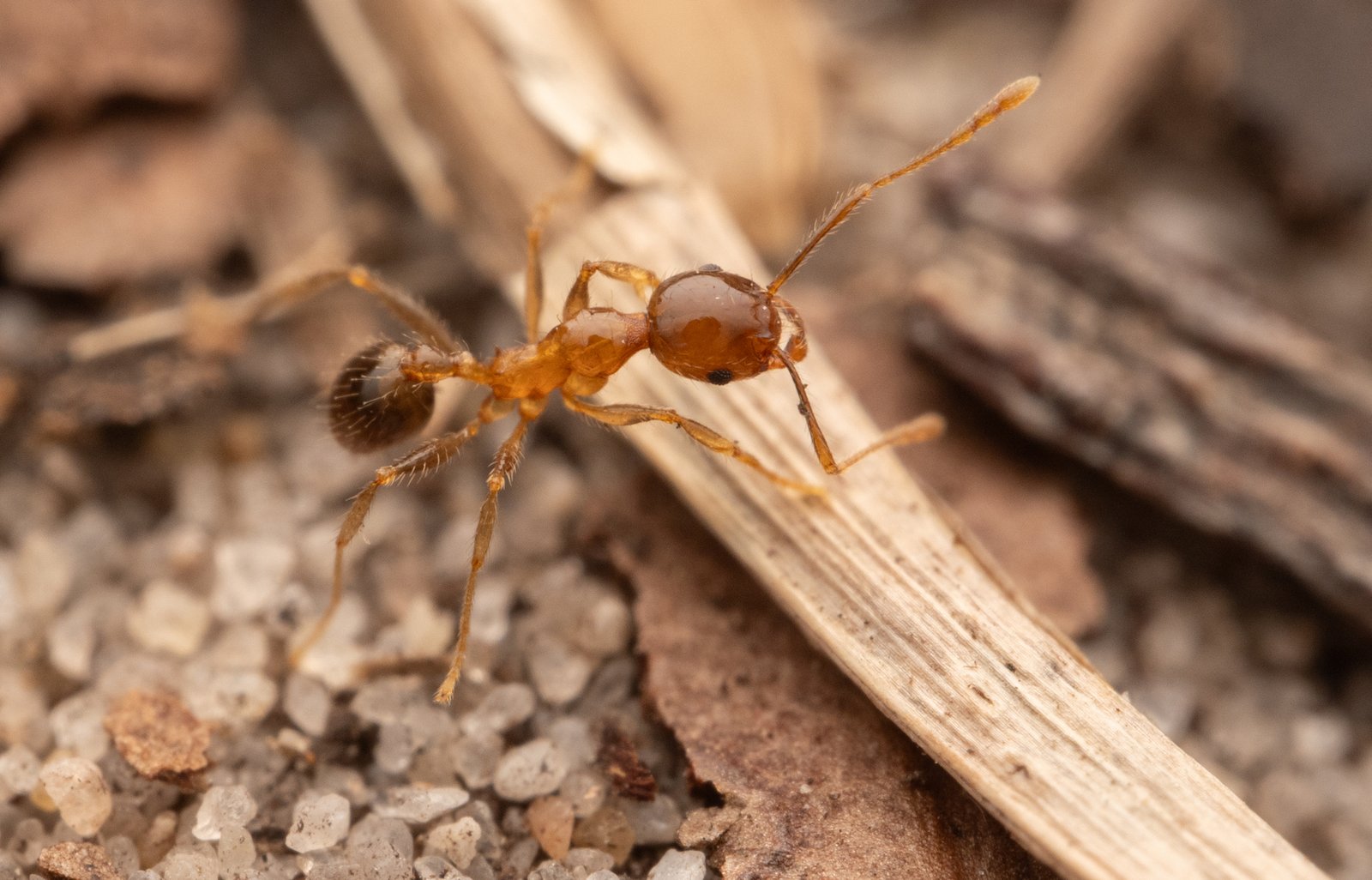
Very small brown ants, with soldiers that have noticeably bigger heads. You spot them by the fine sandy soil pushed up through paving joints, slab edges and grout. The colonies are big and multi-nested, so oil-based granular bait is the tool.
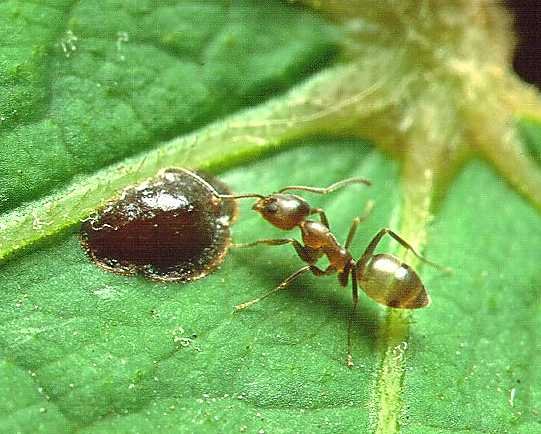
Fast-moving, small and dull brown, in thick trails. Its nests are multi-queen and interconnected with neighbouring nests, so it spreads across properties - and repellent sprays accelerate exactly that.
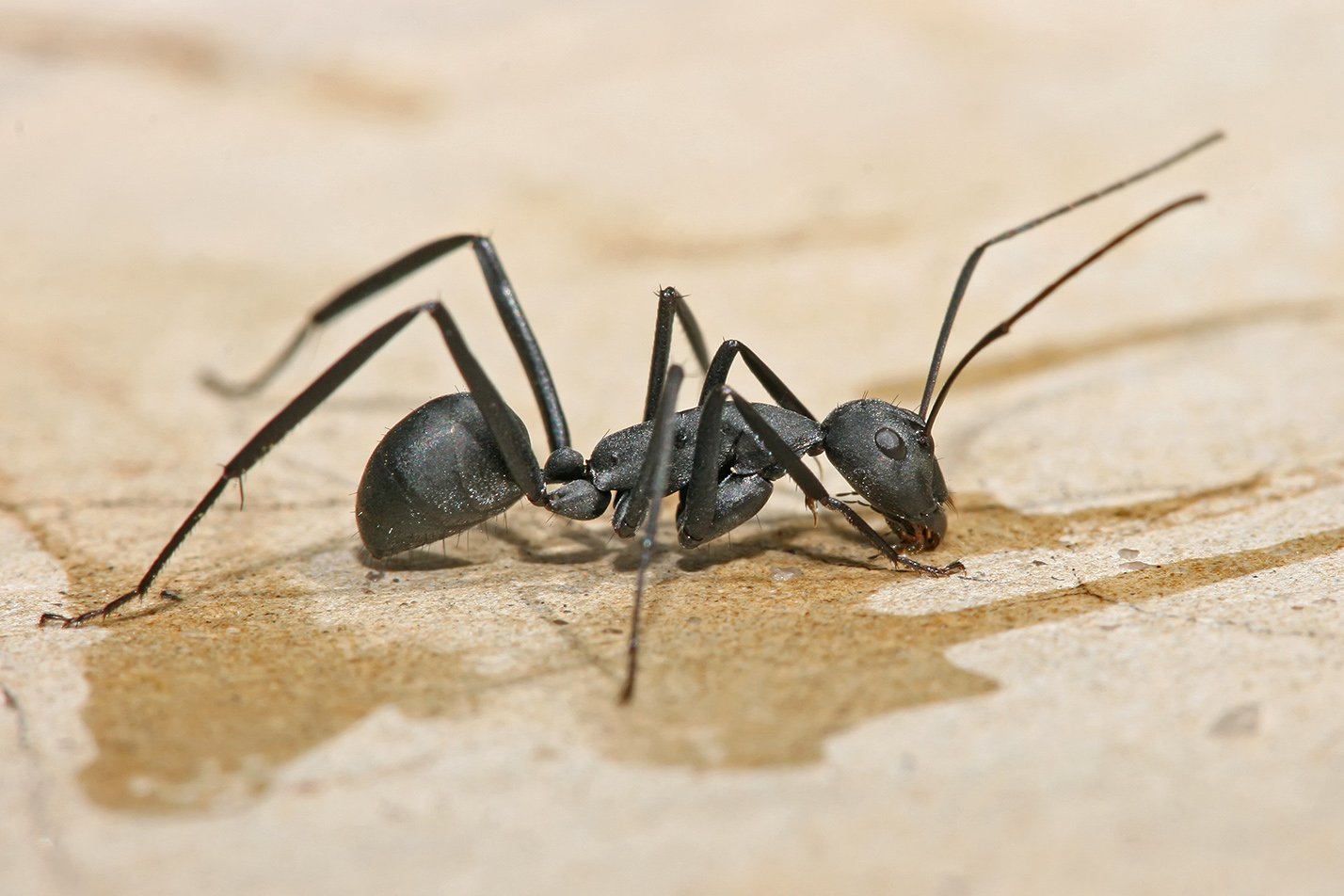
Big ants, usually out after dark, nesting in soil, hollow trees and timber that has gone soft or damp. They are not the structural threat their overseas relatives are, but finding one in a wall usually means there is a leak behind it.
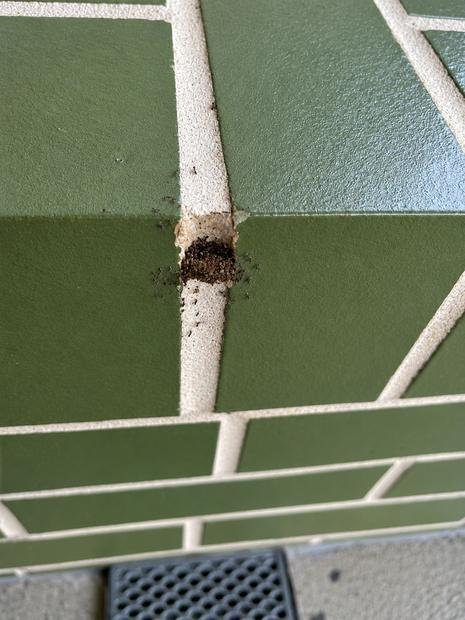
An Elite photo of ants emerging from mortar. The route runs through weep holes and cracked joints straight into the wall cavity, which is the usual home for a black house ant colony.
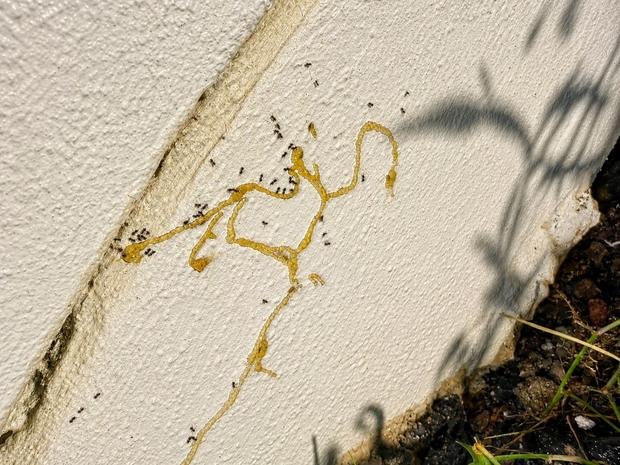
Photo from an Elite job: gel bait placed along an active trail. The ants are left to feed and carry the bait home, so we ask customers not to wipe or spray the trail afterwards.
Where ants appear usually tells us where the nest is and which species we are dealing with.
A trail in from the outside wall means the colony is in the cavity or the garden edge - the entry point is what we follow.
If fine soil keeps appearing in the paving joints and along the drive, coastal brown ants are nesting beneath it.
They go into switches and appliances for the warmth. Keep insecticide out of power points and tell us, so it can be treated safely.
Winged ants swarming in the warmer months are reproductives on a mating flight. Indoors, that can indicate an established colony within the structure.
When trails appear around the shower, vanity or toilet, moisture is the reason - often a slow leak the colony is drinking from.
Bull ants and jumper ants nest in the lawn and garden beds. The sting is genuinely painful and in some people causes a serious allergic reaction.
Speak to a licensed Sydney technician now. Straight advice, and a fixed quote inside 30 minutes.
A repellent does not kill a multi-queen colony, it divides it. A queen and several hundred workers shift to a new site, leaving you with two nests instead of one.
Ants can detect a supermarket spray and will simply route around it. A professional non-repellent is undetectable, so they walk through it and carry the active home to the colony.
If the bait is not what they want today, they will walk past it. Preference moves between sugar and protein with brood demand, so we test and change as needed.
A bait program works over days. The worst thing you can do is spray the trail once we have gone - those ants are the delivery system. See our blog on budding in more detail.
Tracing first, then baits and non-repellent products that do the work after we leave.
We identify the ant and follow trails back to entry points and nests in walls, paving, garden edges and roof spaces.
Before committing, we offer a little of each bait type and let the colony tell us which one it is on.
Inside, gel bait follows the trails: window frames, skirting, the routes they already use, always placed where children and pets cannot get to it.
We treat the foundation line, weep holes, door frames and paths with a non-repellent so incoming ants carry it with them.
Granular bait, or direct nest treatment, for the coastal brown ant nests under paving and at lawn edges.
You receive the job summary in writing, guidance on what to leave alone, and 6 months of warranty on the general treatment.
The same bait does not suit every ant. This is how we choose.
| Species | Usually feeding on | Treatment approach | Common mistake |
|---|---|---|---|
| Black house ant | Sweet liquids and honeydew; protein while the colony is raising young | Gel bait placed on trails, non-repellent applied at weep holes and window frames | Wiping trails clean daily, so the colony simply forages on a different route |
| Coastal brown ant | Protein and oil | Oil-based granular bait applied to paving and lawn edges | Pouring insecticide into one pile and assuming that was the colony |
| Argentine ant | Mainly sugars, protein at some points in the cycle | Slow-acting bait with a non-repellent treatment right across the boundary | Spraying a repellent barrier, which causes a multi-queen nest to bud |
| Sugar ants (Camponotus) | Sweet foods and insects, active after dark | Night trail inspection, baiting near the nest, and dealing with damp timber | Inspecting in daylight when the colony is not foraging |
| Bull ants and jumper ants | Outdoor feeders on insects and nectar | Direct treatment of the nest in the lawn or garden bed | Opening the nest up by hand and being stung for it |
| Time of year | What is happening | What to watch for |
|---|---|---|
| Early spring (Sept to Oct) | The colony restarts and begins brood production, raising its protein needs | First trails inside, and sandy soil showing up in paving joints |
| Late spring to summer (Nov to Feb) | Peak foraging, mating flights after warm humid weather | Winged ants, heavy trails after storms and heatwaves |
| Autumn (Mar to May) | Colonies peak in size and stock up for the cooler months | Trails into the pantry and around pet bowls |
| Winter (Jun to Aug) | Outdoor activity slows, but nests in heated walls keep going | Ants around heaters, hot water units and kitchens |
Most failed ant treatments come down to what happens in the week after.
If a trail runs up a shrub rather than into the house, the colony is farming aphids or scale for honeydew. Treating indoors will not stop it; the plant has to be dealt with too.
Our Winston Hills runs take in Impeesa Reserve and continue across to the Constitution Hill boundary - all the same service area.
Ants in the cavity of a Winston Hills house will appear at power points, architraves and ceiling roses - anywhere the cavity opens into the room.
We follow the trail back to the colony rather than treating the spot where you noticed it.
Baits are matched to the species and the season rather than used as a default.
Sprays that scatter a colony are avoided entirely in favour of non-repellents the ants deliver themselves.
Six months of warranty on a general ant treatment, and a return visit if they come back inside it.
Everything you need to know before you book. Still unsure? Call us — we're happy to help.
Get a Free QuoteAnt treatment starts from $89. The fixed price depends on the size of the property and how far the problem has spread, and we confirm it before we start - there is no call-out fee in Winston Hills 2153. Every general treatment carries a 6-month warranty.
Same-day attendance is usually available. Our Hills District technicians cover Winston Hills daily, and you get a confirmed arrival time when you book.
Where bushland adjoins the block, the question is not how ants got in but how often. The perimeter is what decides that.
Homes with sub-floors and roof voids backing onto reserve - we inspect all three plus the boundary.
Yes - freestanding homes, townhouses, apartments, rentals and business premises in Winston Hills 2153 are all covered, with documentation suitable for an agent or a strata manager.
Yes. Everything we use is registered for the purpose and applied at label rates, and we place product where people and animals do not go. Tell us about pets, aquariums or anyone with a respiratory condition at booking.
Usually not. Most ant control work is done with you there, and anything that needs the room vacated is for a short period we will tell you about beforehand.
Between one and two hours covers the majority of jobs. We do not book so tightly that a technician has to cut a job short.
Every general treatment carries a 6-month warranty. Call us if activity picks up again and we will arrange the return visit.
All of them. Winston Hills sits alongside Constitution Hill, Toongabbie, Northmead and Baulkham Hills in our coverage, and they are serviced on the same schedule.
Photographs from Elite jobs across Sydney — not stock imagery.
Friendly, fully insured technicians and a no-obligation quote inside 30 minutes.