Budding splits the colony
Argentine ants and a number of house ants carry multiple queens. Spray them with a repellent and a queen plus a few hundred workers simply moves out and starts again nearby.

Ant Control in Yowie Bay 2228 — local technicians, fixed prices and a written report. Ant treatment starts from $89.
Real, verified feedback from people we've helped — straight from Google.
Where Yowie Bay sits, who covers it and what it costs.
Yowie Bay is part of the Sutherland Shire, 22.4 km or so south-west of the GPO, and 2228 is a postcode we know well. We run Yowie Bay on a regular route, and same-day attendance is usually available.
If you are near Yowie Bay Old Baths Reserve, Westfield Miranda or Sylvania Par 3 Golf and Soccer, that is ground we cover constantly - it is the busiest part of Yowie Bay for us.
Sutherland Shire is the council area for Yowie Bay, and we treat Gymea Bay, Caringbah South and Caringbah on the same schedule. Bush edges keep re-supplying the problem, which is why we treat the boundary rather than only the interior.
The ant calls we take from Yowie Bay are mostly homes on sloping blocks with a sub-floor and bush on the boundary. If yours is one of them, mention it when you ring 1300 313 373 - it changes what the technician brings.
The rest of 2228 is covered too, including the pockets around Miranda station and Wonga Road Reserve.
You get a confirmed time, not a window. We plan the 2228 run the day before, and if Gymea Bay or Caringbah South is on the same round there is often an earlier slot going.
If trails appear in winter, or in a first-floor bathroom with no outdoor route, the nest is probably inside the building.
Where we find ants in a Yowie Bay wall or frame, we look for the water first. Fix the leak and the timber dries; leave it and another colony will use the same cavity.
People expect a single nest. Coastal brown ants and Argentine ants run dozens of connected nests across a property and beyond it, so the question is never just where it is but how far it goes.
Each of these behaves differently, so the bait and the placement change too. Two photos come from our own jobs.
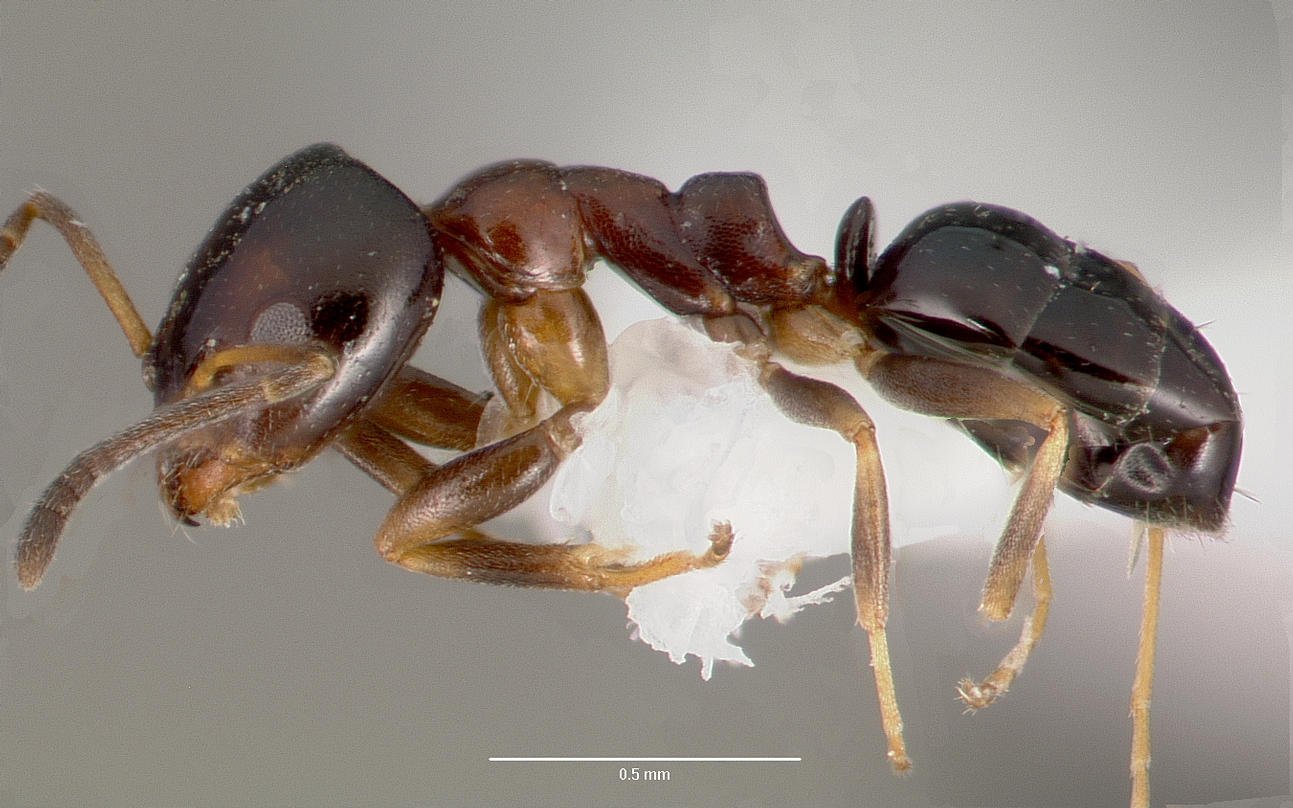
A small black ant with a glossy body, and the one most often in Sydney kitchens. It nests in wall cavities, the roof void and garden edges, trails along skirtings and cabling, and feeds readily on sweet bait.
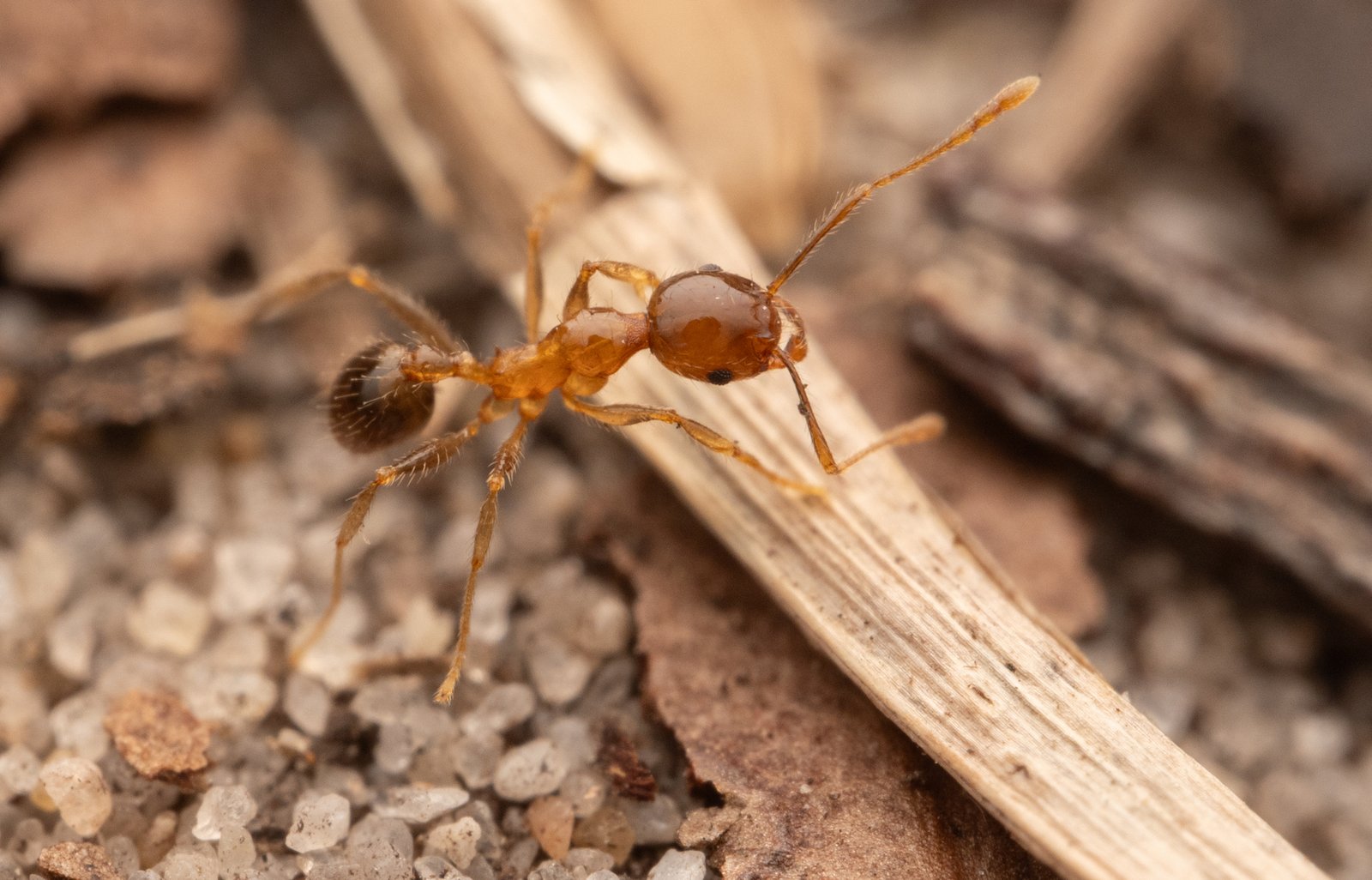
Tiny and brown, with a distinct large-headed soldier. The sign is loose sand appearing between pavers, along the slab edge and in grout lines. Many nests to a colony, which is why we use oil-based granular baits.
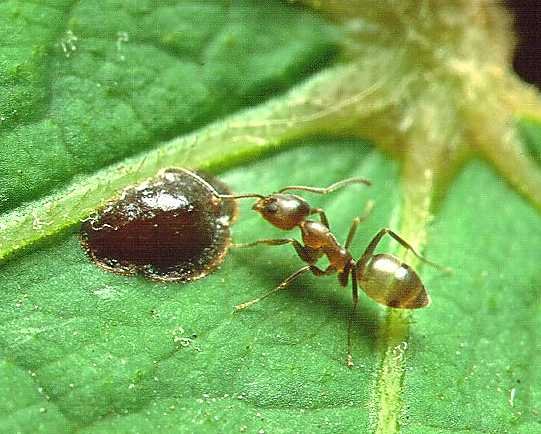
Fast-moving, small and dull brown, in thick trails. Its nests are multi-queen and interconnected with neighbouring nests, so it spreads across properties - and repellent sprays accelerate exactly that.
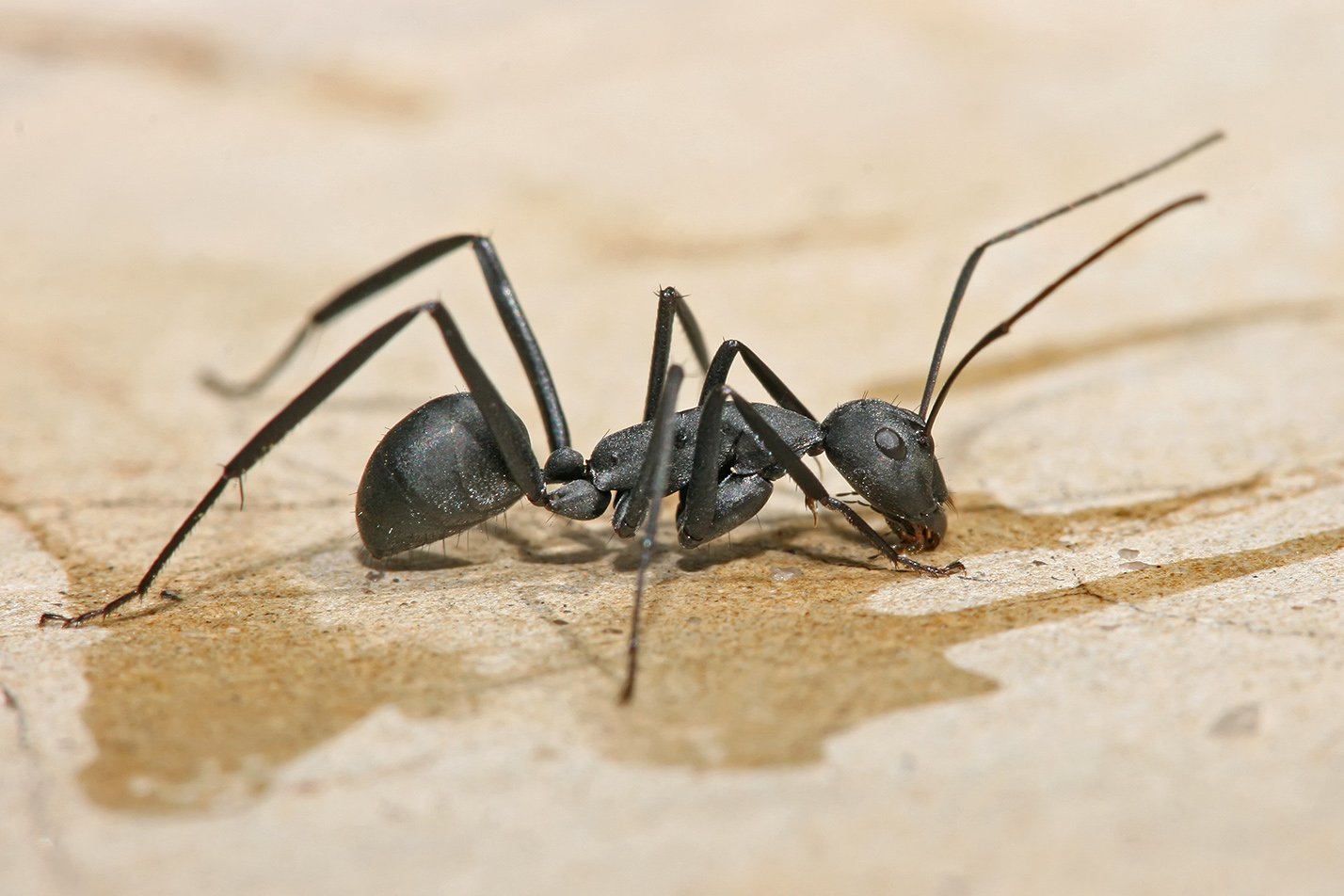
Large and mostly nocturnal, nesting in soil, hollow trees and damp or softened timber. They rarely damage structure here, though a nest inside a wall is a reliable sign of moisture that needs attention.
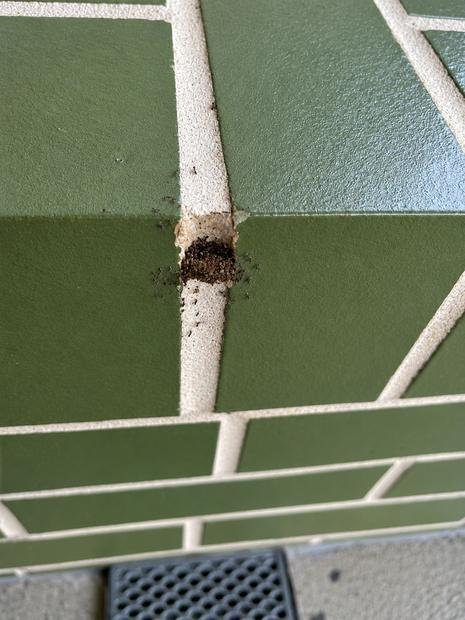
Taken on an Elite job: a mortar joint with a nest behind it. Weep holes and failed mortar are a direct path into the cavity, where many black house ant colonies establish.
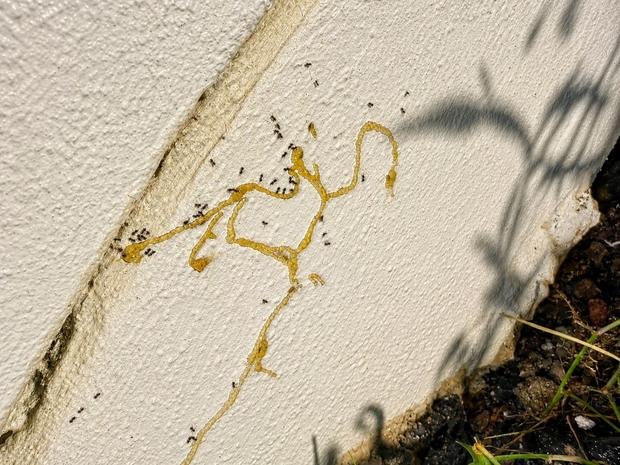
Gel bait on a working trail, from one of our jobs. Ants feed and carry it to the nest, so wiping or spraying the trail afterwards undoes the treatment.
Where ants appear usually tells us where the nest is and which species we are dealing with.
Ants entering from the external wall point to a cavity or garden-edge nest. Finding that entry is the first step.
Fine sand pushed up through paving, driveway and slab joints is coastal brown ants underneath, almost without exception.
Ants nesting in switches and electrical fittings are drawn to the warmth. Do not spray into power points; tell us so we can treat safely.
Swarms of winged ants in spring and summer are mating flights. Seen indoors, they can mean a mature colony inside the building.
Trails around the shower, vanity or toilet often mean moisture in the wall or a colony drinking from a slow leak.
Lawns and garden beds are where bull ants and jumper ants nest. Their stings are painful and can trigger severe allergic reactions.
Get a licensed Sydney technician on the phone today - honest advice, fixed quote in 30 minutes.
Argentine ants and a number of house ants carry multiple queens. Spray them with a repellent and a queen plus a few hundred workers simply moves out and starts again nearby.
Supermarket sprays are repellent: ants detect them and walk around them. Professional non-repellent products are not detected, so foragers walk through, pick up the active and carry it back to nest mates.
If the bait is not what they want today, they will walk past it. Preference moves between sugar and protein with brood demand, so we test and change as needed.
A bait program works over days. The worst thing you can do is spray the trail once we have gone - those ants are the delivery system. See our blog on budding in more detail.
Tracing first, then baits and non-repellent products that do the work after we leave.
We identify the ant and follow trails back to entry points and nests in walls, paving, garden edges and roof spaces.
Small amounts of sweet, protein and oil-based bait show what the colony is feeding on right now.
Gel is placed on the trails themselves - along window frames and skirting boards - and positioned out of reach of children and pets.
The perimeter gets a non-repellent product - foundation, weep holes, door frames, paths - which intercepts ants before they are inside.
Coastal brown ant nests under paving and along lawn edges get granular bait or direct treatment.
The job ends with a written summary, advice on what to avoid spraying, and a 6-month warranty.
The same bait does not suit every ant. This is how we choose.
| Species | Usually feeding on | Treatment approach | Common mistake |
|---|---|---|---|
| Black house ant | Sugars and honeydew, turning to protein while brood is being raised | Sweet gel on the trails themselves, with a non-repellent at weep holes and frames | Cleaning the trail off every day, which just sends them foraging somewhere else |
| Coastal brown ant | Protein and oily foods | Oil-based granular bait over paving and lawn margins | Attacking a single visible nest while the rest of the colony's nests carry on |
| Argentine ant | Sugars primarily, sometimes protein | Slow-acting baits combined with non-repellent treatment across the boundary | A repellent barrier, which splits nests that hold many queens |
| Sugar ants (Camponotus) | Sweet foods and insects, active after dark | Night trail inspection, baiting near the nest, and dealing with damp timber | Inspecting in daylight when the colony is not foraging |
| Bull ants and jumper ants | Nectar and insects taken outdoors | Direct nest treatment wherever it is in the lawn or beds | Trying to dig it out yourself and getting stung |
| Time of year | What is happening | What to watch for |
|---|---|---|
| Early spring (Sept to Oct) | Colonies wake up and start raising new brood, so protein demand rises | First trails indoors, sand piles reappearing in paving |
| Late spring to summer (Nov to Feb) | Foraging peaks, and warm humid spells trigger mating flights | Swarms of winged ants, and heavy trails following storms or heatwaves |
| Autumn (Mar to May) | Colonies peak in size and stock up for the cooler months | Trails into the pantry and around pet bowls |
| Winter (Jun to Aug) | Outdoor activity slows, but nests in heated walls keep going | Ants around heaters, hot water units and kitchens |
Most failed ant treatments come down to what happens in the week after.
Nests under paving are sheltered, warm and almost impossible to flood out. They need bait placed at the active entrances, not a hose.
Winter does not kill the colony, it just slows it. The nest under a Yowie Bay path in July is the same nest that produces the trail in October.
We are around Yowie Bay Old Baths Reserve most weeks and cover every street in 2228, including the ones off the main roads.
Finding the nest is the job - following the trail to it, not treating the visible end of it.
Sweet, protein or oil-based baits chosen for the ant and the season.
Nothing repellent, because that causes budding. Non-repellent products get carried home instead.
A general ant treatment carries 6 months of cover - if they return inside it, so do we.
Everything you need to know before you book. Still unsure? Call us — we're happy to help.
Get a Free QuoteAnt treatment starts from $89. The fixed price depends on the size of the property and how far the problem has spread, and we confirm it before we start - there is no call-out fee in Yowie Bay 2228. Every general treatment carries a 6-month warranty.
Same-day attendance is usually available. Yowie Bay is about 22.4 km south-west of the CBD in the Sutherland Shire, and we give you a firm arrival time rather than an all-day window.
The bush is a permanent reservoir. Treating inside does little here unless the boundary and the perimeter are dealt with, because re-entry is the real issue.
Houses on larger, often sloping blocks with bush on at least one boundary, so the perimeter and the fence line are central to the job.
Yes. Houses, townhouses, units, strata common property, rentals and commercial sites in Yowie Bay 2228 are all part of what we do, and the paperwork is the kind agents accept.
Yes. The products are registered for this use and applied at label rates, and placement keeps them away from where children and animals go. Let us know at booking about pets, fish tanks or anyone with asthma and we will plan the visit around it.
You do not normally need to leave. Anything requiring an empty room is short, and you will know about it before the work starts.
An hour to two hours covers most jobs. The size of the building and the extent of the problem are what change it.
Every general treatment carries a 6-month warranty. If it is not holding, call us - that is exactly what the warranty is for.
Yes - we work right across the Sutherland Shire area, which takes in Yowie Bay and the suburbs around it.
Photographs from Elite jobs across Sydney — not stock imagery.
Fully insured technicians who turn up when they say they will. Quote within 30 minutes, no obligation.