Budding splits the colony
Argentine ants and a number of house ants carry multiple queens. Spray them with a repellent and a queen plus a few hundred workers simply moves out and starts again nearby.

Ant Control in Beaumont Hills 2155 — local technicians, fixed prices and a written report. Ant treatment starts from $89.
Real, verified feedback from people we've helped — straight from Google.
Where Beaumont Hills sits, who covers it and what it costs.
Our Hills District technicians cover Beaumont Hills and the rest of 2155 as a matter of course - it is only about 31.1 km north-west of the city. We cover Beaumont Hills on scheduled runs through the Hills District, and we will give you a firm time rather than a window.
Turkeys Nest Reserve and Beaumont Village are the parts of Beaumont Hills we are called to most.
Kellyville, North Kellyville and Kellyville Ridge are all on the same route as Beaumont Hills. With bushland close by there is constant pressure from outside, so the perimeter and the fence line get as much attention as the house.
What we see in Beaumont Hills is houses backing onto a reserve, where the pressure is constant from outside. Describing it accurately when you book saves a second visit.
The whole of 2155 is on our regular run.
When you book, we confirm the 2155 run the day before and give you an arrival time rather than a window. If we are already out at Kellyville or North Kellyville that morning, we will usually offer you the earlier slot.
Indoor nests sit in wall cavities, behind splashbacks, under baths and in roof insulation. Finding them is most of the work on a Beaumont Hills job.
Coastal brown ants, black house ants and odorous house ants all behave differently and all turn up around Beaumont Hills. We identify before we bait rather than putting down a general-purpose product and hoping.
A trail along a bench is foragers, and foragers are maybe five per cent of the colony. The queens, the brood and most of the workers are in a nest you have not found, which is why wiping the trail achieves nothing lasting in a Beaumont Hills kitchen.
Each of these behaves differently, so the bait and the placement change too. Two photos come from our own jobs.
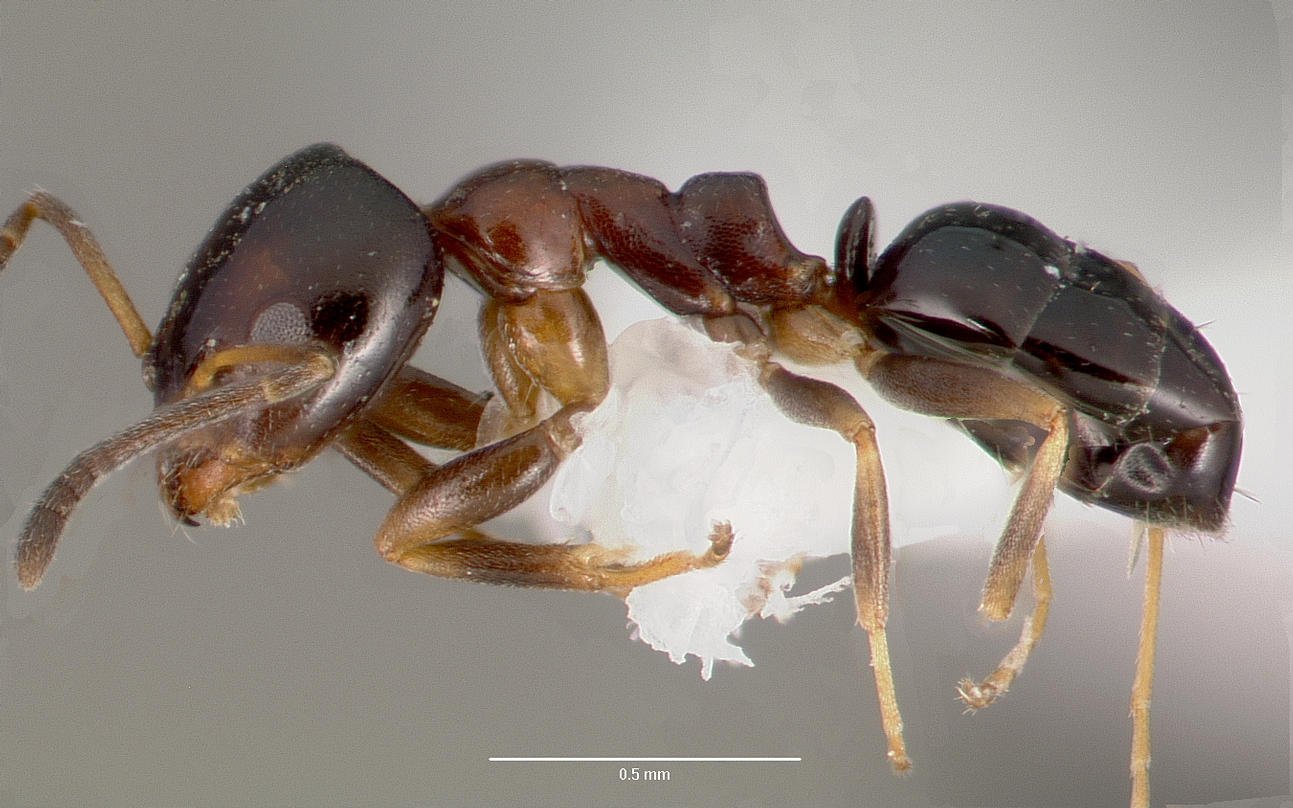
The small glossy black one you find in the kitchen. It runs along skirtings, window frames and cabling, nesting in wall cavities, roof voids and the edges of garden beds, and it takes sweet bait without much persuading.
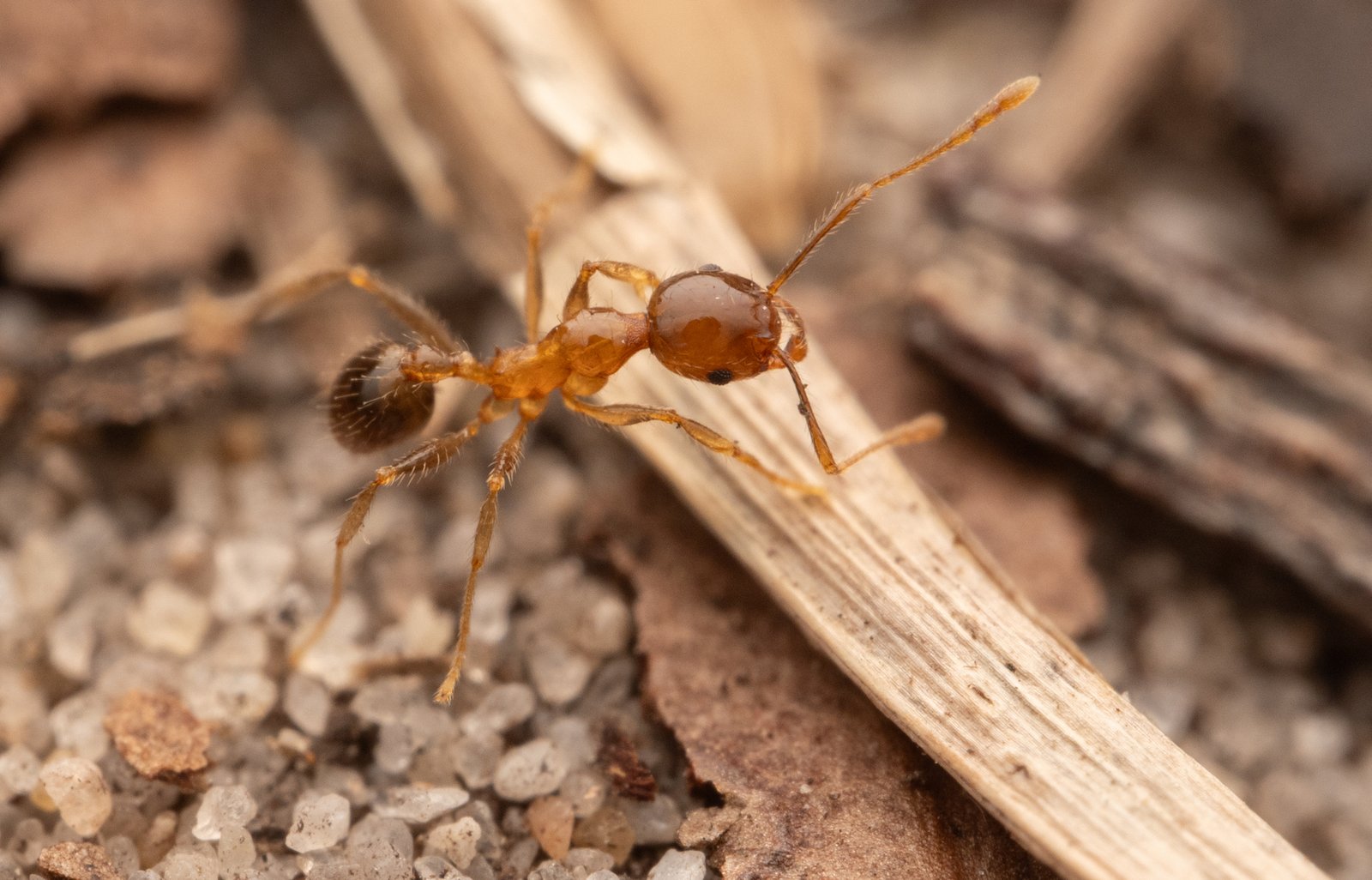
Small brown ants that include a bigger-headed soldier caste. Sandy soil pushed up between pavers and along slab edges gives them away. Colonies run to many nests, and oil-based granular bait is what works.
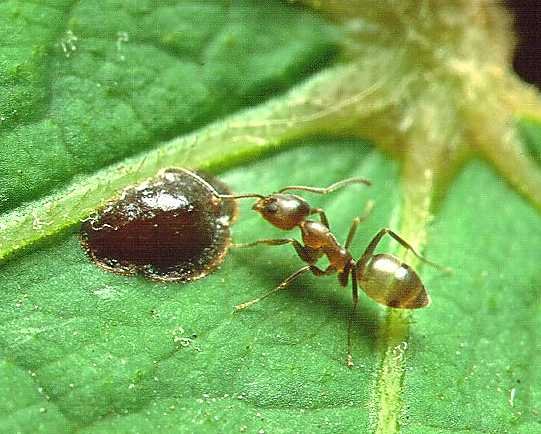
Dull brown, small, and noticeable for the thickness and speed of its trails. Multi-queen nests connect to neighbouring ones, which is how an infestation covers several properties. Repellents make it markedly worse.
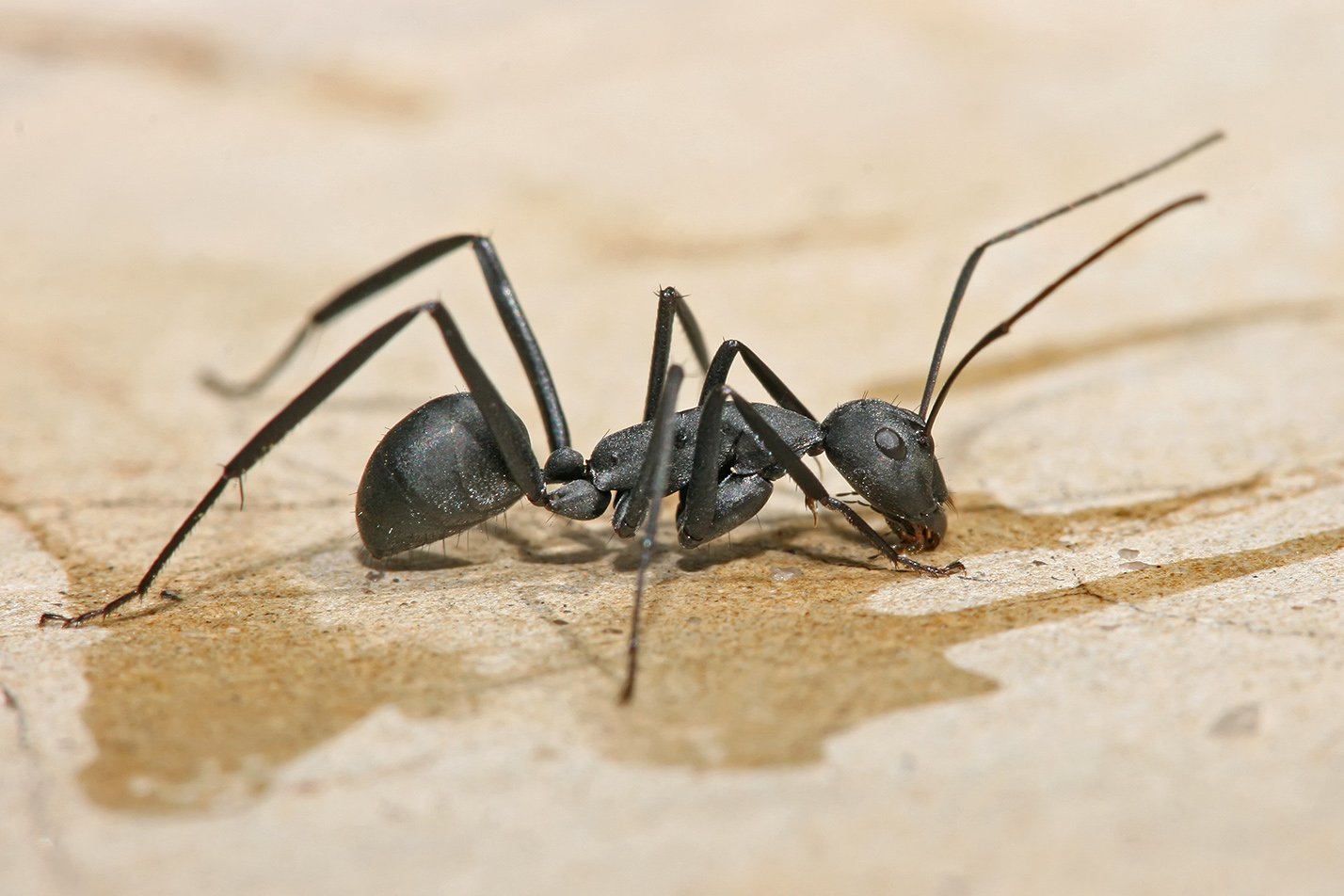
Large and mostly nocturnal, nesting in soil, hollow trees and damp or softened timber. They rarely damage structure here, though a nest inside a wall is a reliable sign of moisture that needs attention.
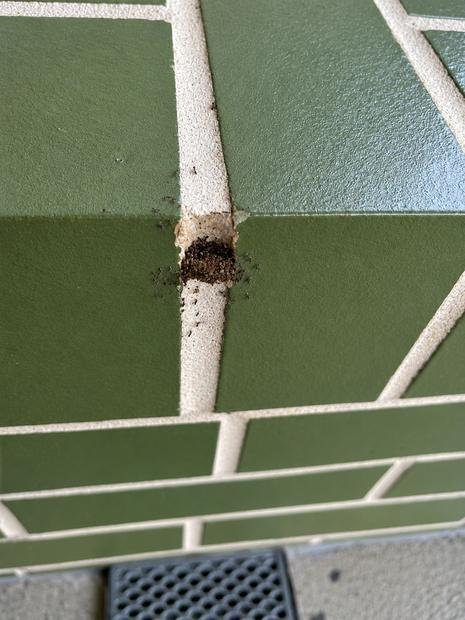
From an Elite job - a nest coming out of a mortar joint. Cracked mortar and weep holes open directly into the wall cavity, and that cavity is where a lot of black house ant colonies sit.
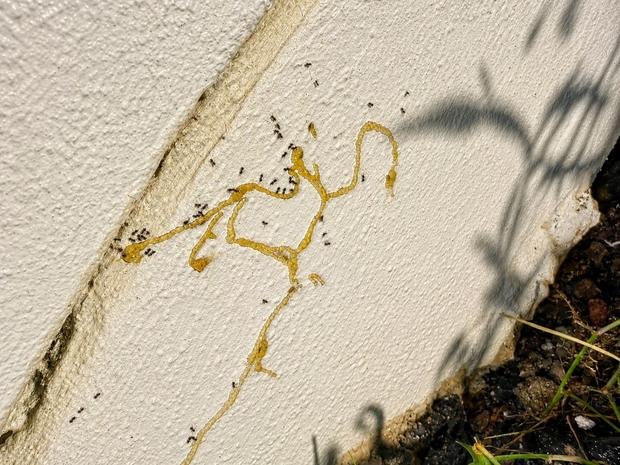
An Elite photo of gel bait on an active trail. The whole point is letting them feed and take it home, so the trail must be left alone once we have treated it.
Where ants appear usually tells us where the nest is and which species we are dealing with.
Ants entering from the external wall point to a cavity or garden-edge nest. Finding that entry is the first step.
That fine sandy soil appearing between pavers, along the driveway and at slab joints is the classic coastal brown ant sign - they are nesting below.
Electrical fittings and switches stay warm, which is why ants nest in them. Do not spray into them; let us know and we will handle it properly.
Swarms of winged ants in spring and summer are mating flights. Seen indoors, they can mean a mature colony inside the building.
When trails appear around the shower, vanity or toilet, moisture is the reason - often a slow leak the colony is drinking from.
Bull and jumper ants live in lawn and garden-bed nests. The sting hurts, and for some people it brings on a serious allergic reaction.
One call to a licensed Sydney technician gets you straight advice and a fixed quote within 30 minutes.
Argentine ants and a number of house ants carry multiple queens. Spray them with a repellent and a queen plus a few hundred workers simply moves out and starts again nearby.
Repellent means detectable, and detectable means avoided. Non-repellent products let foragers walk through and transfer the active to the rest of the nest.
A colony only takes bait if it wants that food at that moment. Ants switch between sugar and protein as their brood needs change, so we test preferences and change baits when needed.
Results come over days as the bait spreads. Spray the trail the next morning and you have killed the ants that were carrying it home. Our blog explains budding in more detail.
Tracing first, then baits and non-repellent products that do the work after we leave.
Species confirmed, then trails traced to entry points and to the nests - walls, paving, garden edges, roof space.
Sweet, protein and oil-based baits are offered in small amounts so the colony shows us its current preference.
Inside, gel bait follows the trails: window frames, skirting, the routes they already use, always placed where children and pets cannot get to it.
The perimeter gets a non-repellent product - foundation, weep holes, door frames, paths - which intercepts ants before they are inside.
Coastal brown ant nests under paving and along lawn edges get granular bait or direct treatment.
You receive the job summary in writing, guidance on what to leave alone, and 6 months of warranty on the general treatment.
The same bait does not suit every ant. This is how we choose.
| Species | Usually feeding on | Treatment approach | Common mistake |
|---|---|---|---|
| Black house ant | Sugars and honeydew, turning to protein while brood is being raised | Sweet gel on the trails themselves, with a non-repellent at weep holes and frames | Cleaning the trail off every day, which just sends them foraging somewhere else |
| Coastal brown ant | Oils and protein rather than sugars | Granular bait with an oil base, spread on paving and at the lawn edge | Boiling water down one hole - there are dozens of other nests |
| Argentine ant | Sugars primarily, sometimes protein | Slow-acting baits combined with non-repellent treatment across the boundary | A repellent barrier, which splits nests that hold many queens |
| Sugar ants (Camponotus) | Sweet foods and insects, active after dark | Night trail inspection, baiting near the nest, and dealing with damp timber | Inspecting in daylight when the colony is not foraging |
| Bull ants and jumper ants | Insects and nectar, always outside | The nest itself is treated directly, in lawn or garden bed | Hand-digging a nest, which reliably ends in stings |
| Time of year | What is happening | What to watch for |
|---|---|---|
| Early spring (Sept to Oct) | Colonies wake up and start raising new brood, so protein demand rises | First trails indoors, sand piles reappearing in paving |
| Late spring to summer (Nov to Feb) | The busiest foraging period, with mating flights after warm humid weather | Winged ants on the wing, and thick trails after a storm or a hot spell |
| Autumn (Mar to May) | Full colony size, and foraging to build stores before it cools | Pantry trails, and ants on the pet food |
| Winter (Jun to Aug) | Outdoor activity slows, but nests in heated walls keep going | Ants around heaters, hot water units and kitchens |
Most failed ant treatments come down to what happens in the week after.
A storm is the most reliable trigger for an indoor ant problem. Nests in soil and paving flood, and the colony relocates somewhere dry, meaning your building.
A column of ants going in and out of a weep hole means they are nesting in the cavity, not the garden. Treating the garden bed in that case does nothing at all for a Beaumont Hills home.
If a trail runs up a shrub rather than into the house, the colony is farming aphids or scale for honeydew. Treating indoors will not stop it; the plant has to be dealt with too.
Trails are traced to the colony, not just sprayed where you saw them.
Baits are matched to the species and the season rather than used as a default.
Non-repellent products that foragers carry home, instead of sprays that scatter the colony.
If ants return within 6 months of a general treatment, we return at no charge.
Everything you need to know before you book. Still unsure? Call us — we're happy to help.
Get a Free QuoteAnt treatment starts from $89. The fixed price depends on the size of the property and how far the problem has spread, and we confirm it before we start - there is no call-out fee in Beaumont Hills 2155. Every general treatment carries a 6-month warranty.
We cover it on scheduled runs, so a day's notice gets you the best slot. Beaumont Hills sits roughly 31.1 km north-west of the CBD, inside our Hills District run, so we book a time and keep to it.
Undisturbed ground, leaf litter and fallen timber right to the boundary mean ants are always established next to the house. Re-entry, not eradication, is what we are managing here.
Free-standing homes with gardens running into bush. We treat the boundary as seriously as the building.
We do. A lot of our Beaumont Hills work is rentals and strata, so the report, the products used and the areas treated are all recorded in writing for whoever needs them.
Yes, with the usual care. Everything is APVMA-registered and used to label, and we will work around pets, aquariums and anyone in the house with a respiratory condition if you tell us when you book.
Normally you can stay. Some treatments mean keeping out of a particular room briefly, and we will flag that when we arrive so you can plan around it.
Usually between one and two hours on site. Bigger properties and heavier infestations take more, and that is included in the quote rather than added afterwards.
Every general treatment carries a 6-month warranty. That is the point of the warranty - you do not pay twice for the same problem.
Yes. As well as Beaumont Hills we cover Kellyville, North Kellyville, Kellyville Ridge and Stanhope Gardens on the same runs, so a job that crosses a boundary can be handled in one visit.
Photographs from Elite jobs across Sydney — not stock imagery.
Insured, licensed technicians and a straight quote within 30 minutes - no obligation either way.