Budding splits the colony
Species with many queens, such as Argentine ants and several house ants, respond to a repellent spray by relocating. A few hundred workers and a queen move to a new spot, and you now have two colonies instead of one.

Ant treatment that follows the trail back to the colony, with baits and non-repellent products matched to the Sydney species in your home, from $89.
Real, verified feedback from people we've helped — straight from Google.
The ants on your bench are a small share of the colony. Most of the workers, the brood and the queens stay out of sight in a wall cavity, under a paver or inside a garden bed. Wiping the trail or spraying it with a household aerosol removes the foragers you can see and leaves the nest untouched, so the trail is back within days.
Several common Sydney pest ants have many queens per colony. When a colony like that is stressed by a repellent spray, groups of workers carry brood and a queen off to start new nests nearby. This is called budding, and it is how one trail in the kitchen becomes ants in the bathroom, the power points and the neighbour's place.
Our treatment works the other way. We identify the species, find out whether it wants sugar, protein or oil, and use professional baits and non-repellent products that foragers carry home to the nest. General ant treatments come with a fixed price and a 6-month warranty.
Each of these behaves differently, so the bait and the placement change too. Two photos come from our own jobs.
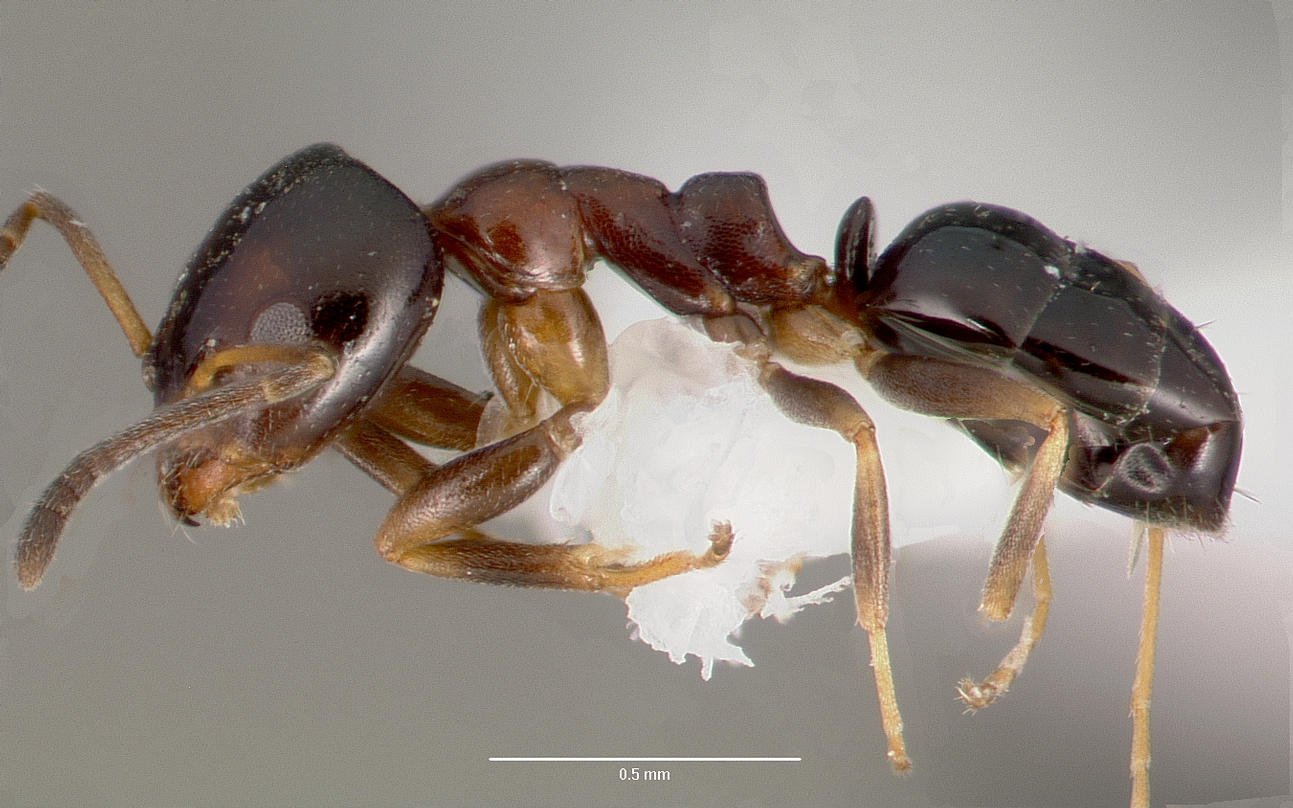
Small, shiny and black, and one of the most common kitchen ants in Sydney. It trails along skirting boards, window frames and power cables, and nests in wall voids, roof spaces and garden edges. It readily takes sweet baits.
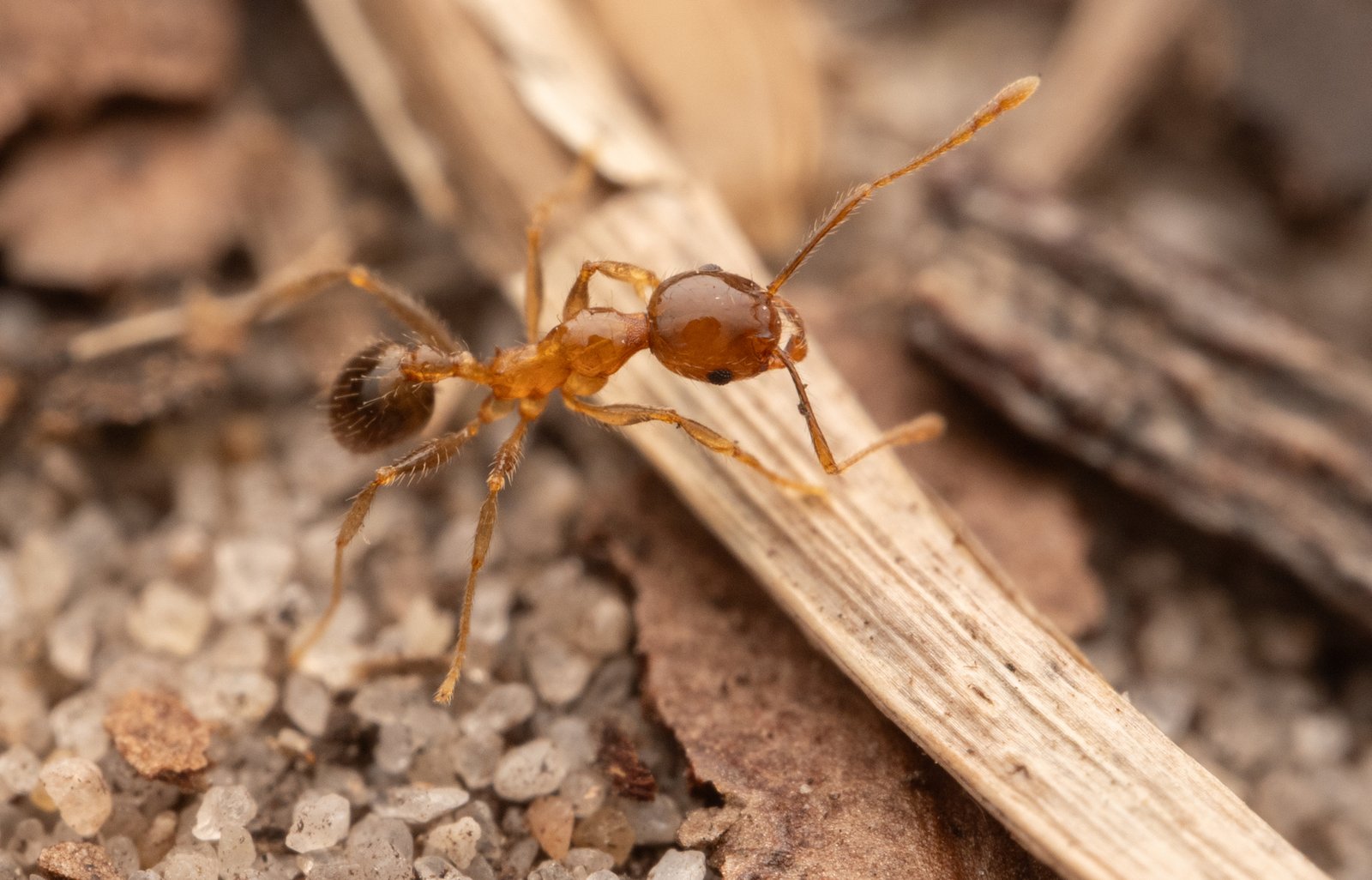
Tiny brown ants with a larger-headed soldier caste. The giveaway is loose sandy soil pushed up between pavers, along slab edges and in grout. Colonies are large with many nests, and oil-based granular baits work well.
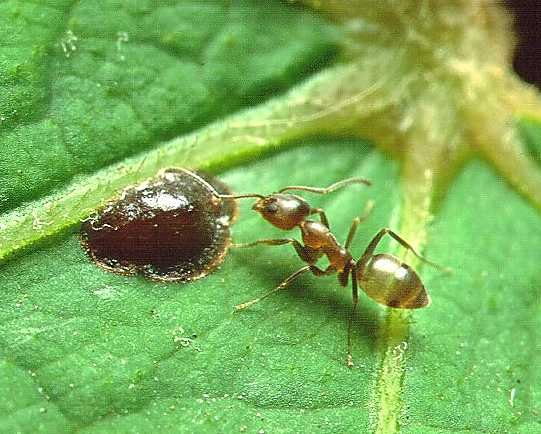
Small, dull brown and fast-moving in thick trails. Nests hold many queens and connect with neighbouring nests, so infestations can stretch across several properties. Repellent sprays are especially counter-productive with this species.
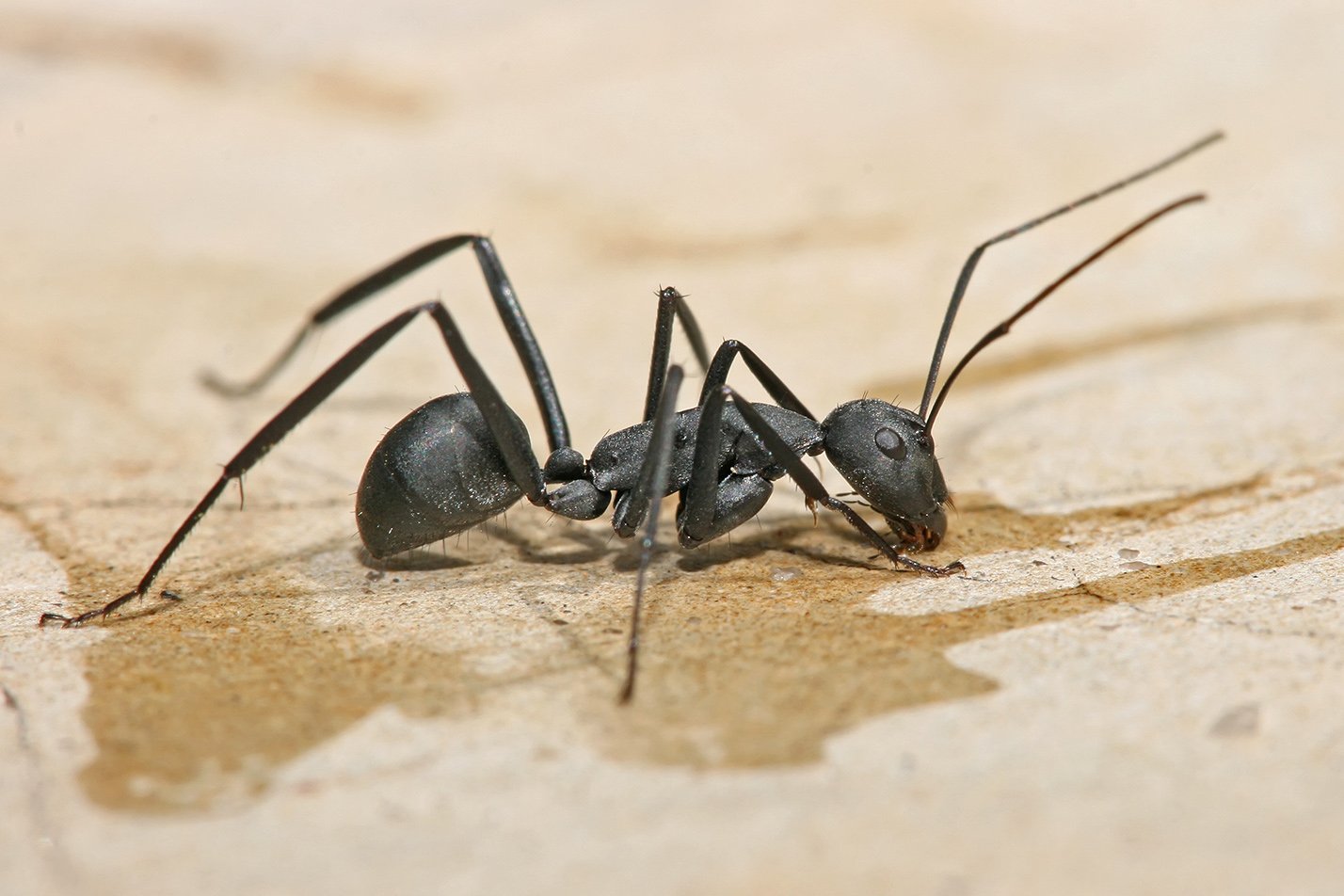
Large ants, often active at night, that nest in soil, hollow trees and softened or damp timber. Unlike the notorious overseas species they are rarely a structural pest, but a nest in a wall often points to a leak worth fixing.
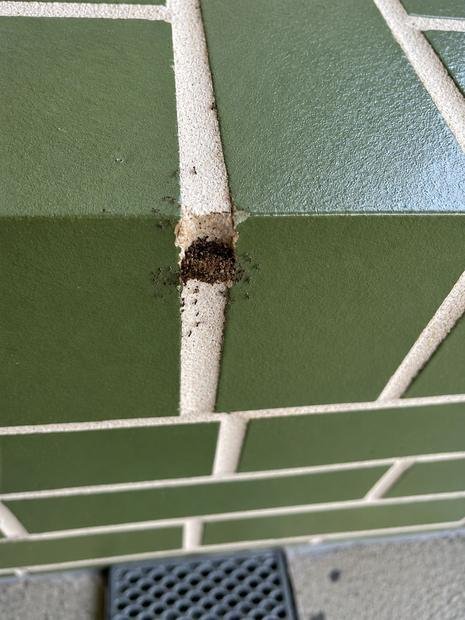
Photo from an Elite job: an ant nest emerging from a mortar joint. Weep holes and cracked mortar lead straight into the wall cavity, which is where many black house ant colonies live.
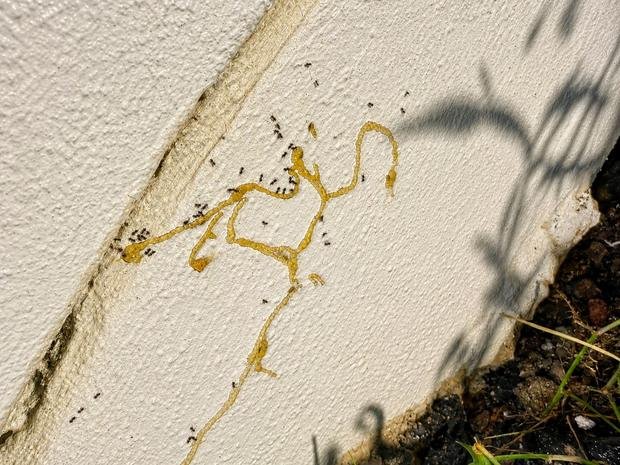
Photo from an Elite job: gel bait placed along an active trail. The ants are left to feed and carry the bait home, so we ask customers not to wipe or spray the trail afterwards.
Where ants appear usually tells us where the nest is and which species we are dealing with.
Ants arriving from the outside wall usually nest in the cavity or garden edge. The entry point is where we start tracing.
Fine soil pushed up along paving, driveways and slab joints is the classic sign of coastal brown ants nesting underneath.
Ants nesting in switches and electrical fittings are drawn to the warmth. Do not spray into power points; tell us so we can treat safely.
Swarms of winged ants in spring and summer are mating flights. Seen indoors, they can mean a mature colony inside the building.
Trails around the shower, vanity or toilet often mean moisture in the wall or a colony drinking from a slow leak.
Bull ants and jumper ants nest in lawns and garden beds. Their stings hurt and can cause serious allergic reactions in some people.
Talk to a licensed Sydney technician today — honest advice and a fixed quote within 30 minutes.
Species with many queens, such as Argentine ants and several house ants, respond to a repellent spray by relocating. A few hundred workers and a queen move to a new spot, and you now have two colonies instead of one.
Supermarket sprays are repellent: ants detect them and walk around them. Professional non-repellent products are not detected, so foragers walk through, pick up the active and carry it back to nest mates.
A colony only takes bait if it wants that food at that moment. Ants switch between sugar and protein as their brood needs change, so we test preferences and change baits when needed.
Bait takes days to work through a colony. If you spray the trail the day after we leave, you kill the couriers. Our blog explains budding in more detail.
Tracing first, then baits and non-repellent products that do the work after we leave.
We identify the ant and follow trails back to entry points and nests in walls, paving, garden edges and roof spaces.
Small amounts of sweet, protein and oil-based bait show what the colony is feeding on right now.
Gel bait goes along trails, window frames and skirting where ants travel, out of reach of children and pets.
A non-repellent treatment around the foundation, weep holes, door frames and paths intercepts ants coming in.
Granular bait or direct treatment for coastal brown ant nests under pavers and in lawn edges.
You get a summary, advice on what not to spray, and a 6-month warranty on the general treatment.
The same bait does not suit every ant. This is how we choose.
| Species | Usually feeding on | Treatment approach | Common mistake |
|---|---|---|---|
| Black house ant | Sugary liquids and honeydew, plus protein when raising brood | Sweet gel bait on trails, non-repellent perimeter at weep holes and frames | Wiping trails with detergent daily, which keeps the colony foraging elsewhere |
| Coastal brown ant | Protein and oils | Oil-based granular bait on paving and lawn edges | Pouring boiling water or insecticide into one pile while dozens of nests remain |
| Argentine ant | Sugars, with protein at times | Slow-acting baits plus non-repellent treatment across the property line | Repellent barrier sprays, which split multi-queen nests |
| Sugar ants (Camponotus) | Sweet foods and insects, mostly at night | Night-time trail inspection, bait near the nest, fix moisture in timber | Treating only in daylight when the ants are not active |
| Bull ants and jumper ants | Insects and nectar outdoors | Direct nest treatment in lawns and garden beds | Digging into the nest by hand and getting stung |
| Time of year | What is happening | What to watch for |
|---|---|---|
| Early spring (Sept to Oct) | Colonies wake up and start raising new brood, so protein demand rises | First trails indoors, sand piles reappearing in paving |
| Late spring to summer (Nov to Feb) | Peak foraging, mating flights after warm humid weather | Winged ants, heavy trails after storms and heatwaves |
| Autumn (Mar to May) | Colonies are at full size and stock up before cooler weather | Trails into pantries and pet food |
| Winter (Jun to Aug) | Outdoor activity slows, but nests in heated walls keep going | Ants around heaters, hot water units and kitchens |
Most failed ant treatments come down to what happens in the week after.
Sandy soils in the Eastern Suburbs, the Sutherland Shire and along the Northern Beaches suit coastal brown ants under paving, while black house ants move through the brick cavities of homes all over the Inner West and the Hills. In apartment buildings, ants often travel along service pipes between units and balconies, so a treatment of one lot may need a look at common property too.
Ants are part of our general home pest treatment, which also covers cockroaches and spiders. For more on identifying species, read common Sydney ant species, and if ants are coming out of damaged timber, book a termite inspection.
Reviewed by Ismail, Founder · NSW Pest Management licence 5122967 · Updated September 2026
Trails are traced to the colony, not just sprayed where you saw them.
Sweet, protein or oil-based baits chosen for the ant and the season.
Non-repellent products that foragers carry home, instead of sprays that scatter the colony.
General ant treatments are covered. If ants come back within 6 months, so do we.
Local technicians servicing 380+ suburbs — fast.
Everything you need to know before you book. Still unsure? Call us — we're happy to help.
Get a Free QuoteAnt treatment starts from $89. The fixed price depends on the size of the property, how many areas have trails, whether paving and lawns need treating, and the species. We confirm the price before starting, and general ant treatments come with a 6-month warranty.
You often see more ants on the bait for the first day or two, which is good: they are collecting it. Activity usually drops noticeably within several days, and large multi-nest colonies can take one to two weeks. Do not wipe or spray the trail while the bait is working.
Household sprays kill the foragers you can see but not the queens and brood in the nest. In species with many queens, the stress can also cause budding, where the colony splits and moves. The result is more nests in more places, which is why we use baits and non-repellent products.
That is almost always the coastal brown ant, one of the most common ants around Sydney homes. Workers carry fine soil up through gaps in paving, slab joints and grout. Granular baits spread along the affected paving usually give good control of the colony underneath.
Yes, when applied properly. We use APVMA-registered products, place gel baits in cracks and along frames rather than open floors, and keep granular bait away from areas pets dig. Keep pets off treated paths and lawns until they are dry, and tell us about any animals that eat soil or plants.
Rarely. Some large ants nest in damp or decayed timber, but they do not eat wood the way termites do. If ants are coming from inside timber, the timber is usually already soft from moisture, and it is worth a termite inspection to rule out termites.
Keep children and pets away from the nest and do not dig into it. Stings are painful, and some people have severe allergic reactions. Anyone with swelling of the face or throat, trouble breathing or collapse needs 000 straight away. We can treat nests in lawns and garden beds.
Fire ants have been detected in far northern NSW, not established in Sydney. They are small, coppery-brown with a darker abdomen, and build dome-shaped soil mounds with no obvious entry holes. If you suspect fire ants anywhere in NSW, do not disturb them and report them to NSW DPIRD on 1800 680 244.
Heavy rain floods ground nests, so colonies move up into wall cavities and buildings. Hot, dry spells send foragers looking for water, especially in kitchens and bathrooms. That is why many Sydney ant calls come in spring and summer, right after a storm or a heatwave.
If ants covered by your general treatment return within 6 months, we come back and re-treat at no charge. The conditions, such as not spraying repellent products over the treated areas, are confirmed in writing on your service summary before we leave.
Photographs from Elite jobs across Sydney — not stock imagery.
Fast, friendly, fully insured technicians. No-obligation quote within 30 minutes.