Budding splits the colony
Species with many queens, such as Argentine ants and several house ants, respond to a repellent spray by relocating. A few hundred workers and a queen move to a new spot, and you now have two colonies instead of one.

Ant Control in Pennant Hills 2120 — local technicians, fixed prices and a written report. Ant treatment starts from $89.
Real, verified feedback from people we've helped — straight from Google.
Local technicians, fixed prices and a written report for every job in Pennant Hills.
Pennant Hills sits about 19.2 km north-west of the CBD in the Ryde & the Northern District, and postcode 2120 is one we are in most weeks. We run Pennant Hills on a regular route, and same-day attendance is usually available.
Most weeks we are somewhere between Observatory Park and Oakleigh Park in Pennant Hills, and Pennant Hills Marketplace is close enough to be on the same run.
Beecroft, Westleigh and Thornleigh are all on the same route as Pennant Hills. Terraces, semis and converted blocks share cavities and risers, which is why a single-unit treatment often does not hold on its own.
The bulk of our Pennant Hills work is apartments and converted blocks where the kitchen backs onto a service riser. Mention the detail when you call 1300 313 373 - it decides how long we need on site.
We cover the remainder of 2120 as well, from Thornleigh Marketplace through to Pennant Hills station.
The 2120 run is set the day before and you are given an arrival time. Where Beecroft and Westleigh fall on the same round, we can usually bring the visit forward.
Where we find ants in a Pennant Hills wall or frame, we look for the water first. Fix the leak and the timber dries; leave it and another colony will use the same cavity.
Pharaoh and some other small species nest indoors in warm voids and never go outside at all. In a Pennant Hills house that changes the treatment completely - and makes spraying actively harmful, because it buds the colony.
A colony can occupy a garden bed, a paving slab and a wall cavity at once. That is why a single treated nest in Pennant Hills changes very little on its own.
Each of these behaves differently, so the bait and the placement change too. Two photos come from our own jobs.
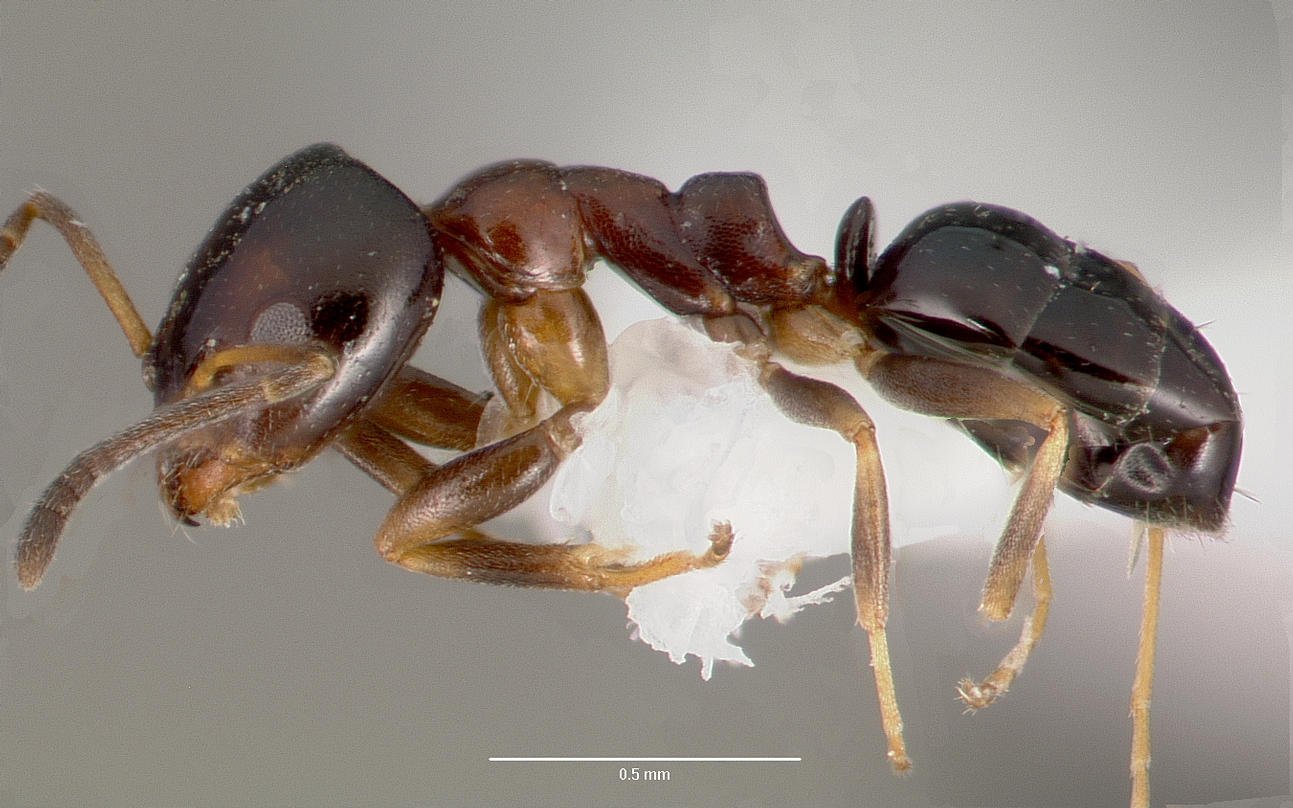
Small and shiny black. It is the usual kitchen ant here, trailing along skirting boards, window frames and power cables from nests in wall voids, roof spaces and the garden edge, and it takes sweet bait easily.
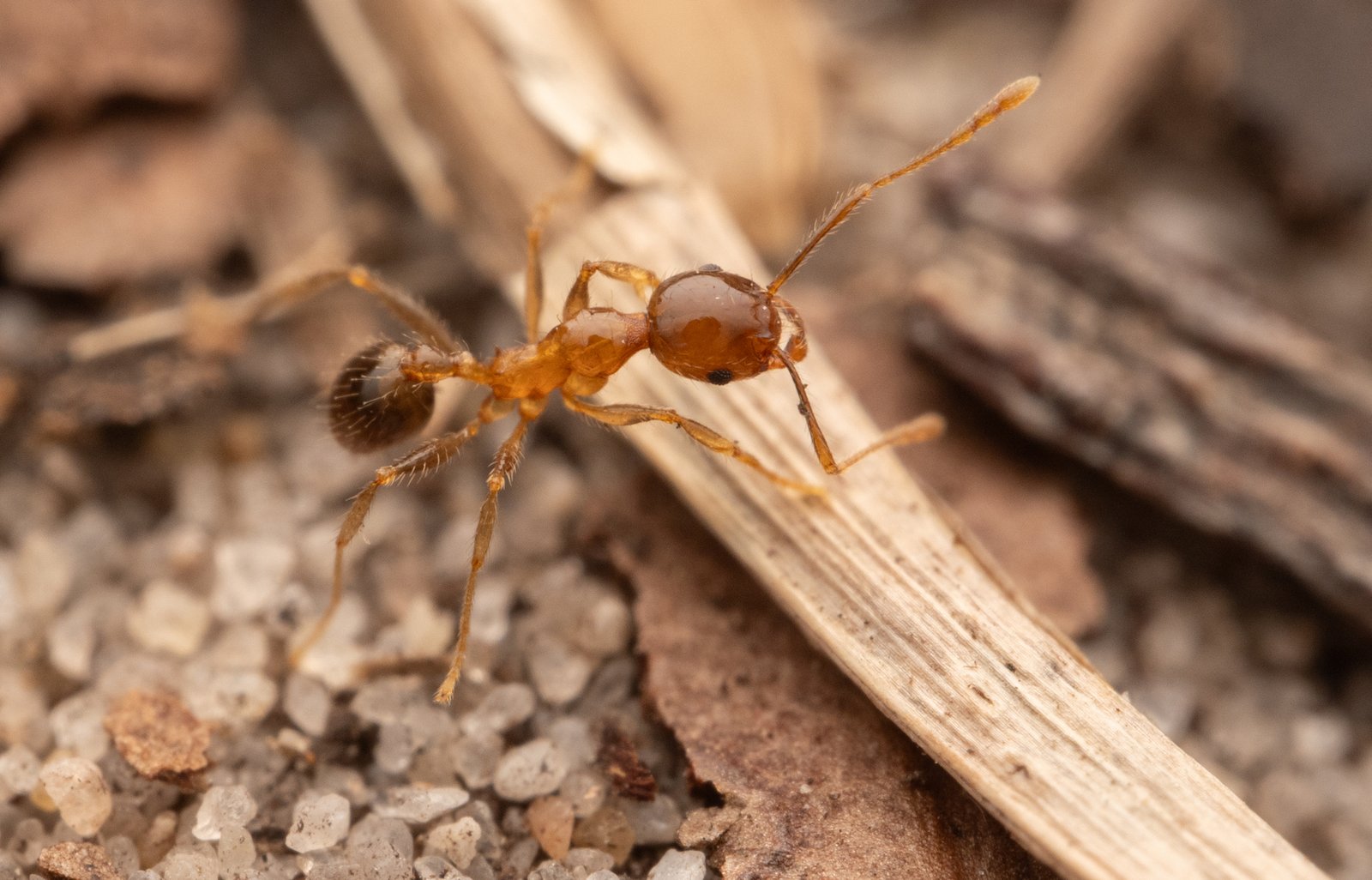
Tiny brown ants with a larger-headed soldier caste. The giveaway is loose sandy soil pushed up between pavers, along slab edges and in grout. Colonies are large with many nests, and oil-based granular baits work well.
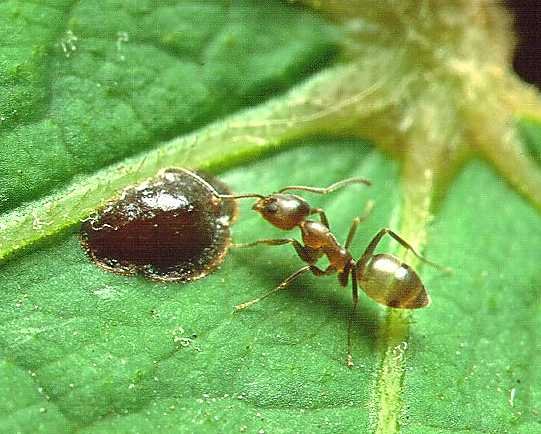
Fast-moving, small and dull brown, in thick trails. Its nests are multi-queen and interconnected with neighbouring nests, so it spreads across properties - and repellent sprays accelerate exactly that.

These are the large night-active ants that nest in soil, hollow trees and timber that has softened with damp. Structural damage is uncommon in Australia, but a wall nest points to a leak worth chasing.
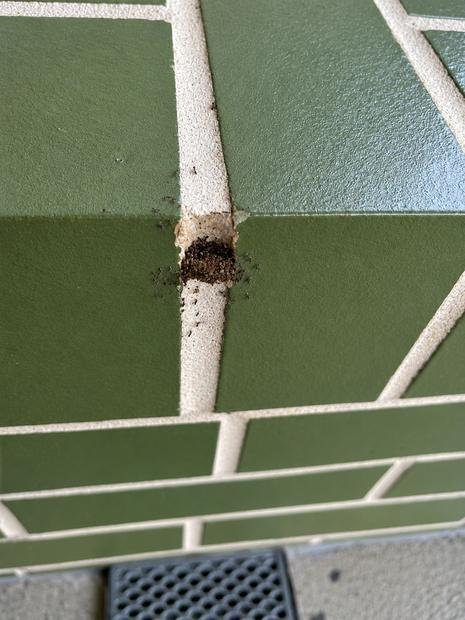
Photo from an Elite job: an ant nest emerging from a mortar joint. Weep holes and cracked mortar lead straight into the wall cavity, which is where many black house ant colonies live.
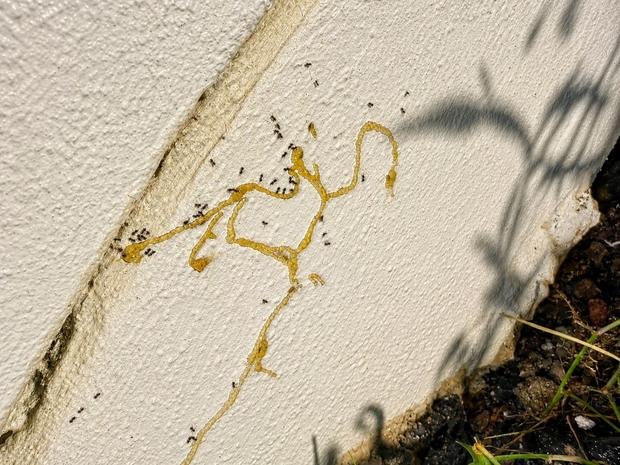
An Elite job photo: gel placed directly on an active trail. Leave it be - the ants feeding there are the ones delivering it to the colony.
Where ants appear usually tells us where the nest is and which species we are dealing with.
A trail in from the outside wall means the colony is in the cavity or the garden edge - the entry point is what we follow.
Fine sand pushed up through paving, driveway and slab joints is coastal brown ants underneath, almost without exception.
They go into switches and appliances for the warmth. Keep insecticide out of power points and tell us, so it can be treated safely.
Winged ants swarming in the warmer months are reproductives on a mating flight. Indoors, that can indicate an established colony within the structure.
When trails appear around the shower, vanity or toilet, moisture is the reason - often a slow leak the colony is drinking from.
Bull ants and jumper ants nest in lawns and garden beds. Their stings hurt and can cause serious allergic reactions in some people.
Speak to a licensed Sydney technician now. Straight advice, and a fixed quote inside 30 minutes.
Species with many queens, such as Argentine ants and several house ants, respond to a repellent spray by relocating. A few hundred workers and a queen move to a new spot, and you now have two colonies instead of one.
Ants can detect a supermarket spray and will simply route around it. A professional non-repellent is undetectable, so they walk through it and carry the active home to the colony.
A colony only takes bait if it wants that food at that moment. Ants switch between sugar and protein as their brood needs change, so we test preferences and change baits when needed.
Bait takes days to work through a colony. If you spray the trail the day after we leave, you kill the couriers. Our blog explains budding in more detail.
Tracing first, then baits and non-repellent products that do the work after we leave.
Identification comes first. Then we trace the trails to the entry points and the nests themselves, whether those are in walls, paving, garden edges or the roof.
We put out small quantities of sweet, protein and oil-based bait to see which the colony is actually taking today.
Gel is placed on the trails themselves - along window frames and skirting boards - and positioned out of reach of children and pets.
A non-repellent treatment around the foundation, weep holes, door frames and paths intercepts ants coming in.
Granular bait, or direct nest treatment, for the coastal brown ant nests under paving and at lawn edges.
You get a summary, advice on what not to spray, and a 6-month warranty on the general treatment.
The same bait does not suit every ant. This is how we choose.
| Species | Usually feeding on | Treatment approach | Common mistake |
|---|---|---|---|
| Black house ant | Sugars and honeydew, turning to protein while brood is being raised | Sweet gel on the trails themselves, with a non-repellent at weep holes and frames | Cleaning the trail off every day, which just sends them foraging somewhere else |
| Coastal brown ant | Protein and oily foods | Oil-based granular bait over paving and lawn margins | Attacking a single visible nest while the rest of the colony's nests carry on |
| Argentine ant | Mainly sugars, protein at some points in the cycle | Slow-acting bait with a non-repellent treatment right across the boundary | Spraying a repellent barrier, which causes a multi-queen nest to bud |
| Sugar ants (Camponotus) | Sweet foods and insects, mostly at night | Night-time trail inspection, bait near the nest, fix moisture in timber | Treating only in daylight when the ants are not active |
| Bull ants and jumper ants | Insects and nectar, always outside | The nest itself is treated directly, in lawn or garden bed | Hand-digging a nest, which reliably ends in stings |
| Time of year | What is happening | What to watch for |
|---|---|---|
| Early spring (Sept to Oct) | The colony restarts and begins brood production, raising its protein needs | First trails inside, and sandy soil showing up in paving joints |
| Late spring to summer (Nov to Feb) | Foraging peaks, and warm humid spells trigger mating flights | Swarms of winged ants, and heavy trails following storms or heatwaves |
| Autumn (Mar to May) | Colonies are at full size and stock up before cooler weather | Trails into pantries and pet food |
| Winter (Jun to Aug) | Quiet outside, but colonies in warm wall cavities keep working | Ants around the heater, the hot water unit and the kitchen |
Most failed ant treatments come down to what happens in the week after.
Brick cavities are dry, warm and undisturbed, which makes them ideal nesting. The weep hole is the doorway and it is usually where we start on a Pennant Hills job.
Honeydew is a sugar supply the colony will defend. We point out the plant on a Pennant Hills job because otherwise the trail simply re-establishes.
Anywhere in 2120, or over toward Beecroft, is inside the area we treat at the same price.
The trail gets traced to its source. Spraying where you saw ants achieves very little.
Sweet, protein or oil-based, picked to suit the ant and the point in the season.
Sprays that scatter a colony are avoided entirely in favour of non-repellents the ants deliver themselves.
If ants return within 6 months of a general treatment, we return at no charge.
Everything you need to know before you book. Still unsure? Call us — we're happy to help.
Get a Free QuoteAnt treatment starts from $89. Two things move it: how big the place is, and how far it has already spread. We work that out on the phone or on site and tell you the figure before anything starts in Pennant Hills. Every general treatment carries a 6-month warranty.
Same-day attendance is usually available. Our Ryde & the Northern District technicians cover Pennant Hills daily, and you get a confirmed arrival time when you book.
The housing stock is old and joined together. A shared wall cavity or a continuous sub-floor lets ants travel from one property to the next, which is why your neighbour matters.
Joined housing with ageing drainage. That combination decides where product goes far more than the floor plan does.
Yes. Houses, townhouses, units, strata common property, rentals and commercial sites in Pennant Hills 2120 are all part of what we do, and the paperwork is the kind agents accept.
Yes, when it is applied properly. We use registered products at label rates and tell you which areas to keep clear and for how long. Mention pets, fish tanks or allergies when you book.
Usually not. Most ant control work is done with you there, and anything that needs the room vacated is for a short period we will tell you about beforehand.
For a standard Pennant Hills home, one to two hours. We would rather tell you it will take longer up front than rush it.
Every general treatment carries a 6-month warranty. If it is not holding, call us - that is exactly what the warranty is for.
Yes. As well as Pennant Hills we cover Beecroft, Westleigh, Thornleigh and Cheltenham on the same runs, so a job that crosses a boundary can be handled in one visit.
Photographs from Elite jobs across Sydney — not stock imagery.
Fast and fully insured, with a no-obligation quote back to you within 30 minutes.