Repairing the damage
Hold off on repairs until we confirm the colony is no longer active. Replacing timber too early can remove the bait termites were feeding on. A builder should assess structural members like bearers, studs and roof timbers.

Found live termites? We trace the colony's path into your home, eliminate it with baiting or a soil treatment, and protect the building so a new colony can't walk straight back in.
Real, verified feedback from people we've helped — straight from Google.
Spraying the termites you can see in a skirting board kills a few hundred workers and sends the rest of the colony off to find another way in. The nest, often in a tree stump, under a slab or in the ground metres from the house, keeps feeding. Real termite control means ending the colony, then closing the gaps it used.
Elite treats active subterranean termites in Sydney homes, strata buildings and commercial properties using the approaches AS 3660.2 sets out for existing buildings: in-ground and above-ground baiting, chemical soil barriers, or both together. We choose based on where the activity is, how the building is constructed and what surrounds it, such as concrete paths, gardens or a pool.
Treatment starts from $179 for a targeted application, and every job gets a fixed written quote once we have confirmed the species and how far the activity has spread. Haven't had the property checked yet? Start with a termite inspection so treatment is aimed at the right places.
Photos from our own Sydney termite jobs. Most properties need one primary method, and some need two working together.

Stations set into the soil around the building. Once termites find the timber inside, it is swapped for bait they carry back to the nest, which is how the colony is eliminated.
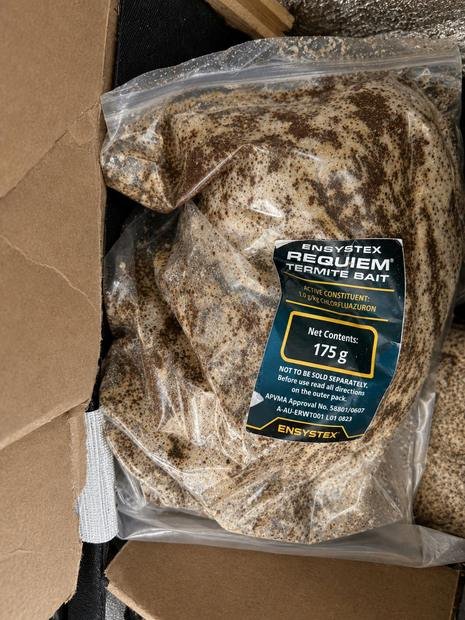
Stations are opened on a schedule to check for feeding and top up bait. Missed checks are a common reason baiting programs stall.
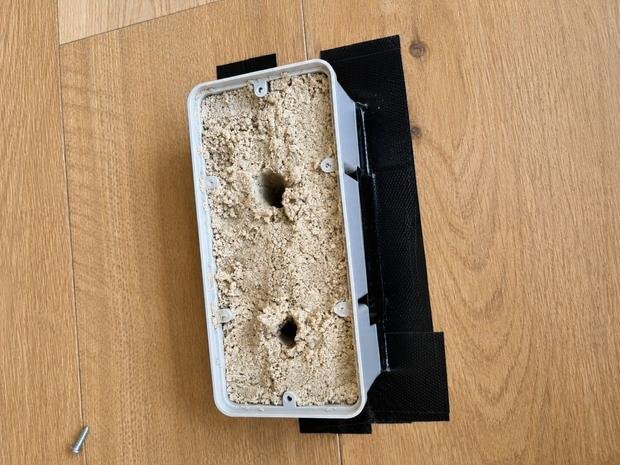
Where termites are working inside a wall or door frame, bait can be fixed directly over the active workings so the colony starts feeding straight away.
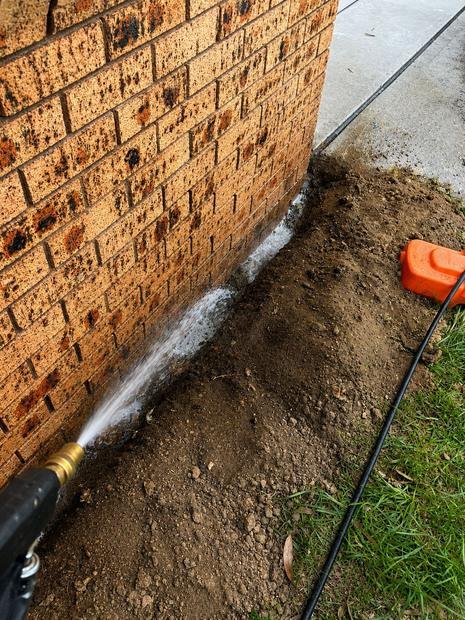
Termiticide applied into a trench along the footings, or injected through drilled holes in paths and slabs, creating a treated zone in the soil around the building.

In suspended floors, the soil around piers and along the walls is included, because subfloors are where concealed activity very often begins.

We show you where timber has been eaten so a builder can assess repairs, which should wait until the colony is confirmed dead.
What you do in the first day or two affects how quickly the colony can be eliminated.
Surface sprays and insect bombs kill the workers in sight and make the rest abandon that feeding site, leaving nothing for bait to work on.
Leave mud tubes and damaged timber intact. Broken workings dry out and termites may retreat, which slows treatment.
Photograph mud tubes, damaged timber or winged insects and note where you saw them. It helps us plan the visit.
Check for leaking taps, hot water overflow or air conditioner drip lines near the spot. Damp soil draws termites and needs fixing too.
Subterranean termites keep eating while you wait. Same-day and next-day inspections of active termites are available across Sydney.
In a unit or townhouse, activity in one lot often involves common property, so let the strata manager know early.
Talk to a licensed Sydney technician today — honest advice and a fixed quote within 30 minutes.
Both are recognised approaches for existing buildings under AS 3660.2. The right choice depends on your property.
| Consideration | Baiting system | Chemical soil barrier | Combination |
|---|---|---|---|
| Main job | Eliminates the colony feeding on the building | Creates a treated zone so termites travelling through the soil are affected | Removes the active colony and protects against new ones |
| How it goes in | Stations in the soil around the perimeter, plus bait on active workings | Trenching along footings, and drilling and injecting through paths and slabs | Bait first, then the soil treatment once the colony is gone |
| Disturbance | Minimal: no drilling of paths or digging of garden beds | Small holes drilled in paving and later sealed; digging along gardens | Spread across staged visits |
| Upkeep | Stations checked on a regular schedule and kept as monitoring | Service life depends on the product label and site; can be re-applied | Station checks continue while the barrier works |
| Suits | Active termites, heavily paved sites, or where chemical use needs limiting | Homes with good access to soil around the footings | Heavy activity, repeat attacks or high-risk sites near bushland |
Want more detail? Our guide to chemical, physical and baiting systems compares them side by side.
Termite treatment is a program over several visits, not a one-off spray.
We identify the termites, trace mud tubes and workings, and check the roof void, subfloor and garden for the likely nest and entry points.
You get a fixed quote naming the method, areas to be treated, products and the follow-up visits needed.
Bait goes onto active workings or into in-ground stations, or termiticide is applied to the soil where termites travel.
Return visits check feeding and top up bait until activity stops. Timing depends on colony size and season.
Once the colony is gone, we recommend a soil barrier, ongoing station monitoring, or both, to lower the risk of a new attack.
You receive a written record of what was applied and where, plus a recommended date for your next timber pest inspection.
Treatment starts from $179. Your fixed quote comes after we've seen the activity.
| Factor | Why it changes the price |
|---|---|
| Where the activity is | Termites in one door frame need far less work than activity spread through a subfloor and wall frames |
| Method chosen | Above-ground baiting, in-ground stations and full soil barriers use different amounts of product and labour |
| Perimeter length & access | Long perimeters, low subfloor clearance and narrow side passages add time |
| Concrete & paving | Paths, patios and garage slabs that must be drilled and injected take longer than open soil |
| Follow-up visits | Baiting needs return visits until the colony is gone, and larger colonies can need more of them |
| Building type | Strata buildings, commercial sites and homes with extensions or granny flats are scoped individually |
For typical scenarios, read how much termite treatment costs in Sydney. Warranty terms for termite work are confirmed in writing with your quote.
Hold off on repairs until we confirm the colony is no longer active. Replacing timber too early can remove the bait termites were feeding on. A builder should assess structural members like bearers, studs and roof timbers.
In-ground stations sit flush with the soil and have locking lids. Don't move them, bury them under mulch or pour concrete over them. Tell us before landscaping so stations can be relocated.
Treated soil works best left undisturbed. New garden beds, pavers or a deck against the house can break the treated zone, so call us before those works.
AS 3660.2 generally recommends inspections at least every 12 months, and more often in high-risk areas. After treatment, regular inspections are what catch a new colony early.
Treatment removes the colony. These property conditions attract the next one, and most are cheap to fix.
The most serious termite damage in Sydney is generally caused by subterranean species, particularly Coptotermes, which can nest in trees, stumps and the ground and forage well away from the nest. Warm, humid summers suit them, and so do conditions found across many suburbs: bushland edges in the Hills, the Northern Beaches and the Sutherland Shire, older timber-floored cottages in the Inner West, and heavily landscaped blocks on the North Shore.
Winged termites flying out on warm, humid evenings, usually from spring into summer, are a sign that a mature colony is close by. If you see them indoors, book an inspection. To understand the risk, read why subterranean termites thrive in Sydney, or see pre-construction barriers if you are building.
Reviewed by Ismail, Founder · NSW Pest Management licence 5122967 · Updated September 2026
NSW licence 5122967, with termite work planned around AS 3660.2 for existing buildings.
We work out where termites are coming from before choosing a method, rather than spraying what's visible.
Products, areas treated and follow-up visits recorded for your files, insurer or a future buyer.
Return visits are built into the program so baiting is never left half-finished.
Local technicians servicing 380+ suburbs — fast.
Everything you need to know before you book. Still unsure? Call us — we're happy to help.
Get a Free QuoteTermite treatment starts from $179 for a targeted application. Most jobs cost more than that, because the price depends on where the termites are, the method needed, the length of the perimeter, how much concrete must be drilled and how many follow-up visits are required. We look at the activity first and give you a fixed written quote before anything is applied.
No. Spraying kills the workers you can see and makes the rest of the colony abandon that feeding point, so there is nothing left for bait to work on and the colony simply moves to another part of the house. Leave the mud tubes and damaged timber alone, take photos, and call a licensed technician.
It varies. Once termites are feeding well on bait, colonies are commonly eliminated over several weeks to a few months, depending on colony size, species and season, since feeding slows in cooler weather. We check stations on a schedule and confirm when activity has stopped before moving on to protection.
They do different jobs. Baiting is designed to eliminate the colony attacking the building. A chemical soil barrier creates a treated zone in the soil so termites entering from outside are affected. Many active infestations are handled with baiting first, then the building is protected with a soil barrier or ongoing monitoring.
Only for a chemical soil barrier where concrete paths, patios or slabs sit against the building. Small holes are drilled at close intervals, termiticide is injected into the soil underneath, and the holes are sealed. Baiting avoids drilling, which is one reason it suits heavily paved properties.
When applied by a licensed technician to the label, yes. We use APVMA-registered termiticides that go into the soil, into sealed bait stations or onto active workings, not across living areas. Keep children and pets away from open trenches until they are backfilled, and your technician will confirm any precautions for your property.
Wait until the colony is confirmed inactive. Removing damaged timber early can take away the feeding site the bait relies on, and new timber can be attacked if the colony is still alive. Once we confirm elimination, a licensed builder can assess and repair structural members such as bearers, studs and roof timbers.
Generally not. Most Australian home insurance policies exclude termite damage, so repairs usually come out of the owner's pocket. Check your own policy wording to be sure. That is why regular inspections and prompt treatment matter, since activity caught early costs far less to deal with.
Terms for termite work depend on the method used and whether ongoing inspections or station checks are kept up, so they are confirmed in writing with your quote rather than as one fixed period. The 6-month warranty shown on our website applies to general pest treatments, not termite work.
An inspection finds and reports on termite activity, damage and risk factors across the property. Treatment is the work that eliminates an active colony and protects the building. If you haven't seen live termites, start with an inspection. If you have, we inspect the activity as part of planning the treatment.
Photographs from Elite jobs across Sydney — not stock imagery.
Fast, friendly, fully insured technicians. No-obligation quote within 30 minutes.