Repairing the damage
Do not start repairs yet. Early timber replacement can remove the feeding site, and the colony needs to be confirmed dead first. A builder should look at the bearers, studs and roof timbers.

Termite Control in Beverley Park 2217 — local technicians, fixed prices and a written report. Termite treatment starts from $179 and a full timber pest inspection from $159.
Real, verified feedback from people we've helped — straight from Google.
Local technicians, fixed prices and a written report for every job in Beverley Park.
Beverley Park sits about 14.3 km south-west of the CBD in the St George & Bayside, and postcode 2217 is one we are in most weeks. We run Beverley Park on a regular route, and same-day attendance is usually available.
If you are near Kogarah Town Centre, Beverley Park Golf Club or Carlton station, that is ground we cover constantly - it is the busiest part of Beverley Park for us.
This is the Georges River and Bayside area, and our runs here also take in Kogarah Bay, Ramsgate and Allawah. Being this close to the coast, sub-floors and ground-floor bathrooms stay damp most of the year, which is the condition that keeps activity going.
What we see in Beverley Park is ground-floor units with a damp sub-floor, and houses where the garage sits below the living level. Describing it accurately when you book saves a second visit.
We also work the streets near Leighton Park and across toward Young Place Reserve - the whole of 2217 is covered.
The 2217 run is set the day before and you are given an arrival time. Where Kogarah Bay and Ramsgate fall on the same round, we can usually bring the visit forward.
The slab edge is meant to be visible so workings show. In a lot of Beverley Park properties landscaping has buried it, which hands termites an invisible route in.
Storm, fire and flood are covered. Termites are not, anywhere in Australia. A Beverley Park repair bill lands entirely on the owner, which is why the cheapest termite money you will ever spend is the inspection.
Coptotermes is the species that does most of the structural damage in Sydney, and it can nest inside a tree or a wall cavity as well as in soil. Identifying what is in the workings decides the Beverley Park treatment.
Photos from our own Sydney termite jobs. Most properties need one primary method, and some need two working together.

We install stations in the soil around the perimeter. They hold timber first; when termites start feeding on it we replace that with bait, and they take it home to the nest.
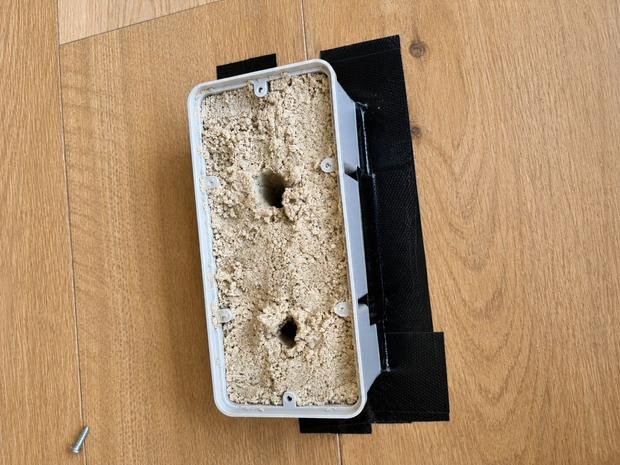
Stations are opened on a schedule to check for feeding and top up bait. Missed checks are a common reason baiting programs stall.
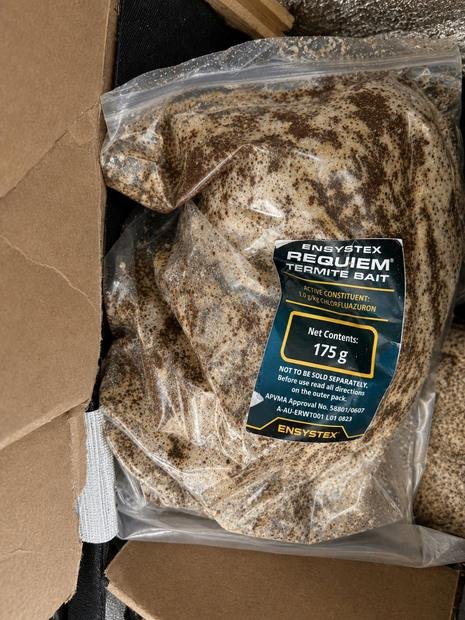
Bait fitted directly over live workings in a wall or frame. There is no waiting for termites to discover it - they are already there.
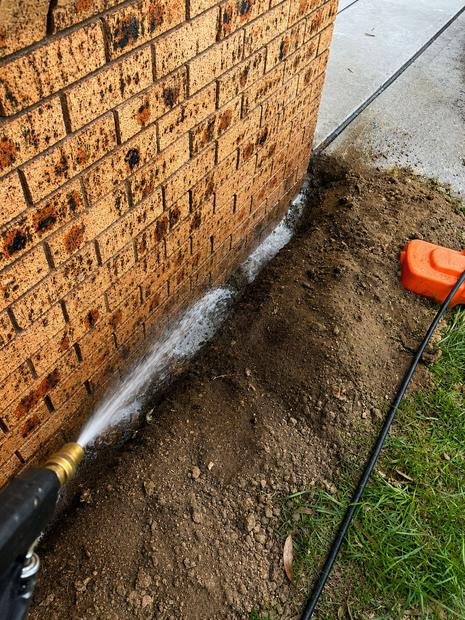
Termiticide applied into a trench along the footings, or injected through drilled holes in paths and slabs, creating a treated zone in the soil around the building.

With a suspended floor the piers and wall lines are part of the job. Most concealed termite activity we find started under the house.

You will be shown every piece of affected timber so a builder can price the repairs. Those repairs should wait until we have confirmed the colony is gone.
What you do in the first day or two affects how quickly the colony can be eliminated.
Surface spray and bombs are the worst thing to use here. The colony retreats from the treated area and you lose the access point we needed.
Tempting as it is, leave the workings whole. A broken tube dries, the termites pull back, and we lose the active site.
If you can, photograph what you found - tubing, damaged timber, flying insects - and tell us where. It shapes how we scope the inspection.
Moisture is usually part of the story: a leaking tap, the hot water overflow, the air conditioner condensate line. Damp soil pulls termites in, so it needs fixing too.
Don't sit on it. The colony keeps working, and we can usually inspect active termites the same or next day anywhere in Sydney.
In a unit or townhouse, activity in one lot often involves common property, so let the strata manager know early.
Get a licensed Sydney technician on the phone today - honest advice, fixed quote in 30 minutes.
Both are recognised approaches for existing buildings under AS 3660.2. The right choice depends on your property.
| Consideration | Baiting system | Chemical soil barrier | Combination |
|---|---|---|---|
| What it achieves | The colony feeding on the house is eliminated | Termites crossing the treated soil around the building are affected | Clears the current attack and defends against the following one |
| Method of install | Soil stations round the perimeter and bait onto the workings themselves | Trenching at the footings with drilling and injection through hard surfaces | Bait phase first, soil barrier second |
| Disruption to the property | Very little - no paths drilled, no garden beds dug up | Small holes through paving, sealed afterwards, and trenching along garden beds | Shared out over several staged visits |
| Looking after it | Stations get opened on a schedule and remain as a monitoring system | Label and site determine the service life; it can be re-applied later | Station monitoring continues for as long as the barrier is in service |
| Best suited to | Live activity, properties with a lot of paving, or where chemical use must be kept down | Houses with decent access to open soil along the footings | Serious activity, properties attacked before, or high-risk blocks near bush |
Want more detail? Our guide to chemical, physical and baiting systems compares them side by side.
Termite treatment is a program over several visits, not a one-off spray.
First the species, then the extent: we follow the mud tubing and workings and inspect the roof void, the subfloor and the garden for the nest and the way in.
You receive a fixed quote that names the method, the areas, the products and the return visits required.
Depending on the site: bait fixed to active workings, bait into in-ground stations, or termiticide into the soil where they move.
We keep coming back to read the feeding and refill bait until the activity ends. How long that takes depends on the colony and the time of year.
With the colony eliminated, the next question is protection - a soil barrier, continued station monitoring, or both together.
The job finishes with a written record of products and areas, and a recommended next inspection date.
Treatment starts from $179. Your fixed quote comes after we've seen the activity.
| Factor | Why it changes the price |
|---|---|
| Where they are working | A single affected door frame is a small job; activity through the subfloor and wall frames is not |
| The approach taken | Bait above ground, stations in the ground and a complete soil barrier are not comparable on product or labour |
| Size and access | The longer the perimeter and the tighter the subfloor and side access, the longer the job |
| Concrete to work through | Open soil can be trenched quickly; paths, patios and slabs have to be drilled and injected |
| How many visits | Baiting continues until elimination, so the colony's size decides how many return visits are needed |
| Kind of property | Strata, commercial and extended homes - including granny flats - are individually scoped |
For typical scenarios, read how much termite treatment costs in Sydney. Warranty terms for termite work are confirmed in writing with your quote.
Do not start repairs yet. Early timber replacement can remove the feeding site, and the colony needs to be confirmed dead first. A builder should look at the bearers, studs and roof timbers.
The in-ground stations are flush to the soil with locking lids. Leave them where they are - not buried in mulch, not concreted over - and tell us before any landscaping so we can relocate them.
Treated soil should not be dug up. If a garden bed, paving or a deck is going in against the house, call us before it does.
AS 3660.2 generally recommends inspections at least every 12 months, and more often in high-risk areas. After treatment, regular inspections are what catch a new colony early.
Treatment removes the colony. These property conditions attract the next one, and most are cheap to fix.
If you are anywhere in 2217, or over toward Kogarah Bay, you are inside the area we cover for inspections and treatment.
Around Beverley Park the risk is driven by what is in the soil and what the house is made of. Timber-framed homes with gardens against the slab edge are the ones we find activity in most often.
Termites do not respect boundaries. A neglected yard or a demolition next door in Beverley Park can push foraging onto your property, which is why we inspect fence lines and boundaries rather than only the house.
NSW licence 5122967, with termite work planned around AS 3660.2 for existing buildings.
Finding the source comes before picking a treatment. Spraying the visible workers is not a plan.
Products, areas treated and follow-up visits recorded for your files, insurer or a future buyer.
The follow-up visits are part of the program, so a baiting job does not get abandoned halfway.
Everything you need to know before you book. Still unsure? Call us — we're happy to help.
Get a Free QuoteTermite treatment starts from $179 and a full timber pest inspection from $159. We quote on the property rather than the postcode, so a unit in Beverley Park and a large house are priced differently. The figure is fixed before any work starts. Treatments carry a 6-month warranty and we re-inspect annually.
Same-day attendance is usually available. Beverley Park is about 14.3 km south-west of the CBD in the St George & Bayside, and we give you a firm arrival time rather than an all-day window.
Sandy ground drains fast but the humidity stays, which means the conditions under a house here suit termites in winter nearly as well as in summer.
Units near the water and houses set back from it, with damp sub-floors the common factor in both.
We do. A lot of our Beverley Park work is rentals and strata, so the report, the products used and the areas treated are all recorded in writing for whoever needs them.
It is, as long as you follow what we tell you on the day - usually keeping off treated surfaces for a couple of hours. Let us know at booking about young children, pets or an aquarium.
In most cases you can stay. Where an area does need to be left clear it is for a couple of hours at most, and we say so before we start.
Typically one to two hours on site. What extends it is size, access and how far the problem has gone, all of which are accounted for in the quote.
Treatments carry a 6-month warranty and we re-inspect annually. So if they turn up again within the warranty, ring us and we will attend.
Yes - we work right across the Georges River and Bayside area, which takes in Beverley Park and the suburbs around it.
Photographs from Elite jobs across Sydney — not stock imagery.
Fast, friendly, fully insured technicians. No-obligation quote within 30 minutes.