
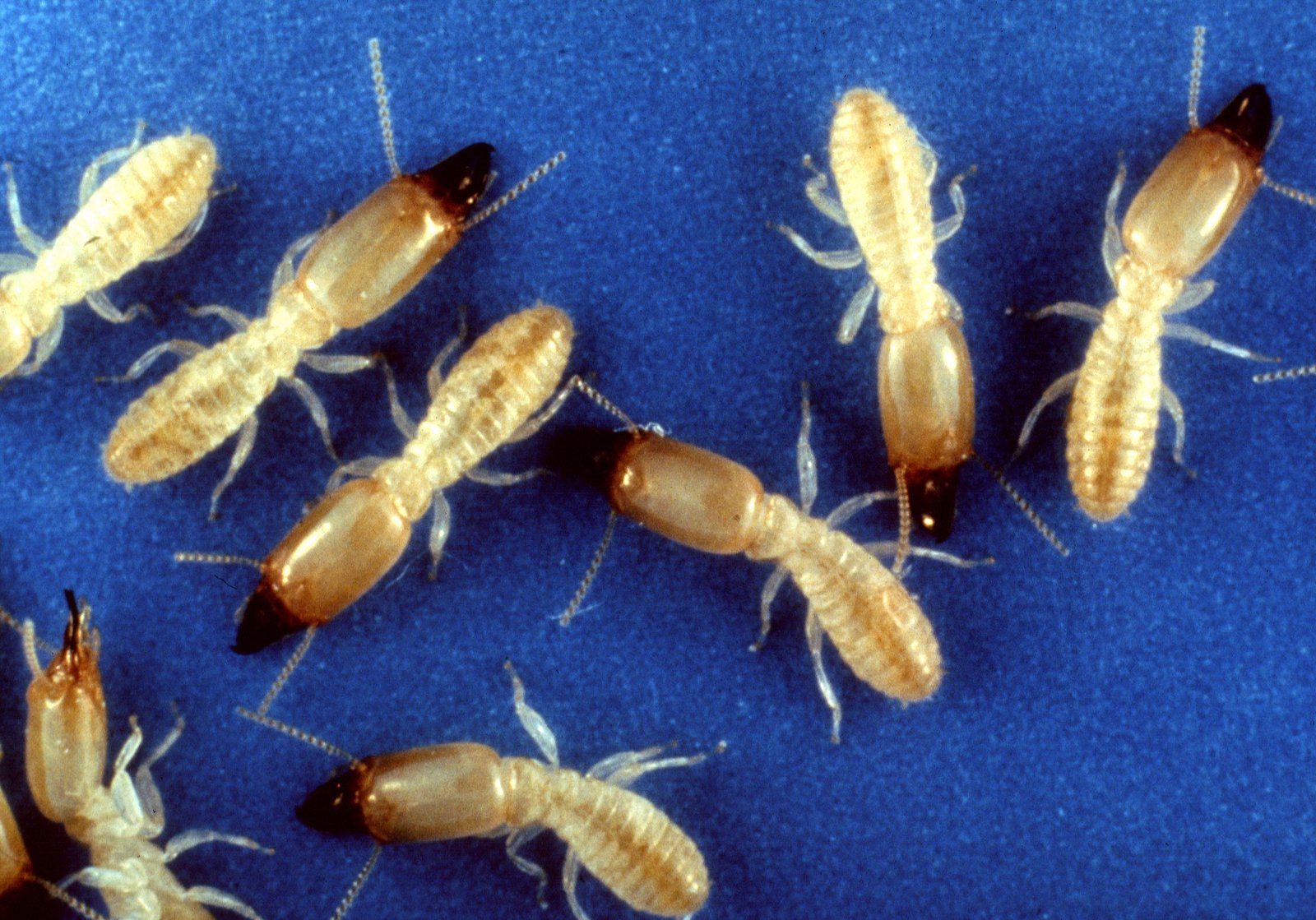
Termite control is an inspection problem before it is a treatment problem. A colony works inside timber for months before anything shows, which is why an annual inspection from $159 is the standard advice. If activity is found, a barrier or baiting system is quoted on the day. Do not disturb live workings.
- Start by working out what you have
- How to tell you have a problem
- Preparation that makes it work better
- What it costs in Sydney
- What this means if you have kids or animals
- Doing it yourself: the honest version
- Mistakes that make it worse
- Four things you can stop worrying about
- What to check before you book
- The guarantee, in plain terms
- Keeping it gone
- Frequently asked questions
Start by working out what you have
Almost every unsuccessful treatment starts the same way: the wrong product aimed at the wrong place. Termites are not a single problem with a single answer - the species, the entry point and the conditions around the building all change what works.
So the sequence matters: identify, locate, treat the source, then close the conditions. Skip a step and you are paying again within weeks.
Key points
- Fix the conditions - moisture, food, entry points - or it returns.
- Treat the source, not the sightings: the nest or harbourage is the target.
- Early action is consistently cheaper than waiting for certainty.
- Ask what the warranty covers and for how long.
We set out the full process, timelines and warranty terms under professional termite control.
How to tell you have a problem
The early evidence is usually subtle, and most of it is found in places nobody looks. Worth checking for:
- Doors and windows that start sticking without any change in the weather.
- Timber that sounds hollow or papery when you tap along it with a knuckle.
- Thin mud veneer filling cracks in skirtings, architraves or door frames.
- Paint or plaster that bubbles, ripples or cracks with no plumbing leak nearby.
- Small piles of discarded wings on windowsills after a warm, humid evening.
The more of these you can tick off, the longer it has been going on - which affects both the method and the price.
That is the case for booking an annual termite inspection rather than waiting for something to become obvious: it is the only stage at which the cost is small.
Preparation that makes it work better
Treatments work better when the technician can reach things. Before the appointment:
- Clear a path to the roof void or subfloor access if there is one.
- Vacuum carpets and hard floors, then empty the vacuum outside.
- Tell the technician what you have already applied yourself.
- Put food, utensils and pet bowls away or in sealed containers.
- Make a note of where you have seen activity and when.
The main thing afterwards is not to clean the treated surfaces for about a week. That one habit undoes more treatments than anything else.
What it costs in Sydney
Nobody can give a final figure sight-unseen, but the starting ranges are not a secret. Current rates:
| Service | From | Notes |
|---|---|---|
| Timber pest inspection with report | from $159 | Annual check; the report is the deliverable |
| Termite treatment or barrier | quoted on inspection | Depends on construction, soil and extent of activity |
| Rodent treatment and proofing | from $150 | Baiting or trapping, plus entry-point work |
| Commercial program | quoted per site | Scheduled servicing with documented reports |
| Flea treatment (internal) | from $160 | Preparation and vacuuming required beforehand |
You get a fixed quote before anything starts - not an estimate that moves on the day. General treatments include a 6-month warranty, so covered pests returning in that window are re-treated at no charge.
There is a fuller explanation of termite control, including what is and is not included.
What this means if you have kids or animals
Short answer, yes. The longer answer is about method:
- Products are APVMA-registered and applied at label rates by a licensed technician.
- Nothing is applied to food preparation surfaces or anywhere food is stored.
- Where a household has asthma, allergies or a newborn, the method is adjusted on request.
- You are given a specific re-entry time, usually just until treated surfaces are dry.
If anyone in the house has a specific sensitivity, tell us when you book - it changes which products we bring, not whether we can help.
You can see about the team and the qualifications behind the work.
Doing it yourself: the honest version
We would rather you spent $15 than $150 where $15 works. The problem is that past a certain point it does not:
- Without identification there is no way to know whether it is working or just scattering.
- Retail products kill what they touch and leave the nest or harbourage producing.
- Surface application misses the voids and cracks where the population actually lives.
- Spraying over bait placements makes them unpalatable and wastes the treatment.
So: one-off sighting, DIY. Repeat activity, damage risk, venomous species or a commercial premises, book someone licensed.
It is worth a look through the services we offer across Sydney, since what you are seeing may not be what you think it is.
Mistakes that make it worse
Things we routinely arrive to find, and what they cost:
- Spraying or disturbing a live termite trail, which scatters the colony and hides the problem.
- Letting an annual inspection lapse because nothing looked wrong.
- Relying on a hardware store product against a colony of hundreds of thousands.
- Assuming a previous treatment is still protecting the house years later.
None of these are unrecoverable - but tell the technician what has already been tried, because it affects what will work now.
Four things you can stop worrying about
A few of these come up on nearly every job:
- You would see them. Termites work inside timber and inside mud tubes. Most owners see damage long before they see an insect.
- A spray from the hardware store will do. Surface products kill the few termites they touch and leave a colony of hundreds of thousands intact.
- One treatment lasts forever. Barriers and baiting systems have a service life and need monitoring. An old treatment is not current protection.
- A brick house cannot get termites. Almost every Sydney home has structural timber in the roof, frame or floor. Brick veneer is a skin over a timber frame.
If you are not certain which pest you are dealing with, the full range of treatments we carry out lists what we treat and the signs that point to each.
What to check before you book
The cheapest quote is often the one that gets repeated. Things worth confirming:
- For termite work, ask whether you receive a written timber pest report.
- Be wary of a price quoted over the phone without any questions about the property.
- Check whether a follow-up visit is included or charged separately.
- Ask which method they intend to use and why that one.
- Confirm they hold current public liability insurance.
A good operator will answer all of those without hesitation. Hesitation on any of them is useful information.
Anyone you let into your home for this work should be licensed and insured, and licensed and insured technicians sets out ours.
The guarantee, in plain terms
Our general treatments are backed for six months. That is a re-treatment guarantee rather than a refund, which is what actually helps.
What it does not cover: a different species arriving later, a re-introduction you bring in yourself, or a recurrence driven by an unaddressed cause such as a leak or a gap we flagged. Termite work is warranted separately, with terms linked to ongoing inspection.
It goes on the invoice, so there is no ambiguity about what was covered six months later.
Most of the homes we look after are on a regular residential program rather than calling when something appears.
Keeping it gone
This is the part that decides whether you see us again. None of it is complicated:
- Keep soil, mulch and garden beds clear of the slab edge and weep holes.
- Direct downpipes and surface water well away from the footings.
- Keep subfloor vents clear so air moves under the building.
- Fix leaking taps, overflows and air-conditioning condensate promptly.
- Store firewood and timber off the ground and away from the house.
Even a couple of these makes a measurable difference, particularly anything involving moisture.
The alternative to treating reactively is an ongoing residential service, timed around the seasons above.
Frequently asked questions
What will treating termites cost?
Starting prices are $89 for a general treatment and $159 for an inspection with a written report. Anything larger is quoted on inspection rather than over the phone. The quote is fixed, so the invoice matches what you were told.
How often should I have a termite inspection?
Annually is the standard advice for Sydney, and more often for high-risk properties - those with a history of activity, a subfloor that holds moisture, or heavy planting against the walls. Termite damage is excluded from almost every home insurance policy, which is why the annual check is the cheap part.
Who pays in a rental or strata building?
For renters, report it to the agent in writing promptly, since that is often what decides responsibility. In a unit block the source is frequently outside your lot, and treating your own apartment repeatedly will not fix a population living in common property.
How long before the treatment works?
Residual treatments start working within hours, but colony and baiting treatments are deliberately slower - the product has to be carried back to the nest. Expect a clear reduction within a week to two, and do not be alarmed if activity briefly rises first.
What happens if they come back?
Yes - six months on general pest work. A recurrence of the treated pest inside that window is a free return visit. A different species arriving later is a new job, and a recurrence traced to an unfixed cause such as a leak sits outside the cover.
Can you come today?
Usually within a day or two, and same-day where there is a safety issue - a sting allergy in the household, young children with access, or live termite activity. We quote most jobs in about thirty minutes over the phone.
Are your technicians licensed and insured?
All of our technicians are licensed under NSW pest management requirements and insured. Pest control is licensed work in this state, so an operator who cannot produce a licence number should not be in your home.
What attracts termites to a house?
Almost always a combination of moisture and an easy entry point. Leaks, condensation, blocked gutters and irrigation do more to attract pests than untidiness does, which is why spotless homes get them too.
Want this sorted properly?
We treat termites across 650+ suburbs of Sydney. Fixed quote up front, licensed and insured technicians, child and pet-safe application, and general treatments backed for six months.