The roof void
Roof rats nest in insulation near warm spots such as downlights and hot water systems, and travel along top plates and ducting. Look for droppings along a line, grease smears on timber and chewed insulation or cabling.

Roof rats in the ceiling or brown rats under the house? Rat-specific stations, trapping and entry-point proofing for Sydney homes, from $89.
Real, verified feedback from people we've helped — straight from Google.
Sydney has two pest rats, and they behave like different animals. The roof rat (Rattus rattus, also called the black rat) is an agile climber that runs along fence tops, power lines and palm fronds into ceilings. The brown rat (Rattus norvegicus, the Norway or sewer rat) is a heavier digger that lives at ground level in burrows, drains and subfloors. Both were brought to Sydney with early European settlement, according to the Australian Museum.
Knowing which one you have decides where our stations go. Roof rats need treatment up high, on the beams and top plates where they travel. Brown rats need attention around foundations, garden beds, compost bays and the subfloor. Placing everything in the wrong zone is the most common reason DIY baiting fails.
We also think about what else eats rats. Poisoned rats are caught by dogs, cats and owls, so our programs use lockable stations, trapping where it suits and proofing that reduces the need for bait over time. You get a fixed price before we start.
Size figures are adult ranges published by the Australian Museum. In practice, where you find the signs is often the fastest clue.
| Feature | Roof rat (Rattus rattus) | Brown rat (Rattus norvegicus) |
|---|---|---|
| Tail | Longer than the head and body | Shorter than the head and body |
| Build | Slender, pointed snout, large thin ears | Heavier and more elongated, blunt muzzle, smaller ears |
| Adult weight | About 95–340 g | About 200–480 g |
| Colour | Usually grey-brown, despite the name “black rat” | Shaggy grey-brown above, paler below |
| Where it lives | Roof voids, wall cavities, trees, palms and dense climbers | Burrows, subfloors, drains, sewers, creek banks and compost |
| How it gets in | Overhanging branches, fences, cables, gaps under roof tiles and eaves | Gaps at ground level, under doors, broken vents and pipe penetrations |
| Typical sound | Running and thumping across the ceiling at night | Scratching under floorboards or in lower wall cavities |
Seeing small droppings in the pantry rather than the roof? That may be mice. For a side-by-side of rats and mice, see our rodent control hub.
Roof rats nest in insulation near warm spots such as downlights and hot water systems, and travel along top plates and ducting. Look for droppings along a line, grease smears on timber and chewed insulation or cabling.
Brown rats use subfloors in older Federation and inter-war homes, especially where vents are broken or bricks are missing. Nests of shredded material, fresh soil and droppings near piers are common finds.
Brown rats dig burrows along retaining walls, under sheds and slabs, and beside compost bins. Active entrances look smooth and clear of cobwebs, often with fresh soil pushed out and a worn track leading away.
Rats can move through stormwater and damaged sewer lines into a property. A broken pipe, an uncapped old drain or a loose inspection opening can let rats in from below, so we check these when activity keeps coming back.
Talk to a licensed Sydney technician today — honest advice and a fixed quote within 30 minutes.
Rats are more than a noise problem. These are the risks worth taking seriously.
NSW Health explains that Leptospira bacteria can be present in rat urine and enter through cuts or the lining of the eyes, nose and mouth. Early symptoms include fever and severe headache.
NSW Health also links rodents to rat bite fever and gastro illnesses such as salmonellosis. Wear gloves and wet-clean with disinfectant when handling droppings.
Rats gnaw to keep their teeth worn down, and roof void wiring, gas lines and irrigation are common targets.
Nesting rats flatten and soil insulation and shred stored boxes, which reduces how well the ceiling performs.
A rat job covers the roof, the ground and the gaps between them.
We check the roof void, eaves, subfloor, garden, drains and burrows to confirm the species and find its runways.
Grease marks, droppings and gnawing show the routes rats use. We note each entry point and how the rats reach it.
Lockable stations are fixed on active runways in the roof, subfloor or garden. Traps are used inside living areas where needed.
Active burrows and ground-level harbourage are treated or collapsed as appropriate, and drain issues are flagged for a plumber.
We quote to seal gaps with rodent-resistant materials and tell you which branches, climbers and cables need cutting back.
We return to check feeding, remove or reduce bait once activity stops, and confirm the job is finished.
Treatment removes the rats that are there. These steps stop the next ones getting in.
How bait is used matters as much as which bait is used.
Some anticoagulant rodenticides take several days to act, so a poisoned rat keeps moving and feeding, and residues build up in its body. A dog, cat, owl or goanna that eats that rat can be poisoned without ever touching a bait.
After reviewing anticoagulant rodenticides, the APVMA certified in March 2026 that second-generation anticoagulant products should be restricted to trained, licensed users, and they are being removed from retail sale. Products and label conditions continue to change, so we follow the current rules for every product we place.
Our aim is to use the least bait for the shortest time.
Tell us about dogs, cats, chickens and any owls you see locally. Pick up dead rats promptly with gloves and bag them for the bin, so pets and wildlife can't eat them.
Real photos from Elite rat jobs.
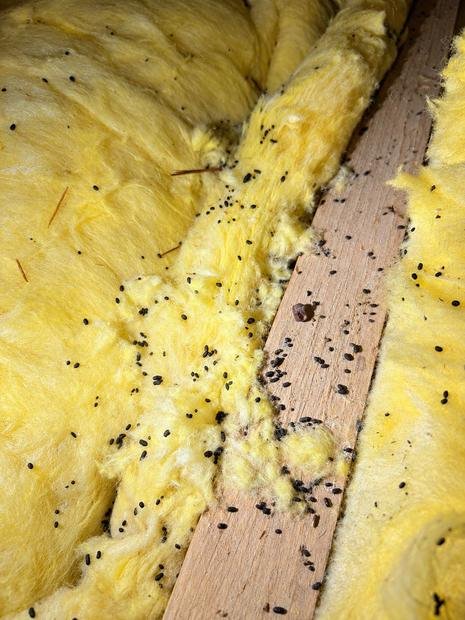
A roof void like this points to rats nesting and feeding over a long period, often right above a living area.
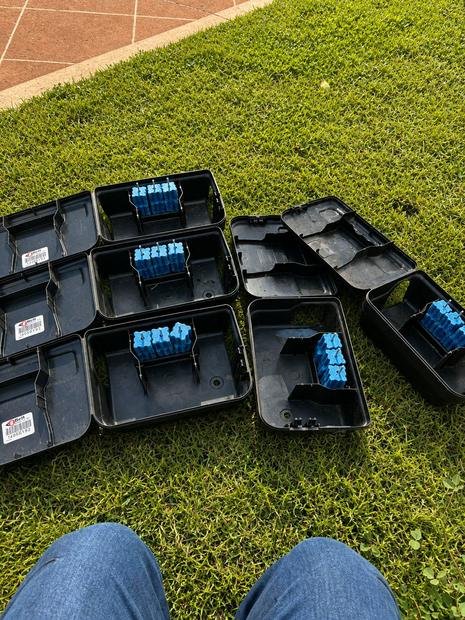
Blocks are fixed on rods inside the station so rats can't carry them off and drop them where pets roam.
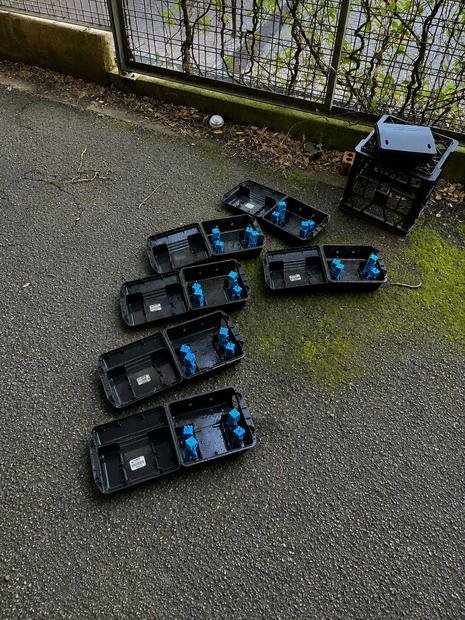
Brown rats travel along walls and fences, so perimeter stations follow those edges.
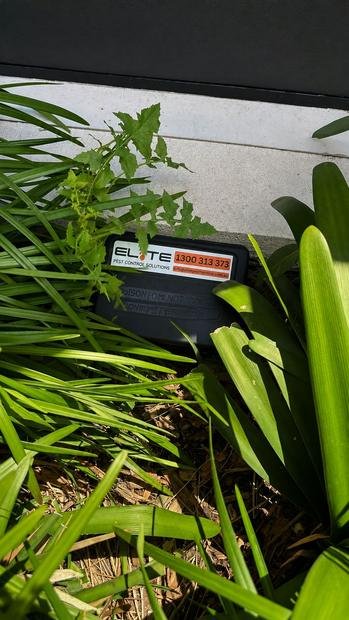
Stations tucked into garden beds near burrows and compost stay out of sight and out of reach.
Rats are around all year, but many Sydney homes notice them most from late autumn through winter, when they move into roof voids and subfloors for warmth. Dealing with rats as soon as you hear them, and proofing before the weather cools, stops a small group becoming an established colony.
Heavy droppings and nesting in insulation can leave a roof void contaminated long after the rats are gone, so ask about pest disinfection. For more on proofing, read how to rodent-proof your Sydney home before winter, or book pest proofing as a separate job.
Reviewed by Ismail, Founder · NSW Pest Management licence 5122967 · Updated September 2026
Stations go where roof rats or brown rats actually travel, not in random corners.
Lockable stations, trapping where suitable and proofing to cut down bait use.
NSW Pest Management licence 5122967 and APVMA-registered products used to label.
A fixed price before we start. Warranty and service terms confirmed in writing with your quote.
Local technicians servicing 650+ suburbs — fast.
Everything you need to know before you book. Still unsure? Call us — we're happy to help.
Get a Free QuoteRat control starts from $89. The final fixed price depends on the size of the property, whether the roof void and subfloor both need stations, how many burrows there are and whether you want entry points proofed. You get the price before any work starts, and warranty and follow-up terms are confirmed in writing with your quote.
Where you hear and find them is the best clue. Running across the ceiling, droppings in the roof void and rats seen on fences or in trees point to roof rats. Burrows in the garden, activity under the floor and rats near drains or compost usually mean brown rats. Some properties have both.
Pest management guidance commonly puts it at about 12 mm for an adult rat, roughly the width of your thumb, and young rats fit through less. Rats also gnaw to enlarge a gap, so soft materials like foam and plastic won't hold them. Proofing uses metal mesh, stainless steel wool and cement-based sealants.
In cooler months rats look for warm, dry shelter near food, and a roof void above a heated home is ideal. Many Sydney households first notice rats from late autumn. Proofing gaps and trimming branches back from the roofline before winter is one of the most effective ways to prevent it.
Yes. NSW Health lists leptospirosis, spread through infected urine, as well as rat bite fever and gastro infections like salmonellosis among illnesses associated with rodents. Avoid touching droppings or carcasses with bare hands, cover cuts, and wet-clean contaminated areas with disinfectant. See a doctor if you develop fever after exposure.
It can be, if a pet eats bait or a poisoned rat. That is why we only use lockable, tamper-resistant stations fixed in position, place them away from pets and consider trapping where pets roam. If you think your pet has eaten bait or a rat, see a vet straight away and take any packaging with you.
It can. Australian studies have found anticoagulant rodenticide residues in many owls tested, including powerful owls and southern boobooks, which eat poisoned rats. In 2026 the APVMA acted to restrict second-generation anticoagulant baits to trained, licensed users because of this risk. We use baits carefully, in locked stations, and reduce reliance on them through proofing.
A trap or two can deal with a single rat. When you hear activity every night, see droppings in several places or find burrows, there is usually a breeding population, and the entry points need finding too. A professional inspection identifies the species, the runways and the gaps, so the problem doesn't return.
They can. Fallen fruit, spilled chicken feed, pet food left outside and open compost are reliable food sources for rats. Pick up fallen fruit, store feed in metal bins, feed pets indoors or remove bowls at night, and use enclosed compost units to make your yard far less attractive.
Yes. Native bush rats and swamp rats live near bushland and wetlands around Sydney, and native animals are protected in NSW. They look similar to introduced rats at a glance, so we confirm identification before treating and, if it's a native, focus on keeping it out of the house instead.
Fast, friendly, fully insured technicians. No-obligation quote within 30 minutes.