
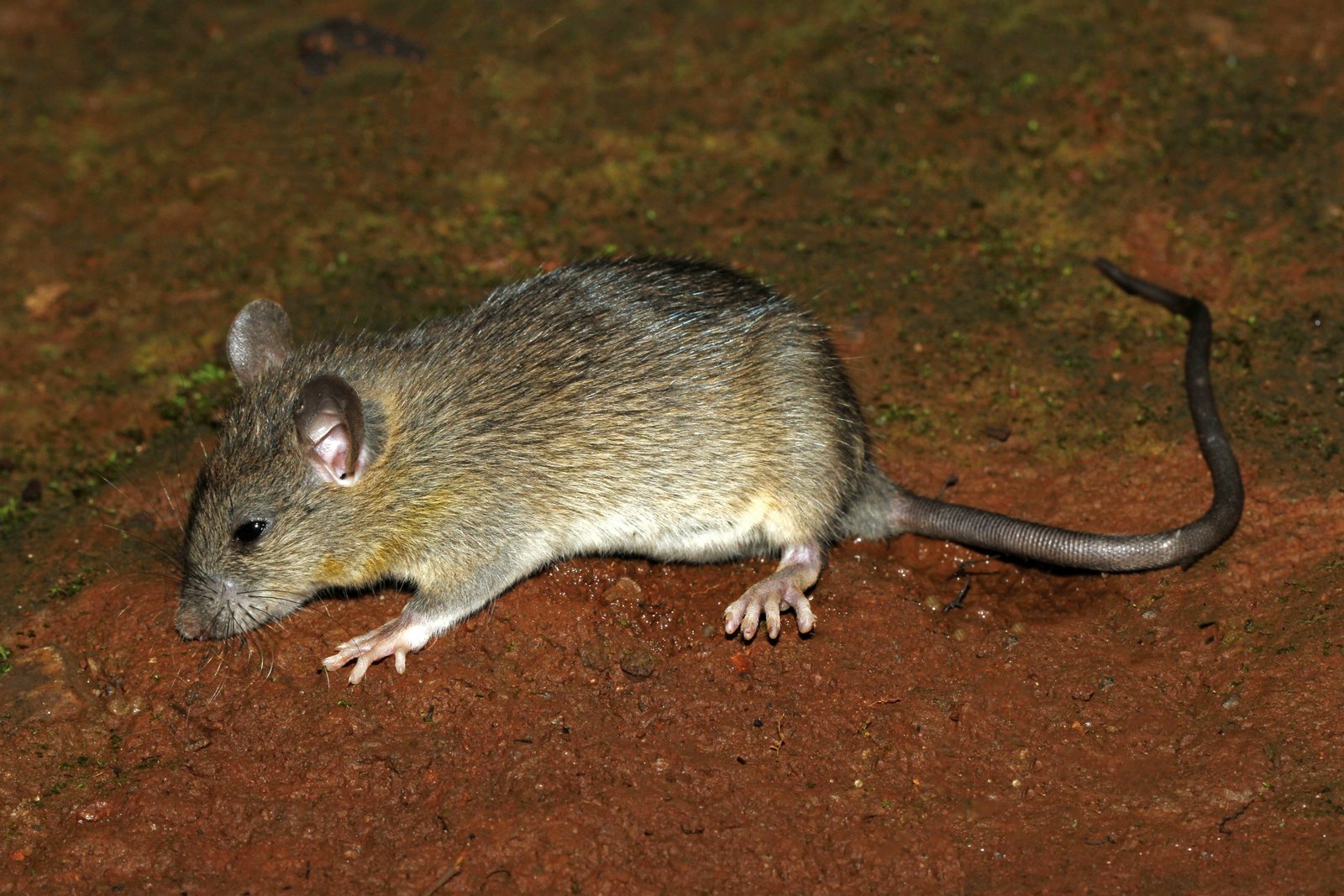
Getting rid of rodents properly means finding where they are living and breeding, treating that, and closing the conditions that invited them. This guide covers the signs, the treatment options, honest Sydney costs and the prevention that keeps it solved - written by the licensed technicians who do the work.
- What you are actually dealing with
- What to look for
- Why they are in your home
- How the treatments differ
- How professional treatment works
- Honest pricing
- Is it safe for children and pets?
- Four things you can stop worrying about
- Houses, units and townhouses
- Businesses, strata and shared buildings
- How to tell a good operator from a cheap one
- Frequently asked questions
What you are actually dealing with
Most of the cost in dealing with rodents comes from doing it twice. Getting the identification and the source right the first time is what makes the difference between one treatment and a recurring expense.
A licensed technician works through that in order, which is why the first part of a visit is looking rather than spraying.
Key points
- Treat the source, not the sightings: the nest or harbourage is the target.
- Fix the conditions - moisture, food, entry points - or it returns.
- Identify the species before treating - the right product depends on it.
- A fixed quote should come before any work starts.
We set out the full process, timelines and warranty terms under what the treatment involves.
What to look for
The early evidence is usually subtle, and most of it is found in places nobody looks. Worth checking for:
- A pet fixated on one point of a wall, cupboard or appliance.
- Dirty smudges around a gap at a pipe penetration or weatherboard joint.
- Disturbed pet food, birdseed or compost overnight.
- Greasy rub marks along a regular run between a gap and a food source.
- Droppings on top of kitchen cupboards, where rats travel but people rarely look.
One of these on its own may mean nothing. Two or more in the same area is worth a professional look, and it is better not to disturb the site before someone has seen it.
It is worth a look through the full range of treatments we carry out, since what you are seeing may not be what you think it is.
Why they are in your home
Treatment deals with the population; this list is what decides whether it comes back. The usual contributors:
- Bins stored against the wall with lids that do not seal.
- Gaps of 12mm or more at pipe penetrations, weatherboards and roof junctions.
- A roof void with easy entry and undisturbed insulation to nest in.
- Dense ivy, bamboo or a fence line giving cover right up to the building.
- Fruit trees, compost, chicken feed or pet food available overnight.
A technician will walk you through whichever of these apply to your place as part of the visit.
How the treatments differ
Worth understanding before you compare quotes, because two companies may be quoting different methods entirely:
| Method | Works well for | Limitations |
|---|---|---|
| Secured external bait stations | Controls pressure from outside the building | Tamper-resistant placement essential |
| Rodent monitoring program | Early warning at commercial and strata sites | Ongoing service rather than one visit |
| Trapping in roof and voids | No toxicant inside; carcass is recovered | Needs servicing and access |
| Sanitation and habitat work | Removes what drew them in | Requires follow-through by the occupier |
Ask which of these is being proposed and why. A technician who cannot answer that is guessing.
If you want to see how the treatment is actually carried out, rodent control walks through each stage.
How professional treatment works
What distinguishes professional treatment is sequencing, not chemistry. It runs like this:
- Inspect and identify. Work out the species and find where the population actually sits - usually not where it was seen.
- Treat the source. Apply the right method for that species - gel bait, dust, residual, baiting system or trapping - where it does the most work and the least harm.
- Allow the method to run. Baits and colony treatments work over days to weeks; re-spraying during that window undoes them.
- Close the conditions. The gaps to seal, the moisture to fix and the habits to change - this is what makes the result last.
Every Elite Pest treatment is carried out by a licensed, insured technician and general pest work carries a 6-month warranty.
How that is done in practice is covered under how rodent control works.
Honest pricing
Nobody can give a final figure sight-unseen, but the starting ranges are not a secret. Current rates:
| Service | From | Notes |
|---|---|---|
| Rodent treatment and proofing | from $150 | Baiting or trapping, plus entry-point work |
| General pest treatment (internal & external) | from $89 | Covers cockroaches, ants, spiders and silverfish |
| Bed bug treatment (per room) | from $280 | Usually includes a follow-up visit |
| Possum removal and proofing | from $250 | One-way exclusion, then sealing the entry |
| Commercial program | quoted per site | Scheduled servicing with documented reports |
Nothing is charged beyond the quoted figure. Where a job turns out to need more than expected, you are told before it is done, not after.
The method itself, product by product, is explained on our page about professional rodent control.
Is it safe for children and pets?
Fair question, and worth more than a one-word answer. Professional treatment is safe around families and pets because of how it is applied, not because the products are inert:
- Quantities are measured to the area rather than applied until the bottle is empty.
- Fish tanks are covered and pet bowls and bedding moved before any treatment.
- Where a household has asthma, allergies or a newborn, the method is adjusted on request.
- Products are APVMA-registered and applied at label rates by a licensed technician.
If anyone in the house has a specific sensitivity, tell us when you book - it changes which products we bring, not whether we can help.
That is worth checking before you book anyone, including us - our licensing and insurance covers our licensing, insurance and how long we have been doing this.
Four things you can stop worrying about
A few of these come up on nearly every job:
- You would smell them straight away. Roof-void activity is often noticed first as noise, an electrical fault or a ceiling stain.
- Bait alone fixes it. Without proofing and removing the food source, new animals simply move into the space.
- Steel wool seals a hole permanently. It is a temporary measure. Rodents work through it; proper proofing uses rigid materials.
- A cat will handle it. A cat may catch some rodents, but it does not address a breeding population in a roof void.
The rest of what we handle is set out under the services we offer across Sydney.
Houses, units and townhouses
Two neighbours with identical problems can get quite different treatments, and the reason is usually construction rather than preference:
- Apartments and units. Shared walls, services and risers mean the source is often outside your lot - partial treatment just moves it.
- Terraces and semis. Party walls and shared subfloors let populations travel; treating one side alone rarely holds.
- Townhouses. Common walls plus private courtyards, so internal and external work both matter.
- New builds. Tighter sealing helps, but landscaping against the slab and construction debris are common early problems.
Where a building is shared, the honest advice is often to raise it with the owners corporation rather than treat your lot repeatedly.
Units bring their own constraints - shared walls, shared plumbing, limited external access - and how apartments are treated is set up around them.
Businesses, strata and shared buildings
For a business or an owners corporation the deliverable includes paperwork, not just a result:
- Treatment of common property - risers, voids, bin rooms, roof spaces - not just individual lots.
- Scheduled servicing rather than reactive call-outs, with visit dates set in advance.
- Written service reports an auditor or committee can follow.
- After-hours or pre-opening access so trading is not disrupted.
- Food-safety alignment for kitchens, cafes and childcare premises.
For a food business in particular, pest records are among the first things an inspector asks for - which makes the documentation as valuable as the treatment.
In a strata building the cause is often outside the affected unit, which is why strata pest control is handled at building level.
How to tell a good operator from a cheap one
This is a licensed trade, so there are specific things you are entitled to ask:
- For termite work, ask whether you receive a written timber pest report.
- Ask what the warranty covers, what voids it, and how long it runs.
- Confirm they hold current public liability insurance.
- Get the quote in writing, fixed, before any work starts.
- Be wary of a price quoted over the phone without any questions about the property.
None of those questions are unreasonable, and the answers tend to sort operators quickly.
Anyone you let into your home for this work should be licensed and insured, and about the team sets out ours.
Frequently asked questions
What do you charge for rodents in Sydney?
General pest treatments start from $89 and timber pest inspections from $159. Termite treatments and barriers are quoted after an inspection because the price depends on the construction and the extent of the activity. You get a fixed figure before any work begins.
Should I block the holes straight away?
Not until the building is confirmed clear. Sealing entry points while animals are still inside traps them in the wall or roof void, which leaves you with a carcass and a smell problem. Proofing is the right fix, but it comes after control, not before.
What prevents a repeat?
Maintenance rather than pest control: fix the water, close the gaps, cut the food supply and reduce clutter where things can shelter. Households that would rather not think about it move onto a regular program instead.
What if the problem is coming from next door?
For renters, report it to the agent in writing promptly, since that is often what decides responsibility. In a unit block the source is frequently outside your lot, and treating your own apartment repeatedly will not fix a population living in common property.
Is the treatment safe for children and pets?
It is safe when applied correctly, which is most of what a licence is for. Baits and dusts go where children and pets do not reach, fish tanks are covered and pet bowls moved. For general treatments you do not need to leave the property.
What brings rodents indoors?
Usually something fixable: an unsealed food source, standing water, mulch or timber against the wall, or a gap at a weep hole or pipe penetration. A technician will point out which apply to your property.
Can I treat this myself?
For a single insect, yes. For an established population, retail products usually fail because they kill what they touch and leave the nest producing. Repellent sprays can also split ant colonies, which turns one problem into several.
How quickly can you come out to Sydney?
Most bookings in Sydney are filled within 48 hours. Urgent situations are prioritised, and we will tell you honestly if yours is not urgent rather than selling you a priority visit.
Want this sorted properly?
One call gets you a fixed price, usually inside 30 minutes. Licensed technicians, 650+ Sydney suburbs covered, child and pet-safe treatments, and a 6-month warranty on general work.