Budding splits the colony
Where a species has many queens, a repellent spray causes budding rather than death. Part of the colony, queen included, moves elsewhere, and you have doubled the problem.

Ant Control in Clontarf 2093 — local technicians, fixed prices and a written report. Ant treatment starts from $89.
Real, verified feedback from people we've helped — straight from Google.
What we cover in Clontarf, and how quickly we can get there.
Clontarf is part of the Northern Beaches, 7.9 km or so north-east of the GPO, and 2093 is a postcode we know well. Our technicians are through Clontarf most days, so same-day attendance is usually available.
If you are near Clontarf Reserve, Harbour View Reserve or Clontarf Beach, that is ground we cover constantly - it is the busiest part of Clontarf for us.
The suburb sits in the Northern Beaches area. Balgowlah Heights, Balgowlah and Seaforth are all covered on the same day, so a problem that has spread across a boundary can be handled in one visit. Salt air and sandy ground keep sub-floors damp here, and damp is what sustains a population.
Clontarf jobs tend to be unit blocks a street or two back from the water, plus the odd beachfront cafe. Let us know which when you ring and we will plan the visit around it.
We cover the remainder of 2093 as well, from The Village - Balgowlah Stockland through to Balgowlah Golf Club.
We confirm your slot the day before and arrive at a stated time. Balgowlah Heights and Balgowlah sit on the same run, so earlier appointments in 2093 come up regularly.
People assume a trail means something was left out. Around Clontarf it is just as likely to be the bathroom, because water is the scarcer resource in summer.
People expect a single nest. Coastal brown ants and Argentine ants run dozens of connected nests across a property and beyond it, so the question is never just where it is but how far it goes.
Pharaoh and some other small species nest indoors in warm voids and never go outside at all. In a Clontarf house that changes the treatment completely - and makes spraying actively harmful, because it buds the colony.
Each of these behaves differently, so the bait and the placement change too. Two photos come from our own jobs.
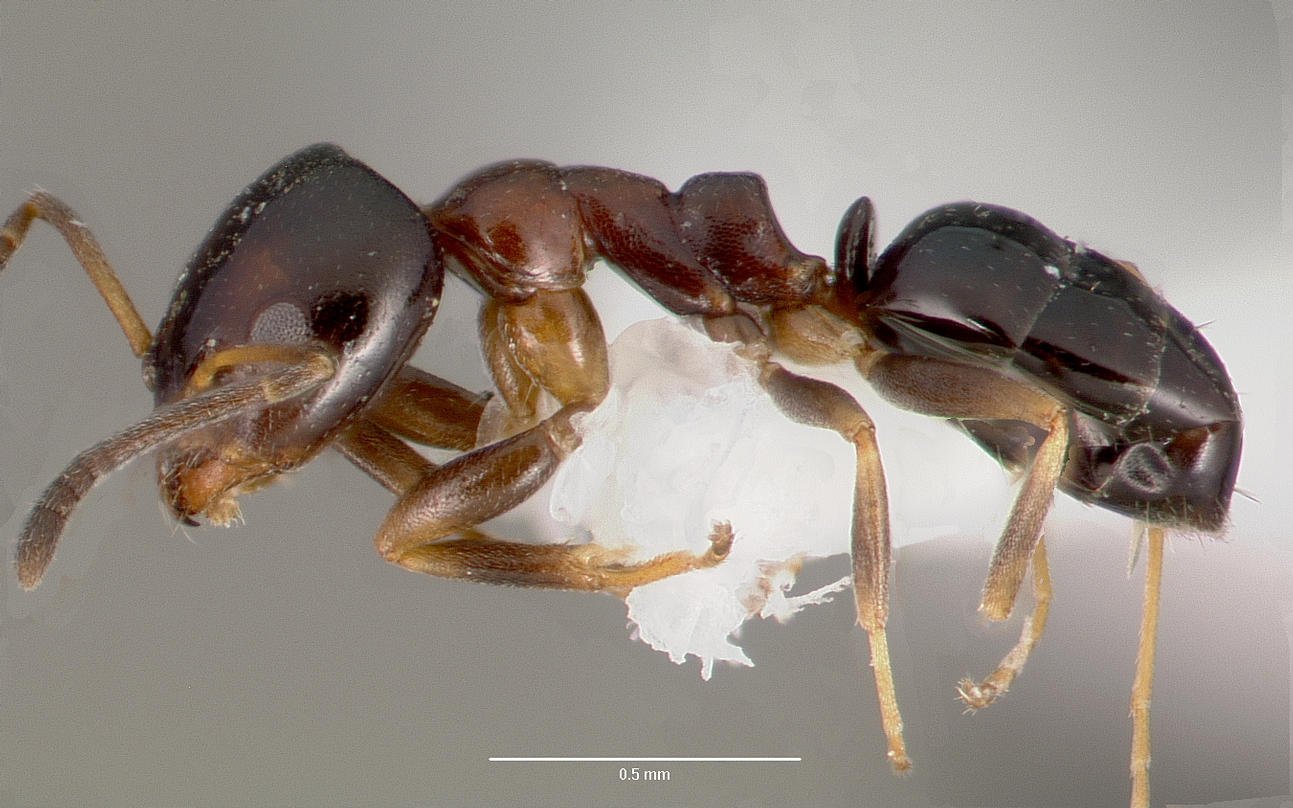
A small black ant with a glossy body, and the one most often in Sydney kitchens. It nests in wall cavities, the roof void and garden edges, trails along skirtings and cabling, and feeds readily on sweet bait.
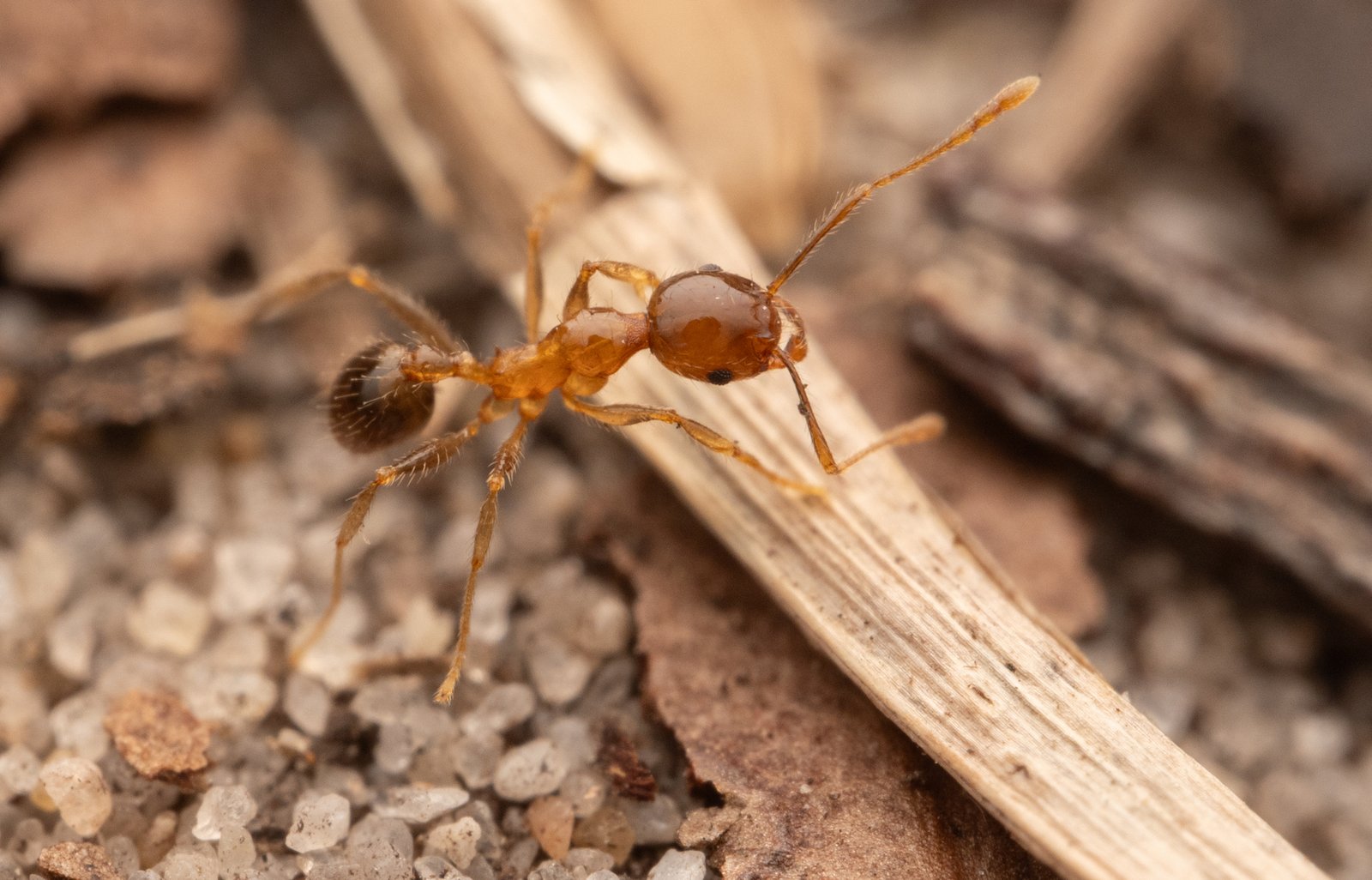
Minute brown ants with larger-headed soldiers among them. Fine sand in paving joints, at slab edges and in grout is the tell. Because a colony holds many nests, oil-based granular baits are the right approach.
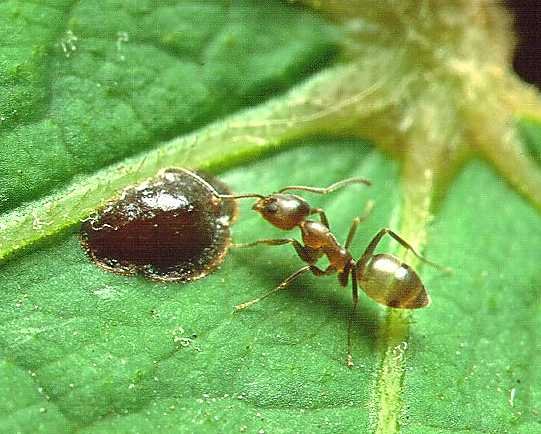
Dull brown, small, and noticeable for the thickness and speed of its trails. Multi-queen nests connect to neighbouring ones, which is how an infestation covers several properties. Repellents make it markedly worse.
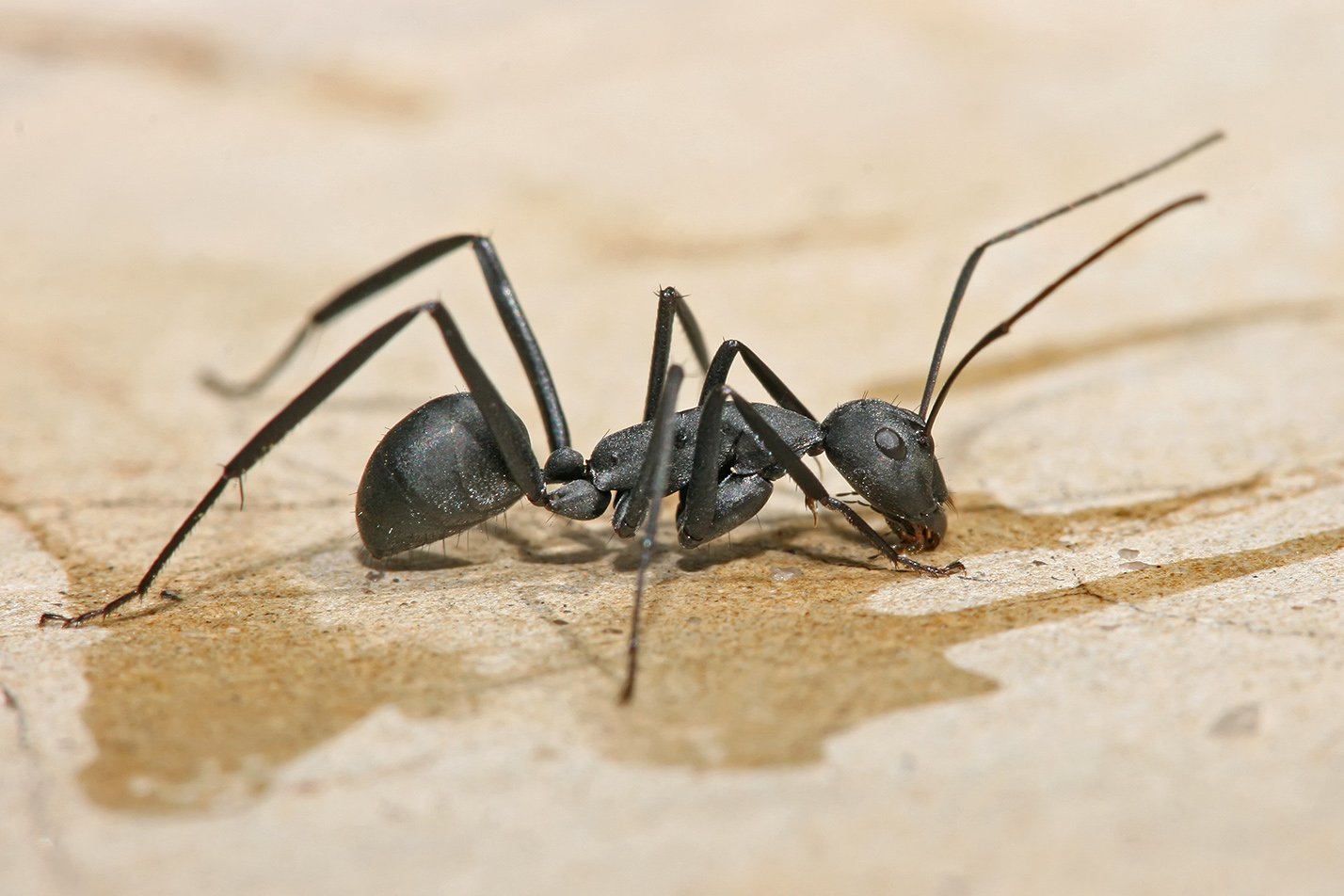
Large and mostly nocturnal, nesting in soil, hollow trees and damp or softened timber. They rarely damage structure here, though a nest inside a wall is a reliable sign of moisture that needs attention.
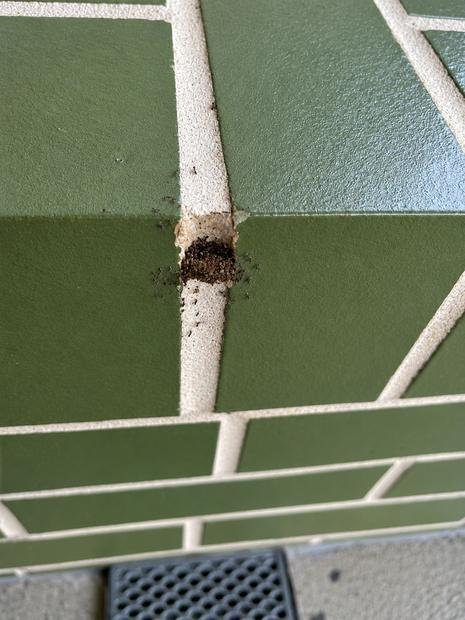
From an Elite job - a nest coming out of a mortar joint. Cracked mortar and weep holes open directly into the wall cavity, and that cavity is where a lot of black house ant colonies sit.
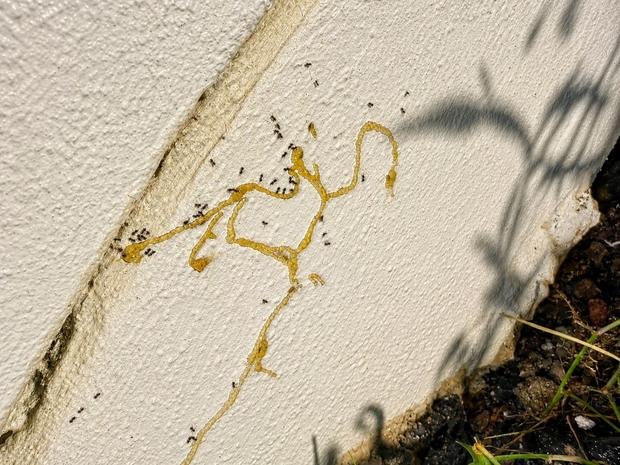
An Elite photo of gel bait on an active trail. The whole point is letting them feed and take it home, so the trail must be left alone once we have treated it.
Where ants appear usually tells us where the nest is and which species we are dealing with.
A trail coming in from the external wall normally means a nest in the cavity or at the garden edge, and that entry point is where the tracing begins.
That fine sandy soil appearing between pavers, along the driveway and at slab joints is the classic coastal brown ant sign - they are nesting below.
Warmth is what draws them into switches and electrical fittings. Never spray into a power point - tell us instead and we will treat it safely.
Swarms of winged ants in spring and summer are mating flights. Seen indoors, they can mean a mature colony inside the building.
Trails in the bathroom point to water in the wall or a slow leak the ants have found.
Bull and jumper ants live in lawn and garden-bed nests. The sting hurts, and for some people it brings on a serious allergic reaction.
Talk to a licensed Sydney technician today - honest advice and a fixed quote within 30 minutes.
Where a species has many queens, a repellent spray causes budding rather than death. Part of the colony, queen included, moves elsewhere, and you have doubled the problem.
Supermarket sprays are repellent: ants detect them and walk around them. Professional non-repellent products are not detected, so foragers walk through, pick up the active and carry it back to nest mates.
A colony's appetite shifts between sugar and protein with the brood cycle. Bait only works when it matches, which is why we test preferences on site.
Give it days, not hours. Bait has to be carried through the colony, and spraying the trail afterwards destroys the couriers doing that work. Our blog covers budding in more detail.
Tracing first, then baits and non-repellent products that do the work after we leave.
We work out which ant it is and follow the trails back, which is what locates nests in wall cavities, under paving, along garden edges and in roof spaces.
We put out small quantities of sweet, protein and oil-based bait to see which the colony is actually taking today.
Indoor placements are gel on the trail - skirting, window frames, travel routes - sited away from children and pets.
A non-repellent band around the footings, weep holes, door frames and paths catches ants as they come in.
Under-paver and lawn-edge nests are handled with granular bait, or treated directly where that is better.
You get a summary, advice on what not to spray, and a 6-month warranty on the general treatment.
The same bait does not suit every ant. This is how we choose.
| Species | Usually feeding on | Treatment approach | Common mistake |
|---|---|---|---|
| Black house ant | Mostly sweet liquids and honeydew, with protein demand during brood rearing | Gel bait along the trail, plus non-repellent treatment to weep holes and door frames | Daily detergent wiping of trails - it moves the foraging rather than stopping it |
| Coastal brown ant | Protein and oily foods | Oil-based granular bait over paving and lawn margins | Attacking a single visible nest while the rest of the colony's nests carry on |
| Argentine ant | Mainly sugars, protein at some points in the cycle | Slow-acting bait with a non-repellent treatment right across the boundary | Spraying a repellent barrier, which causes a multi-queen nest to bud |
| Sugar ants (Camponotus) | Insects and sweet foods, taken mainly at night | A night inspection of the trails, bait near the nest, and moisture in timber repaired | Daytime-only treatment, which misses them entirely |
| Bull ants and jumper ants | Nectar and insects taken outdoors | Direct nest treatment wherever it is in the lawn or beds | Trying to dig it out yourself and getting stung |
| Time of year | What is happening | What to watch for |
|---|---|---|
| Early spring (Sept to Oct) | Colonies become active and start on brood, which shifts them onto protein | Early indoor trails, and sand piles returning to the paving |
| Late spring to summer (Nov to Feb) | Peak foraging, mating flights after warm humid weather | Winged ants, heavy trails after storms and heatwaves |
| Autumn (Mar to May) | Colonies peak in size and stock up for the cooler months | Trails into the pantry and around pet bowls |
| Winter (Jun to Aug) | Outdoor activity slows, but nests in heated walls keep going | Ants around heaters, hot water units and kitchens |
Most failed ant treatments come down to what happens in the week after.
We are around Harbour View Reserve most weeks and cover every street in 2093, including the ones off the main roads.
Winter does not kill the colony, it just slows it. The nest under a Clontarf path in July is the same nest that produces the trail in October.
Food premises need bait placement that will not contaminate, and records of what was used where. That is a different job from a domestic callout.
Trails lead somewhere, so we follow them to the colony instead of spraying the sighting.
The bait is chosen for the species and the time of year - sweet, protein or oil-based.
Sprays that scatter a colony are avoided entirely in favour of non-repellents the ants deliver themselves.
General treatments come with 6 months. Ants back within that window means we come back too.
Everything you need to know before you book. Still unsure? Call us — we're happy to help.
Get a Free QuoteAnt treatment starts from $89. There is no call-out charge in Clontarf 2093. The final number comes down to the property itself, and it is fixed before we begin. Every general treatment carries a 6-month warranty.
Same-day attendance is usually available. Our Northern Beaches technicians cover Clontarf daily, and you get a confirmed arrival time when you book.
The air never really dries out near the water, so sub-floors and lower rooms hold moisture through the year. ants need that damp more than they need food, and here they always have it.
Apartments near the beach and houses behind them. Either way the sub-floor and the lower level are the parts that matter.
Yes. Houses, townhouses, units, strata common property, rentals and commercial sites in Clontarf 2093 are all part of what we do, and the paperwork is the kind agents accept.
It is, provided the instructions are followed. We will tell you what to keep clear of and for how long before we leave. Let us know about children, pets or fish tanks when you book.
Usually not. Most ant control work is done with you there, and anything that needs the room vacated is for a short period we will tell you about beforehand.
Typically one to two hours on site. What extends it is size, access and how far the problem has gone, all of which are accounted for in the quote.
Every general treatment carries a 6-month warranty. If it is not holding, call us - that is exactly what the warranty is for.
All of them. Clontarf sits alongside Balgowlah Heights, Balgowlah, Seaforth and Fairlight in our coverage, and they are serviced on the same schedule.
Photographs from Elite jobs across Sydney — not stock imagery.
Fully insured technicians who turn up when they say they will. Quote within 30 minutes, no obligation.