Budding splits the colony
Species with many queens, such as Argentine ants and several house ants, respond to a repellent spray by relocating. A few hundred workers and a queen move to a new spot, and you now have two colonies instead of one.

Ant Control in Collaroy Plateau 2097 — local technicians, fixed prices and a written report. Ant treatment starts from $89.
Real, verified feedback from people we've helped — straight from Google.
Local technicians, fixed prices and a written report for every job in Collaroy Plateau.
Collaroy Plateau sits about 17.2 km north-east of the CBD in the Northern Beaches, and postcode 2097 is one we are in most weeks. We run Collaroy Plateau on a regular route, and same-day attendance is usually available.
If you are near Edgar Gornall Wildflower Garden, Wabash Reserve or Collaroy Beach, that is ground we cover constantly - it is the busiest part of Collaroy Plateau for us.
This is the Northern Beaches area, and our runs here also take in Narrabeen, Collaroy and Wheeler Heights. Salt air and sandy ground keep sub-floors damp here, and damp is what sustains a population.
Collaroy Plateau jobs tend to be unit blocks a street or two back from the water, plus the odd beachfront cafe. Let us know which when you ring and we will plan the visit around it.
Augusta Shopping Centre and Long Reef Golf Course are on the same round, which means every part of 2097 is within our area.
When you book, we confirm the 2097 run the day before and give you an arrival time rather than a window. If we are already out at Narrabeen or Collaroy that morning, we will usually offer you the earlier slot.
A trail along a bench is foragers, and foragers are maybe five per cent of the colony. The queens, the brood and most of the workers are in a nest you have not found, which is why wiping the trail achieves nothing lasting in a Collaroy Plateau kitchen.
Many ants get most of their sugar from honeydew - the secretion of aphids and scale insects they actively protect on garden plants. A Collaroy Plateau garden with a scale problem is feeding the ant colony that then comes indoors.
People expect a single nest. Coastal brown ants and Argentine ants run dozens of connected nests across a property and beyond it, so the question is never just where it is but how far it goes.
Each of these behaves differently, so the bait and the placement change too. Two photos come from our own jobs.
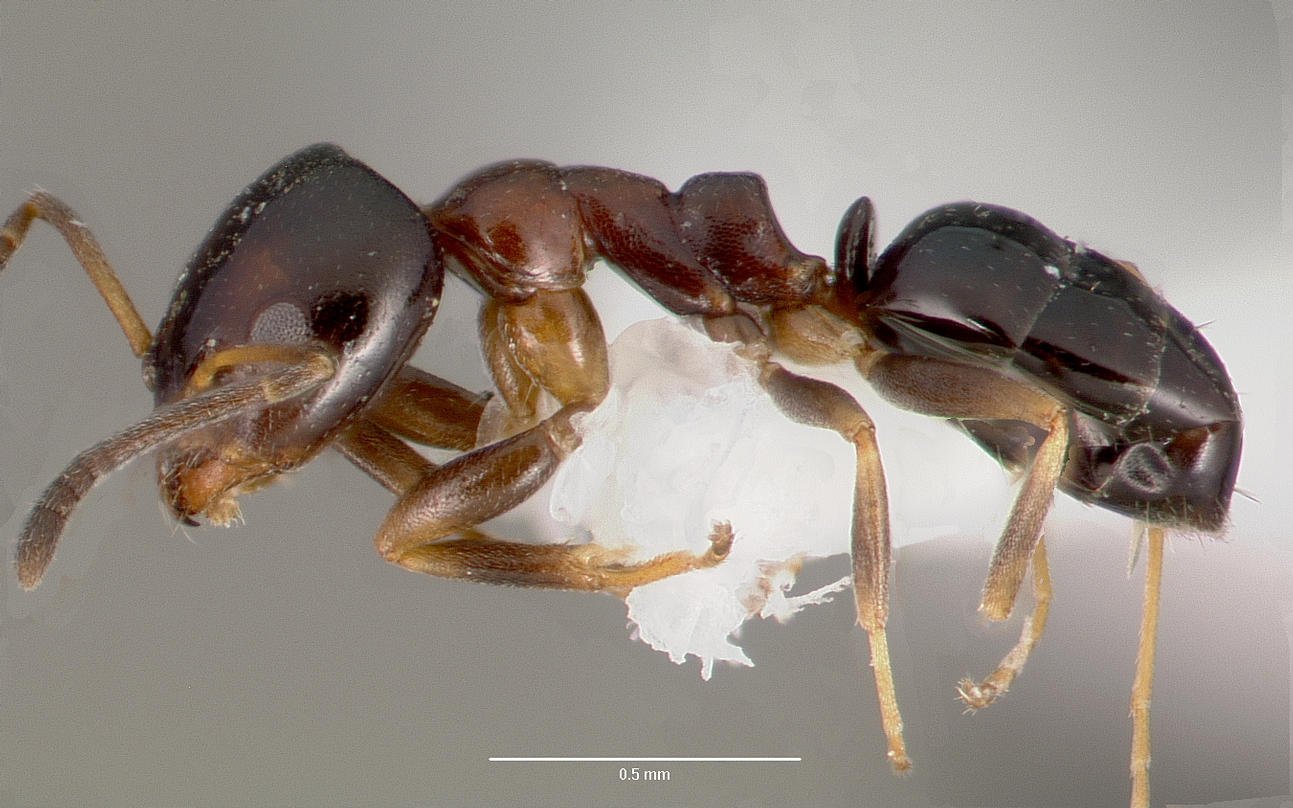
The small glossy black one you find in the kitchen. It runs along skirtings, window frames and cabling, nesting in wall cavities, roof voids and the edges of garden beds, and it takes sweet bait without much persuading.
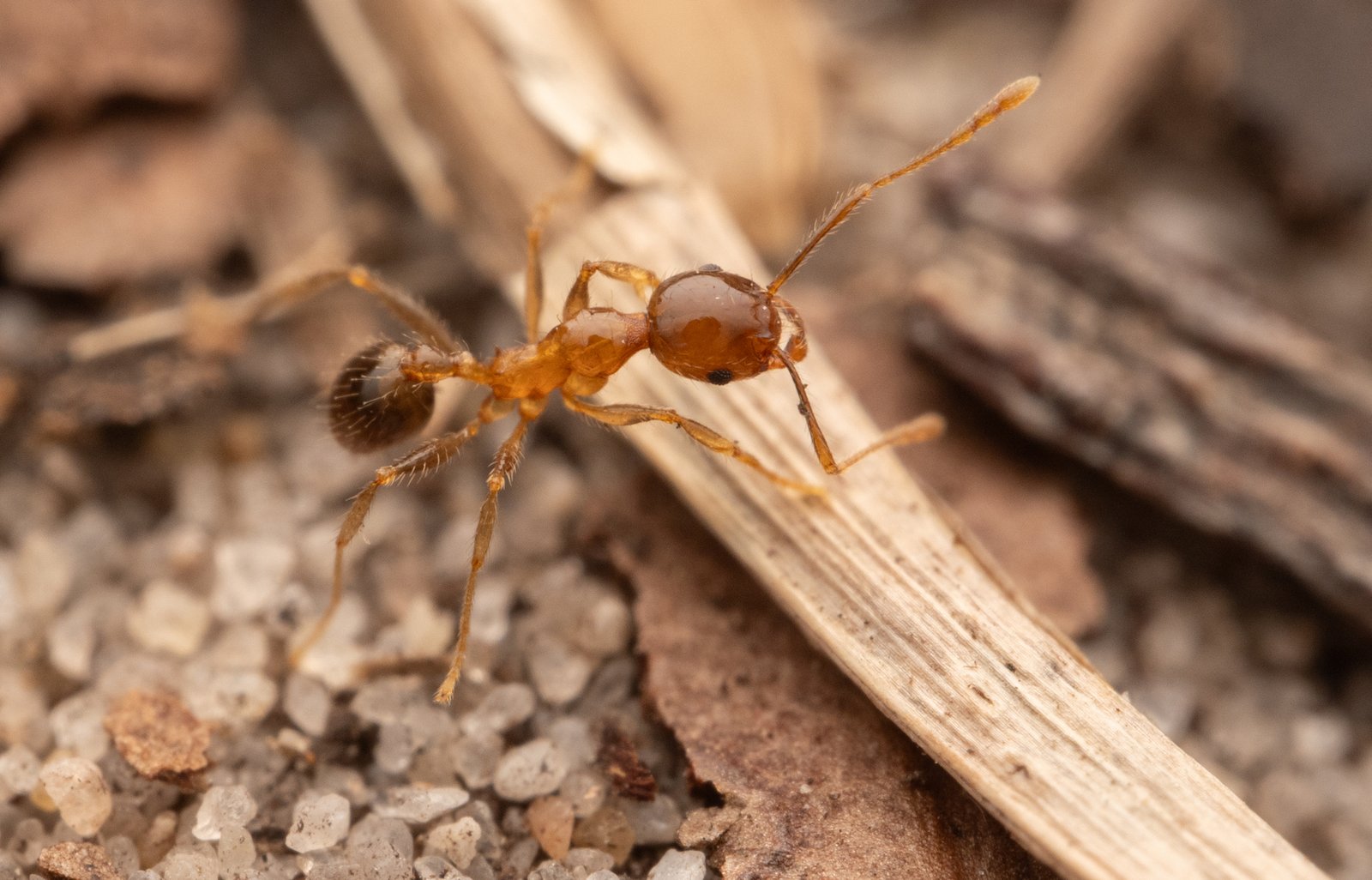
Tiny brown ants with a larger-headed soldier caste. The giveaway is loose sandy soil pushed up between pavers, along slab edges and in grout. Colonies are large with many nests, and oil-based granular baits work well.
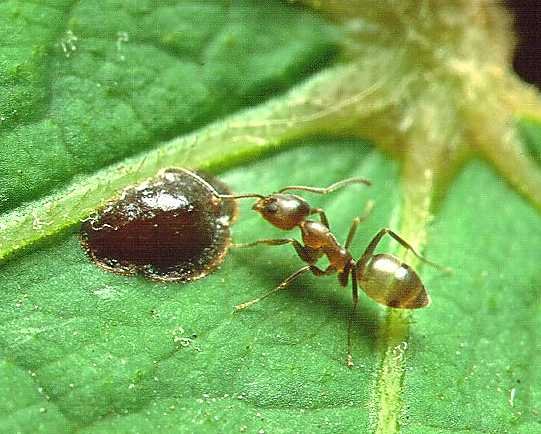
Small and flat brown in colour, running in dense fast trails. Because nests hold many queens and join with those next door, the infestation is usually bigger than one property. Never spray a repellent on it.
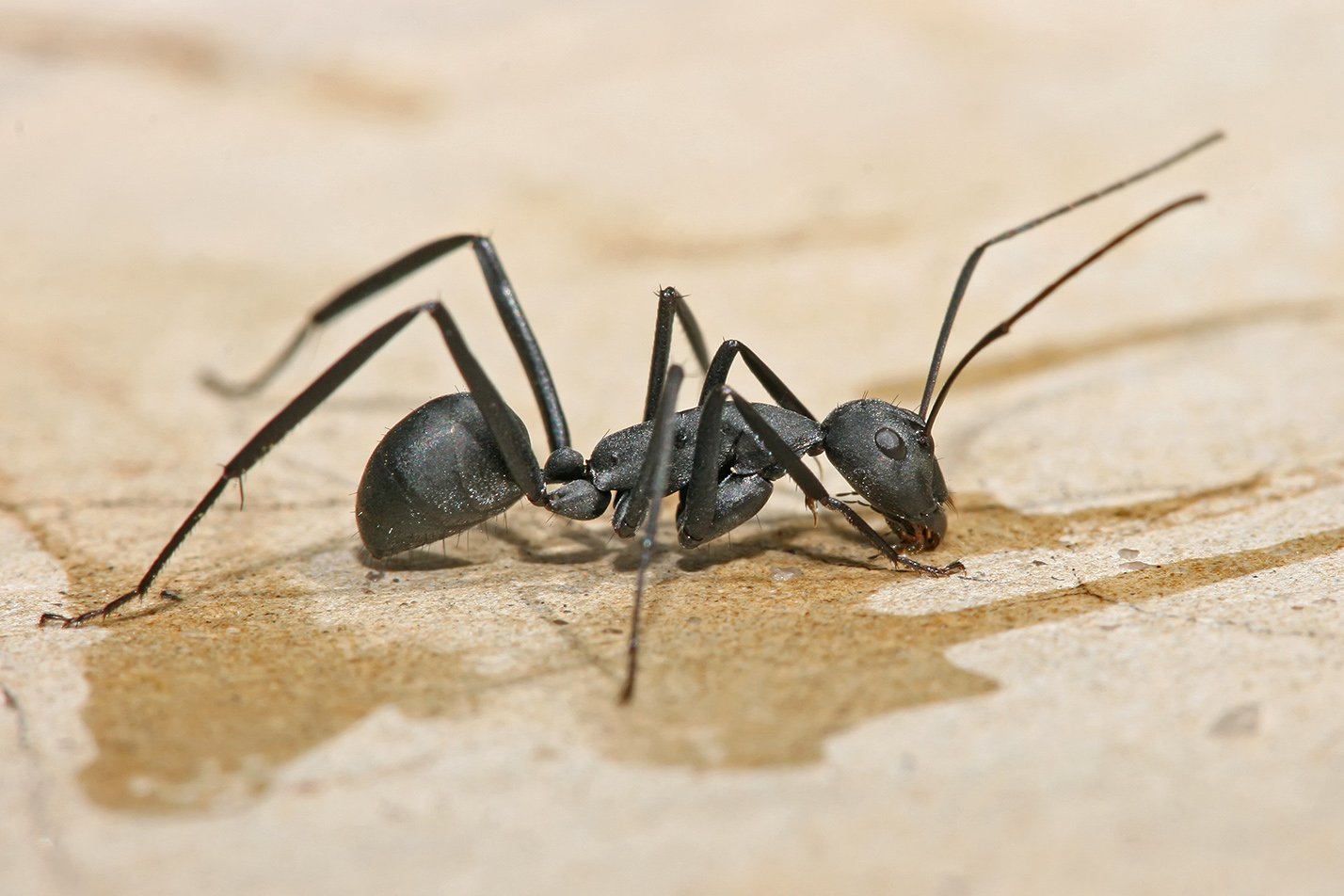
Large and mostly nocturnal, nesting in soil, hollow trees and damp or softened timber. They rarely damage structure here, though a nest inside a wall is a reliable sign of moisture that needs attention.
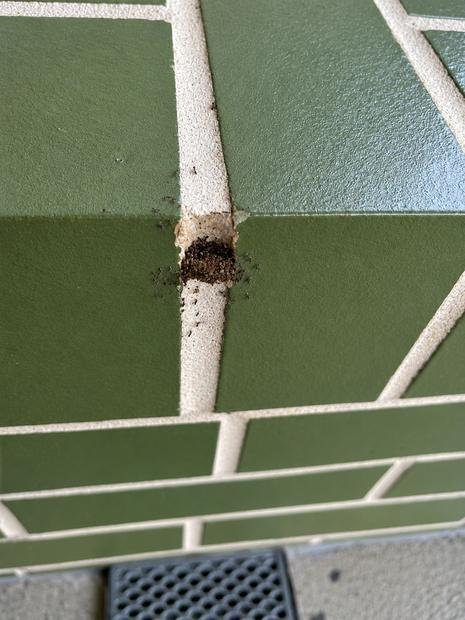
An Elite job photo showing a nest in masonry. Weep holes and cracked mortar lead into the wall cavity - the spot black house ants most often choose.
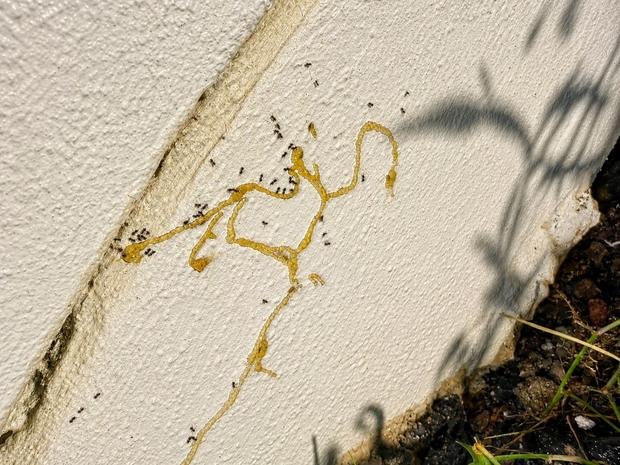
Photo from an Elite job: gel bait placed along an active trail. The ants are left to feed and carry the bait home, so we ask customers not to wipe or spray the trail afterwards.
Where ants appear usually tells us where the nest is and which species we are dealing with.
Ants arriving from the outside wall usually nest in the cavity or garden edge. The entry point is where we start tracing.
Fine soil pushed up along paving, driveways and slab joints is the classic sign of coastal brown ants nesting underneath.
A nest in a power point or appliance is about warmth. Spraying into electrical fittings is dangerous - tell us and we will treat it the right way.
Winged ants swarming in the warmer months are reproductives on a mating flight. Indoors, that can indicate an established colony within the structure.
Ant trails at the shower, vanity or toilet usually come down to moisture - either damp in the wall or a slow leak they are drinking from.
Lawns and garden beds are where bull ants and jumper ants nest. Their stings are painful and can trigger severe allergic reactions.
Get a licensed Sydney technician on the phone today - honest advice, fixed quote in 30 minutes.
Species with many queens, such as Argentine ants and several house ants, respond to a repellent spray by relocating. A few hundred workers and a queen move to a new spot, and you now have two colonies instead of one.
Supermarket sprays are repellent: ants detect them and walk around them. Professional non-repellent products are not detected, so foragers walk through, pick up the active and carry it back to nest mates.
Ants will ignore bait that does not suit their current needs. Because they alternate between sugar and protein depending on the brood, we test preference rather than assume.
Results come over days as the bait spreads. Spray the trail the next morning and you have killed the ants that were carrying it home. Our blog explains budding in more detail.
Tracing first, then baits and non-repellent products that do the work after we leave.
We work out which ant it is and follow the trails back, which is what locates nests in wall cavities, under paving, along garden edges and in roof spaces.
Small amounts of sweet, protein and oil-based bait show what the colony is feeding on right now.
Indoor placements are gel on the trail - skirting, window frames, travel routes - sited away from children and pets.
A non-repellent band around the footings, weep holes, door frames and paths catches ants as they come in.
Granular bait or direct treatment for coastal brown ant nests under pavers and in lawn edges.
You get a summary, advice on what not to spray, and a 6-month warranty on the general treatment.
The same bait does not suit every ant. This is how we choose.
| Species | Usually feeding on | Treatment approach | Common mistake |
|---|---|---|---|
| Black house ant | Honeydew and sugary liquids, switching to protein when there is brood | Sweet gel on active trails and a non-repellent perimeter at frames and weep holes | Washing the trail down each day, which only relocates the foraging route |
| Coastal brown ant | Protein and oily foods | Oil-based granular bait over paving and lawn margins | Attacking a single visible nest while the rest of the colony's nests carry on |
| Argentine ant | Sugar for the most part, with periodic protein demand | Slow baits and a non-repellent applied along the property line | Using a repellent barrier spray - it divides the multi-queen colony |
| Sugar ants (Camponotus) | Sweet foods and insects, foraging after dark | Inspecting trails at night, baiting close to the nest, and fixing damp timber | Working only in daylight hours, when these ants are not out |
| Bull ants and jumper ants | Insects and nectar outdoors | Direct nest treatment in lawns and garden beds | Digging into the nest by hand and getting stung |
| Time of year | What is happening | What to watch for |
|---|---|---|
| Early spring (Sept to Oct) | Activity resumes and brood rearing starts, so the colony wants protein | Trails appearing indoors again, and fresh sand piles in the paving |
| Late spring to summer (Nov to Feb) | The busiest foraging period, with mating flights after warm humid weather | Winged ants on the wing, and thick trails after a storm or a hot spell |
| Autumn (Mar to May) | Full colony size, and foraging to build stores before it cools | Pantry trails, and ants on the pet food |
| Winter (Jun to Aug) | Outdoor foraging slows right down while nests in heated walls continue | Ants showing up by heaters, hot water services and in kitchens |
Most failed ant treatments come down to what happens in the week after.
Activity climbs from early spring as colonies start brood-rearing, peaks through the hot months and tails off in autumn. Treating in early spring around Collaroy Plateau gets ahead of it rather than chasing it.
A column of ants going in and out of a weep hole means they are nesting in the cavity, not the garden. Treating the garden bed in that case does nothing at all for a Collaroy Plateau home.
Anywhere in 2097, or over toward Narrabeen, is inside the area we treat at the same price.
The trail gets traced to its source. Spraying where you saw ants achieves very little.
Sweet, protein or oil-based baits chosen for the ant and the season.
Nothing repellent, because that causes budding. Non-repellent products get carried home instead.
If ants return within 6 months of a general treatment, we return at no charge.
Everything you need to know before you book. Still unsure? Call us — we're happy to help.
Get a Free QuoteAnt treatment starts from $89. The fixed price depends on the size of the property and how far the problem has spread, and we confirm it before we start - there is no call-out fee in Collaroy Plateau 2097. Every general treatment carries a 6-month warranty.
Same-day attendance is usually available. Collaroy Plateau sits roughly 17.2 km north-east of the CBD, inside our Northern Beaches run, so we book a time and keep to it.
Humidity close to the coast does not fall away in winter the way it does inland, so ants here get a longer active season than they would further west.
A mix of unit blocks and houses, most with a damp sub-floor or a ground level that sits low - and that is usually where we concentrate.
Yes - freestanding homes, townhouses, apartments, rentals and business premises in Collaroy Plateau 2097 are all covered, with documentation suitable for an agent or a strata manager.
Yes. Everything we use is registered for the purpose and applied at label rates, and we place product where people and animals do not go. Tell us about pets, aquariums or anyone with a respiratory condition at booking.
Usually not. Most of the work is done with you in the house, and where a room does need to be clear it is for a short period we will tell you about on arrival.
An hour to two hours covers most jobs. The size of the building and the extent of the problem are what change it.
Every general treatment carries a 6-month warranty. Call us if activity picks up again and we will arrange the return visit.
We do. Collaroy Plateau and Narrabeen, Collaroy, Wheeler Heights and Cromer are all on the same route, which helps if you own more than one property in the area.
Photographs from Elite jobs across Sydney — not stock imagery.
Fast, friendly, fully insured technicians. No-obligation quote within 30 minutes.