Budding splits the colony
Argentine ants and a number of house ants carry multiple queens. Spray them with a repellent and a queen plus a few hundred workers simply moves out and starts again nearby.

Ant Control in Schofields 2762 — local technicians, fixed prices and a written report. Ant treatment starts from $89.
Real, verified feedback from people we've helped — straight from Google.
What we cover in Schofields, and how quickly we can get there.
Schofields is part of the Blacktown & Mount Druitt, 36.6 km or so north-west of the GPO, and 2762 is a postcode we know well. We cover Schofields on scheduled runs through the Blacktown & Mount Druitt, and we will give you a firm time rather than a window.
The Schofields jobs we attend tend to sit between Schofields station and Altrove Hilltop Park.
We work under the Blacktown City area here, and Riverstone, Quakers Hill and The Ponds are all on the same route, which matters when ant problems are moving between adjoining properties. Newer estate housing sits close together on small blocks, so what happens next door matters. We check the boundary and the fence line, not just the house.
Around Schofields the pattern is fairly consistent: recently built homes where the activity started at the boundary. Tell us which it is on the phone and we will come prepared for it.
The whole of 2762 is on our regular run.
When you book, we confirm the 2762 run the day before and give you an arrival time rather than a window. If we are already out at Riverstone or Quakers Hill that morning, we will usually offer you the earlier slot.
What you are looking at is a supply line, not a population. Treat the line and the colony sends another one tomorrow along a slightly different route.
In a dry spell ants move indoors looking for moisture, which is why a spotless Schofields kitchen still gets trails in January. The sink, the pet bowl and the shower recess are the attractions.
Coastal brown ants, black house ants and odorous house ants all behave differently and all turn up around Schofields. We identify before we bait rather than putting down a general-purpose product and hoping.
Each of these behaves differently, so the bait and the placement change too. Two photos come from our own jobs.
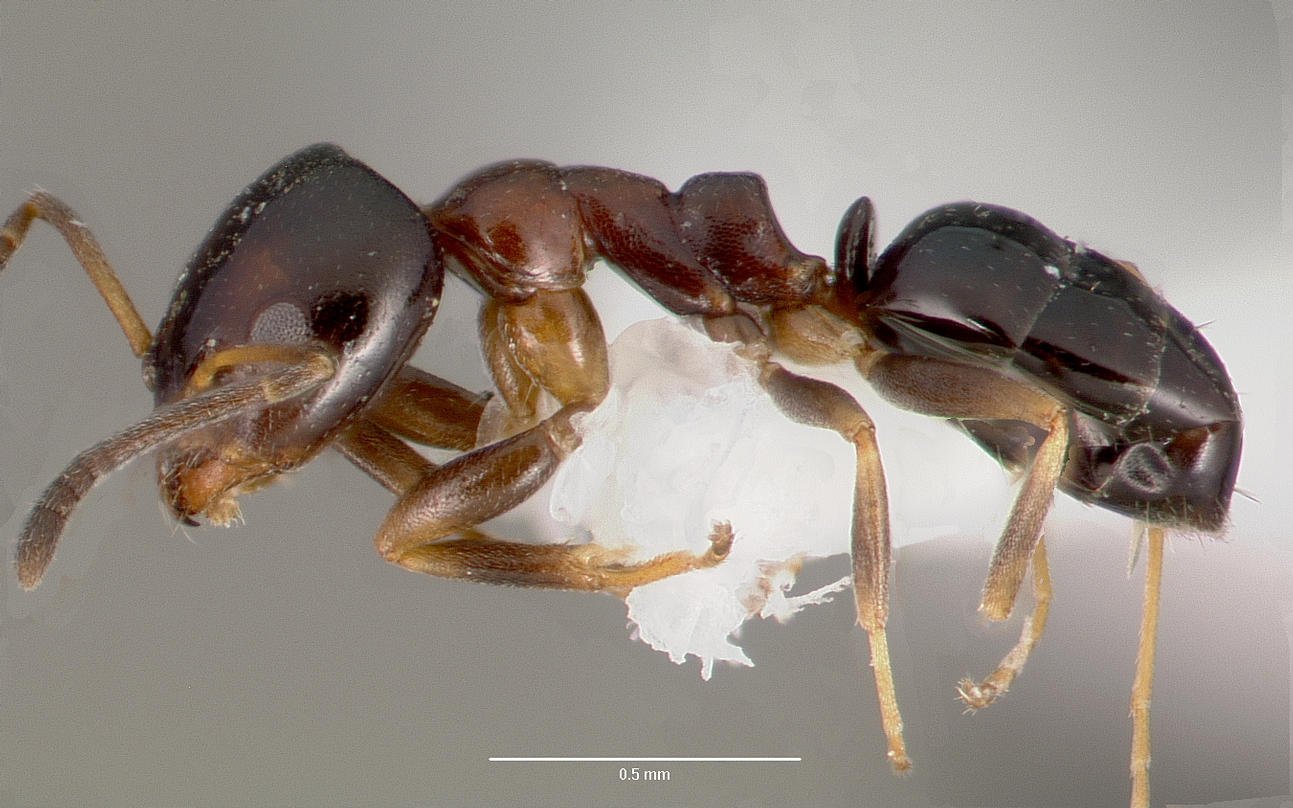
The small glossy black one you find in the kitchen. It runs along skirtings, window frames and cabling, nesting in wall cavities, roof voids and the edges of garden beds, and it takes sweet bait without much persuading.
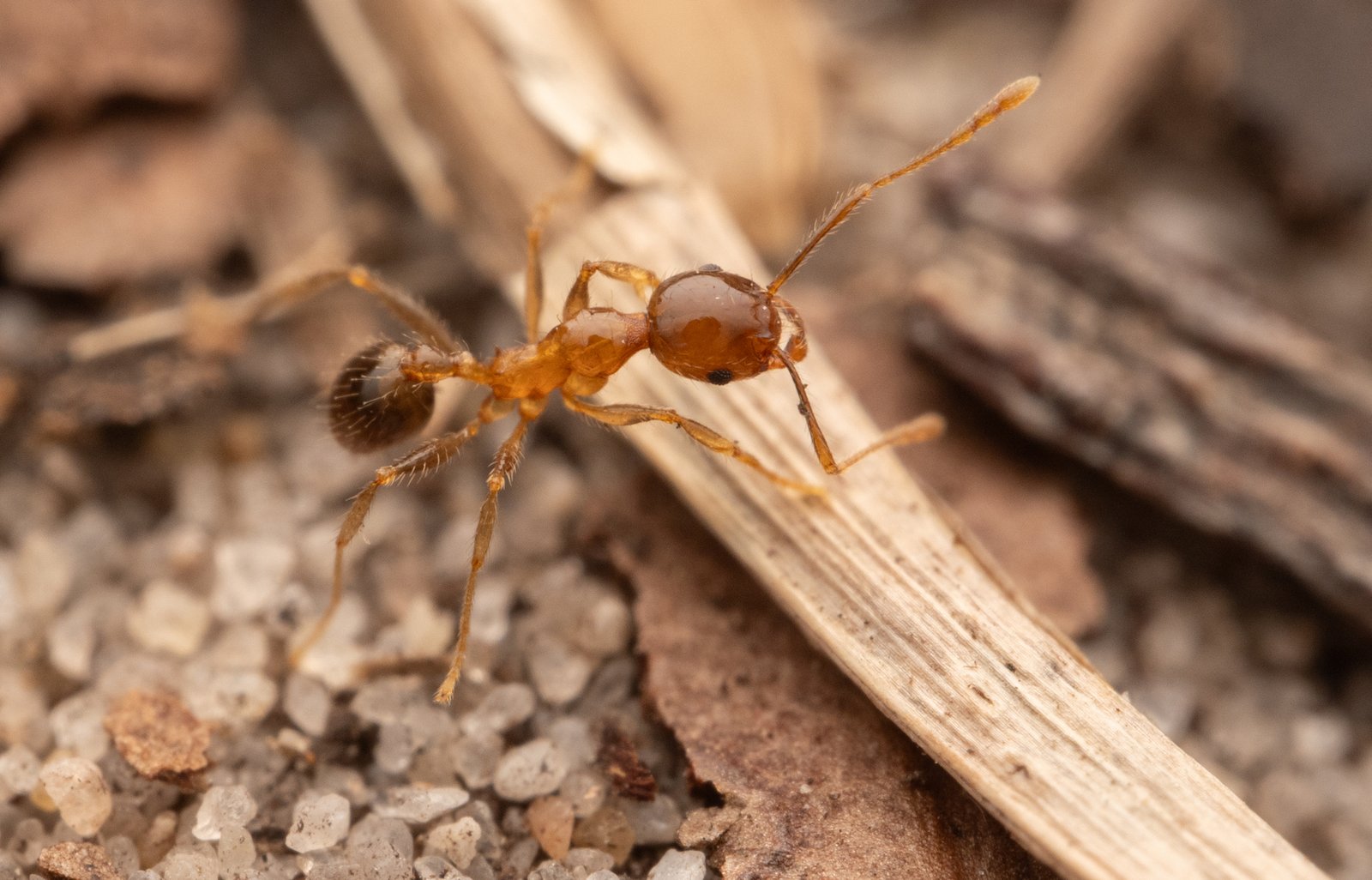
Minute brown ants with larger-headed soldiers among them. Fine sand in paving joints, at slab edges and in grout is the tell. Because a colony holds many nests, oil-based granular baits are the right approach.
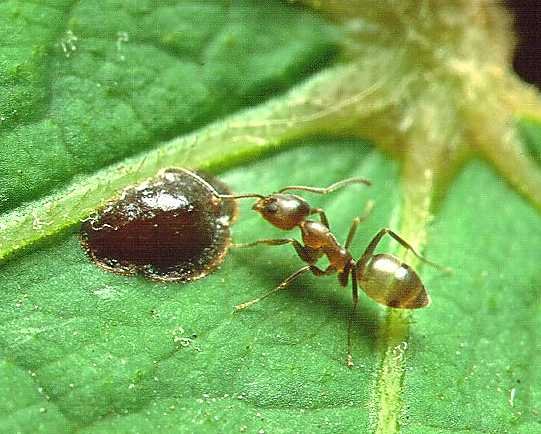
A small, matt brown ant that moves quickly in heavy trails. Its nests have multiple queens and link up with others nearby, so the problem often spans several properties. Repellent spray is the worst thing to use on it.
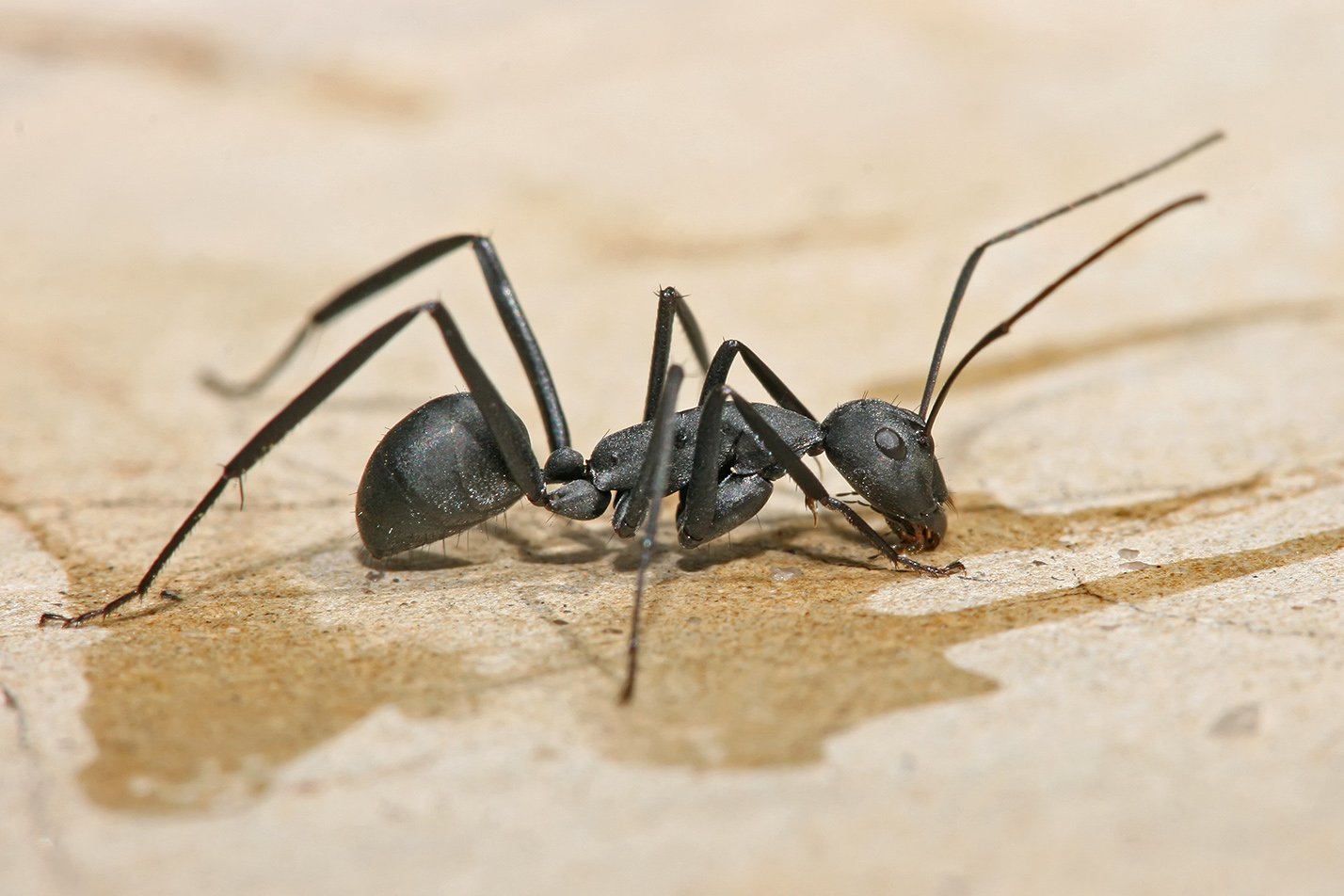
These are the large night-active ants that nest in soil, hollow trees and timber that has softened with damp. Structural damage is uncommon in Australia, but a wall nest points to a leak worth chasing.
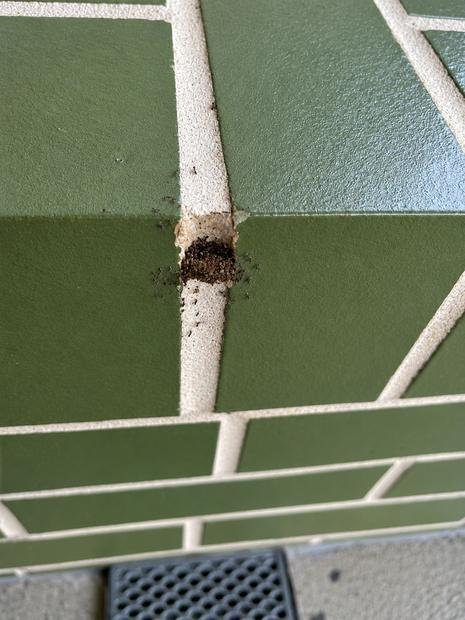
From an Elite job - a nest coming out of a mortar joint. Cracked mortar and weep holes open directly into the wall cavity, and that cavity is where a lot of black house ant colonies sit.
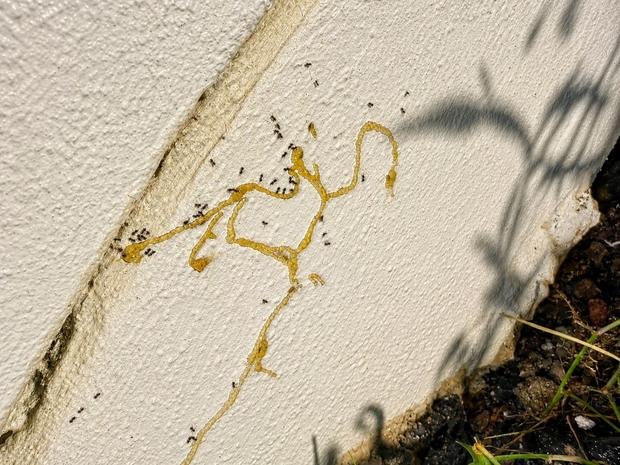
An Elite photo of gel bait on an active trail. The whole point is letting them feed and take it home, so the trail must be left alone once we have treated it.
Where ants appear usually tells us where the nest is and which species we are dealing with.
A trail coming in from the external wall normally means a nest in the cavity or at the garden edge, and that entry point is where the tracing begins.
That fine sandy soil appearing between pavers, along the driveway and at slab joints is the classic coastal brown ant sign - they are nesting below.
A nest in a power point or appliance is about warmth. Spraying into electrical fittings is dangerous - tell us and we will treat it the right way.
Swarming winged ants in spring or summer are a mating flight. Seen inside the house, it often means the colony is mature and in the building.
Bathroom trails around the shower, basin or toilet normally mean water: damp in the wall cavity, or a slow leak supplying the colony.
These are the bull ants and jumper ants nesting in lawns and beds - a painful sting, and a risk of serious allergic reaction for some.
One call to a licensed Sydney technician gets you straight advice and a fixed quote within 30 minutes.
Argentine ants and a number of house ants carry multiple queens. Spray them with a repellent and a queen plus a few hundred workers simply moves out and starts again nearby.
Repellent means detectable, and detectable means avoided. Non-repellent products let foragers walk through and transfer the active to the rest of the nest.
Ants will ignore bait that does not suit their current needs. Because they alternate between sugar and protein depending on the brood, we test preference rather than assume.
Results come over days as the bait spreads. Spray the trail the next morning and you have killed the ants that were carrying it home. Our blog explains budding in more detail.
Tracing first, then baits and non-repellent products that do the work after we leave.
First the species, then the trails - followed back to where they enter and to nests in the wall, under paving, at garden edges or in the roof space.
A test with small amounts of each bait type - sweet, protein, oil-based - tells us what the colony wants at this point in its cycle.
Inside, gel bait follows the trails: window frames, skirting, the routes they already use, always placed where children and pets cannot get to it.
We treat the foundation line, weep holes, door frames and paths with a non-repellent so incoming ants carry it with them.
For nests beneath pavers and in lawn edges - typically coastal brown ants - we use granular bait or treat the nest directly.
Written summary, instructions on what not to spray, and a 6-month warranty covering the general treatment.
The same bait does not suit every ant. This is how we choose.
| Species | Usually feeding on | Treatment approach | Common mistake |
|---|---|---|---|
| Black house ant | Sugars and honeydew, turning to protein while brood is being raised | Sweet gel on the trails themselves, with a non-repellent at weep holes and frames | Cleaning the trail off every day, which just sends them foraging somewhere else |
| Coastal brown ant | Oils and protein rather than sugars | Granular bait with an oil base, spread on paving and at the lawn edge | Boiling water down one hole - there are dozens of other nests |
| Argentine ant | Sugars, with protein at times | Slow-acting baits plus non-repellent treatment across the property line | Repellent barrier sprays, which split multi-queen nests |
| Sugar ants (Camponotus) | Sweet foods and insects, mostly at night | Night-time trail inspection, bait near the nest, fix moisture in timber | Treating only in daylight when the ants are not active |
| Bull ants and jumper ants | Nectar and insects taken outdoors | Direct nest treatment wherever it is in the lawn or beds | Trying to dig it out yourself and getting stung |
| Time of year | What is happening | What to watch for |
|---|---|---|
| Early spring (Sept to Oct) | Colonies become active and start on brood, which shifts them onto protein | Early indoor trails, and sand piles returning to the paving |
| Late spring to summer (Nov to Feb) | Peak foraging, mating flights after warm humid weather | Winged ants, heavy trails after storms and heatwaves |
| Autumn (Mar to May) | Colonies peak in size and stock up for the cooler months | Trails into the pantry and around pet bowls |
| Winter (Jun to Aug) | Outdoor activity slows, but nests in heated walls keep going | Ants around heaters, hot water units and kitchens |
Most failed ant treatments come down to what happens in the week after.
Brick cavities are dry, warm and undisturbed, which makes them ideal nesting. The weep hole is the doorway and it is usually where we start on a Schofields job.
After sustained rain in Schofields we get a run of calls, and the cause is consistent: shallow nests waterlogged, the colony moved into a wall cavity or subfloor to dry out.
Ants protecting aphids on a Schofields citrus or gardenia will keep that trail running all season. It is a garden problem presenting as a kitchen one.
We follow the trail back to the colony rather than treating the spot where you noticed it.
Which bait we use depends on the ant and the season: sweet, protein or oil-based.
Non-repellent products only - they are taken back to the nest rather than scattering it.
If ants return within 6 months of a general treatment, we return at no charge.
Everything you need to know before you book. Still unsure? Call us — we're happy to help.
Get a Free QuoteAnt treatment starts from $89. We quote on the property rather than the postcode, so a unit in Schofields and a large house are priced differently. The figure is fixed before any work starts. Every general treatment carries a 6-month warranty.
We cover it on scheduled runs, so a day's notice gets you the best slot. We are about 36.6 km north-west of the city here, and Schofields is covered by the Blacktown & Mount Druitt team.
Two things drive it on an estate: compact blocks with narrow side passages, and ground that was cleared and rebuilt recently, which displaces whatever was living in it.
Newer homes, tightly spaced, usually slab on ground - so the treatment concentrates on the perimeter and entry points.
Yes - freestanding homes, townhouses, apartments, rentals and business premises in Schofields 2762 are all covered, with documentation suitable for an agent or a strata manager.
It is, as long as you follow what we tell you on the day - usually keeping off treated surfaces for a couple of hours. Let us know at booking about young children, pets or an aquarium.
In the great majority of jobs, no. If one area needs to be left for an hour or two we say so before we start rather than after.
Allow one to two hours for a typical Schofields property. Larger homes, or ones where the problem has spread, take longer and we will say so when we quote.
Every general treatment carries a 6-month warranty. Call us if activity picks up again and we will arrange the return visit.
We do. Schofields and Riverstone, Quakers Hill, The Ponds and Dean Park are all on the same route, which helps if you own more than one property in the area.
Photographs from Elite jobs across Sydney — not stock imagery.
Insured, licensed technicians and a straight quote within 30 minutes - no obligation either way.