Budding splits the colony
Multi-queen species - Argentine ants and several house ants among them - react to a repellent by splitting. A queen and a few hundred workers relocate, and one colony becomes two.

Ant Control in Roseville 2069 — local technicians, fixed prices and a written report. Ant treatment starts from $89.
Real, verified feedback from people we've helped — straight from Google.
Local technicians, fixed prices and a written report for every job in Roseville.
Roseville sits about 9.6 km north of the CBD in the Lower North Shore, and postcode 2069 is one we are in most weeks. Our technicians are through Roseville most days, so same-day attendance is usually available.
Most weeks we are somewhere between Roseville Golf Course and Roseville station in Roseville, and Hemsley Reserve is close enough to be on the same run.
The suburb sits in the North Sydney, Mosman, Willoughby, Lane Cove and Hunters Hill area. East Lindfield, Roseville Chase and Castle Cove are all covered on the same day, so a problem that has spread across a boundary can be handled in one visit. Period homes near the harbour tend to have sub-floors, original timber and gardens running down to the boundary, so the inspection covers well beyond the kitchen.
Roseville jobs tend to be period houses and converted blocks where the lower level is the problem. Let us know which when you ring and we will plan the visit around it.
The rest of 2069 is covered too, including the pockets around Blue Gum Reserve and Chatswood Chase Shopping Centre.
We confirm your slot the day before and arrive at a stated time. East Lindfield and Roseville Chase sit on the same run, so earlier appointments in 2069 come up regularly.
Ants in timber are a symptom. They do not create the damp, they move into timber the damp has already softened, so the leak matters more than the ants.
Ants lay a pheromone trail that other workers follow, which is why the line is so precise and why it reappears in exactly the same place after you wipe it. Cleaning a Roseville kitchen removes the smell for a few hours, not the colony that laid it.
A trail along a bench is foragers, and foragers are maybe five per cent of the colony. The queens, the brood and most of the workers are in a nest you have not found, which is why wiping the trail achieves nothing lasting in a Roseville kitchen.
Each of these behaves differently, so the bait and the placement change too. Two photos come from our own jobs.
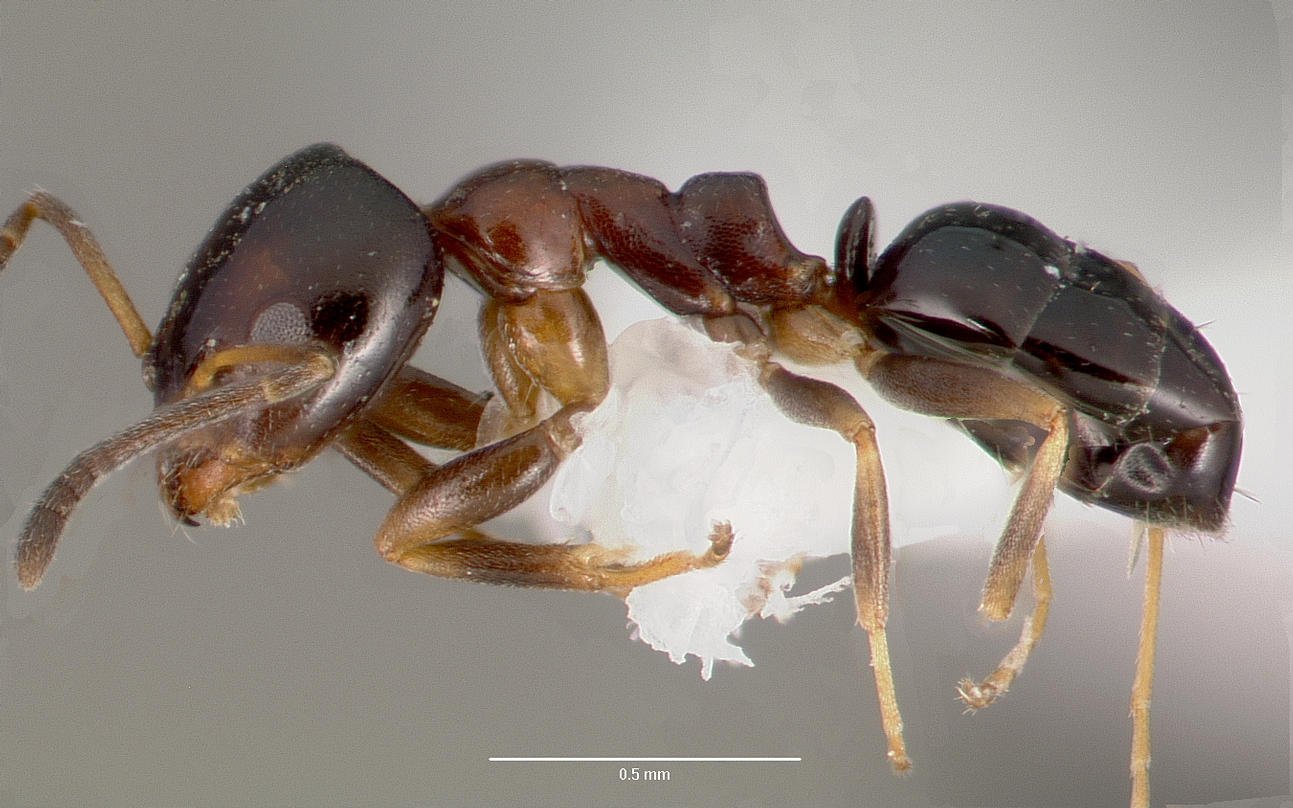
Small and shiny black. It is the usual kitchen ant here, trailing along skirting boards, window frames and power cables from nests in wall voids, roof spaces and the garden edge, and it takes sweet bait easily.
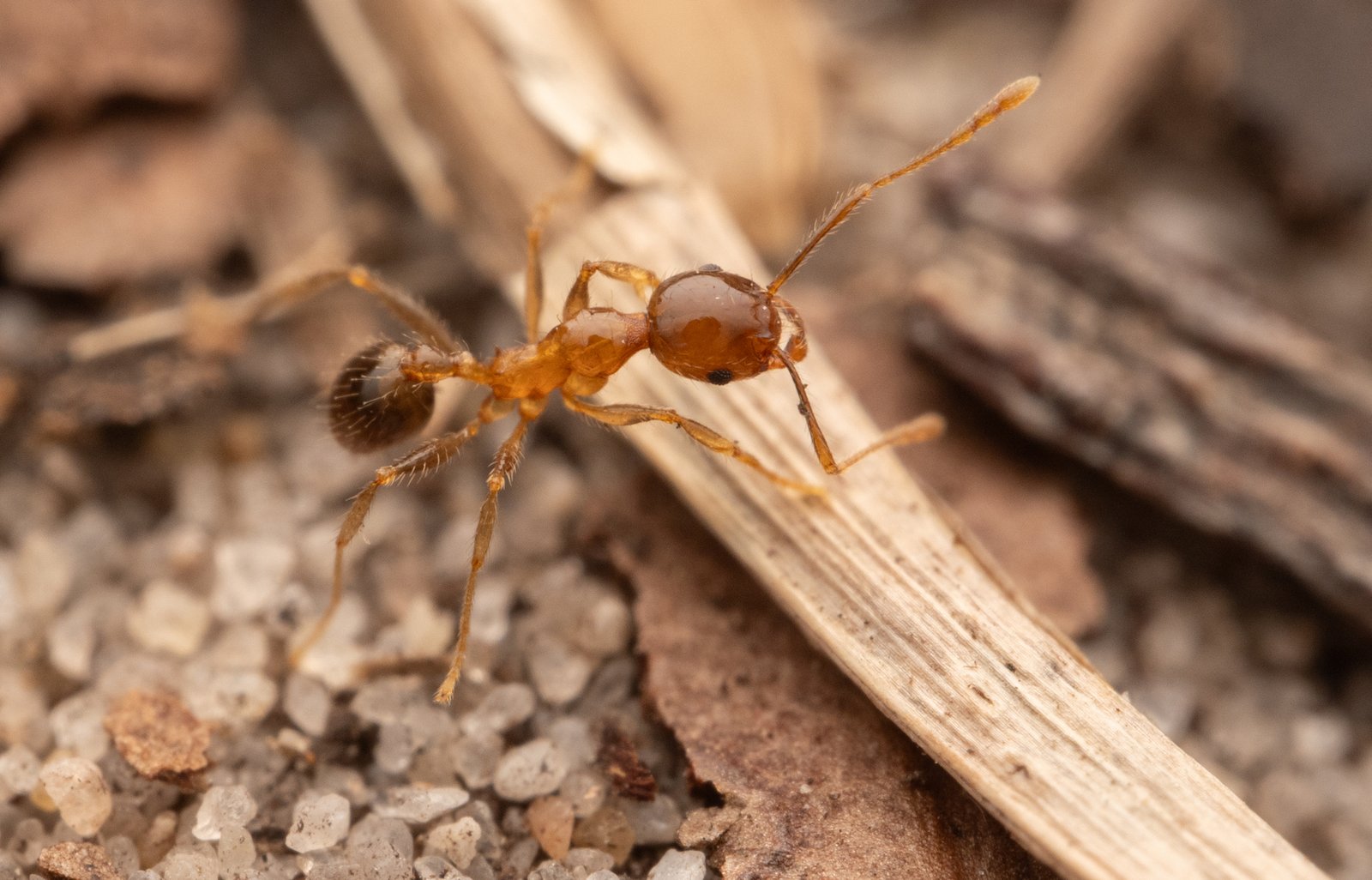
Small brown ants that include a bigger-headed soldier caste. Sandy soil pushed up between pavers and along slab edges gives them away. Colonies run to many nests, and oil-based granular bait is what works.
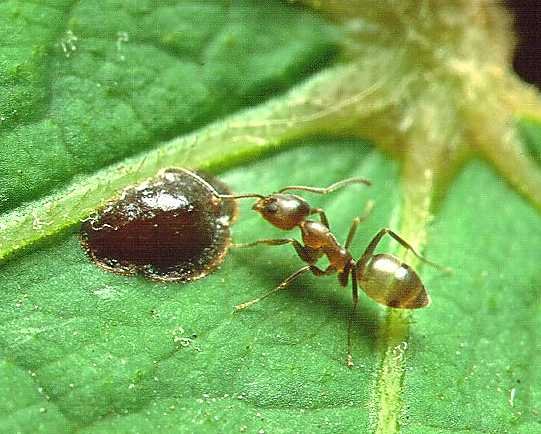
Dull brown, small, and noticeable for the thickness and speed of its trails. Multi-queen nests connect to neighbouring ones, which is how an infestation covers several properties. Repellents make it markedly worse.
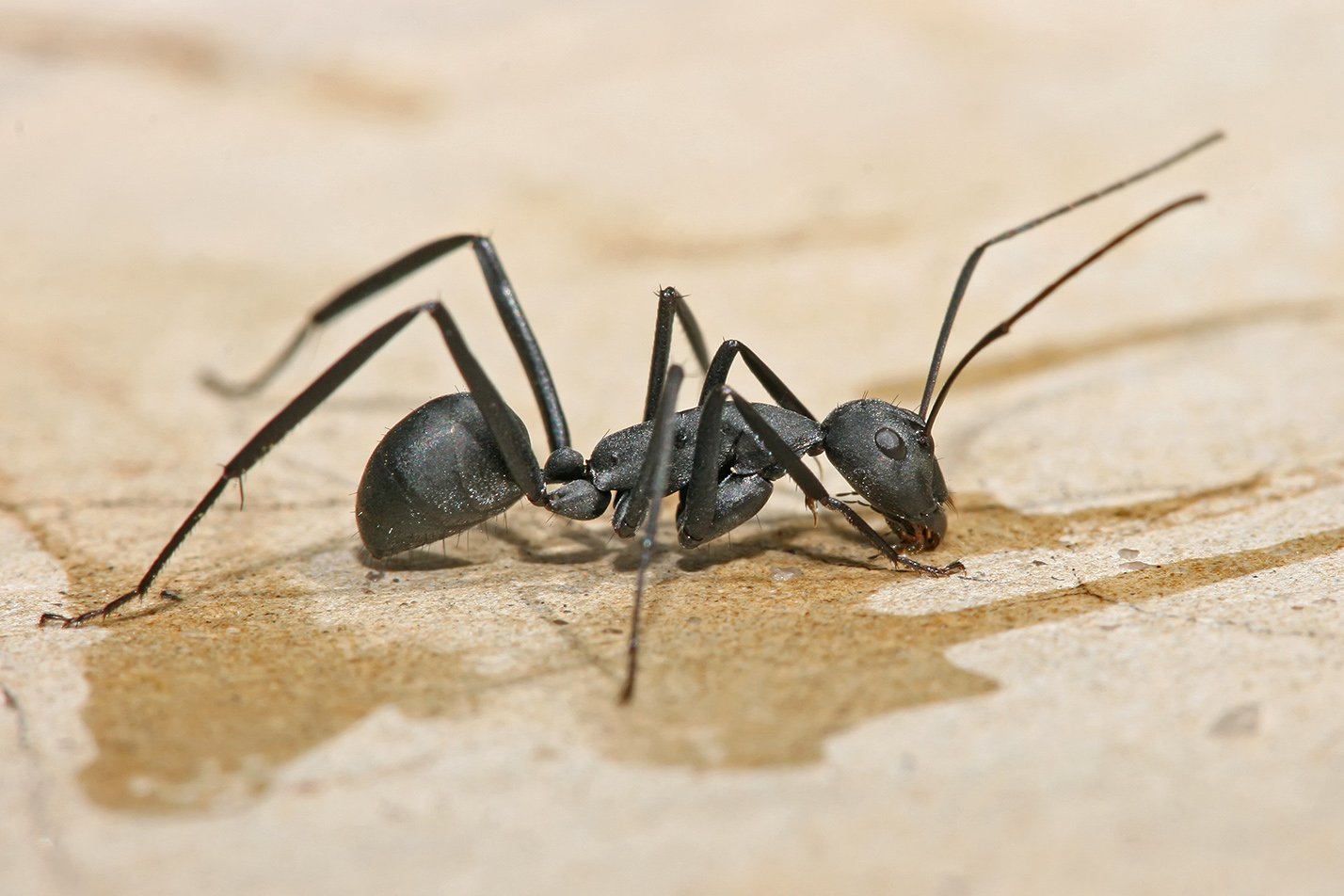
Large ants, often active at night, that nest in soil, hollow trees and softened or damp timber. Unlike the notorious overseas species they are rarely a structural pest, but a nest in a wall often points to a leak worth fixing.
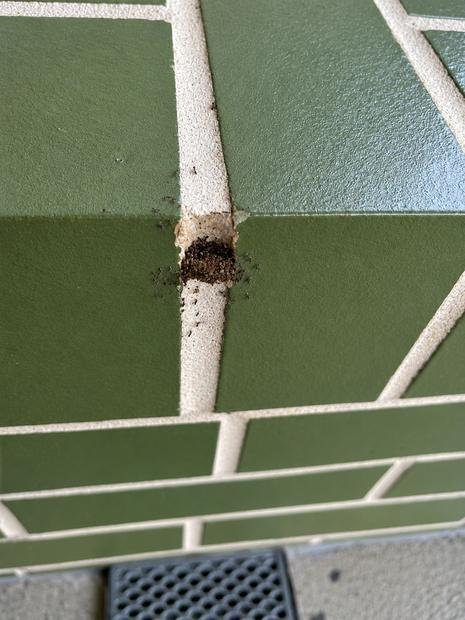
An Elite photo of ants emerging from mortar. The route runs through weep holes and cracked joints straight into the wall cavity, which is the usual home for a black house ant colony.
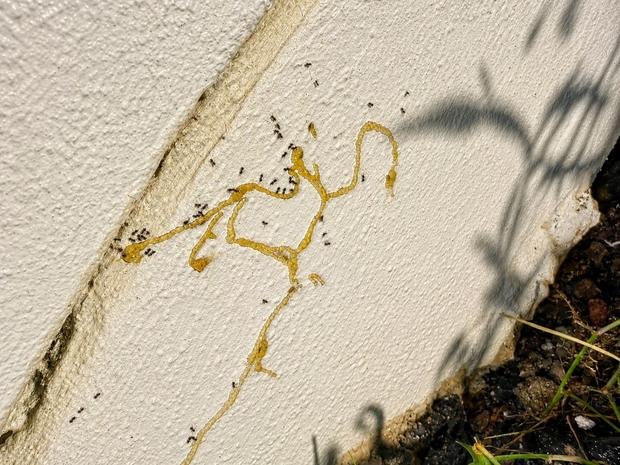
Photo from an Elite job: gel bait placed along an active trail. The ants are left to feed and carry the bait home, so we ask customers not to wipe or spray the trail afterwards.
Where ants appear usually tells us where the nest is and which species we are dealing with.
A trail coming in from the external wall normally means a nest in the cavity or at the garden edge, and that entry point is where the tracing begins.
If fine soil keeps appearing in the paving joints and along the drive, coastal brown ants are nesting beneath it.
A nest in a power point or appliance is about warmth. Spraying into electrical fittings is dangerous - tell us and we will treat it the right way.
Swarming winged ants in spring or summer are a mating flight. Seen inside the house, it often means the colony is mature and in the building.
Ant trails at the shower, vanity or toilet usually come down to moisture - either damp in the wall or a slow leak they are drinking from.
Bull ants and jumper ants nest in lawns and garden beds. Their stings hurt and can cause serious allergic reactions in some people.
A licensed Sydney technician will talk it through and give you a fixed quote within half an hour.
Multi-queen species - Argentine ants and several house ants among them - react to a repellent by splitting. A queen and a few hundred workers relocate, and one colony becomes two.
Retail sprays repel: the ants know they are there and go round. Professional non-repellents do not register, so the foragers deliver the active to the colony for us.
Bait is only taken if it matches what the colony wants right now. Their preference moves between sugar and protein as the brood changes, so we test and switch baits accordingly.
A bait program works over days. The worst thing you can do is spray the trail once we have gone - those ants are the delivery system. See our blog on budding in more detail.
Tracing first, then baits and non-repellent products that do the work after we leave.
Identification comes first. Then we trace the trails to the entry points and the nests themselves, whether those are in walls, paving, garden edges or the roof.
Small amounts of sweet, protein and oil-based bait show what the colony is feeding on right now.
Gel is placed on the trails themselves - along window frames and skirting boards - and positioned out of reach of children and pets.
A non-repellent treatment around the foundation, weep holes, door frames and paths intercepts ants coming in.
Under-paver and lawn-edge nests are handled with granular bait, or treated directly where that is better.
The job ends with a written summary, advice on what to avoid spraying, and a 6-month warranty.
The same bait does not suit every ant. This is how we choose.
| Species | Usually feeding on | Treatment approach | Common mistake |
|---|---|---|---|
| Black house ant | Sweet liquids and honeydew; protein while the colony is raising young | Gel bait placed on trails, non-repellent applied at weep holes and window frames | Wiping trails clean daily, so the colony simply forages on a different route |
| Coastal brown ant | Oils and protein rather than sugars | Granular bait with an oil base, spread on paving and at the lawn edge | Boiling water down one hole - there are dozens of other nests |
| Argentine ant | Sugars primarily, sometimes protein | Slow-acting baits combined with non-repellent treatment across the boundary | A repellent barrier, which splits nests that hold many queens |
| Sugar ants (Camponotus) | Nocturnal, on sweet foods and insects | Trails inspected at night, bait placed near the nest, timber moisture fixed | Only ever treating during the day, when there is nothing to see |
| Bull ants and jumper ants | Nectar and insects, outdoors | Treating the nest directly where it sits in lawn or garden bed | Digging the nest out by hand, which is how people get stung |
| Time of year | What is happening | What to watch for |
|---|---|---|
| Early spring (Sept to Oct) | Colonies wake up and start raising new brood, so protein demand rises | First trails indoors, sand piles reappearing in paving |
| Late spring to summer (Nov to Feb) | Peak foraging, mating flights after warm humid weather | Winged ants, heavy trails after storms and heatwaves |
| Autumn (Mar to May) | Full colony size, and foraging to build stores before it cools | Pantry trails, and ants on the pet food |
| Winter (Jun to Aug) | Outside activity drops away, though nests in warm wall cavities carry on | Ants near heaters, hot water units and in the kitchen |
Most failed ant treatments come down to what happens in the week after.
A column of ants going in and out of a weep hole means they are nesting in the cavity, not the garden. Treating the garden bed in that case does nothing at all for a Roseville home.
Honeydew is a sugar supply the colony will defend. We point out the plant on a Roseville job because otherwise the trail simply re-establishes.
Fine soil pushed up along paving joints, path edges and garden edging is excavation - there is a nest directly beneath. Around Roseville that is coastal brown ants more often than not.
Trails lead somewhere, so we follow them to the colony instead of spraying the sighting.
The bait is chosen for the species and the time of year - sweet, protein or oil-based.
We use non-repellents the foragers carry back, not sprays that split the colony up.
General ant treatments are covered. If ants come back within 6 months, so do we.
Everything you need to know before you book. Still unsure? Call us — we're happy to help.
Get a Free QuoteAnt treatment starts from $89. There is no call-out charge in Roseville 2069. The final number comes down to the property itself, and it is fixed before we begin. Every general treatment carries a 6-month warranty.
At roughly 9.6 km north of the city, Roseville is on a route we run regularly. Same-day attendance is usually available. You will be given a time, not a window.
Established gardens, original timber and sub-floors that no longer breathe - that is the profile of a harbourside house, and it suits ants very well.
Large older homes and converted apartments, with damp lower levels the recurring theme.
Yes. Houses, townhouses, units, strata common property, rentals and commercial sites in Roseville 2069 are all part of what we do, and the paperwork is the kind agents accept.
It is, provided the instructions are followed. We will tell you what to keep clear of and for how long before we leave. Let us know about children, pets or fish tanks when you book.
Usually not. Most of the work is done with you in the house, and where a room does need to be clear it is for a short period we will tell you about on arrival.
For a standard Roseville home, one to two hours. We would rather tell you it will take longer up front than rush it.
Every general treatment carries a 6-month warranty. If activity continues past the expected period, call us and we will come back.
We do. Roseville and East Lindfield, Roseville Chase, Castle Cove and Chatswood are all on the same route, which helps if you own more than one property in the area.
Photographs from Elite jobs across Sydney — not stock imagery.
Fully insured technicians who turn up when they say they will. Quote within 30 minutes, no obligation.