Budding splits the colony
Where a species has many queens, a repellent spray causes budding rather than death. Part of the colony, queen included, moves elsewhere, and you have doubled the problem.

Ant Control in Canoelands 2157 — local technicians, fixed prices and a written report. Ant treatment starts from $89.
Real, verified feedback from people we've helped — straight from Google.
What we cover in Canoelands, and how quickly we can get there.
Postcode 2157 covers Canoelands and the streets immediately around it. At about 42.4 km north of the CBD it falls in the Hawkesbury & the Rural North-West, where we have vans out daily. We travel out to Canoelands on planned runs through the Hawkesbury & the Rural North-West, so booking a day ahead gets you the best slot.
Around Canoelands we are most often working near Marramarra National Park.
Hawkesbury is the council area for Canoelands, and we treat Singletons Mill, Forest Glen and Lower Hawkesbury on the same schedule. Bigger properties mean sheds, stables and stacked timber to check as well as the house.
The bulk of our Canoelands work is acreage properties with outbuildings that need checking alongside the house. Mention the detail when you call 1300 313 373 - it decides how long we need on site.
All of 2157 falls inside the area we service.
You get a confirmed time, not a window. We plan the 2157 run the day before, and if Singletons Mill or Forest Glen is on the same round there is often an earlier slot going.
Where we find ants in a Canoelands wall or frame, we look for the water first. Fix the leak and the timber dries; leave it and another colony will use the same cavity.
Ants will defend aphids and scale from predators because that honeydew is their sugar supply. Deal with the scale on the plants near the house and the ant pressure drops with it.
A colony can occupy a garden bed, a paving slab and a wall cavity at once. That is why a single treated nest in Canoelands changes very little on its own.
Each of these behaves differently, so the bait and the placement change too. Two photos come from our own jobs.
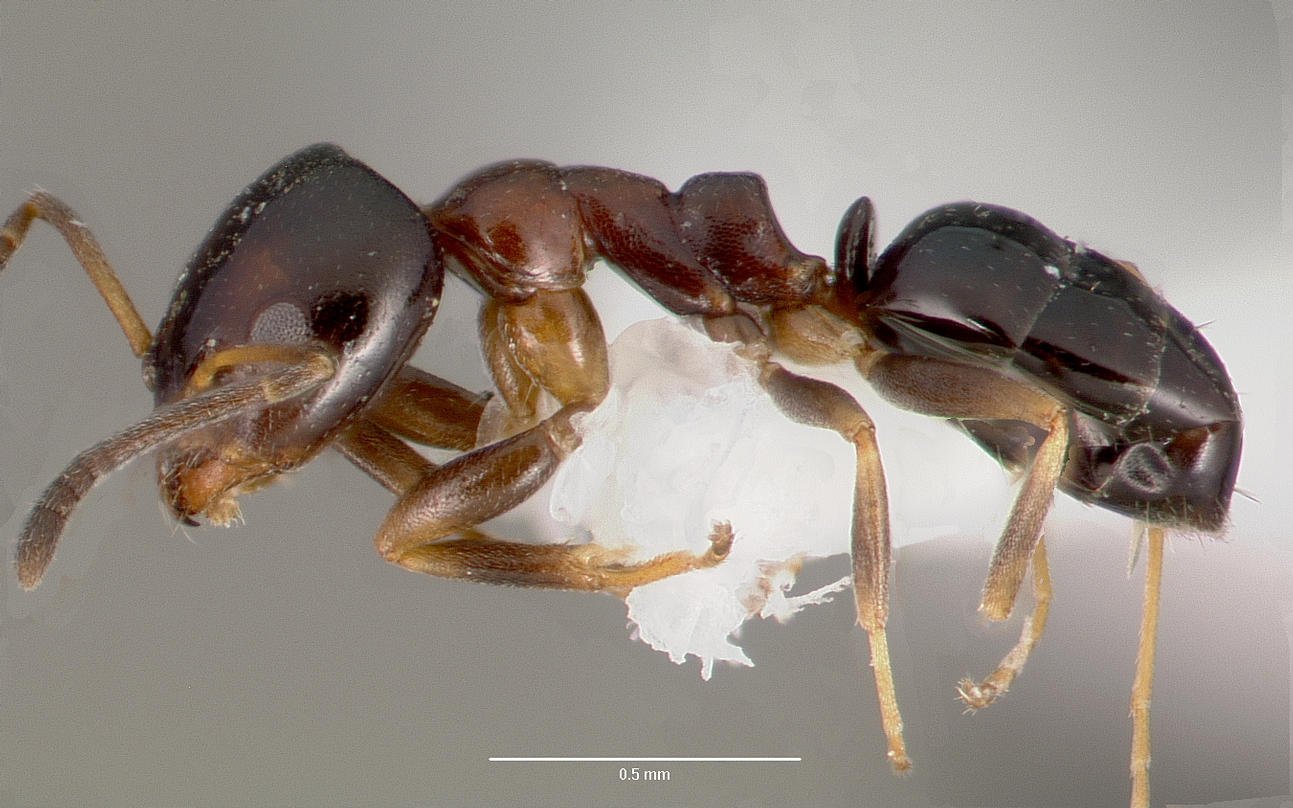
A small black ant with a glossy body, and the one most often in Sydney kitchens. It nests in wall cavities, the roof void and garden edges, trails along skirtings and cabling, and feeds readily on sweet bait.
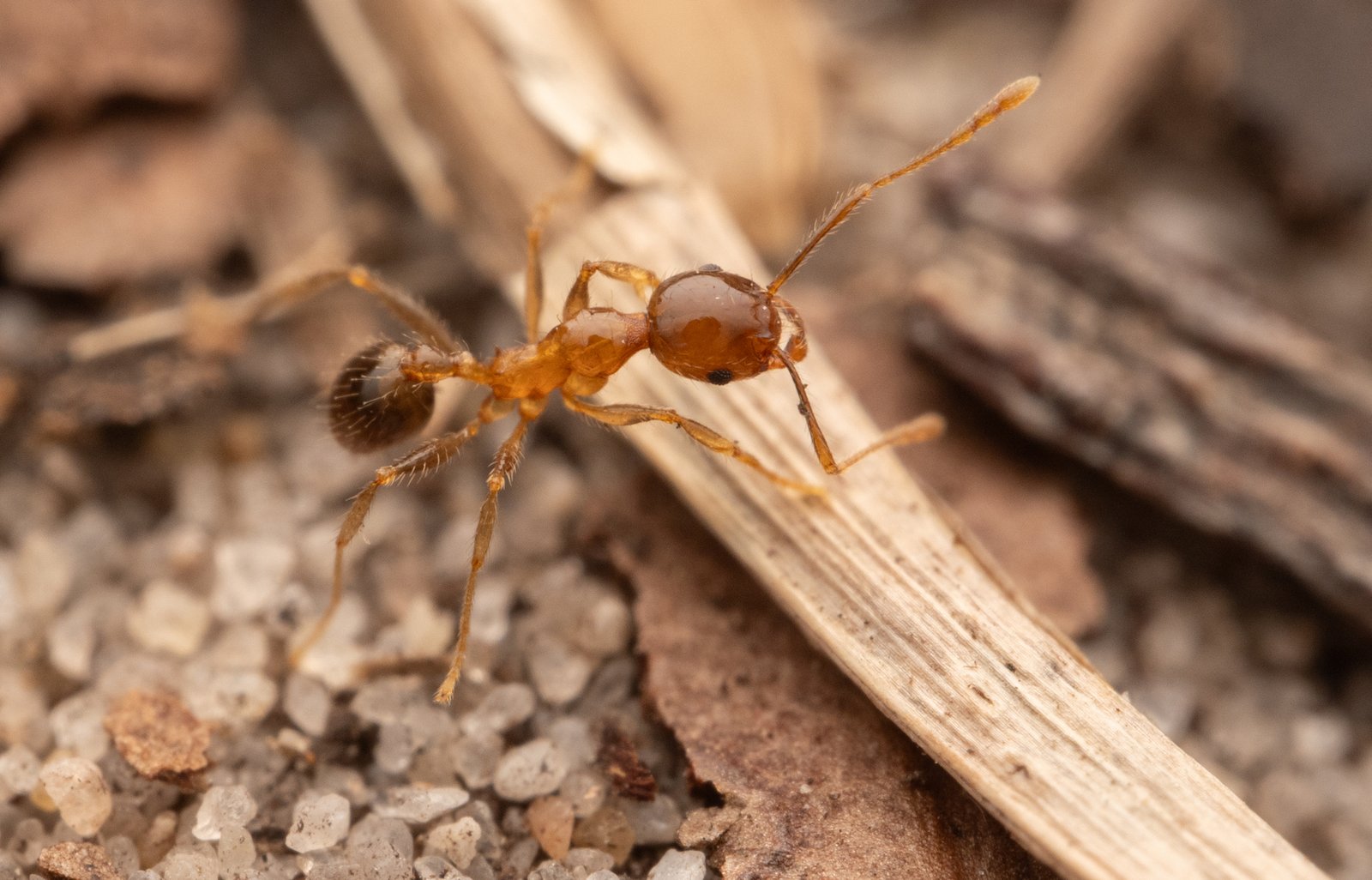
Minute brown ants with larger-headed soldiers among them. Fine sand in paving joints, at slab edges and in grout is the tell. Because a colony holds many nests, oil-based granular baits are the right approach.
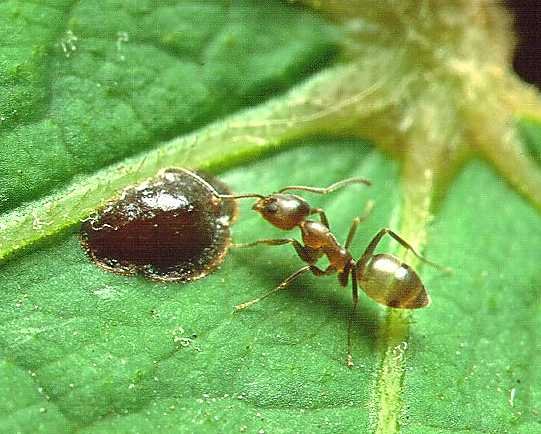
Small, dull brown and fast-moving in thick trails. Nests hold many queens and connect with neighbouring nests, so infestations can stretch across several properties. Repellent sprays are especially counter-productive with this species.
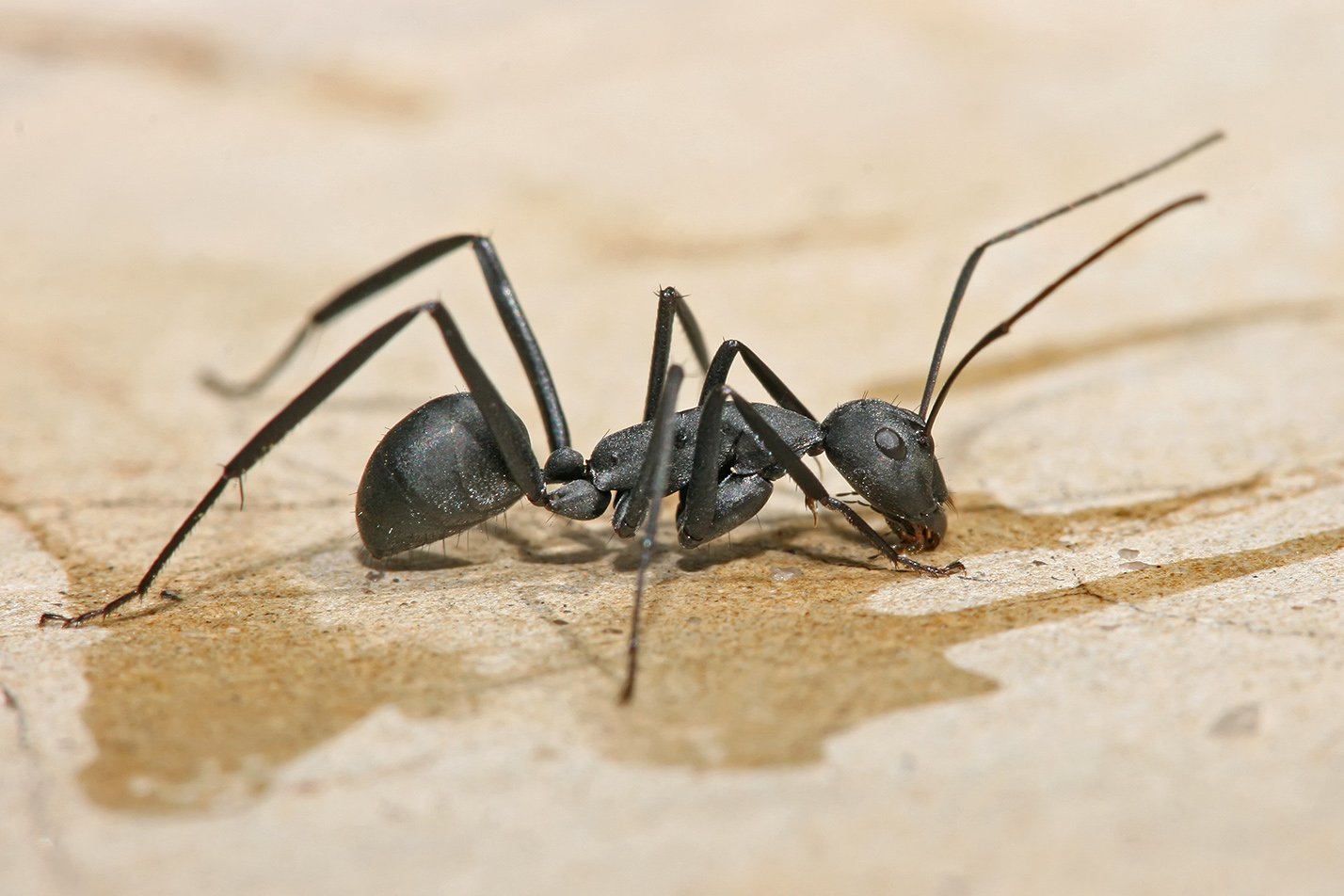
Big ants, usually out after dark, nesting in soil, hollow trees and timber that has gone soft or damp. They are not the structural threat their overseas relatives are, but finding one in a wall usually means there is a leak behind it.
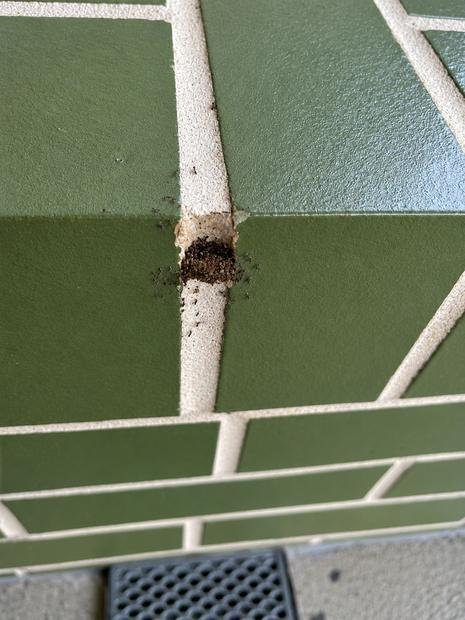
Taken on an Elite job: a mortar joint with a nest behind it. Weep holes and failed mortar are a direct path into the cavity, where many black house ant colonies establish.
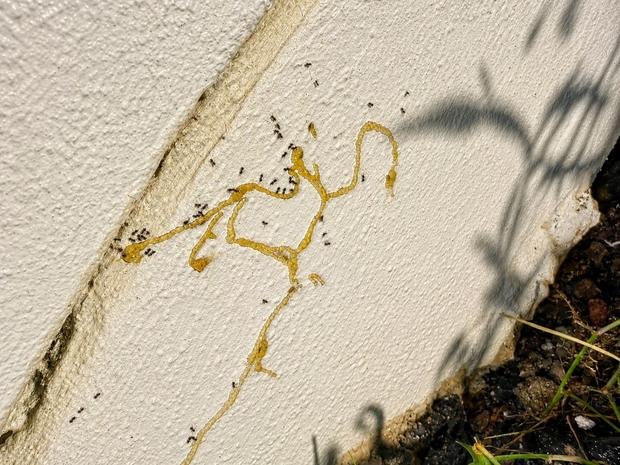
Photo from an Elite job: gel bait placed along an active trail. The ants are left to feed and carry the bait home, so we ask customers not to wipe or spray the trail afterwards.
Where ants appear usually tells us where the nest is and which species we are dealing with.
Ants entering from the external wall point to a cavity or garden-edge nest. Finding that entry is the first step.
That fine sandy soil appearing between pavers, along the driveway and at slab joints is the classic coastal brown ant sign - they are nesting below.
Warmth is what draws them into switches and electrical fittings. Never spray into a power point - tell us instead and we will treat it safely.
Swarming winged ants in spring or summer are a mating flight. Seen inside the house, it often means the colony is mature and in the building.
When trails appear around the shower, vanity or toilet, moisture is the reason - often a slow leak the colony is drinking from.
Bull and jumper ants live in lawn and garden-bed nests. The sting hurts, and for some people it brings on a serious allergic reaction.
A licensed Sydney technician will talk it through and give you a fixed quote within half an hour.
Where a species has many queens, a repellent spray causes budding rather than death. Part of the colony, queen included, moves elsewhere, and you have doubled the problem.
The difference matters. Retail sprays are repellent - ants sense them and avoid the treated area. Non-repellent products cannot be detected, so foragers cross them, pick up the active and take it back to the nest.
A colony only takes bait if it wants that food at that moment. Ants switch between sugar and protein as their brood needs change, so we test preferences and change baits when needed.
Give it days, not hours. Bait has to be carried through the colony, and spraying the trail afterwards destroys the couriers doing that work. Our blog covers budding in more detail.
Tracing first, then baits and non-repellent products that do the work after we leave.
We identify the ant and follow trails back to entry points and nests in walls, paving, garden edges and roof spaces.
Sweet, protein and oil-based baits are offered in small amounts so the colony shows us its current preference.
Gel is placed on the trails themselves - along window frames and skirting boards - and positioned out of reach of children and pets.
A non-repellent band around the footings, weep holes, door frames and paths catches ants as they come in.
Granular bait, or direct nest treatment, for the coastal brown ant nests under paving and at lawn edges.
Written summary, instructions on what not to spray, and a 6-month warranty covering the general treatment.
The same bait does not suit every ant. This is how we choose.
| Species | Usually feeding on | Treatment approach | Common mistake |
|---|---|---|---|
| Black house ant | Sugary liquids and honeydew, plus protein when raising brood | Sweet gel bait on trails, non-repellent perimeter at weep holes and frames | Wiping trails with detergent daily, which keeps the colony foraging elsewhere |
| Coastal brown ant | Protein and oil | Oil-based granular bait applied to paving and lawn edges | Pouring insecticide into one pile and assuming that was the colony |
| Argentine ant | Mainly sugars, protein at some points in the cycle | Slow-acting bait with a non-repellent treatment right across the boundary | Spraying a repellent barrier, which causes a multi-queen nest to bud |
| Sugar ants (Camponotus) | Insects and sweet foods, taken mainly at night | A night inspection of the trails, bait near the nest, and moisture in timber repaired | Daytime-only treatment, which misses them entirely |
| Bull ants and jumper ants | Insects and nectar outdoors | Direct nest treatment in lawns and garden beds | Digging into the nest by hand and getting stung |
| Time of year | What is happening | What to watch for |
|---|---|---|
| Early spring (Sept to Oct) | Colonies come out of winter and begin raising brood, which pushes protein demand up | The first indoor trails of the season, and sand reappearing between pavers |
| Late spring to summer (Nov to Feb) | Foraging at its height, and mating flights whenever it turns warm and humid | Winged ants indoors, and much heavier trails after storms and heatwaves |
| Autumn (Mar to May) | Full colony size, and foraging to build stores before it cools | Pantry trails, and ants on the pet food |
| Winter (Jun to Aug) | Little happening outdoors, but a nest in a heated wall stays active | Activity around heaters, the hot water unit and kitchen areas |
Most failed ant treatments come down to what happens in the week after.
After sustained rain in Canoelands we get a run of calls, and the cause is consistent: shallow nests waterlogged, the colony moved into a wall cavity or subfloor to dry out.
Brick cavities are dry, warm and undisturbed, which makes them ideal nesting. The weep hole is the doorway and it is usually where we start on a Canoelands job.
Mulch against the wall, a shrub touching the eaves and a damp garden bed along the footings all put ants within reach of the building. In Canoelands we routinely find the colony is in the garden, not the house.
We follow the trail back to the colony rather than treating the spot where you noticed it.
Which bait we use depends on the ant and the season: sweet, protein or oil-based.
Nothing repellent, because that causes budding. Non-repellent products get carried home instead.
A general ant treatment carries 6 months of cover - if they return inside it, so do we.
Everything you need to know before you book. Still unsure? Call us — we're happy to help.
Get a Free QuoteAnt treatment starts from $89. There is no call-out charge in Canoelands 2157. The final number comes down to the property itself, and it is fixed before we begin. Every general treatment carries a 6-month warranty.
At roughly 42.4 km north of the city, Canoelands is on a route we run regularly. We cover it on scheduled runs, so a day's notice gets you the best slot. You will be given a time, not a window.
There is simply more harbourage on a block this size. Sheds, stacked timber, feed stores and open ground all hold ants populations long before the house is involved.
Rural-residential blocks where the shed, feed store or woodpile is as likely to be the source as the building itself.
Yes. Houses, townhouses, units, strata common property, rentals and commercial sites in Canoelands 2157 are all part of what we do, and the paperwork is the kind agents accept.
It is, as long as you follow what we tell you on the day - usually keeping off treated surfaces for a couple of hours. Let us know at booking about young children, pets or an aquarium.
Most of the time you can carry on as normal. If a particular area needs to be empty we will flag it when we arrive and it is rarely more than a couple of hours.
Usually between one and two hours on site. Bigger properties and heavier infestations take more, and that is included in the quote rather than added afterwards.
Every general treatment carries a 6-month warranty. A return visit inside that period does not cost you anything.
Yes. As well as Canoelands we cover Singletons Mill, Forest Glen, Lower Hawkesbury and Berowra Creek on the same runs, so a job that crosses a boundary can be handled in one visit.
Photographs from Elite jobs across Sydney — not stock imagery.
Fully insured technicians who turn up when they say they will. Quote within 30 minutes, no obligation.