Budding splits the colony
Where a species has many queens, a repellent spray causes budding rather than death. Part of the colony, queen included, moves elsewhere, and you have doubled the problem.

Ant Control in Woodcroft 2767 — local technicians, fixed prices and a written report. Ant treatment starts from $89.
Real, verified feedback from people we've helped — straight from Google.
Local technicians, fixed prices and a written report for every job in Woodcroft.
Our Blacktown & Mount Druitt technicians cover Woodcroft and the rest of 2767 as a matter of course - it is only about 33 km west of the city. We cover Woodcroft on scheduled runs through the Blacktown & Mount Druitt, and we will give you a firm time rather than a window.
The Woodcroft addresses we attend cluster around Woodcroft Shopping Village and Doonside station. Doonside Crescent Bushland Reserve is another part of the suburb we are called to often.
We work under the Blacktown City area here, and Doonside, Marayong and Glendenning are all on the same route, which matters when ant problems are moving between adjoining properties. Estate blocks are compact with narrow side passages, so access and the perimeter are where most of the work happens.
What we see in Woodcroft is recently built homes where the activity started at the boundary. Describing it accurately when you book saves a second visit.
Wherever you are in 2767, you are inside the area our technicians cover.
Bookings for 2767 are confirmed the day before with a set arrival time, not an all-day window. Jobs at Doonside and Marayong often share the same run, which is how earlier slots come up.
Many ants get most of their sugar from honeydew - the secretion of aphids and scale insects they actively protect on garden plants. A Woodcroft garden with a scale problem is feeding the ant colony that then comes indoors.
What looks like a queue is a chemical road. Each worker reinforces it on the way back, so the trail gets stronger the better the food is - and re-forms along the same skirting the moment the cleaning dries.
After heavy rain the opposite happens - flooded nests push colonies up and inside. Both extremes send ants into Woodcroft houses for different reasons.
Each of these behaves differently, so the bait and the placement change too. Two photos come from our own jobs.
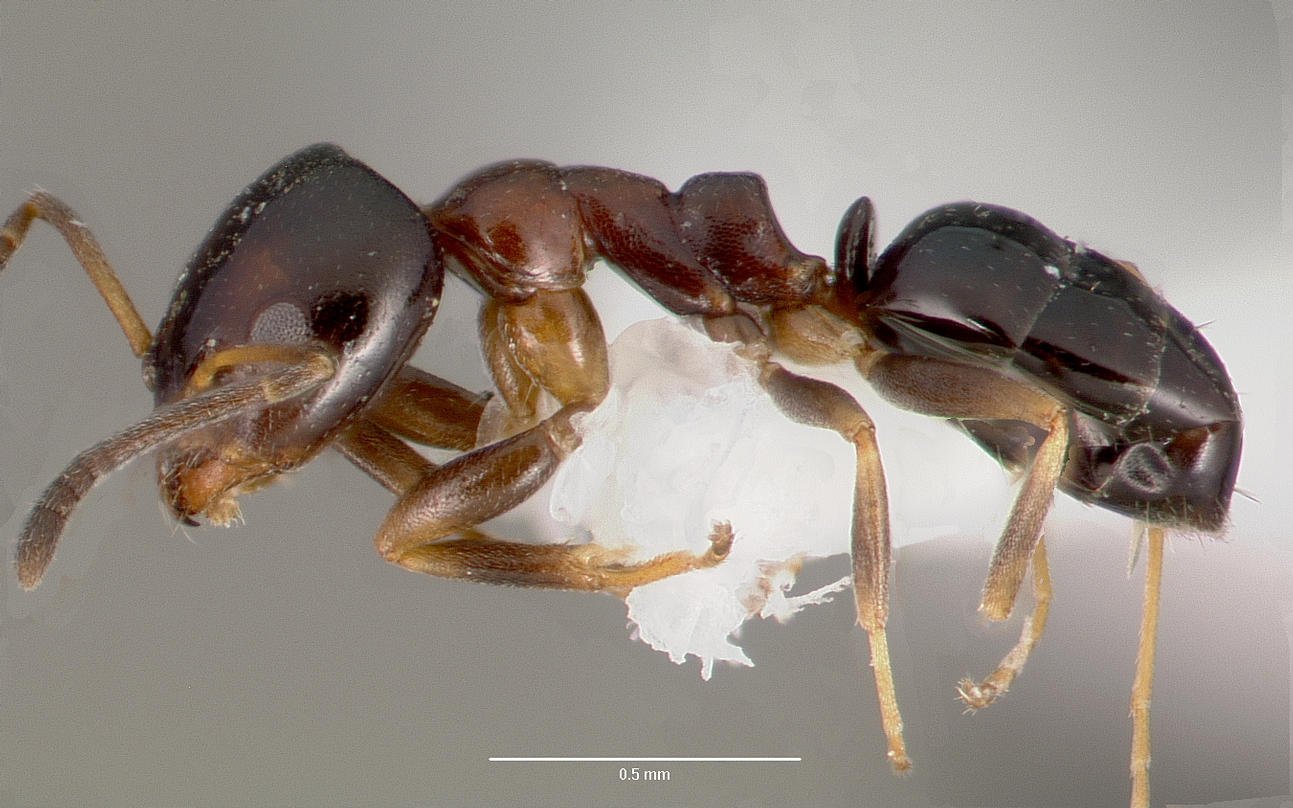
Shiny, black and small - Sydney's most common indoor ant. Trails follow skirting boards, window frames and power cables back to nests in wall voids, roof spaces or garden edges. Sweet baits work well on it.
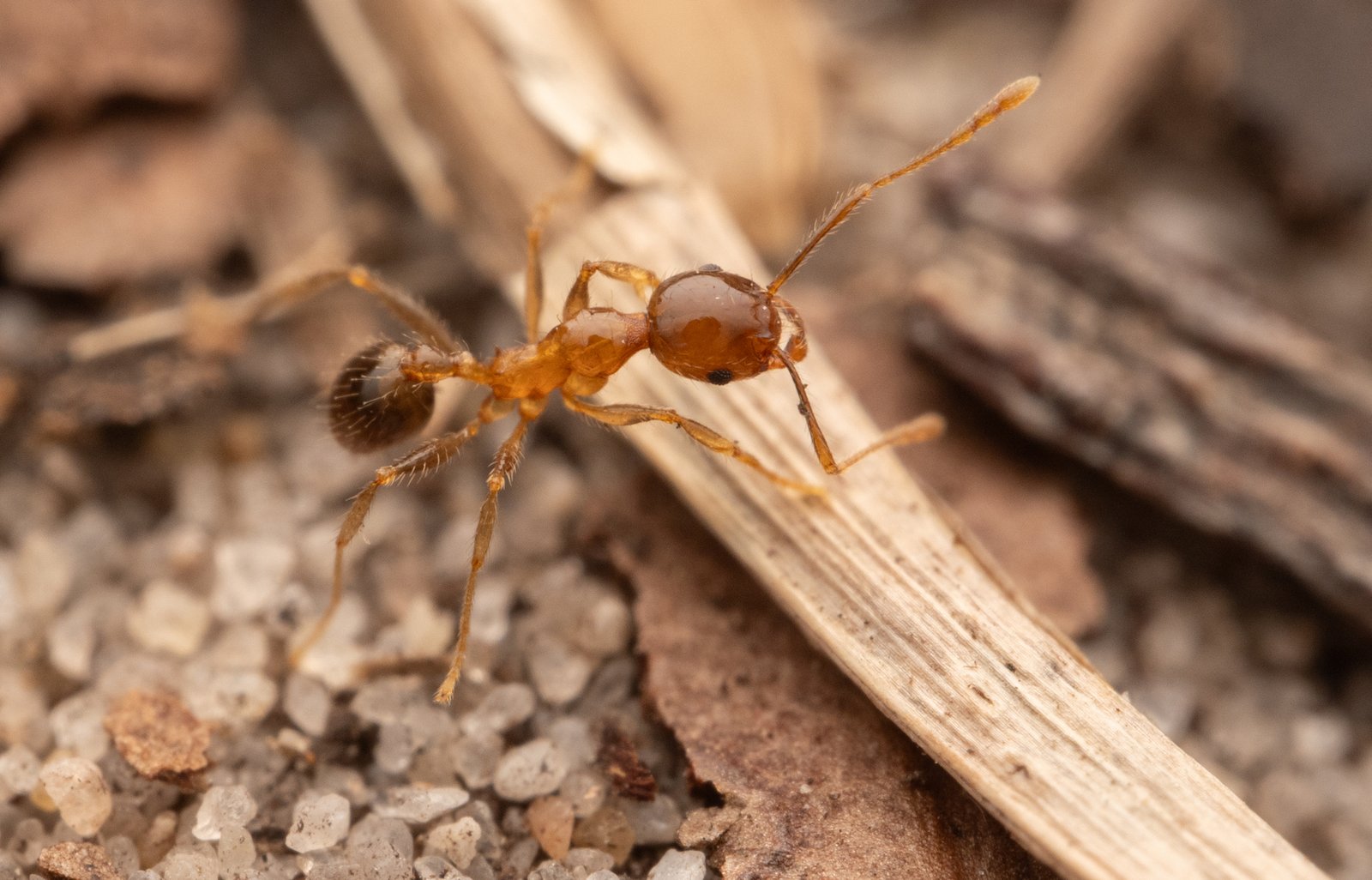
Small brown ants that include a bigger-headed soldier caste. Sandy soil pushed up between pavers and along slab edges gives them away. Colonies run to many nests, and oil-based granular bait is what works.
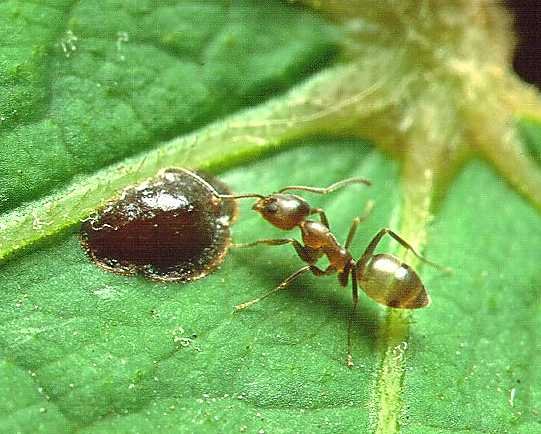
Small, dull brown and fast-moving in thick trails. Nests hold many queens and connect with neighbouring nests, so infestations can stretch across several properties. Repellent sprays are especially counter-productive with this species.
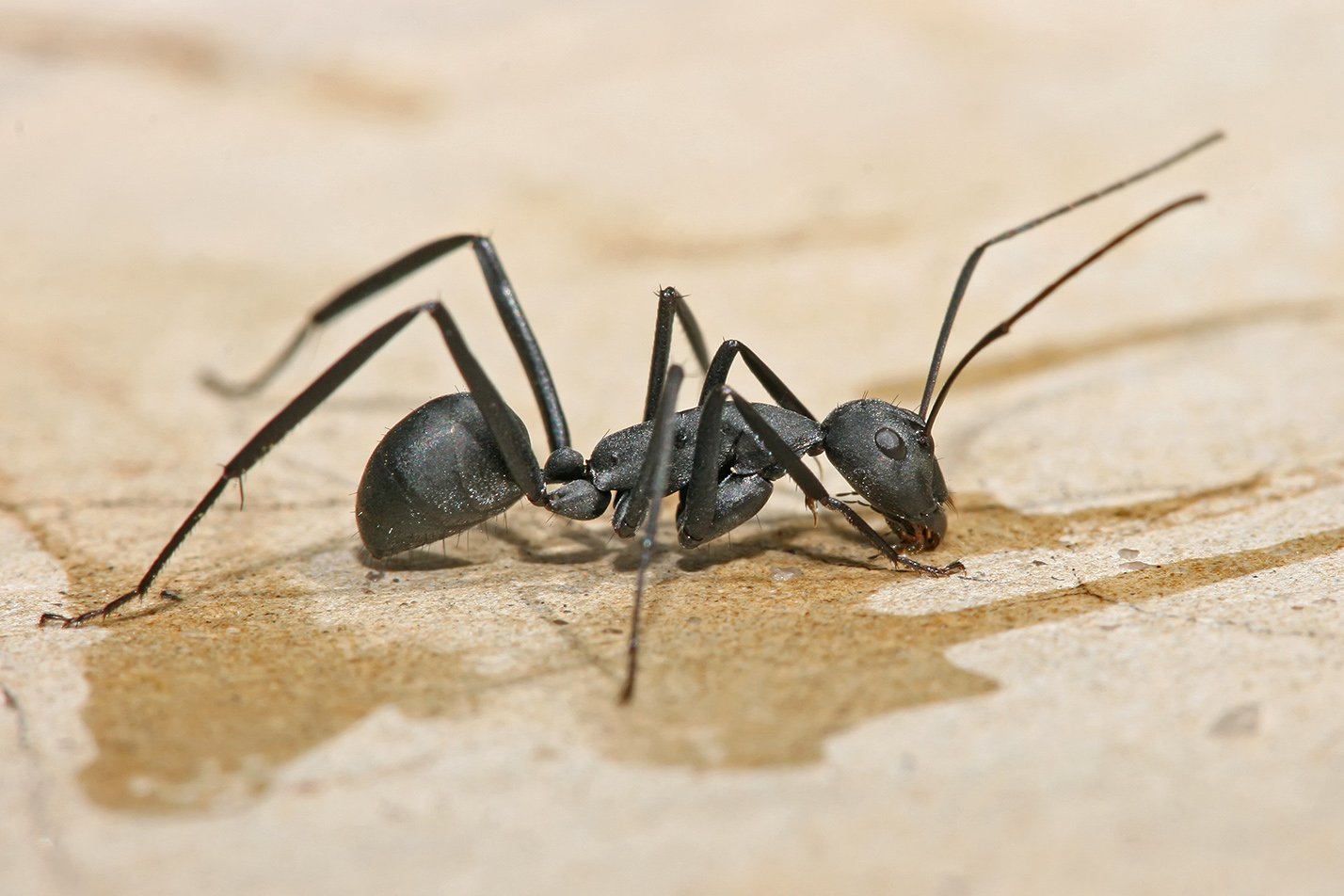
Big ants, usually out after dark, nesting in soil, hollow trees and timber that has gone soft or damp. They are not the structural threat their overseas relatives are, but finding one in a wall usually means there is a leak behind it.
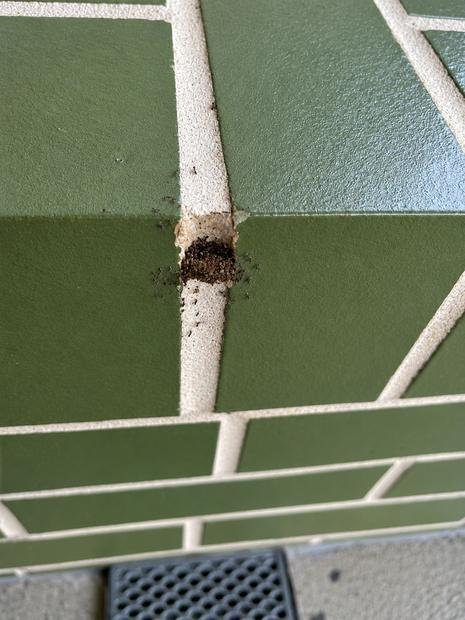
An Elite photo of ants emerging from mortar. The route runs through weep holes and cracked joints straight into the wall cavity, which is the usual home for a black house ant colony.
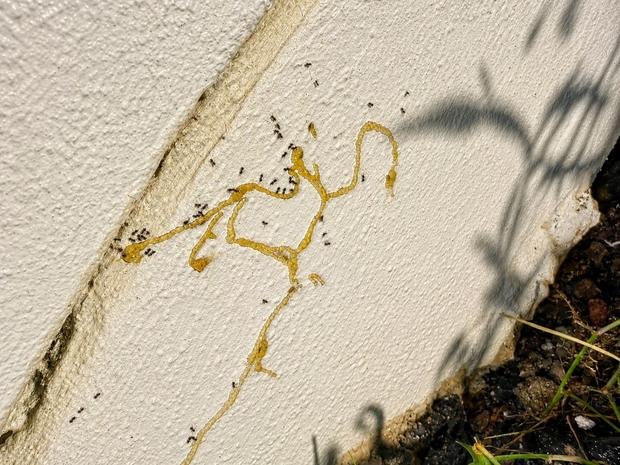
An Elite job photo: gel placed directly on an active trail. Leave it be - the ants feeding there are the ones delivering it to the colony.
Where ants appear usually tells us where the nest is and which species we are dealing with.
A trail in from the outside wall means the colony is in the cavity or the garden edge - the entry point is what we follow.
Fine sand pushed up through paving, driveway and slab joints is coastal brown ants underneath, almost without exception.
Warmth is what draws them into switches and electrical fittings. Never spray into a power point - tell us instead and we will treat it safely.
Swarms of winged ants in spring and summer are mating flights. Seen indoors, they can mean a mature colony inside the building.
Trails around the shower, vanity or toilet often mean moisture in the wall or a colony drinking from a slow leak.
Bull ants and jumper ants nest in lawns and garden beds. Their stings hurt and can cause serious allergic reactions in some people.
Speak to a licensed Sydney technician now. Straight advice, and a fixed quote inside 30 minutes.
Where a species has many queens, a repellent spray causes budding rather than death. Part of the colony, queen included, moves elsewhere, and you have doubled the problem.
The difference matters. Retail sprays are repellent - ants sense them and avoid the treated area. Non-repellent products cannot be detected, so foragers cross them, pick up the active and take it back to the nest.
A colony's appetite shifts between sugar and protein with the brood cycle. Bait only works when it matches, which is why we test preferences on site.
Bait takes days to work through a colony. If you spray the trail the day after we leave, you kill the couriers. Our blog explains budding in more detail.
Tracing first, then baits and non-repellent products that do the work after we leave.
We work out which ant it is and follow the trails back, which is what locates nests in wall cavities, under paving, along garden edges and in roof spaces.
Sweet, protein and oil-based baits are offered in small amounts so the colony shows us its current preference.
Inside, gel bait follows the trails: window frames, skirting, the routes they already use, always placed where children and pets cannot get to it.
The perimeter gets a non-repellent product - foundation, weep holes, door frames, paths - which intercepts ants before they are inside.
Under-paver and lawn-edge nests are handled with granular bait, or treated directly where that is better.
You get a summary, advice on what not to spray, and a 6-month warranty on the general treatment.
The same bait does not suit every ant. This is how we choose.
| Species | Usually feeding on | Treatment approach | Common mistake |
|---|---|---|---|
| Black house ant | Sugary liquids and honeydew, plus protein when raising brood | Sweet gel bait on trails, non-repellent perimeter at weep holes and frames | Wiping trails with detergent daily, which keeps the colony foraging elsewhere |
| Coastal brown ant | Oils and protein rather than sugars | Granular bait with an oil base, spread on paving and at the lawn edge | Boiling water down one hole - there are dozens of other nests |
| Argentine ant | Chiefly sugars, with protein at intervals | Slow-release baits plus a non-repellent treatment along the property line | Repellent sprays at the boundary, which make a multi-queen colony bud |
| Sugar ants (Camponotus) | Sweet foods and insects, active after dark | Night trail inspection, baiting near the nest, and dealing with damp timber | Inspecting in daylight when the colony is not foraging |
| Bull ants and jumper ants | Insects and nectar, always outside | The nest itself is treated directly, in lawn or garden bed | Hand-digging a nest, which reliably ends in stings |
| Time of year | What is happening | What to watch for |
|---|---|---|
| Early spring (Sept to Oct) | The colony restarts and begins brood production, raising its protein needs | First trails inside, and sandy soil showing up in paving joints |
| Late spring to summer (Nov to Feb) | Foraging at its height, and mating flights whenever it turns warm and humid | Winged ants indoors, and much heavier trails after storms and heatwaves |
| Autumn (Mar to May) | Colonies peak in size and stock up for the cooler months | Trails into the pantry and around pet bowls |
| Winter (Jun to Aug) | Quiet outside, but colonies in warm wall cavities keep working | Ants around the heater, the hot water unit and the kitchen |
Most failed ant treatments come down to what happens in the week after.
If a trail runs up a shrub rather than into the house, the colony is farming aphids or scale for honeydew. Treating indoors will not stop it; the plant has to be dealt with too.
We are around Woodcroft Shopping Village most weeks and cover every street in 2767, including the ones off the main roads.
A column of ants going in and out of a weep hole means they are nesting in the cavity, not the garden. Treating the garden bed in that case does nothing at all for a Woodcroft home.
We follow the trail back to the colony rather than treating the spot where you noticed it.
The bait is chosen for the species and the time of year - sweet, protein or oil-based.
Sprays that scatter a colony are avoided entirely in favour of non-repellents the ants deliver themselves.
If ants return within 6 months of a general treatment, we return at no charge.
Everything you need to know before you book. Still unsure? Call us — we're happy to help.
Get a Free QuoteAnt treatment starts from $89. There is no call-out charge in Woodcroft 2767. The final number comes down to the property itself, and it is fixed before we begin. Every general treatment carries a 6-month warranty.
We cover it on scheduled runs, so a day's notice gets you the best slot. Our Blacktown & Mount Druitt technicians cover Woodcroft daily, and you get a confirmed arrival time when you book.
The ground here was cleared and rebuilt recently, which displaced whatever lived in it, and the blocks are close enough that ants move between them along the fence lines.
Newer homes, tightly spaced, usually slab on ground - so the treatment concentrates on the perimeter and entry points.
Yes. Houses, townhouses, units, strata common property, rentals and commercial sites in Woodcroft 2767 are all part of what we do, and the paperwork is the kind agents accept.
It is, provided the instructions are followed. We will tell you what to keep clear of and for how long before we leave. Let us know about children, pets or fish tanks when you book.
You do not normally need to leave. Anything requiring an empty room is short, and you will know about it before the work starts.
An hour to two hours covers most jobs. The size of the building and the extent of the problem are what change it.
Every general treatment carries a 6-month warranty. If it is not holding, call us - that is exactly what the warranty is for.
We cover the whole of Woodcroft, from the streets around Woodcroft Shopping Village out to the suburb boundary and on into Doonside.
Photographs from Elite jobs across Sydney — not stock imagery.
Fully insured technicians who turn up when they say they will. Quote within 30 minutes, no obligation.