Budding splits the colony
A repellent does not kill a multi-queen colony, it divides it. A queen and several hundred workers shift to a new site, leaving you with two nests instead of one.

Ant Control in Elizabeth Bay 2011 — local technicians, fixed prices and a written report. Ant treatment starts from $89.
Real, verified feedback from people we've helped — straight from Google.
Local technicians, fixed prices and a written report for every job in Elizabeth Bay.
Postcode 2011 covers Elizabeth Bay and the streets immediately around it. At about 1.8 km east of the CBD it falls in the Eastern Suburbs, where we have vans out daily. Our technicians are through Elizabeth Bay most days, so same-day attendance is usually available.
Most weeks we are somewhere between Kings Cross station and John Armstrong Reserve in Elizabeth Bay, and Double Bay Beach is close enough to be on the same run.
Waverley, Randwick and Woollahra is the council area for Elizabeth Bay, and we treat Rushcutters Bay, Woolloomooloo and Darling Point on the same schedule. Salt air and sandy ground keep sub-floors damp here, and damp is what sustains a population.
The bulk of our Elizabeth Bay work is apartments where the problem is really in the building rather than the flat. Mention the detail when you call 1300 313 373 - it decides how long we need on site.
The whole of 2011 is covered, Westfield Sydney included.
Bookings for 2011 are confirmed the day before with a set arrival time, not an all-day window. Jobs at Rushcutters Bay and Woolloomooloo often share the same run, which is how earlier slots come up.
Ants in timber are a symptom. They do not create the damp, they move into timber the damp has already softened, so the leak matters more than the ants.
A colony can occupy a garden bed, a paving slab and a wall cavity at once. That is why a single treated nest in Elizabeth Bay changes very little on its own.
After heavy rain the opposite happens - flooded nests push colonies up and inside. Both extremes send ants into Elizabeth Bay houses for different reasons.
Each of these behaves differently, so the bait and the placement change too. Two photos come from our own jobs.
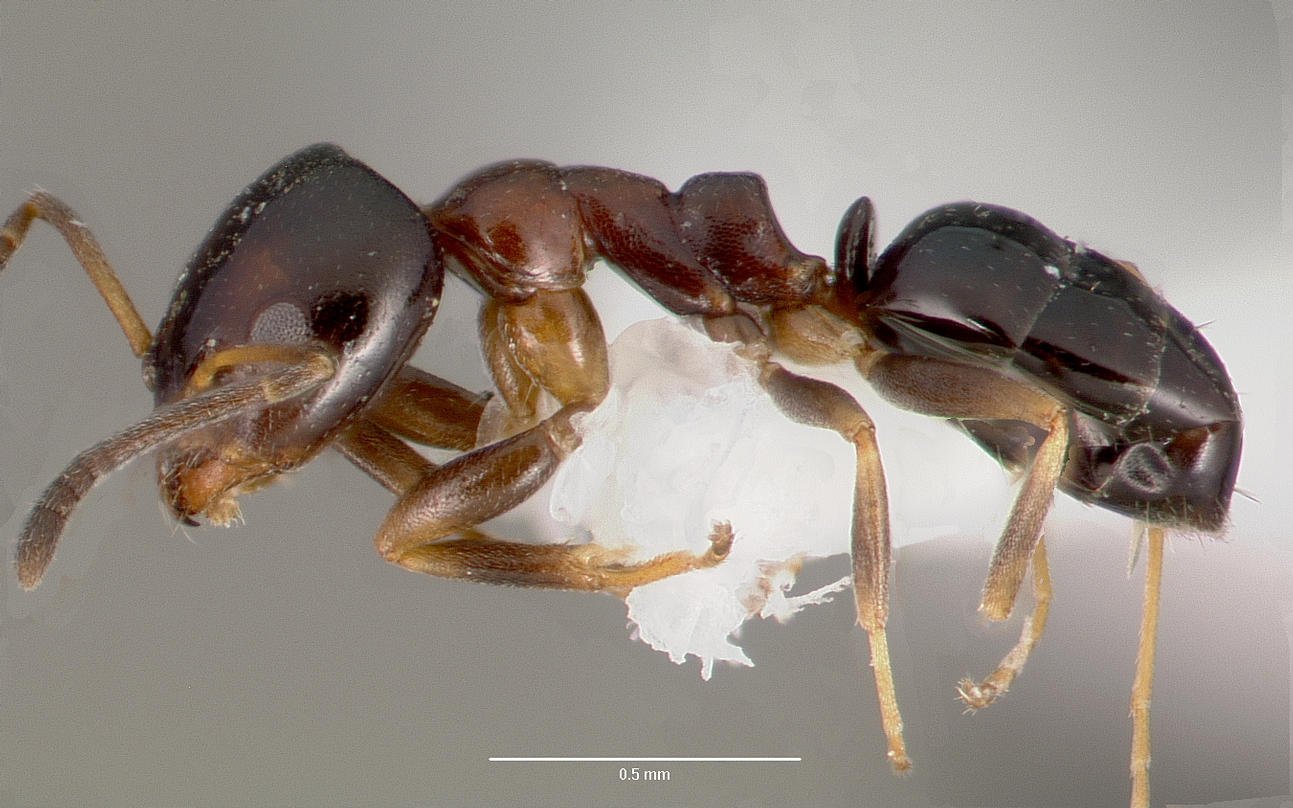
Small, shiny and black, and one of the most common kitchen ants in Sydney. It trails along skirting boards, window frames and power cables, and nests in wall voids, roof spaces and garden edges. It readily takes sweet baits.
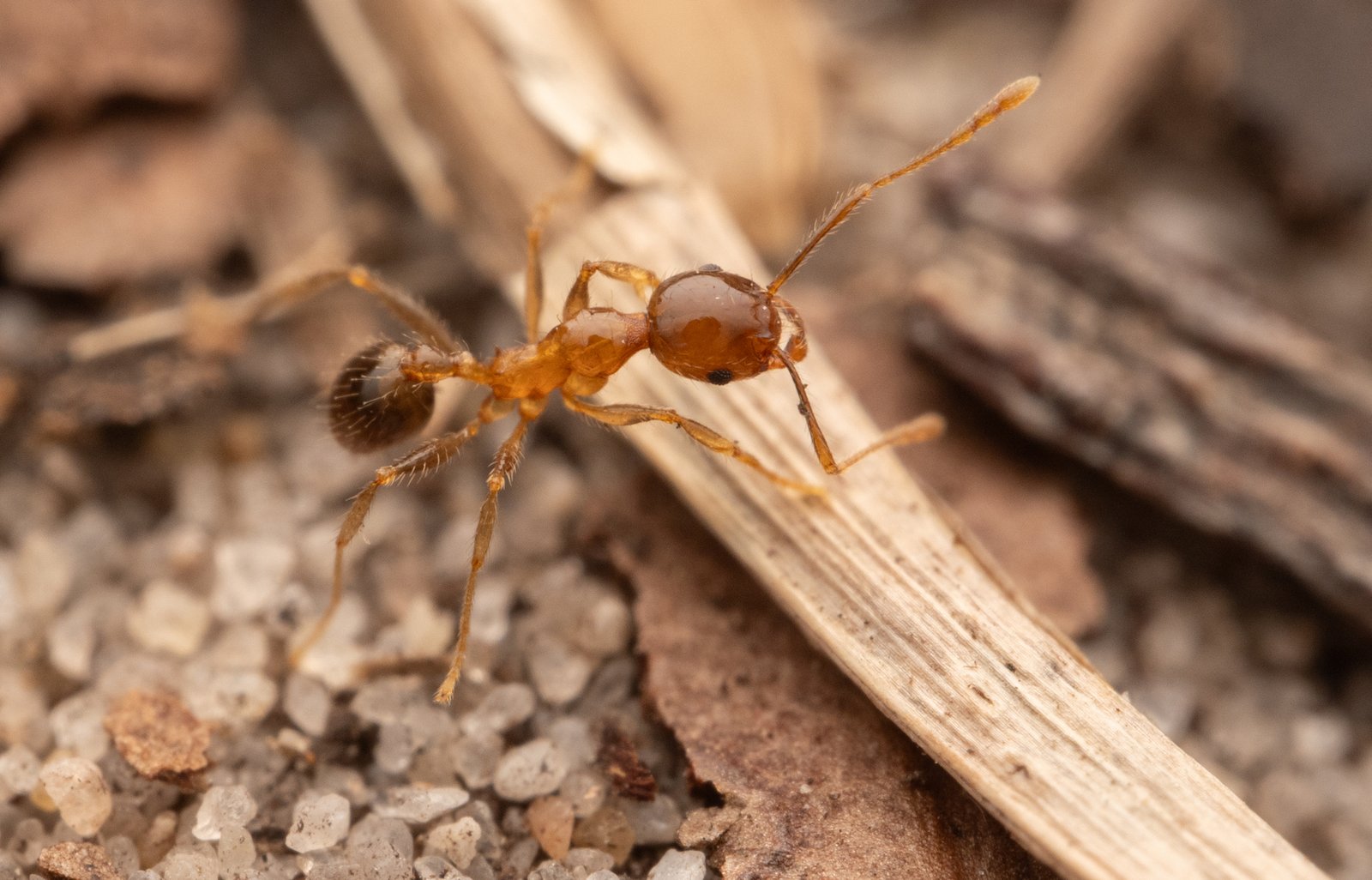
Very small brown ants, with soldiers that have noticeably bigger heads. You spot them by the fine sandy soil pushed up through paving joints, slab edges and grout. The colonies are big and multi-nested, so oil-based granular bait is the tool.
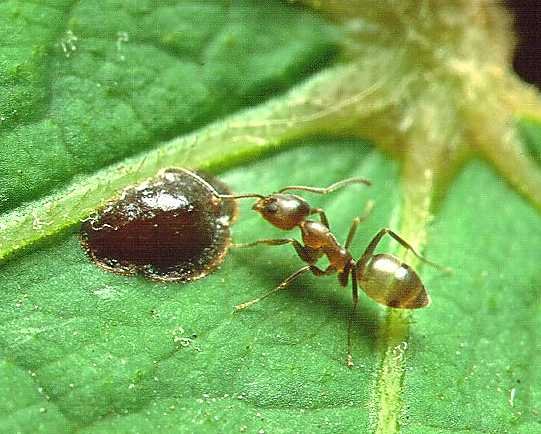
Small and flat brown in colour, running in dense fast trails. Because nests hold many queens and join with those next door, the infestation is usually bigger than one property. Never spray a repellent on it.
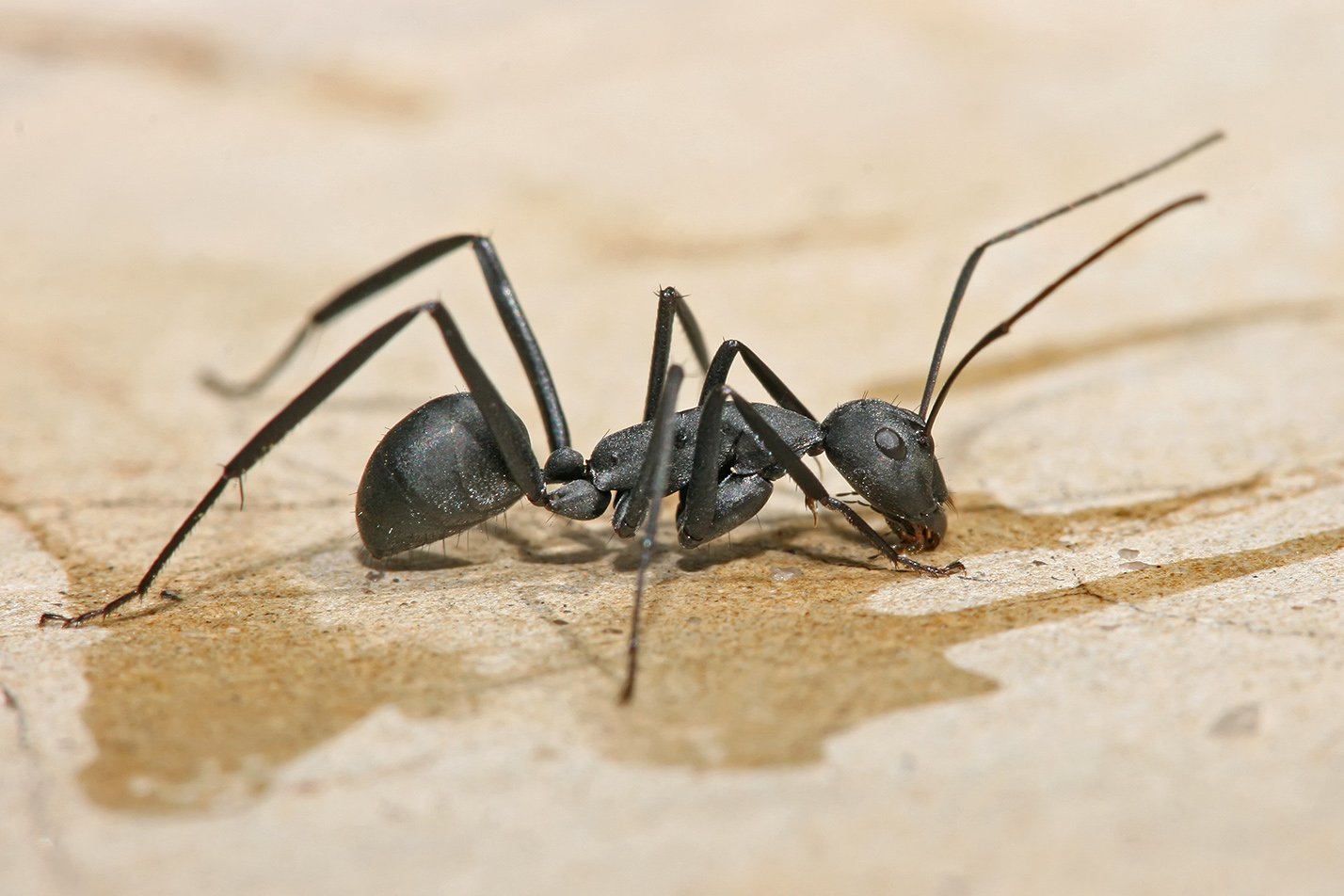
Large ants that come out at night and nest in soil, hollow trees or damp timber. Unlike the overseas carpenter ants they seldom threaten structure - but a nest in a wall tells you there is moisture there.
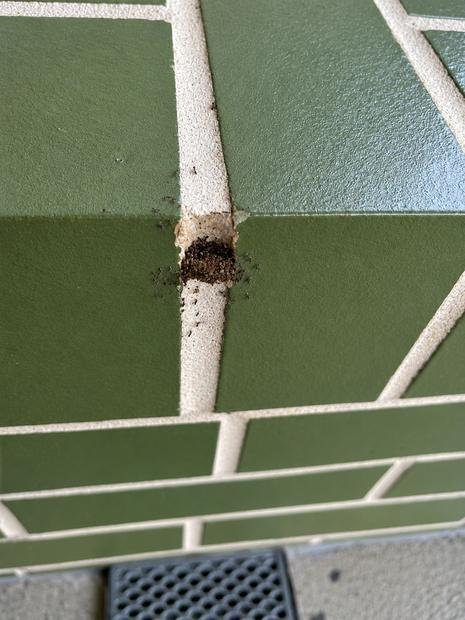
Taken on an Elite job: a mortar joint with a nest behind it. Weep holes and failed mortar are a direct path into the cavity, where many black house ant colonies establish.
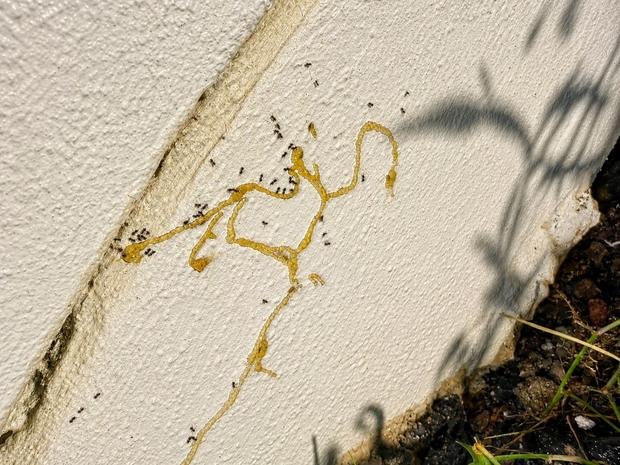
Photo from an Elite job: gel bait placed along an active trail. The ants are left to feed and carry the bait home, so we ask customers not to wipe or spray the trail afterwards.
Where ants appear usually tells us where the nest is and which species we are dealing with.
Ants arriving from the outside wall usually nest in the cavity or garden edge. The entry point is where we start tracing.
Fine soil pushed up along paving, driveways and slab joints is the classic sign of coastal brown ants nesting underneath.
Warmth is what draws them into switches and electrical fittings. Never spray into a power point - tell us instead and we will treat it safely.
Winged ants swarming in the warmer months are reproductives on a mating flight. Indoors, that can indicate an established colony within the structure.
Trails in the bathroom point to water in the wall or a slow leak the ants have found.
These are the bull ants and jumper ants nesting in lawns and beds - a painful sting, and a risk of serious allergic reaction for some.
Get a licensed Sydney technician on the phone today - honest advice, fixed quote in 30 minutes.
A repellent does not kill a multi-queen colony, it divides it. A queen and several hundred workers shift to a new site, leaving you with two nests instead of one.
Supermarket sprays are repellent: ants detect them and walk around them. Professional non-repellent products are not detected, so foragers walk through, pick up the active and carry it back to nest mates.
Bait is only taken if it matches what the colony wants right now. Their preference moves between sugar and protein as the brood changes, so we test and switch baits accordingly.
A bait program works over days. The worst thing you can do is spray the trail once we have gone - those ants are the delivery system. See our blog on budding in more detail.
Tracing first, then baits and non-repellent products that do the work after we leave.
We identify the ant and follow trails back to entry points and nests in walls, paving, garden edges and roof spaces.
Sweet, protein and oil-based baits are offered in small amounts so the colony shows us its current preference.
We run gel along the active trails, window frames and skirting, keeping every placement out of reach of children and animals.
We treat the foundation line, weep holes, door frames and paths with a non-repellent so incoming ants carry it with them.
For nests beneath pavers and in lawn edges - typically coastal brown ants - we use granular bait or treat the nest directly.
A written summary, clear advice on what not to spray afterwards, and a 6-month warranty on the general treatment.
The same bait does not suit every ant. This is how we choose.
| Species | Usually feeding on | Treatment approach | Common mistake |
|---|---|---|---|
| Black house ant | Sweet liquids and honeydew; protein while the colony is raising young | Gel bait placed on trails, non-repellent applied at weep holes and window frames | Wiping trails clean daily, so the colony simply forages on a different route |
| Coastal brown ant | Oils and protein rather than sugars | Granular bait with an oil base, spread on paving and at the lawn edge | Boiling water down one hole - there are dozens of other nests |
| Argentine ant | Sugars primarily, sometimes protein | Slow-acting baits combined with non-repellent treatment across the boundary | A repellent barrier, which splits nests that hold many queens |
| Sugar ants (Camponotus) | Insects and sweet foods, taken mainly at night | A night inspection of the trails, bait near the nest, and moisture in timber repaired | Daytime-only treatment, which misses them entirely |
| Bull ants and jumper ants | Insects and nectar, always outside | The nest itself is treated directly, in lawn or garden bed | Hand-digging a nest, which reliably ends in stings |
| Time of year | What is happening | What to watch for |
|---|---|---|
| Early spring (Sept to Oct) | Colonies wake up and start raising new brood, so protein demand rises | First trails indoors, sand piles reappearing in paving |
| Late spring to summer (Nov to Feb) | Foraging at its height, and mating flights whenever it turns warm and humid | Winged ants indoors, and much heavier trails after storms and heatwaves |
| Autumn (Mar to May) | Colonies are at full size and stock up before cooler weather | Trails into pantries and pet food |
| Winter (Jun to Aug) | Outside activity drops away, though nests in warm wall cavities carry on | Ants near heaters, hot water units and in the kitchen |
Most failed ant treatments come down to what happens in the week after.
If your Elizabeth Bay paving keeps developing little sand volcanoes, sweeping them away is treating the spoil rather than the nest. The colony is in the bedding sand under the slab.
Winter does not kill the colony, it just slows it. The nest under a Elizabeth Bay path in July is the same nest that produces the trail in October.
Heavy rain floods shallow nests, and the colony moves to the nearest dry cavity - which is usually a wall, a subfloor or under a slab. A sudden indoor trail in Elizabeth Bay after a storm is almost always this.
Trails lead somewhere, so we follow them to the colony instead of spraying the sighting.
Sweet, protein or oil-based baits chosen for the ant and the season.
Sprays that scatter a colony are avoided entirely in favour of non-repellents the ants deliver themselves.
A general ant treatment carries 6 months of cover - if they return inside it, so do we.
Everything you need to know before you book. Still unsure? Call us — we're happy to help.
Get a Free QuoteAnt treatment starts from $89. Two things move it: how big the place is, and how far it has already spread. We work that out on the phone or on site and tell you the figure before anything starts in Elizabeth Bay. Every general treatment carries a 6-month warranty.
Same-day attendance is usually available. Our Eastern Suburbs technicians cover Elizabeth Bay daily, and you get a confirmed arrival time when you book.
Being near the water means humidity that never really drops. Sub-floors stay moist, lower levels stay cool and damp, and ants do well in both.
A mix of unit blocks and houses, most with a damp sub-floor or a ground level that sits low - and that is usually where we concentrate.
Yes - freestanding homes, townhouses, apartments, rentals and business premises in Elizabeth Bay 2011 are all covered, with documentation suitable for an agent or a strata manager.
Yes, with the usual care. Everything is APVMA-registered and used to label, and we will work around pets, aquariums and anyone in the house with a respiratory condition if you tell us when you book.
Usually not. Most ant control work is done with you there, and anything that needs the room vacated is for a short period we will tell you about beforehand.
Between one and two hours covers the majority of jobs. We do not book so tightly that a technician has to cut a job short.
Every general treatment carries a 6-month warranty. A return visit within the warranty period costs you nothing.
We do. Elizabeth Bay and Rushcutters Bay, Woolloomooloo, Darling Point and Edgecliff are all on the same route, which helps if you own more than one property in the area.
Photographs from Elite jobs across Sydney — not stock imagery.
Fast and fully insured, with a no-obligation quote back to you within 30 minutes.