Budding splits the colony
Where a species has many queens, a repellent spray causes budding rather than death. Part of the colony, queen included, moves elsewhere, and you have doubled the problem.

Ant Control in Mount Vernon 2178 — local technicians, fixed prices and a written report. Ant treatment starts from $89.
Real, verified feedback from people we've helped — straight from Google.
Local technicians, fixed prices and a written report for every job in Mount Vernon.
Mount Vernon is part of the South West Sydney, 36.9 km or so west of the GPO, and 2178 is a postcode we know well. We cover Mount Vernon on scheduled runs through the South West Sydney, and we will give you a firm time rather than a window.
Around Mount Vernon we are most often working near Kemps Creek Nature Reserve.
Liverpool, Fairfield and Cumberland is the council area for Mount Vernon, and we treat Kemps Creek, Cecil Park and Horsley Park on the same schedule. Newer estate housing sits close together on small blocks, so what happens next door matters. We check the boundary and the fence line, not just the house.
Around Mount Vernon the pattern is fairly consistent: estate houses with narrow side access and a shared fence line. Tell us which it is on the phone and we will come prepared for it.
All of 2178 falls inside the area we service.
You get a confirmed time, not a window. We plan the 2178 run the day before, and if Kemps Creek or Cecil Park is on the same round there is often an earlier slot going.
A colony can occupy a garden bed, a paving slab and a wall cavity at once. That is why a single treated nest in Mount Vernon changes very little on its own.
Coastal brown ants, black house ants and odorous house ants all behave differently and all turn up around Mount Vernon. We identify before we bait rather than putting down a general-purpose product and hoping.
In a dry spell ants move indoors looking for moisture, which is why a spotless Mount Vernon kitchen still gets trails in January. The sink, the pet bowl and the shower recess are the attractions.
Each of these behaves differently, so the bait and the placement change too. Two photos come from our own jobs.
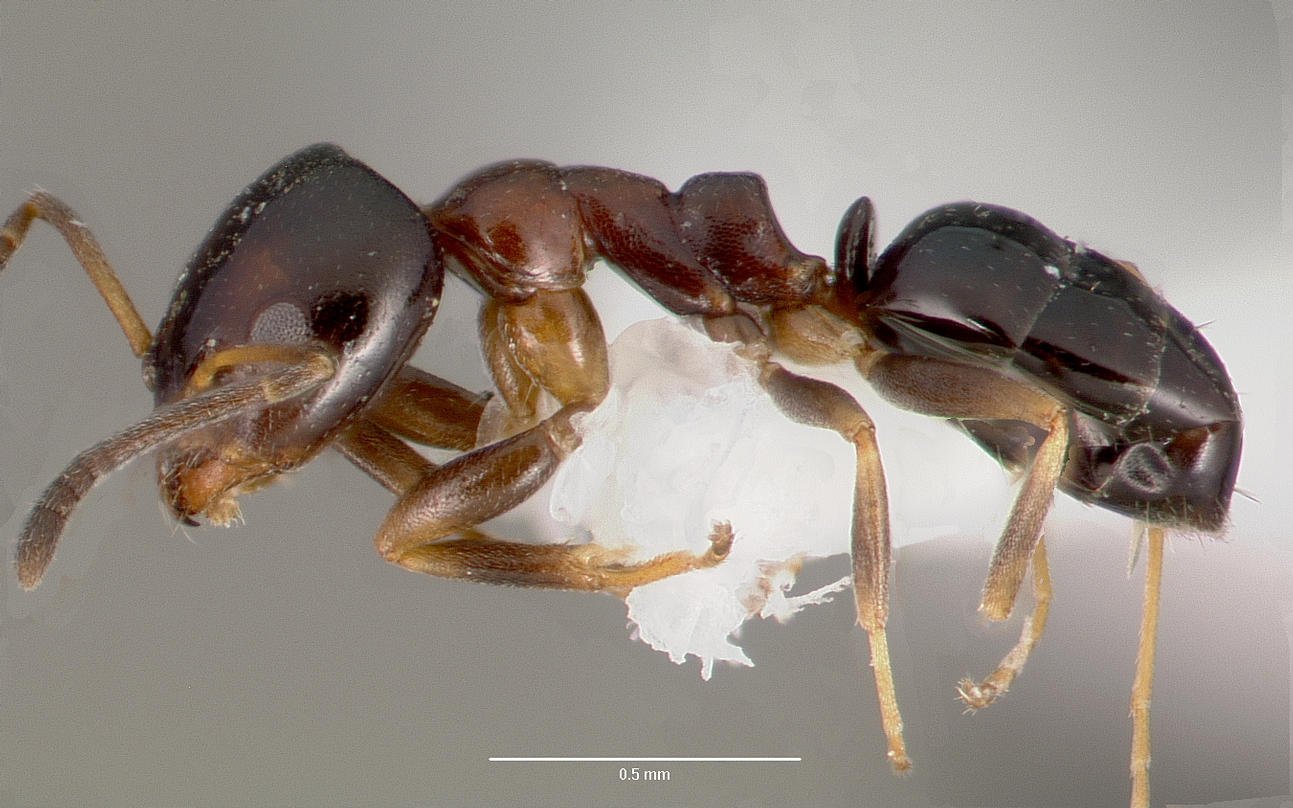
A small black ant with a glossy body, and the one most often in Sydney kitchens. It nests in wall cavities, the roof void and garden edges, trails along skirtings and cabling, and feeds readily on sweet bait.
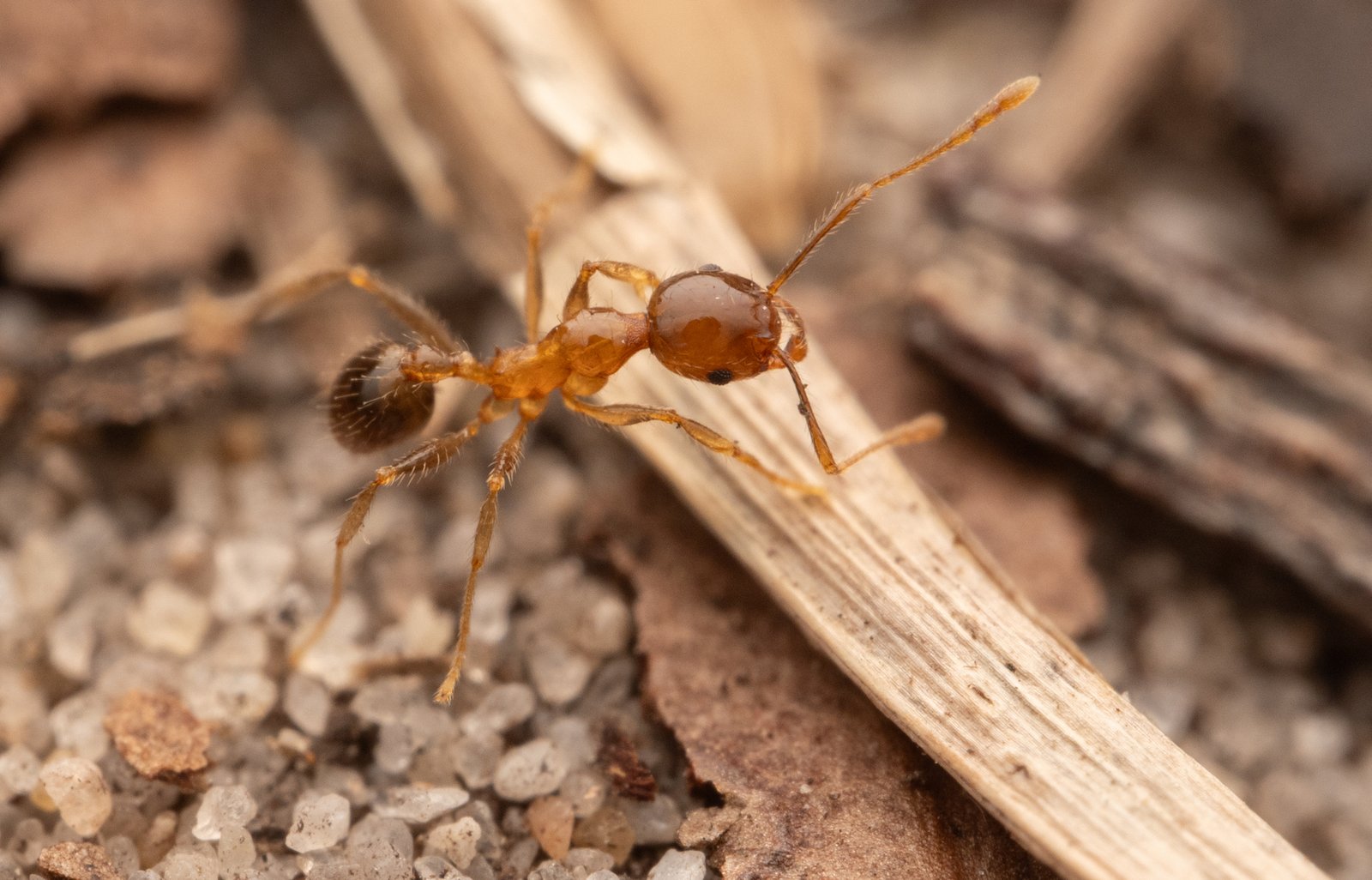
Very small brown ants, with soldiers that have noticeably bigger heads. You spot them by the fine sandy soil pushed up through paving joints, slab edges and grout. The colonies are big and multi-nested, so oil-based granular bait is the tool.
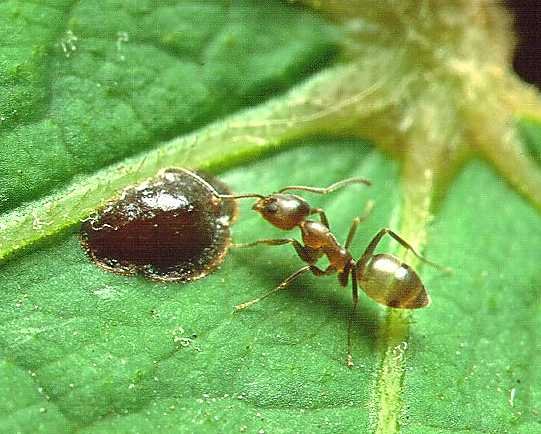
Fast-moving, small and dull brown, in thick trails. Its nests are multi-queen and interconnected with neighbouring nests, so it spreads across properties - and repellent sprays accelerate exactly that.

Big ants, usually out after dark, nesting in soil, hollow trees and timber that has gone soft or damp. They are not the structural threat their overseas relatives are, but finding one in a wall usually means there is a leak behind it.
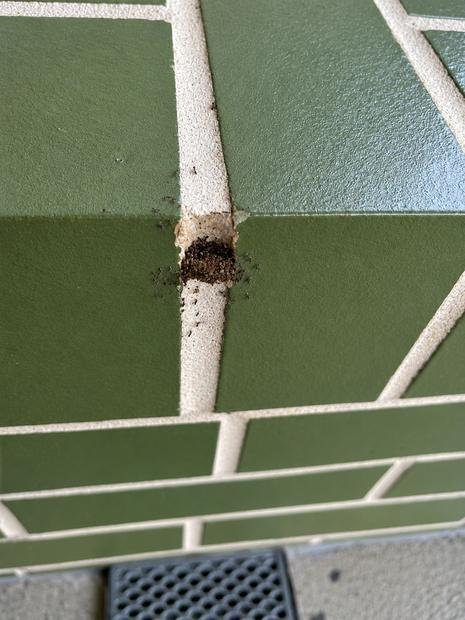
Photo from an Elite job: an ant nest emerging from a mortar joint. Weep holes and cracked mortar lead straight into the wall cavity, which is where many black house ant colonies live.
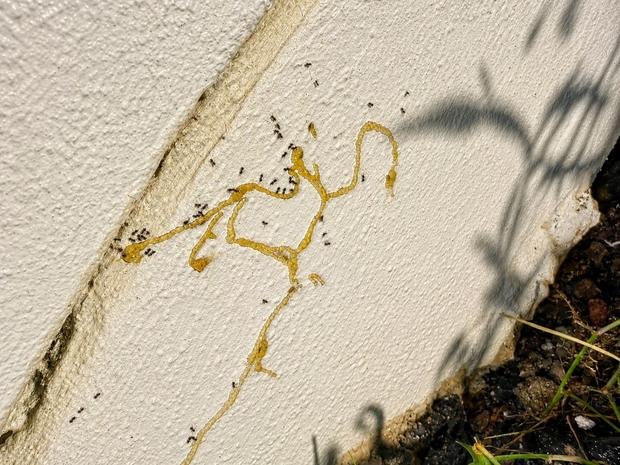
From an Elite job - gel bait set down on a live trail. The ants feed and carry it back to the nest, which is why we ask you not to wipe or spray that trail afterwards.
Where ants appear usually tells us where the nest is and which species we are dealing with.
Ants entering from the external wall point to a cavity or garden-edge nest. Finding that entry is the first step.
If fine soil keeps appearing in the paving joints and along the drive, coastal brown ants are nesting beneath it.
Warmth is what draws them into switches and electrical fittings. Never spray into a power point - tell us instead and we will treat it safely.
Mating flights produce the winged swarms you see in spring and summer. Finding them indoors suggests a mature colony inside rather than outside.
Bathroom trails around the shower, basin or toilet normally mean water: damp in the wall cavity, or a slow leak supplying the colony.
Bull ants and jumper ants nest in lawns and garden beds. Their stings hurt and can cause serious allergic reactions in some people.
Talk to a licensed Sydney technician today - honest advice and a fixed quote within 30 minutes.
Where a species has many queens, a repellent spray causes budding rather than death. Part of the colony, queen included, moves elsewhere, and you have doubled the problem.
Ants can detect a supermarket spray and will simply route around it. A professional non-repellent is undetectable, so they walk through it and carry the active home to the colony.
Bait is only taken if it matches what the colony wants right now. Their preference moves between sugar and protein as the brood changes, so we test and switch baits accordingly.
Bait takes days to work through a colony. If you spray the trail the day after we leave, you kill the couriers. Our blog explains budding in more detail.
Tracing first, then baits and non-repellent products that do the work after we leave.
First the species, then the trails - followed back to where they enter and to nests in the wall, under paving, at garden edges or in the roof space.
A test with small amounts of each bait type - sweet, protein, oil-based - tells us what the colony wants at this point in its cycle.
Gel is placed on the trails themselves - along window frames and skirting boards - and positioned out of reach of children and pets.
The perimeter gets a non-repellent product - foundation, weep holes, door frames, paths - which intercepts ants before they are inside.
For nests beneath pavers and in lawn edges - typically coastal brown ants - we use granular bait or treat the nest directly.
A written summary, clear advice on what not to spray afterwards, and a 6-month warranty on the general treatment.
The same bait does not suit every ant. This is how we choose.
| Species | Usually feeding on | Treatment approach | Common mistake |
|---|---|---|---|
| Black house ant | Mostly sweet liquids and honeydew, with protein demand during brood rearing | Gel bait along the trail, plus non-repellent treatment to weep holes and door frames | Daily detergent wiping of trails - it moves the foraging rather than stopping it |
| Coastal brown ant | Protein and oily foods | Oil-based granular bait over paving and lawn margins | Attacking a single visible nest while the rest of the colony's nests carry on |
| Argentine ant | Sugar for the most part, with periodic protein demand | Slow baits and a non-repellent applied along the property line | Using a repellent barrier spray - it divides the multi-queen colony |
| Sugar ants (Camponotus) | Sweet foods and insects, mostly at night | Night-time trail inspection, bait near the nest, fix moisture in timber | Treating only in daylight when the ants are not active |
| Bull ants and jumper ants | Insects and nectar outdoors | Direct nest treatment in lawns and garden beds | Digging into the nest by hand and getting stung |
| Time of year | What is happening | What to watch for |
|---|---|---|
| Early spring (Sept to Oct) | The colony restarts and begins brood production, raising its protein needs | First trails inside, and sandy soil showing up in paving joints |
| Late spring to summer (Nov to Feb) | Peak foraging, mating flights after warm humid weather | Winged ants, heavy trails after storms and heatwaves |
| Autumn (Mar to May) | Colonies are at full size and stock up before cooler weather | Trails into pantries and pet food |
| Winter (Jun to Aug) | Outdoor foraging slows right down while nests in heated walls continue | Ants showing up by heaters, hot water services and in kitchens |
Most failed ant treatments come down to what happens in the week after.
Food premises need bait placement that will not contaminate, and records of what was used where. That is a different job from a domestic callout.
Ants in the cavity of a Mount Vernon house will appear at power points, architraves and ceiling roses - anywhere the cavity opens into the room.
The South West Sydney pattern is a surge after the first warm fortnight, then steady pressure into March. A colony treated in September is a fraction of the job it is in January.
We follow the trail back to the colony rather than treating the spot where you noticed it.
Sweet, protein or oil-based baits chosen for the ant and the season.
Nothing repellent, because that causes budding. Non-repellent products get carried home instead.
Six months of warranty on a general ant treatment, and a return visit if they come back inside it.
Everything you need to know before you book. Still unsure? Call us — we're happy to help.
Get a Free QuoteAnt treatment starts from $89. The fixed price depends on the size of the property and how far the problem has spread, and we confirm it before we start - there is no call-out fee in Mount Vernon 2178. Every general treatment carries a 6-month warranty.
We cover it on scheduled runs, so a day's notice gets you the best slot. Mount Vernon is about 36.9 km west of the CBD in the South West Sydney, and we give you a firm arrival time rather than an all-day window.
Estates are built fast and close. Shared fence lines, narrow side access and uniform construction mean ants rarely stay at just one address.
Newer detached homes on compact blocks, so access down the side and the shared fence line shape how we work.
We do. A lot of our Mount Vernon work is rentals and strata, so the report, the products used and the areas treated are all recorded in writing for whoever needs them.
Yes. The products are registered for this use and applied at label rates, and placement keeps them away from where children and animals go. Let us know at booking about pets, fish tanks or anyone with asthma and we will plan the visit around it.
You do not normally need to leave. Anything requiring an empty room is short, and you will know about it before the work starts.
Typically one to two hours on site. What extends it is size, access and how far the problem has gone, all of which are accounted for in the quote.
Every general treatment carries a 6-month warranty. If activity continues past the expected period, call us and we will come back.
Yes - we work right across the Liverpool, Fairfield and Cumberland area, which takes in Mount Vernon and the suburbs around it.
Photographs from Elite jobs across Sydney — not stock imagery.
Fully insured technicians who turn up when they say they will. Quote within 30 minutes, no obligation.