Budding splits the colony
Species with many queens, such as Argentine ants and several house ants, respond to a repellent spray by relocating. A few hundred workers and a queen move to a new spot, and you now have two colonies instead of one.

Ant Control in Sackville North 2756 — local technicians, fixed prices and a written report. Ant treatment starts from $89.
Real, verified feedback from people we've helped — straight from Google.
What we cover in Sackville North, and how quickly we can get there.
We treat ants right across 2756. Sackville North is roughly 52.5 km north-west of the city, which puts it well inside the Hawkesbury & the Rural North-West run our technicians work. We travel out to Sackville North on planned runs through the Hawkesbury & the Rural North-West, so booking a day ahead gets you the best slot.
Around Sackville North we are most often working near Hawkesbury Waters Golf Course.
This is the Hawkesbury area, and our runs here also take in Lower Portland, South Maroota and Leets Vale. Bigger properties mean sheds, stables and stacked timber to check as well as the house.
Around Sackville North the pattern is fairly consistent: acreage properties with outbuildings that need checking alongside the house. Tell us which it is on the phone and we will come prepared for it.
Wherever you are in 2756, you are inside the area our technicians cover.
Your appointment is confirmed the day before with a real arrival time. Because Lower Portland and South Maroota are covered on the same round, 2756 often has an earlier slot available.
What looks like a queue is a chemical road. Each worker reinforces it on the way back, so the trail gets stronger the better the food is - and re-forms along the same skirting the moment the cleaning dries.
In a dry spell ants move indoors looking for moisture, which is why a spotless Sackville North kitchen still gets trails in January. The sink, the pet bowl and the shower recess are the attractions.
Some ants want protein, some want sugar, and the wrong bait gets ignored completely. Identifying what is trailing through a Sackville North kitchen is the difference between a result and a wasted visit.
Each of these behaves differently, so the bait and the placement change too. Two photos come from our own jobs.
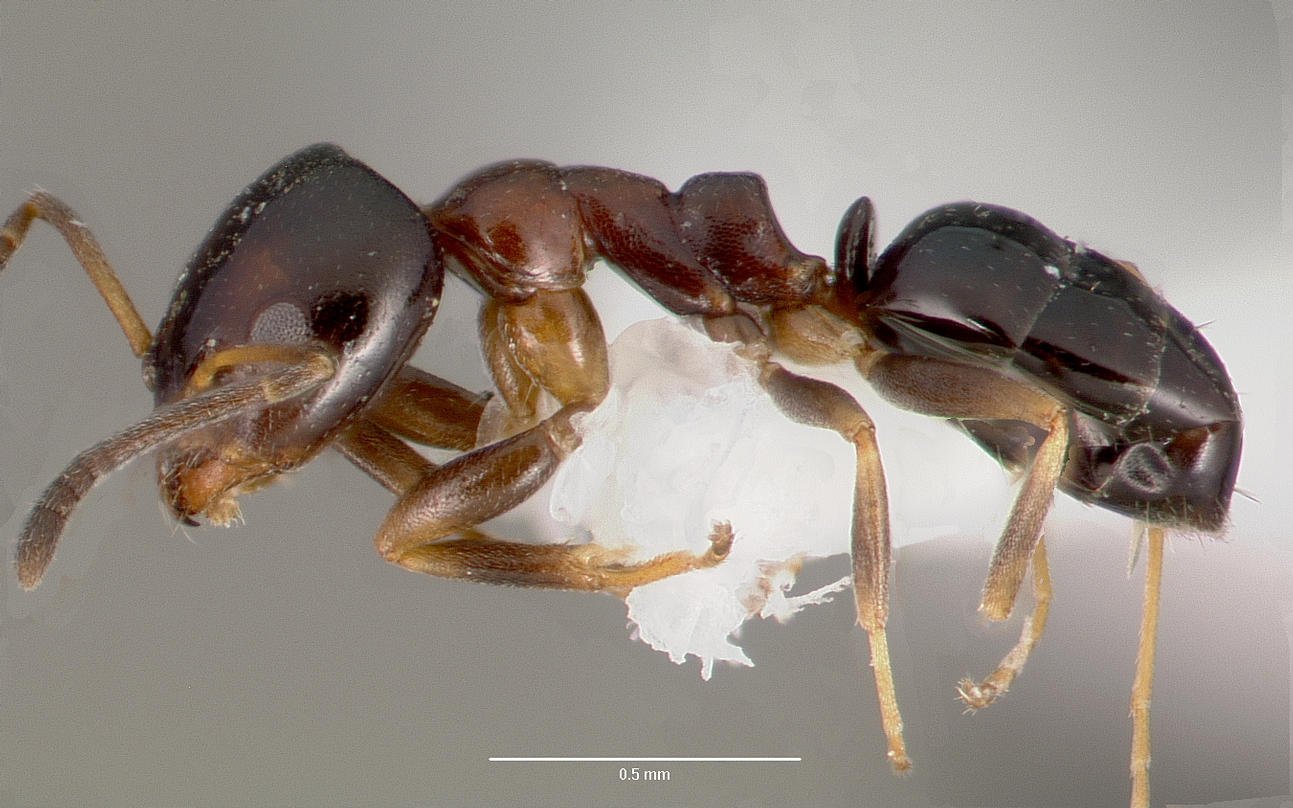
Small, shiny and black, and one of the most common kitchen ants in Sydney. It trails along skirting boards, window frames and power cables, and nests in wall voids, roof spaces and garden edges. It readily takes sweet baits.
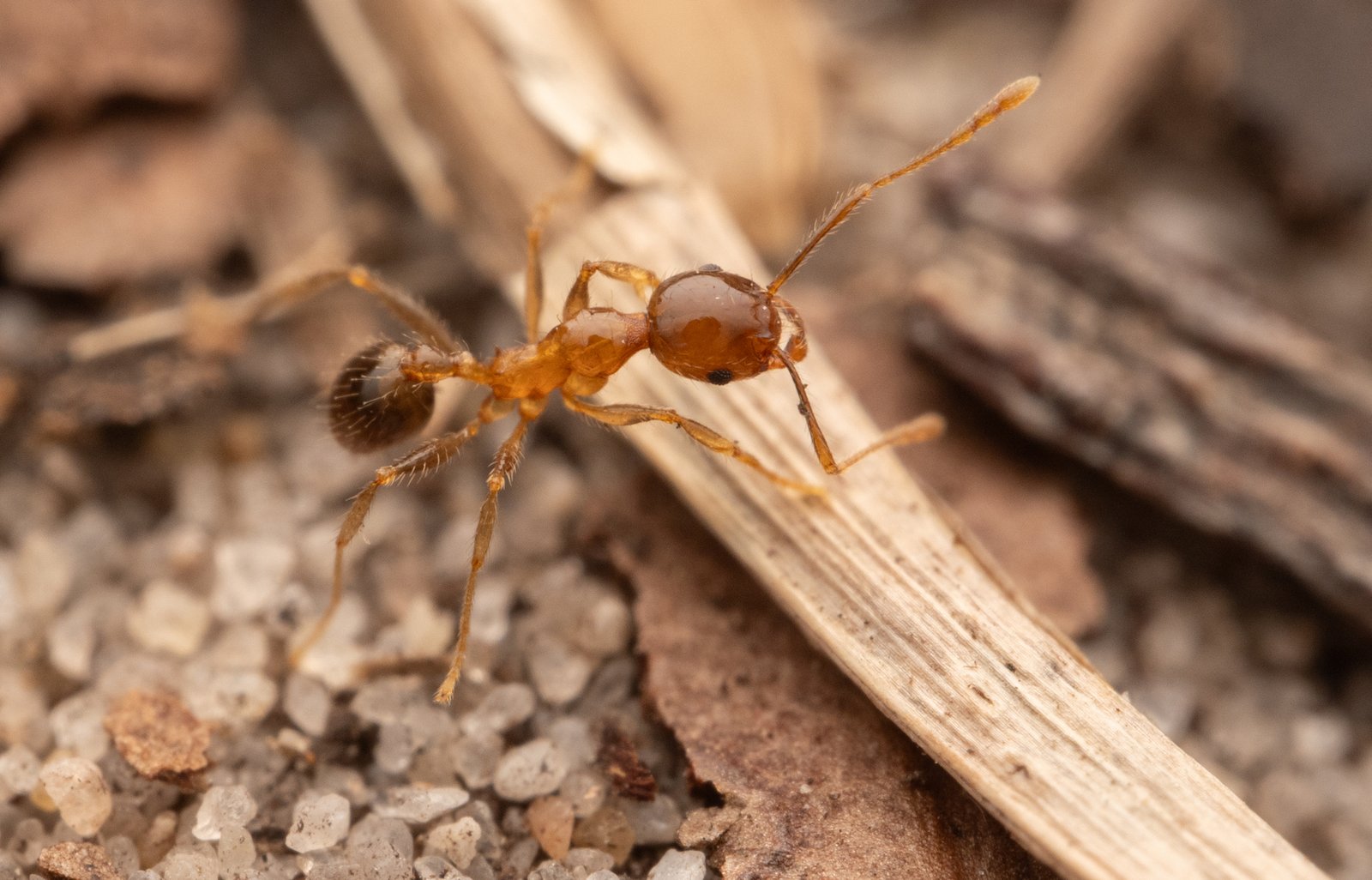
Tiny brown ants with a larger-headed soldier caste. The giveaway is loose sandy soil pushed up between pavers, along slab edges and in grout. Colonies are large with many nests, and oil-based granular baits work well.
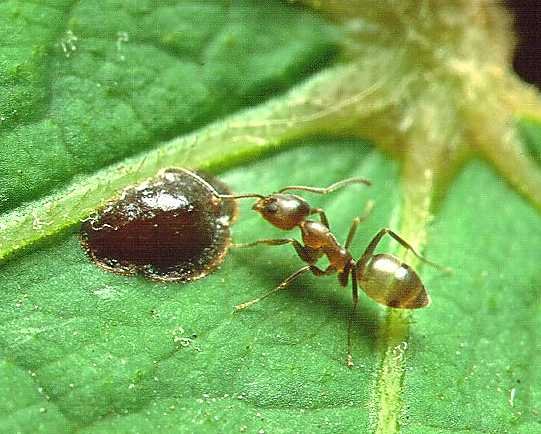
Fast-moving, small and dull brown, in thick trails. Its nests are multi-queen and interconnected with neighbouring nests, so it spreads across properties - and repellent sprays accelerate exactly that.
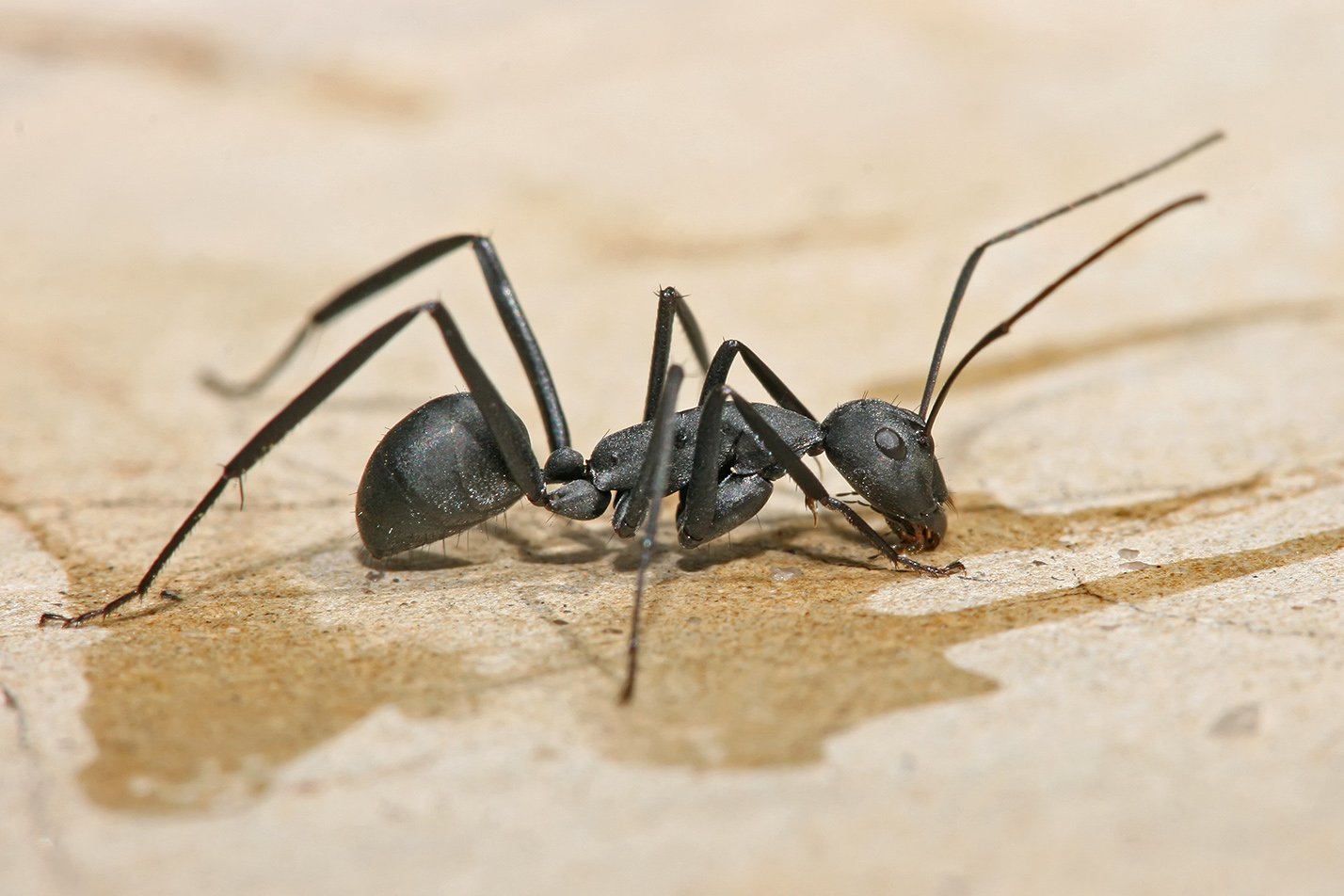
Big ants, usually out after dark, nesting in soil, hollow trees and timber that has gone soft or damp. They are not the structural threat their overseas relatives are, but finding one in a wall usually means there is a leak behind it.
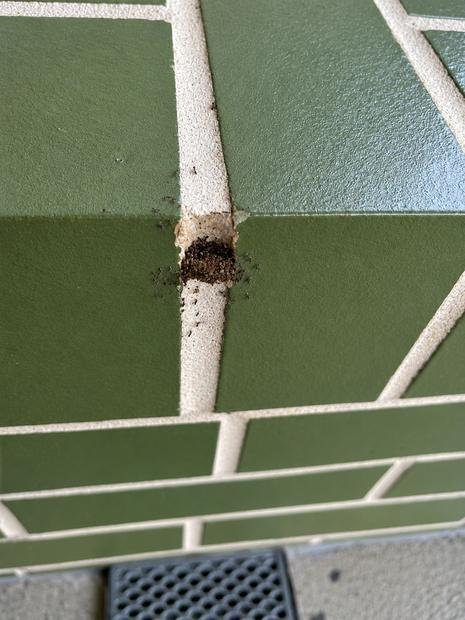
An Elite photo of ants emerging from mortar. The route runs through weep holes and cracked joints straight into the wall cavity, which is the usual home for a black house ant colony.
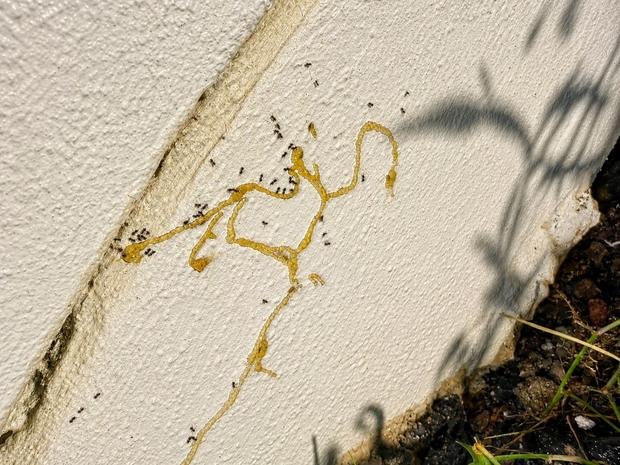
An Elite job photo: gel placed directly on an active trail. Leave it be - the ants feeding there are the ones delivering it to the colony.
Where ants appear usually tells us where the nest is and which species we are dealing with.
Ants entering from the external wall point to a cavity or garden-edge nest. Finding that entry is the first step.
If fine soil keeps appearing in the paving joints and along the drive, coastal brown ants are nesting beneath it.
They go into switches and appliances for the warmth. Keep insecticide out of power points and tell us, so it can be treated safely.
Those spring and summer swarms of winged ants are mating flights. If they are coming out inside the house, there may be a mature colony in the building.
Trails around the shower, vanity or toilet often mean moisture in the wall or a colony drinking from a slow leak.
These are the bull ants and jumper ants nesting in lawns and beds - a painful sting, and a risk of serious allergic reaction for some.
Get a licensed Sydney technician on the phone today - honest advice, fixed quote in 30 minutes.
Species with many queens, such as Argentine ants and several house ants, respond to a repellent spray by relocating. A few hundred workers and a queen move to a new spot, and you now have two colonies instead of one.
Supermarket sprays are repellent: ants detect them and walk around them. Professional non-repellent products are not detected, so foragers walk through, pick up the active and carry it back to nest mates.
Bait is only taken if it matches what the colony wants right now. Their preference moves between sugar and protein as the brood changes, so we test and switch baits accordingly.
It takes days for bait to move through a colony. Spraying the trail the day after our visit kills the very ants delivering it - our blog explains budding in more detail.
Tracing first, then baits and non-repellent products that do the work after we leave.
First the species, then the trails - followed back to where they enter and to nests in the wall, under paving, at garden edges or in the roof space.
We put out small quantities of sweet, protein and oil-based bait to see which the colony is actually taking today.
Gel is placed on the trails themselves - along window frames and skirting boards - and positioned out of reach of children and pets.
A non-repellent band around the footings, weep holes, door frames and paths catches ants as they come in.
Coastal brown ant nests under paving and along lawn edges get granular bait or direct treatment.
Written summary, instructions on what not to spray, and a 6-month warranty covering the general treatment.
The same bait does not suit every ant. This is how we choose.
| Species | Usually feeding on | Treatment approach | Common mistake |
|---|---|---|---|
| Black house ant | Mostly sweet liquids and honeydew, with protein demand during brood rearing | Gel bait along the trail, plus non-repellent treatment to weep holes and door frames | Daily detergent wiping of trails - it moves the foraging rather than stopping it |
| Coastal brown ant | Protein and oil | Oil-based granular bait applied to paving and lawn edges | Pouring insecticide into one pile and assuming that was the colony |
| Argentine ant | Chiefly sugars, with protein at intervals | Slow-release baits plus a non-repellent treatment along the property line | Repellent sprays at the boundary, which make a multi-queen colony bud |
| Sugar ants (Camponotus) | Nocturnal, on sweet foods and insects | Trails inspected at night, bait placed near the nest, timber moisture fixed | Only ever treating during the day, when there is nothing to see |
| Bull ants and jumper ants | Insects and nectar, always outside | The nest itself is treated directly, in lawn or garden bed | Hand-digging a nest, which reliably ends in stings |
| Time of year | What is happening | What to watch for |
|---|---|---|
| Early spring (Sept to Oct) | Colonies become active and start on brood, which shifts them onto protein | Early indoor trails, and sand piles returning to the paving |
| Late spring to summer (Nov to Feb) | Peak activity, with swarming flights triggered by warm humid conditions | Flying ants, and trails that thicken noticeably after storms and heat |
| Autumn (Mar to May) | Full colony size, and foraging to build stores before it cools | Pantry trails, and ants on the pet food |
| Winter (Jun to Aug) | Little happening outdoors, but a nest in a heated wall stays active | Activity around heaters, the hot water unit and kitchen areas |
Most failed ant treatments come down to what happens in the week after.
Food premises need bait placement that will not contaminate, and records of what was used where. That is a different job from a domestic callout.
Nests under paving are sheltered, warm and almost impossible to flood out. They need bait placed at the active entrances, not a hose.
Ants protecting aphids on a Sackville North citrus or gardenia will keep that trail running all season. It is a garden problem presenting as a kitchen one.
Trails lead somewhere, so we follow them to the colony instead of spraying the sighting.
Baits are matched to the species and the season rather than used as a default.
Non-repellent products that foragers carry home, instead of sprays that scatter the colony.
Six months of warranty on a general ant treatment, and a return visit if they come back inside it.
Everything you need to know before you book. Still unsure? Call us — we're happy to help.
Get a Free QuoteAnt treatment starts from $89. What changes the figure is the size of the building, how many areas are affected and the access. You get that number up front for Sackville North 2756, with no call-out fee. Every general treatment carries a 6-month warranty.
We cover it on scheduled runs, so a day's notice gets you the best slot. We are about 52.5 km north-west of the city here, and Sackville North is covered by the Hawkesbury & the Rural North-West team.
Larger properties have more places for ants to live undisturbed, and the house is simply the warmest option once the weather turns.
Acreage and rural-residential homes. We inspect the outbuildings and woodpiles alongside the house.
Yes. We work in houses, units, strata blocks, rentals and commercial premises across Sackville North 2756, and we provide the written report agents and strata managers ask for.
Yes. The products are registered for this use and applied at label rates, and placement keeps them away from where children and animals go. Let us know at booking about pets, fish tanks or anyone with asthma and we will plan the visit around it.
Usually not. Most of the work is done with you in the house, and where a room does need to be clear it is for a short period we will tell you about on arrival.
Allow one to two hours for a typical Sackville North property. Larger homes, or ones where the problem has spread, take longer and we will say so when we quote.
Every general treatment carries a 6-month warranty. A return visit within the warranty period costs you nothing.
Yes - we work right across the Hawkesbury area, which takes in Sackville North and the suburbs around it.
Photographs from Elite jobs across Sydney — not stock imagery.
Fast, friendly, fully insured technicians. No-obligation quote within 30 minutes.