Budding splits the colony
Species with many queens, such as Argentine ants and several house ants, respond to a repellent spray by relocating. A few hundred workers and a queen move to a new spot, and you now have two colonies instead of one.

Ant Control in Wisemans Ferry 2775 — local technicians, fixed prices and a written report. Ant treatment starts from $89.
Real, verified feedback from people we've helped — straight from Google.
What we cover in Wisemans Ferry, and how quickly we can get there.
If you are in Wisemans Ferry or anywhere else in 2775, you are in our Hawkesbury & the Rural North-West patch, 58 km north of the CBD. We travel out to Wisemans Ferry on planned runs through the Hawkesbury & the Rural North-West, so booking a day ahead gets you the best slot.
Much of our Wisemans Ferry work is in the streets around Wisemans Ferry Country Retirement Golf Course.
We work under the Hawkesbury area here, and Leets Vale, Laughtondale and Maroota are all on the same route, which matters when ant problems are moving between adjoining properties. Bigger properties mean sheds, stables and stacked timber to check as well as the house.
The ant calls we take from Wisemans Ferry are mostly larger blocks where the shed or the woodpile turns out to be the source. If yours is one of them, mention it when you ring 1300 313 373 - it changes what the technician brings.
Every part of 2775 is covered as standard.
The 2775 run is set the day before and you are given an arrival time. Where Leets Vale and Laughtondale fall on the same round, we can usually bring the visit forward.
Several of the species we treat around Wisemans Ferry are polydomous - one colony spread across many nests. Treating the nest you found leaves the rest of it working, which is why we look for the extent before we choose a product.
If trails appear in winter, or in a first-floor bathroom with no outdoor route, the nest is probably inside the building.
What looks like a queue is a chemical road. Each worker reinforces it on the way back, so the trail gets stronger the better the food is - and re-forms along the same skirting the moment the cleaning dries.
Each of these behaves differently, so the bait and the placement change too. Two photos come from our own jobs.
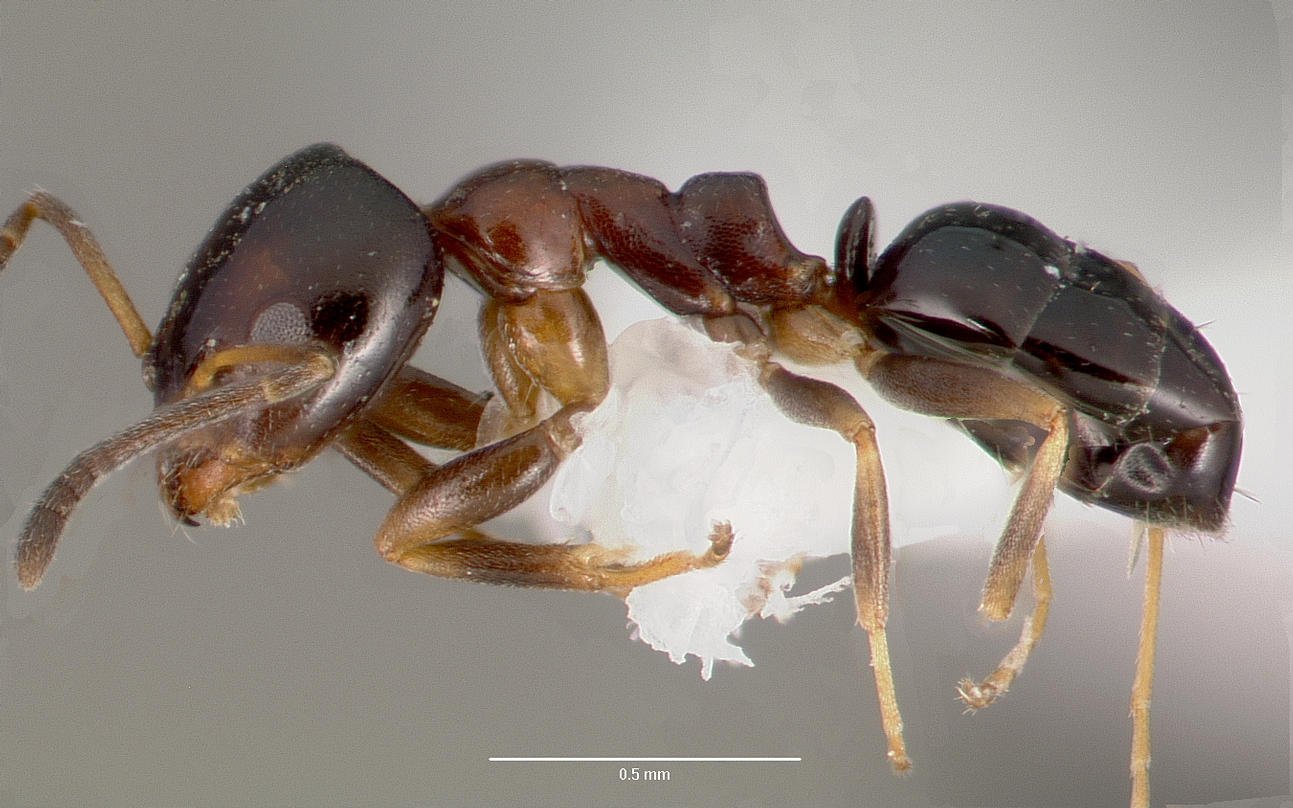
Small, shiny and black, and one of the most common kitchen ants in Sydney. It trails along skirting boards, window frames and power cables, and nests in wall voids, roof spaces and garden edges. It readily takes sweet baits.
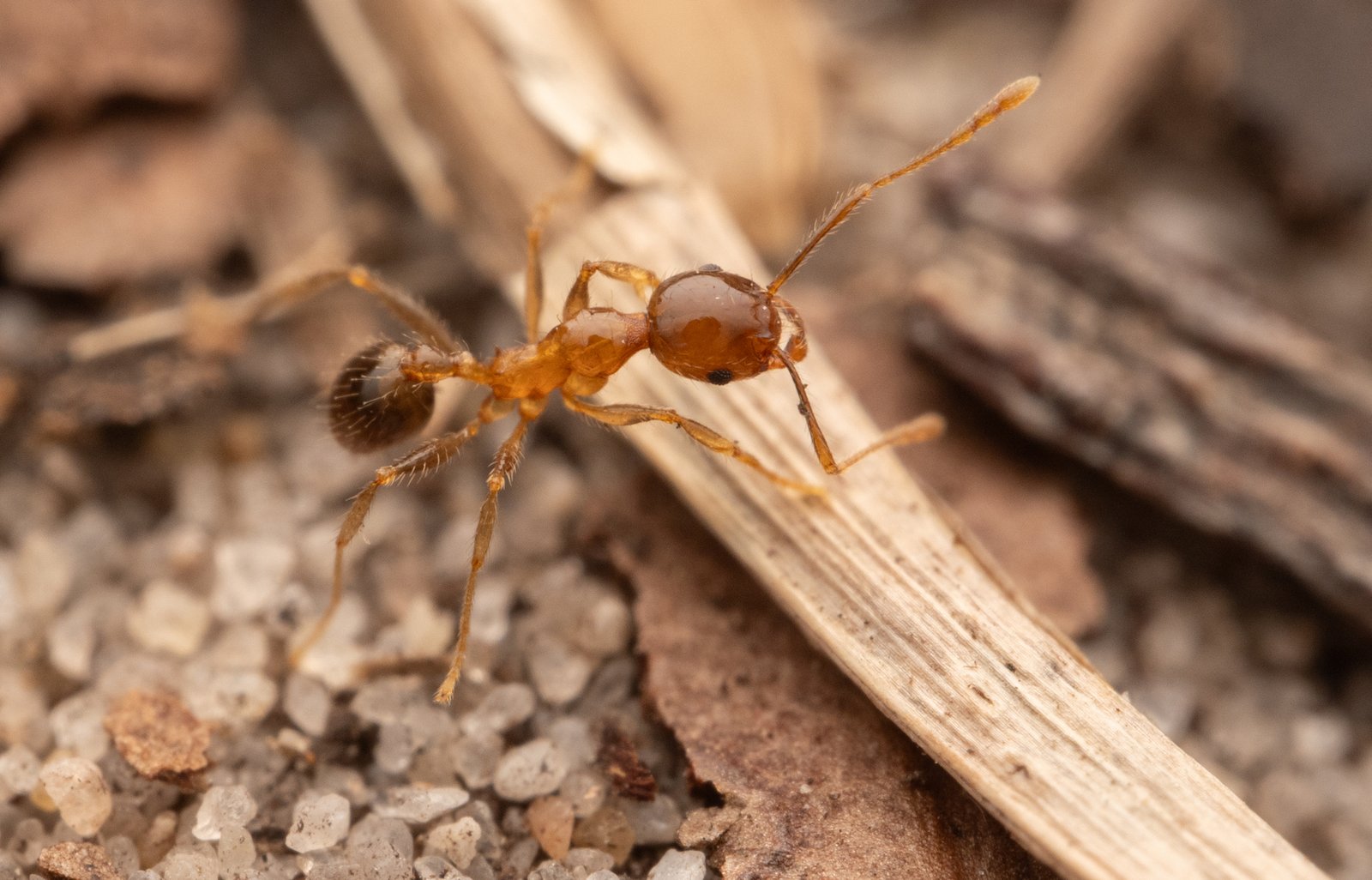
Very small brown ants, with soldiers that have noticeably bigger heads. You spot them by the fine sandy soil pushed up through paving joints, slab edges and grout. The colonies are big and multi-nested, so oil-based granular bait is the tool.
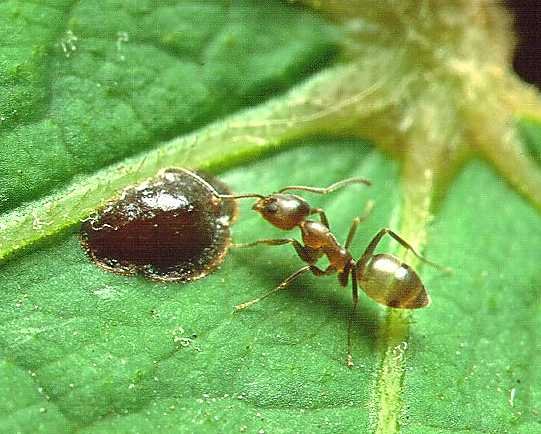
Fast-moving, small and dull brown, in thick trails. Its nests are multi-queen and interconnected with neighbouring nests, so it spreads across properties - and repellent sprays accelerate exactly that.
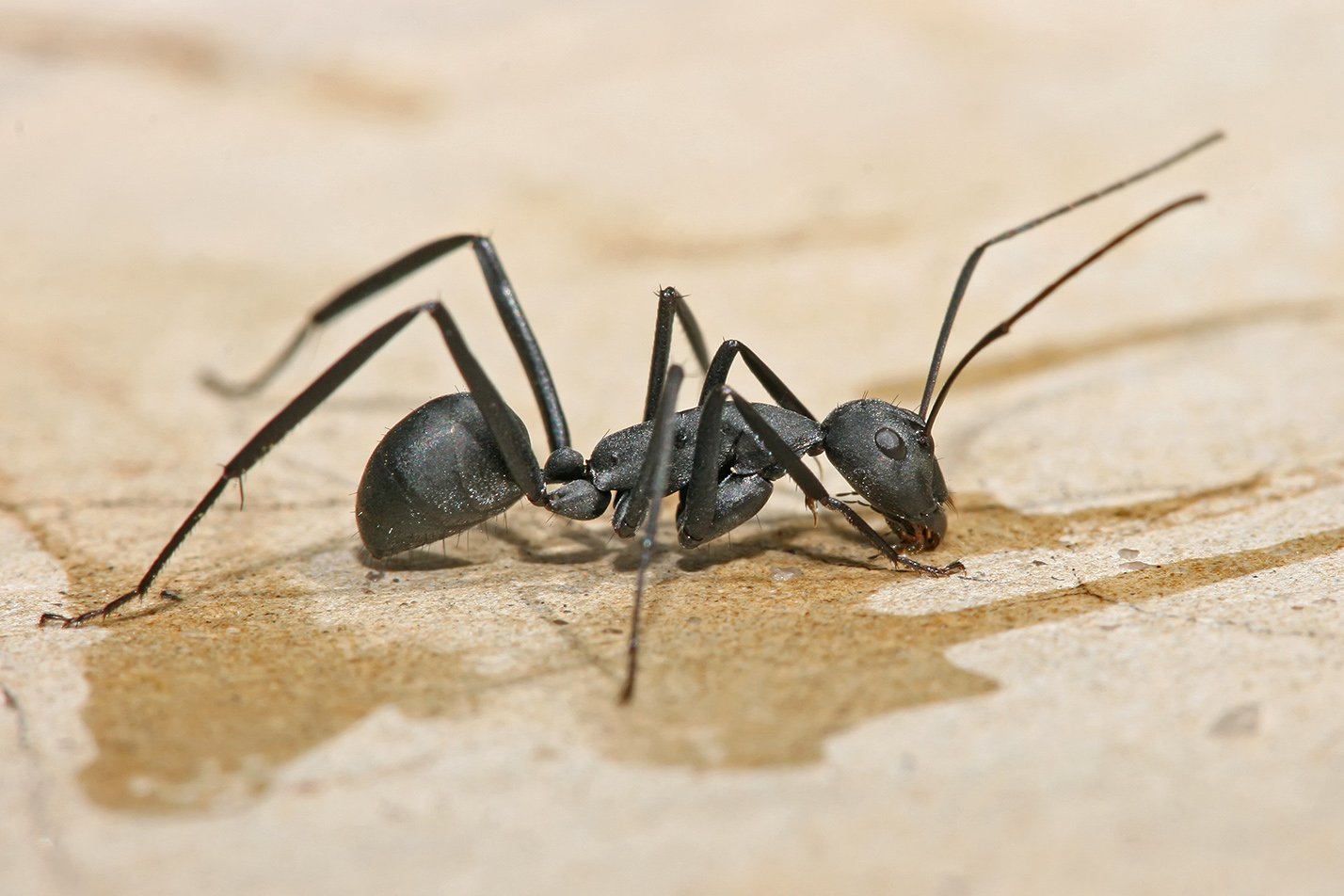
Large and mostly nocturnal, nesting in soil, hollow trees and damp or softened timber. They rarely damage structure here, though a nest inside a wall is a reliable sign of moisture that needs attention.
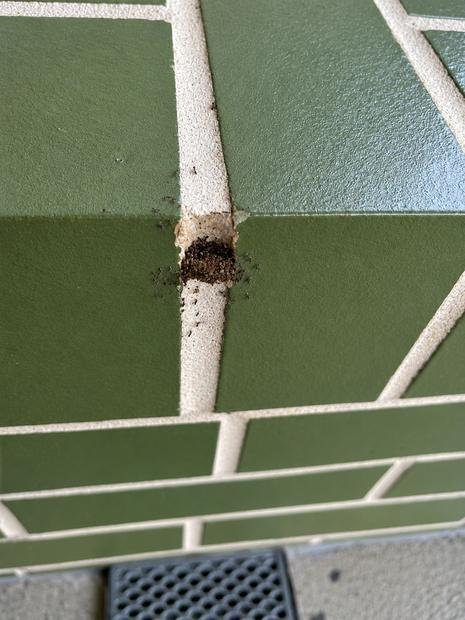
An Elite photo of ants emerging from mortar. The route runs through weep holes and cracked joints straight into the wall cavity, which is the usual home for a black house ant colony.
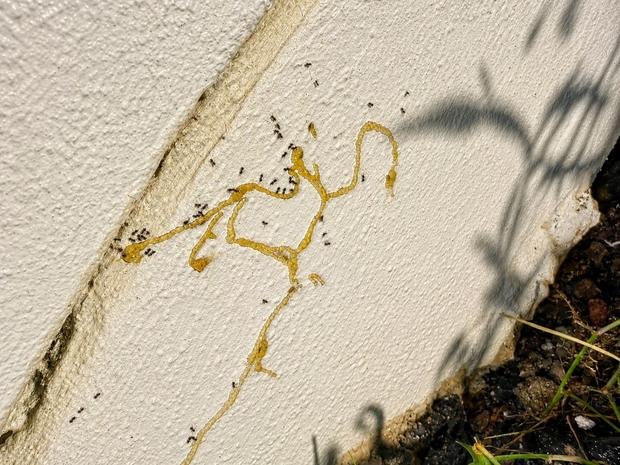
Gel bait on a working trail, from one of our jobs. Ants feed and carry it to the nest, so wiping or spraying the trail afterwards undoes the treatment.
Where ants appear usually tells us where the nest is and which species we are dealing with.
Ants entering from the external wall point to a cavity or garden-edge nest. Finding that entry is the first step.
Fine sand pushed up through paving, driveway and slab joints is coastal brown ants underneath, almost without exception.
A nest in a power point or appliance is about warmth. Spraying into electrical fittings is dangerous - tell us and we will treat it the right way.
Swarms of winged ants in spring and summer are mating flights. Seen indoors, they can mean a mature colony inside the building.
When trails appear around the shower, vanity or toilet, moisture is the reason - often a slow leak the colony is drinking from.
Bull and jumper ants live in lawn and garden-bed nests. The sting hurts, and for some people it brings on a serious allergic reaction.
Get a licensed Sydney technician on the phone today - honest advice, fixed quote in 30 minutes.
Species with many queens, such as Argentine ants and several house ants, respond to a repellent spray by relocating. A few hundred workers and a queen move to a new spot, and you now have two colonies instead of one.
The difference matters. Retail sprays are repellent - ants sense them and avoid the treated area. Non-repellent products cannot be detected, so foragers cross them, pick up the active and take it back to the nest.
If the bait is not what they want today, they will walk past it. Preference moves between sugar and protein with brood demand, so we test and change as needed.
Results come over days as the bait spreads. Spray the trail the next morning and you have killed the ants that were carrying it home. Our blog explains budding in more detail.
Tracing first, then baits and non-repellent products that do the work after we leave.
Species confirmed, then trails traced to entry points and to the nests - walls, paving, garden edges, roof space.
We put out small quantities of sweet, protein and oil-based bait to see which the colony is actually taking today.
Gel bait goes along trails, window frames and skirting where ants travel, out of reach of children and pets.
A non-repellent band around the footings, weep holes, door frames and paths catches ants as they come in.
For nests beneath pavers and in lawn edges - typically coastal brown ants - we use granular bait or treat the nest directly.
You receive the job summary in writing, guidance on what to leave alone, and 6 months of warranty on the general treatment.
The same bait does not suit every ant. This is how we choose.
| Species | Usually feeding on | Treatment approach | Common mistake |
|---|---|---|---|
| Black house ant | Mostly sweet liquids and honeydew, with protein demand during brood rearing | Gel bait along the trail, plus non-repellent treatment to weep holes and door frames | Daily detergent wiping of trails - it moves the foraging rather than stopping it |
| Coastal brown ant | Protein and oily foods | Oil-based granular bait over paving and lawn margins | Attacking a single visible nest while the rest of the colony's nests carry on |
| Argentine ant | Sugar for the most part, with periodic protein demand | Slow baits and a non-repellent applied along the property line | Using a repellent barrier spray - it divides the multi-queen colony |
| Sugar ants (Camponotus) | Sweet foods and insects, mostly at night | Night-time trail inspection, bait near the nest, fix moisture in timber | Treating only in daylight when the ants are not active |
| Bull ants and jumper ants | Nectar and insects, outdoors | Treating the nest directly where it sits in lawn or garden bed | Digging the nest out by hand, which is how people get stung |
| Time of year | What is happening | What to watch for |
|---|---|---|
| Early spring (Sept to Oct) | Colonies come out of winter and begin raising brood, which pushes protein demand up | The first indoor trails of the season, and sand reappearing between pavers |
| Late spring to summer (Nov to Feb) | The busiest foraging period, with mating flights after warm humid weather | Winged ants on the wing, and thick trails after a storm or a hot spell |
| Autumn (Mar to May) | Colonies peak in size and stock up for the cooler months | Trails into the pantry and around pet bowls |
| Winter (Jun to Aug) | Little happening outdoors, but a nest in a heated wall stays active | Activity around heaters, the hot water unit and kitchen areas |
Most failed ant treatments come down to what happens in the week after.
A single trail across a Wisemans Ferry prep bench during an inspection is enough to cause a problem. The program is built to prevent that rather than react to it.
A storm is the most reliable trigger for an indoor ant problem. Nests in soil and paving flood, and the colony relocates somewhere dry, meaning your building.
A branch touching the roof is a bridge. Mulch banked against brickwork is harbourage. Most of what brings ants inside a Wisemans Ferry home is in the garden immediately around it.
Trails are traced to the colony, not just sprayed where you saw them.
Sweet, protein or oil-based, picked to suit the ant and the point in the season.
Sprays that scatter a colony are avoided entirely in favour of non-repellents the ants deliver themselves.
General ant treatments are covered. If ants come back within 6 months, so do we.
Everything you need to know before you book. Still unsure? Call us — we're happy to help.
Get a Free QuoteAnt treatment starts from $89. We quote on the property rather than the postcode, so a unit in Wisemans Ferry and a large house are priced differently. The figure is fixed before any work starts. Every general treatment carries a 6-month warranty.
We cover it on scheduled runs, so a day's notice gets you the best slot. Wisemans Ferry is about 58 km north of the CBD in the Hawkesbury & the Rural North-West, and we give you a firm arrival time rather than an all-day window.
Acreage means more harbourage. Stacked timber, disused sheds and open ground all support ants populations that eventually work their way inward.
Rural-residential blocks where the shed, feed store or woodpile is as likely to be the source as the building itself.
We do. A lot of our Wisemans Ferry work is rentals and strata, so the report, the products used and the areas treated are all recorded in writing for whoever needs them.
Yes. Everything we use is registered for the purpose and applied at label rates, and we place product where people and animals do not go. Tell us about pets, aquariums or anyone with a respiratory condition at booking.
Generally no. We will tell you on arrival if any part of the job means keeping out of a room for a while, so there are no surprises.
An hour to two hours covers most jobs. The size of the building and the extent of the problem are what change it.
Every general treatment carries a 6-month warranty. If activity continues past the expected period, call us and we will come back.
We do. Wisemans Ferry and Leets Vale, Laughtondale, Maroota and Lower Hawkesbury are all on the same route, which helps if you own more than one property in the area.
Photographs from Elite jobs across Sydney — not stock imagery.
Fast and fully insured, with a no-obligation quote back to you within 30 minutes.