Budding splits the colony
Species with many queens, such as Argentine ants and several house ants, respond to a repellent spray by relocating. A few hundred workers and a queen move to a new spot, and you now have two colonies instead of one.

Ant Control in South Turramurra 2074 — local technicians, fixed prices and a written report. Ant treatment starts from $89.
Real, verified feedback from people we've helped — straight from Google.
Where South Turramurra sits, who covers it and what it costs.
South Turramurra is part of the Upper North Shore, 15.5 km or so north-west of the GPO, and 2074 is a postcode we know well. We run South Turramurra on a regular route, and same-day attendance is usually available.
If you are near Dog Park, City View Park or Lane Cove National Park, that is ground we cover constantly - it is the busiest part of South Turramurra for us.
This is the Ku-ring-gai and Hornsby area, and our runs here also take in North Epping, West Pymble and Turramurra. Bush edges keep re-supplying the problem, which is why we treat the boundary rather than only the interior.
Most South Turramurra bookings come in as homes on sloping blocks with a sub-floor and bush on the boundary. Say which one applies when you call 1300 313 373 and the technician will have the right products on the van.
We also work the area near Duff Street Reserve, and the rest of 2074 with it.
The 2074 run is set the day before and you are given an arrival time. Where North Epping and West Pymble fall on the same round, we can usually bring the visit forward.
People expect a single nest. Coastal brown ants and Argentine ants run dozens of connected nests across a property and beyond it, so the question is never just where it is but how far it goes.
Where we find ants in a South Turramurra wall or frame, we look for the water first. Fix the leak and the timber dries; leave it and another colony will use the same cavity.
If there are ants running up a shrub beside a South Turramurra house, look for scale or aphids on it. They are farming, and that food source is what sustains the colony.
Each of these behaves differently, so the bait and the placement change too. Two photos come from our own jobs.
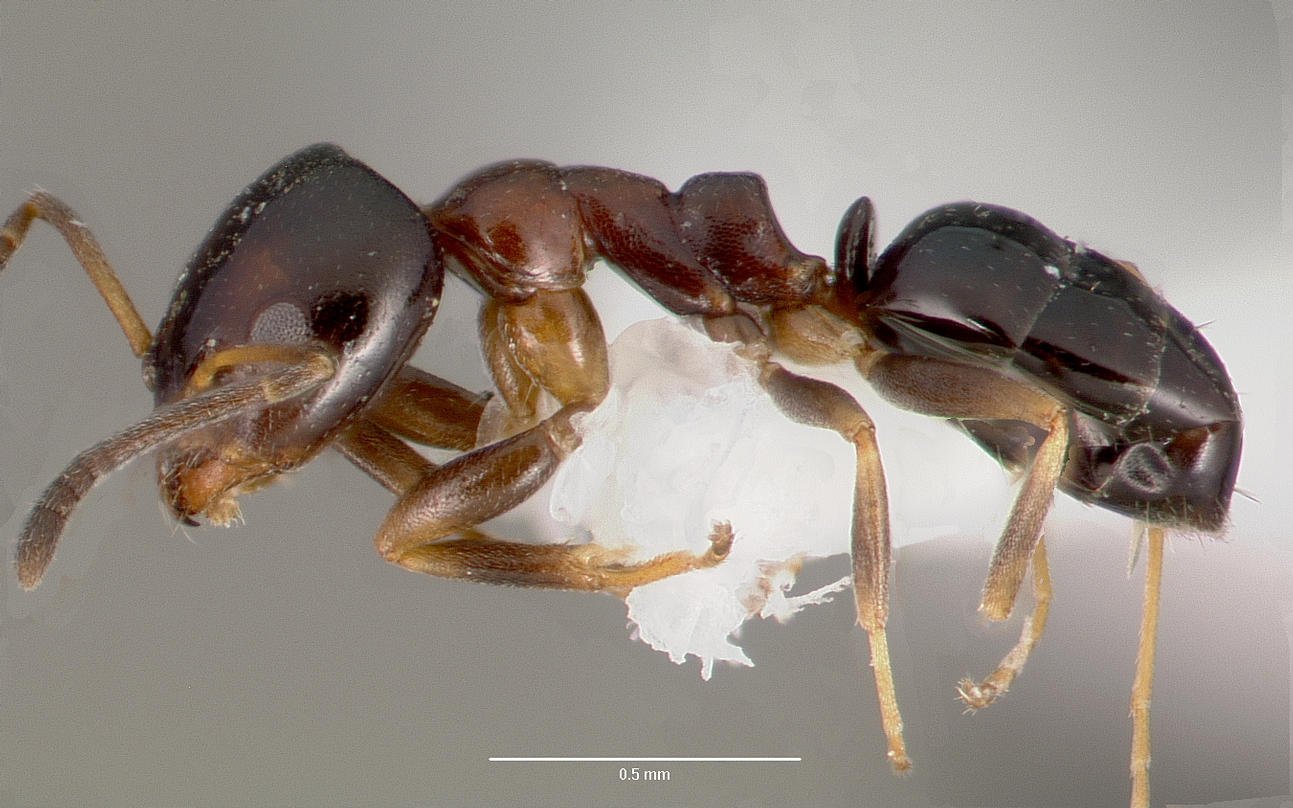
Small and shiny black. It is the usual kitchen ant here, trailing along skirting boards, window frames and power cables from nests in wall voids, roof spaces and the garden edge, and it takes sweet bait easily.
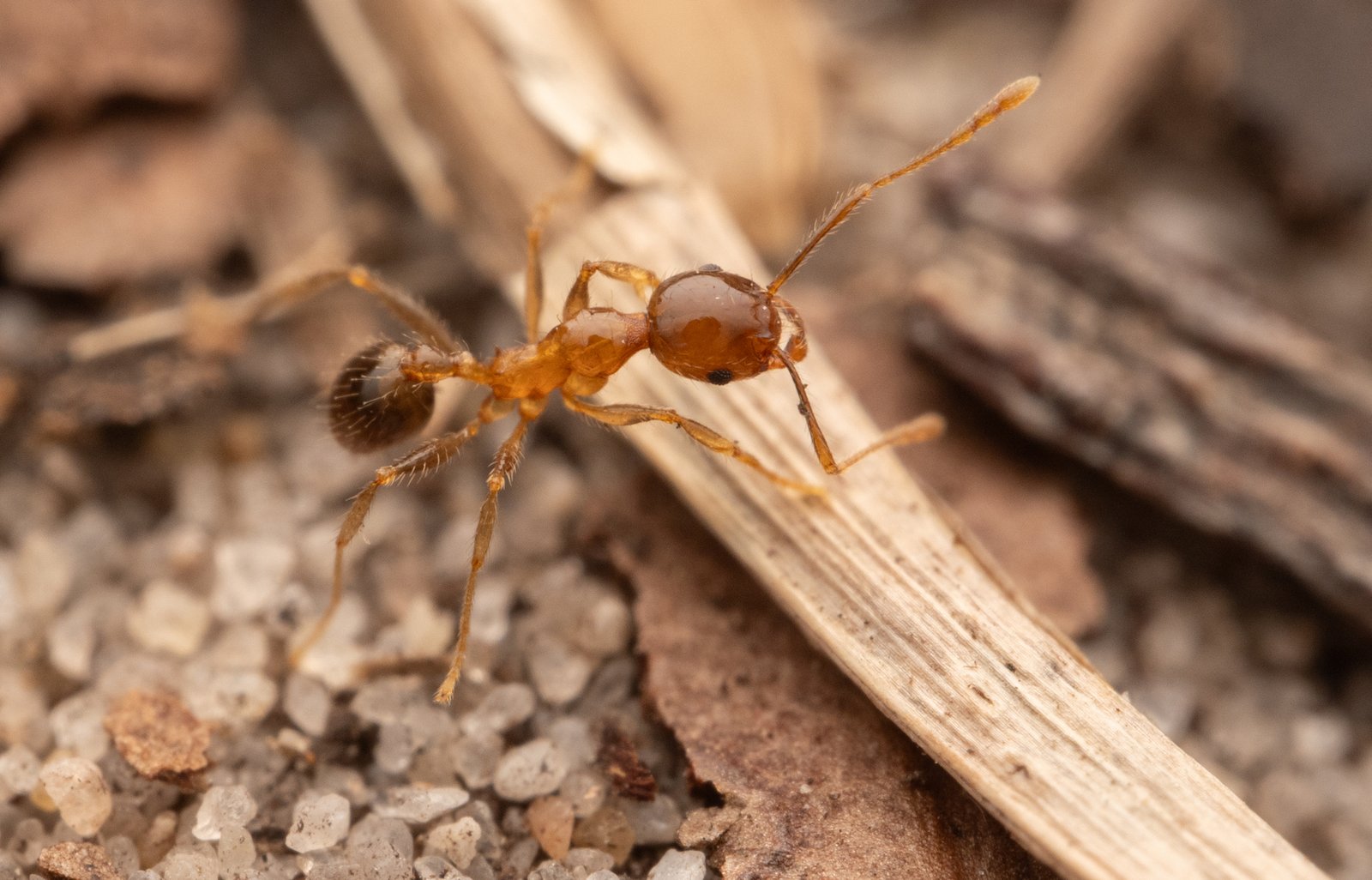
Tiny brown ants with a larger-headed soldier caste. The giveaway is loose sandy soil pushed up between pavers, along slab edges and in grout. Colonies are large with many nests, and oil-based granular baits work well.
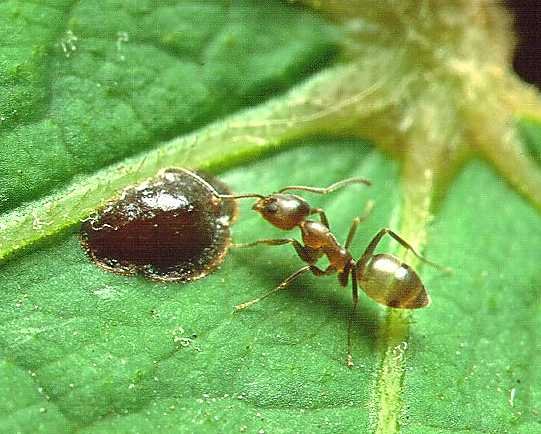
Fast-moving, small and dull brown, in thick trails. Its nests are multi-queen and interconnected with neighbouring nests, so it spreads across properties - and repellent sprays accelerate exactly that.
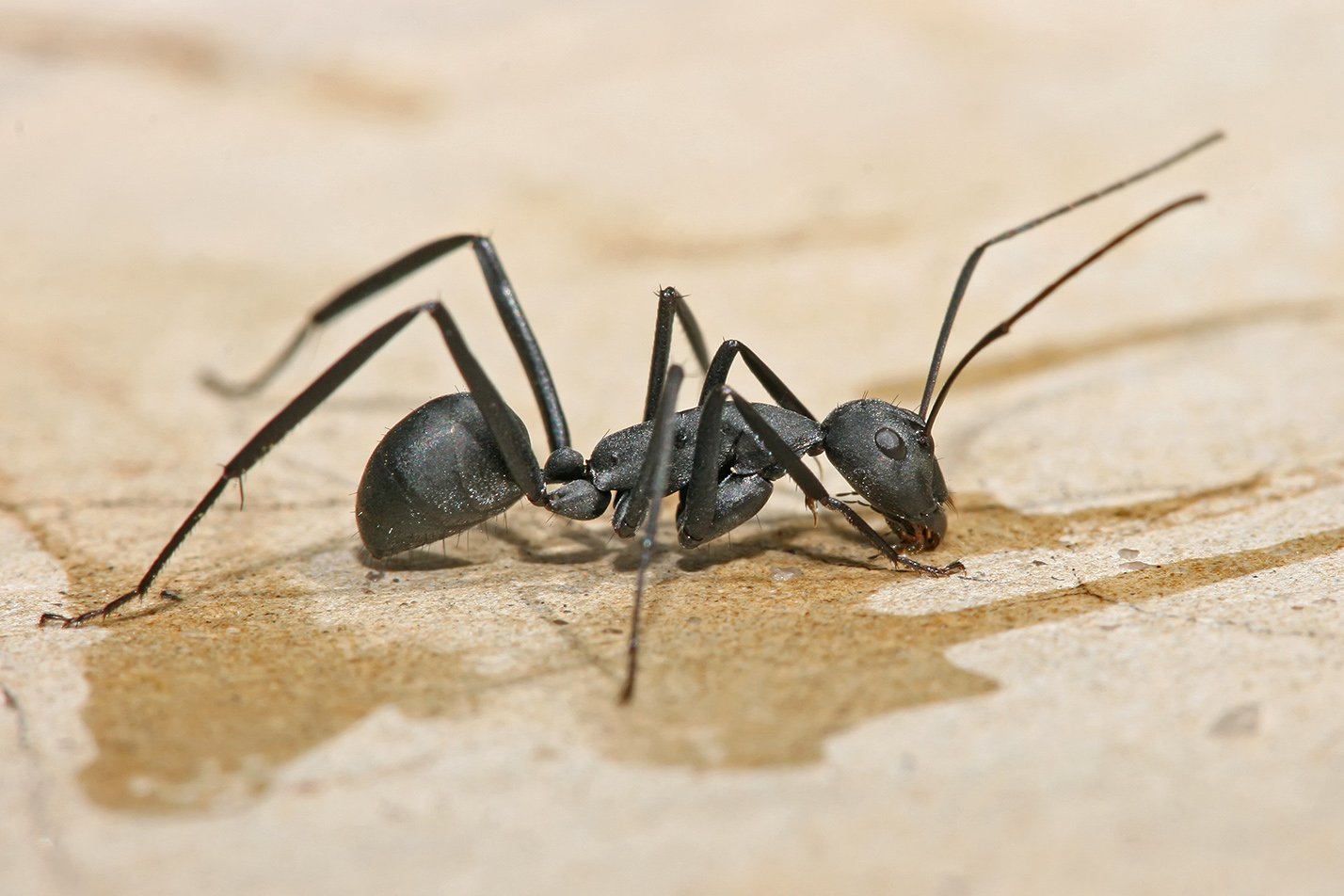
Large and mostly nocturnal, nesting in soil, hollow trees and damp or softened timber. They rarely damage structure here, though a nest inside a wall is a reliable sign of moisture that needs attention.
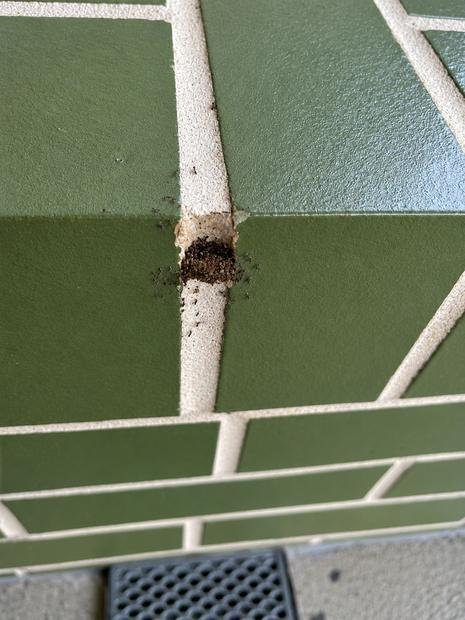
Photo from an Elite job: an ant nest emerging from a mortar joint. Weep holes and cracked mortar lead straight into the wall cavity, which is where many black house ant colonies live.
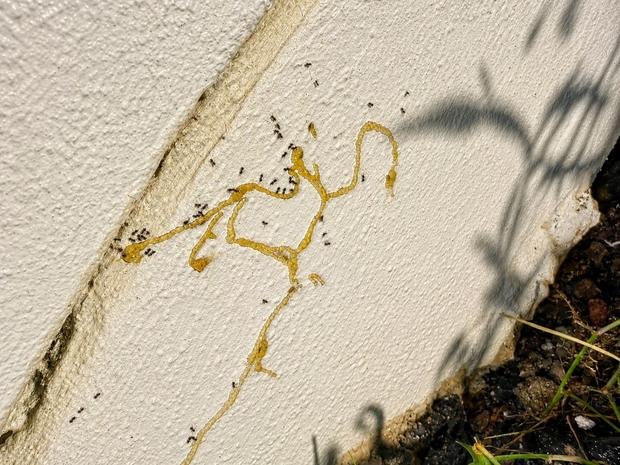
An Elite job photo: gel placed directly on an active trail. Leave it be - the ants feeding there are the ones delivering it to the colony.
Where ants appear usually tells us where the nest is and which species we are dealing with.
A trail in from the outside wall means the colony is in the cavity or the garden edge - the entry point is what we follow.
If fine soil keeps appearing in the paving joints and along the drive, coastal brown ants are nesting beneath it.
A nest in a power point or appliance is about warmth. Spraying into electrical fittings is dangerous - tell us and we will treat it the right way.
Swarms of winged ants in spring and summer are mating flights. Seen indoors, they can mean a mature colony inside the building.
Trails around the shower, vanity or toilet often mean moisture in the wall or a colony drinking from a slow leak.
Bull ants and jumper ants nest in the lawn and garden beds. The sting is genuinely painful and in some people causes a serious allergic reaction.
Talk to a licensed Sydney technician today - honest advice and a fixed quote within 30 minutes.
Species with many queens, such as Argentine ants and several house ants, respond to a repellent spray by relocating. A few hundred workers and a queen move to a new spot, and you now have two colonies instead of one.
Supermarket sprays are repellent: ants detect them and walk around them. Professional non-repellent products are not detected, so foragers walk through, pick up the active and carry it back to nest mates.
Ants will ignore bait that does not suit their current needs. Because they alternate between sugar and protein depending on the brood, we test preference rather than assume.
A bait program works over days. The worst thing you can do is spray the trail once we have gone - those ants are the delivery system. See our blog on budding in more detail.
Tracing first, then baits and non-repellent products that do the work after we leave.
Species confirmed, then trails traced to entry points and to the nests - walls, paving, garden edges, roof space.
Sweet, protein and oil-based baits are offered in small amounts so the colony shows us its current preference.
Gel bait goes along trails, window frames and skirting where ants travel, out of reach of children and pets.
Outside, a non-repellent goes around the foundation, weep holes, door frames and paths, so ants coming in pick it up on the way.
Granular bait or direct treatment for coastal brown ant nests under pavers and in lawn edges.
You receive the job summary in writing, guidance on what to leave alone, and 6 months of warranty on the general treatment.
The same bait does not suit every ant. This is how we choose.
| Species | Usually feeding on | Treatment approach | Common mistake |
|---|---|---|---|
| Black house ant | Sugars and honeydew, turning to protein while brood is being raised | Sweet gel on the trails themselves, with a non-repellent at weep holes and frames | Cleaning the trail off every day, which just sends them foraging somewhere else |
| Coastal brown ant | Oils and protein | Granular oil-based bait across the paving and along lawn edges | Treating one sand pile with boiling water or insecticide when there are dozens more |
| Argentine ant | Sugars primarily, sometimes protein | Slow-acting baits combined with non-repellent treatment across the boundary | A repellent barrier, which splits nests that hold many queens |
| Sugar ants (Camponotus) | Sweet foods and insects, active after dark | Night trail inspection, baiting near the nest, and dealing with damp timber | Inspecting in daylight when the colony is not foraging |
| Bull ants and jumper ants | Insects and nectar, always outside | The nest itself is treated directly, in lawn or garden bed | Hand-digging a nest, which reliably ends in stings |
| Time of year | What is happening | What to watch for |
|---|---|---|
| Early spring (Sept to Oct) | Colonies come out of winter and begin raising brood, which pushes protein demand up | The first indoor trails of the season, and sand reappearing between pavers |
| Late spring to summer (Nov to Feb) | Foraging at its height, and mating flights whenever it turns warm and humid | Winged ants indoors, and much heavier trails after storms and heatwaves |
| Autumn (Mar to May) | The colony is at its largest and laying in stores before winter | Trails running into pantries and to pet food |
| Winter (Jun to Aug) | Outside activity drops away, though nests in warm wall cavities carry on | Ants near heaters, hot water units and in the kitchen |
Most failed ant treatments come down to what happens in the week after.
The garden is usually the source. Shrubs touching the walls, mulch up against the footings and irrigated beds give a colony everything it needs within a metre of your kitchen.
Brick cavities are dry, warm and undisturbed, which makes them ideal nesting. The weep hole is the doorway and it is usually where we start on a South Turramurra job.
If your South Turramurra paving keeps developing little sand volcanoes, sweeping them away is treating the spoil rather than the nest. The colony is in the bedding sand under the slab.
We follow the trail back to the colony rather than treating the spot where you noticed it.
Sweet, protein or oil-based, picked to suit the ant and the point in the season.
Nothing repellent, because that causes budding. Non-repellent products get carried home instead.
General treatments come with 6 months. Ants back within that window means we come back too.
Everything you need to know before you book. Still unsure? Call us — we're happy to help.
Get a Free QuoteAnt treatment starts from $89. There is no call-out charge in South Turramurra 2074. The final number comes down to the property itself, and it is fixed before we begin. Every general treatment carries a 6-month warranty.
Same-day attendance is usually available. South Turramurra sits roughly 15.5 km north-west of the CBD, inside our Upper North Shore run, so we book a time and keep to it.
The bush is a permanent reservoir. Treating inside does little here unless the boundary and the perimeter are dealt with, because re-entry is the real issue.
Mostly detached housing backing onto reserve. Proofing and the perimeter are what actually hold here.
Yes - freestanding homes, townhouses, apartments, rentals and business premises in South Turramurra 2074 are all covered, with documentation suitable for an agent or a strata manager.
It is, as long as you follow what we tell you on the day - usually keeping off treated surfaces for a couple of hours. Let us know at booking about young children, pets or an aquarium.
In the great majority of jobs, no. If one area needs to be left for an hour or two we say so before we start rather than after.
Between one and two hours covers the majority of jobs. We do not book so tightly that a technician has to cut a job short.
Every general treatment carries a 6-month warranty. Ring us if activity picks up again inside that period and we will arrange the return.
All of them. South Turramurra sits alongside North Epping, West Pymble, Turramurra and Pymble in our coverage, and they are serviced on the same schedule.
Photographs from Elite jobs across Sydney — not stock imagery.
Friendly, fully insured technicians and a no-obligation quote inside 30 minutes.