
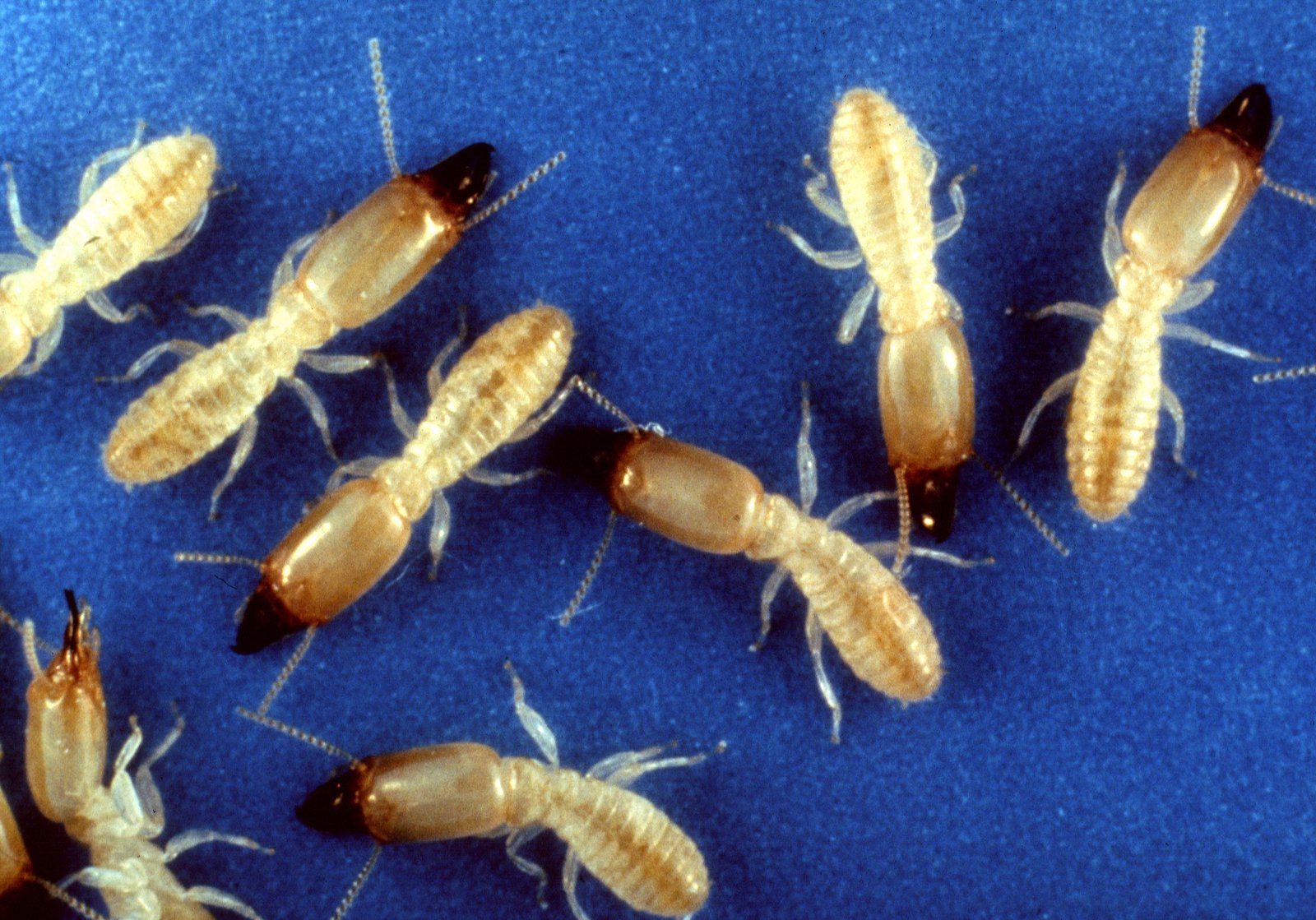
Termite control is an inspection problem before it is a treatment problem. A colony works inside timber for months before anything shows, which is why an annual inspection from $159 is the standard advice. If activity is found, a barrier or baiting system is quoted on the day. Do not disturb live workings.
- Start by working out what you have
- The early signs people miss
- The conditions behind it
- Which method suits which situation
- What a licensed technician actually does
- Honest pricing
- Doing it yourself: the honest version
- Does your type of property change things?
- When it is not a single home
- Warranty and follow-up
- What to do once it is sorted
- Frequently asked questions
Start by working out what you have
Most of the cost in dealing with termites comes from doing it twice. Getting the identification and the source right the first time is what makes the difference between one treatment and a recurring expense.
So the sequence matters: identify, locate, treat the source, then close the conditions. Skip a step and you are paying again within weeks.
Key points
- Early action is consistently cheaper than waiting for certainty.
- Identify the species before treating - the right product depends on it.
- Fix the conditions - moisture, food, entry points - or it returns.
- Ask what the warranty covers and for how long.
There is a fuller explanation of how termite control works, including what is and is not included.
The early signs people miss
Catching this early is the difference between a routine treatment and an expensive one. These are the signs our technicians see most often in Sydney:
- Paint or plaster that bubbles, ripples or cracks with no plumbing leak nearby.
- Doors and windows that start sticking without any change in the weather.
- Floorboards that feel spongy underfoot, particularly near wet areas.
- Thin mud veneer filling cracks in skirtings, architraves or door frames.
- Sagging or blistered cornices where a nest has worked up inside a wall.
One of these on its own may mean nothing. Two or more in the same area is worth a professional look, and it is better not to disturb the site before someone has seen it.
Because the early signs are so easy to miss, the inspection itself every twelve months is the standard advice for Sydney homes.
The conditions behind it
Nothing moves in without a reason. Termites turn up where there is food, water or shelter available, and in most Sydney homes it is a short list of the same culprits:
- Stored timber, firewood or offcuts stacked against an external wall.
- Tree stumps and buried form-work left on the block after construction.
- Garden beds, mulch or soil built up above the slab edge, bridging the barrier.
- Subfloor moisture from a leaking pipe, a failed shower base or poor drainage.
- An untreated or breached physical barrier on an older Sydney build.
None of that requires a trade - it is mostly maintenance - but it is the part that determines whether you call us again.
Which method suits which situation
There is rarely one correct method. What follows is what each approach does well and where it falls short:
| Method | Works well for | Limitations |
|---|---|---|
| Above-ground baiting | Targets active workings directly | Only where live activity is accessible |
| Dusting active workings | Fast knock-down on a found trail | A first step, not a complete solution |
| Chemical soil barrier | Full perimeter protection, long service life | Needs trenching or drilling; priced after inspection |
| Annual timber pest inspection | Finds activity while it is still cheap | Detection, not treatment |
Ask which of these is being proposed and why. A technician who cannot answer that is guessing.
The method itself, product by product, is explained on our page about what the treatment involves.
What a licensed technician actually does
The work is more methodical than most people expect, and very little of it involves a spray wand. The sequence:
- Inspect and identify. Confirm the species, locate nests and harbourage, and note the conditions sustaining them.
- Treat the source. Apply the right method for that species - gel bait, dust, residual, baiting system or trapping - where it does the most work and the least harm.
- Allow the method to run. Baits and colony treatments work over days to weeks; re-spraying during that window undoes them.
- Close the conditions. Proofing and maintenance advice specific to your building, which is the part that prevents a repeat.
Every Elite Pest treatment is carried out by a licensed, insured technician and general pest work carries a 6-month warranty.
How that is done in practice is covered under termite control.
Honest pricing
Price depends on the property size, the species and how established the population is. These are the starting figures Elite Pest works to in 2026:
| Service | From | Notes |
|---|---|---|
| Timber pest inspection with report | from $159 | Annual check; the report is the deliverable |
| Termite treatment or barrier | quoted on inspection | Depends on construction, soil and extent of activity |
| Rodent treatment and proofing | from $150 | Baiting or trapping, plus entry-point work |
| Possum removal and proofing | from $250 | One-way exclusion, then sealing the entry |
| Wasp or bee nest treatment | from $150 | Priced on access and nest location |
Nothing is charged beyond the quoted figure. Where a job turns out to need more than expected, you are told before it is done, not after.
If you want to see how the treatment is actually carried out, professional termite control walks through each stage.
Doing it yourself: the honest version
This is worth being straight about, because DIY is not always the wrong answer. It is the wrong answer once a population is established, for reasons that are fairly mechanical:
- Repellent sprays can split colonies - with ants especially - turning one nest into several.
- Without identification there is no way to know whether it is working or just scattering.
- Guessing the species usually means the wrong product entirely.
- Surface application misses the voids and cracks where the population actually lives.
Where it crosses over is roughly when you have treated twice and it has come back, or when the species itself is a safety question.
If you are not certain which pest you are dealing with, the services we offer across Sydney lists what we treat and the signs that point to each.
Does your type of property change things?
Access decides a lot. What is straightforward in a house can be the hard part in an apartment:
- Townhouses. Common walls plus private courtyards, so internal and external work both matter.
- Freestanding houses. Full external access, subfloor and roof void available, so the source can usually be treated directly.
- Commercial premises. Documentation, scheduling and after-hours access become part of the job.
- New builds. Tighter sealing helps, but landscaping against the slab and construction debris are common early problems.
If you are in a unit or a terrace and the problem keeps returning after treatment, the source is very likely not inside your own walls.
If you are in a unit rather than a house, apartment pest control explains what can be treated inside your own lot.
When it is not a single home
Once more than one occupier is involved, the job changes shape. The treatment may be similar; everything around it is not:
- Treatment of common property - risers, voids, bin rooms, roof spaces - not just individual lots.
- Written service reports an auditor or committee can follow.
- A site plan showing monitored station locations.
- Scheduled servicing rather than reactive call-outs, with visit dates set in advance.
- Coordination across multiple lots so the population cannot simply relocate.
At an audit the question is rarely whether you have pests; it is whether you can show a managed program. That is what the reporting is for.
In a commercial kitchen the same problem becomes a compliance issue, and food-premises pest programs covers the servicing and records involved.
Warranty and follow-up
Our general treatments are backed for six months. That is a re-treatment guarantee rather than a refund, which is what actually helps.
The exclusions are the ordinary ones - a new pest is a new job, and a recurrence traced to an unfixed cause sits outside the cover. Termite barriers and baiting programs have their own longer warranties, conditional on annual monitoring.
Ask for it in writing. Any operator who will not put the warranty terms on the invoice is worth passing on.
If this is the second or third time you have dealt with it, routine residential pest control costs less over a year than repeated call-outs.
What to do once it is sorted
The treatment buys you a clean slate. These keep it:
- Store firewood and timber off the ground and away from the house.
- Book a timber pest inspection every twelve months, or annually with a report.
- Fix leaking taps, overflows and air-conditioning condensate promptly.
- Grind out or remove stumps rather than leaving them in the ground.
- Keep subfloor vents clear so air moves under the building.
The moisture items matter most. If you only do one thing, fix the water.
Households that would rather not think about it tend to move to a regular residential program, which catches problems at the point they are still small.
Frequently asked questions
What will treating termites cost?
From $89 for general pest work in Sydney, and from $159 for a timber pest inspection. Termite barriers, baiting systems and commercial programs are priced after a site visit. Nothing is charged above the quoted figure without your agreement.
How often do termite inspections need doing?
Every twelve months, and that is the minimum rather than a precaution. A colony can work inside timber for months without any visible sign, and insurance will not cover the repair, so the inspection is the only point at which this is inexpensive.
What prevents a repeat?
Remove the food, remove the water, seal the gaps and keep vegetation off the walls. Of those, moisture matters most - fixing a leak or clearing a gutter prevents more problems than any spray. A scheduled annual service catches anything that slips through.
Do you offer a warranty?
Yes - six months on general pest work. A recurrence of the treated pest inside that window is a free return visit. A different species arriving later is a new job, and a recurrence traced to an unfixed cause such as a leak sits outside the cover.
Can you come today?
Usually within a day or two, and same-day where there is a safety issue - a sting allergy in the household, young children with access, or live termite activity. We quote most jobs in about thirty minutes over the phone.
I am renting - whose responsibility is this?
If the source is common property, it is a building-level job rather than yours. We are happy to provide a written report for an agent or owners corporation setting out where the activity is and what it will take to resolve.
Is an inspection really necessary?
An inspection is what tells a technician the species, the extent and the cause. Treating without it is guesswork, and guesswork is the main reason jobs get repeated. On general treatments it is built into the appointment.
How quickly will I see a difference?
For a general treatment you should see a drop within 24 to 72 hours. Where baiting is used it takes one to three weeks, because the aim is the colony rather than the foragers. A short increase in sightings early on means the bait is being taken.
Want this sorted properly?
Licensed, insured and working across 650+ Sydney suburbs. You get a fixed price before anything starts, a 6-month warranty on general pest work, and a technician who explains what they found.