
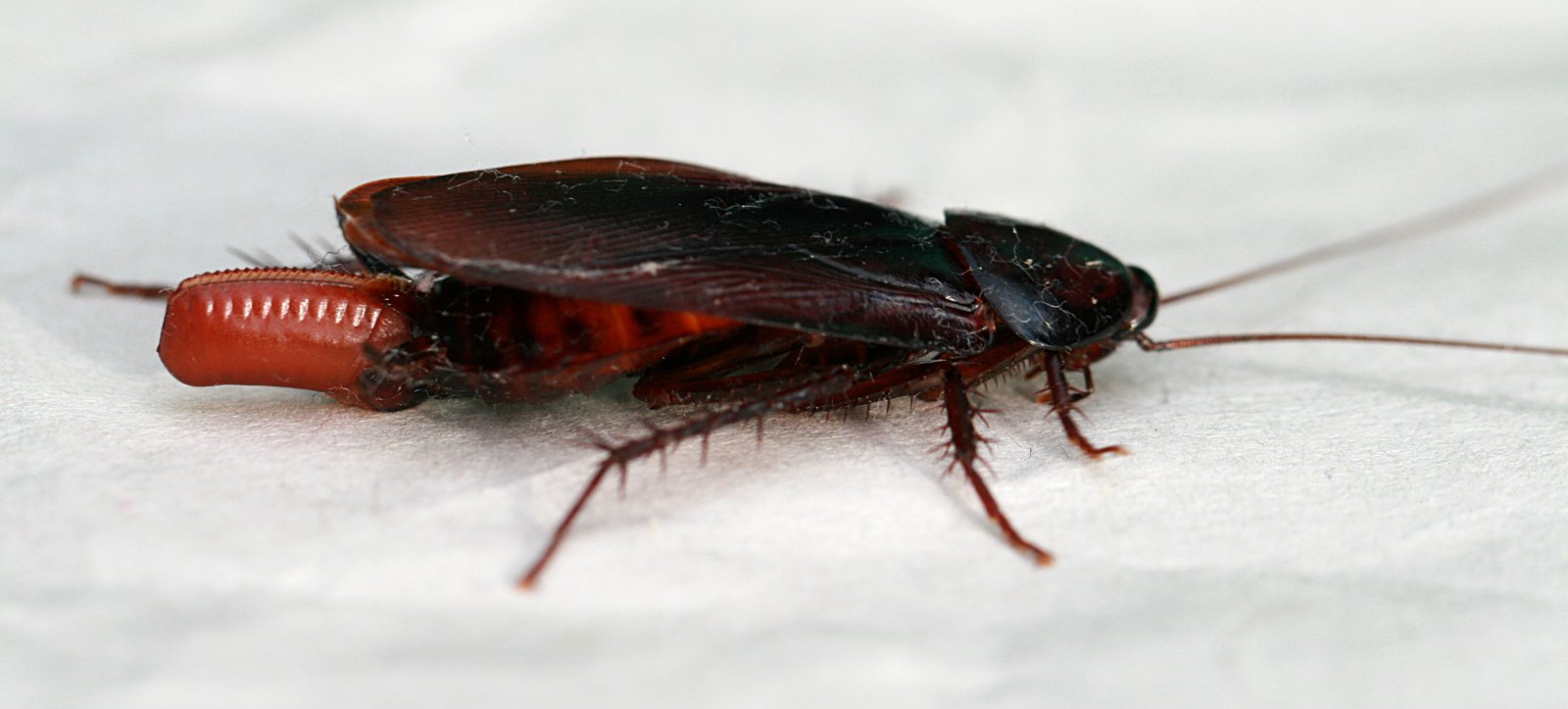
A cockroach problem is faster and cheaper to resolve when the treatment targets the source instead of the sightings. Below, Elite Pest's licensed Sydney technicians set out the signs worth acting on, which treatments actually work for cockroaches, what it costs here, and how to stop it recurring. Fixed quote, usually within thirty minutes.
- The part most people get wrong
- What to look for
- The conditions behind it
- Why it is worth dealing with
- How the treatments differ
- The visit itself
- Safety around the family
- Four things you can stop worrying about
- How the building affects the treatment
- Commercial and common-property situations
- How quickly do you need to act?
- Frequently asked questions
The part most people get wrong
Most of the cost in dealing with cockroaches comes from doing it twice. Getting the identification and the source right the first time is what makes the difference between one treatment and a recurring expense.
That is why an inspection comes before any product. It establishes the species, how far the population has spread, and which conditions on the property are sustaining it.
Key points
- Early action is consistently cheaper than waiting for certainty.
- Fix the conditions - moisture, food, entry points - or it returns.
- Identify the species before treating - the right product depends on it.
- Ask what the warranty covers and for how long.
How that is done in practice is covered under professional cockroach control.
What to look for
Before numbers become obvious there is almost always a quieter stage. What to look for:
- Dark staining around motor housings at the back of appliances.
- Droppings like coarse black pepper in cutlery drawers and pantry corners.
- Brown, oval egg cases glued into hinges, cupboard seams or behind kickboards.
- Live insects in a dishwasher door seal or the gap beside a built-in oven.
- Shed skins in warm cavities behind the fridge, oven or dishwasher.
One of these on its own may mean nothing. Two or more in the same area is worth a professional look, and it is better not to disturb the site before someone has seen it.
The rest of what we handle is set out under everything we treat.
The conditions behind it
There is almost always something on the property doing the inviting. Most commonly:
- Pet food and water left down overnight.
- Shared plumbing and wall voids in an apartment or terrace, letting them move between units.
- A floor waste or disused drain that has dried out and lost its water seal.
- Cardboard and paper storage in a damp cupboard, which doubles as harbourage.
- Warmth and condensation behind a fridge, oven or dishwasher motor.
A technician will walk you through whichever of these apply to your place as part of the visit.
Why it is worth dealing with
Cockroaches matter for health rather than structure. They track through drains and waste and then over food surfaces, carrying organisms that cause gastroenteritis and food poisoning, and their droppings and shed skins are a well-documented trigger for childhood asthma and allergic rhinitis. A persistent population in a kitchen is a health issue, not just an unpleasant one.
That is the argument for acting on the early signs rather than waiting until there is no doubt.
The method itself, product by product, is explained on our page about cockroach control.
How the treatments differ
A technician chooses between these based on the species, the building and how established the population is:
| Method | Works well for | Limitations |
|---|---|---|
| Monitoring traps | Confirms species and whether numbers are falling | Monitoring, not control |
| Gel bait in harbourage | Carried back to the harbourage; very effective on German cockroach | Must not be sprayed over |
| Targeted residual spray | Treats runways and entry points | Surface work alone rarely clears a population |
| Insecticidal dust to voids | Long residual in wall and cabinet voids | Placement only where it stays dry |
When comparing quotes, compare methods rather than prices - that is normally where the difference sits.
There is a fuller explanation of the cockroach control page, including what is and is not included.
The visit itself
There is not much mystery to it, and most of it is quicker than people expect:
- Arrival and walk-through. A proper look first, including the places you have not checked, and a straight answer about what you are dealing with.
- Agreeing the work. You hear the fixed price and what is included before work begins. If you would rather not proceed, that is fine.
- The work itself. Most general treatments take 45 to 90 minutes depending on the property size and how much access is involved.
- What you are told. A clear explanation of what happens next, so an increase in activity a few days later does not alarm you.
Expect a short increase in sightings after a bait treatment. It means the bait is being carried, which is the point.
Safety around the family
It is the right thing to ask. What makes a professional treatment safe is where the product goes and how much of it is used:
- You are given a specific re-entry time, usually just until treated surfaces are dry.
- Where a household has asthma, allergies or a newborn, the method is adjusted on request.
- Baits, gels and dusts go into cracks, voids and secured stations - not across open surfaces.
- Quantities are measured to the area rather than applied until the bottle is empty.
If anyone in the house has a specific sensitivity, tell us when you book - it changes which products we bring, not whether we can help.
You can see our licensing and insurance and the qualifications behind the work.
Four things you can stop worrying about
A few of these come up on nearly every job:
- They only live in kitchens. Bathrooms, laundries, wall voids and shared risers are all common harbourage.
- A bomb or fogger clears a kitchen. Foggers push cockroaches deeper into wall voids and make the problem harder to reach.
- Cockroaches mean a dirty house. German cockroaches arrive in appliances, cartons and shared plumbing. Spotless kitchens get them too.
- Surface spray fixes it. Spray kills foragers. The harbourage and egg cases keep producing, so numbers rebound in weeks.
If you are not certain which pest you are dealing with, the full range of treatments we carry out lists what we treat and the signs that point to each.
How the building affects the treatment
Two neighbours with identical problems can get quite different treatments, and the reason is usually construction rather than preference:
- Commercial premises. Documentation, scheduling and after-hours access become part of the job.
- New builds. Tighter sealing helps, but landscaping against the slab and construction debris are common early problems.
- Apartments and units. Shared walls, services and risers mean the source is often outside your lot - partial treatment just moves it.
- Older Sydney housing. Deeper gaps, timber framing and subfloor moisture raise both termite and rodent exposure.
The recurring-problem-in-a-unit pattern almost always means the population is living in common property.
Units bring their own constraints - shared walls, shared plumbing, limited external access - and apartment pest control is set up around them.
Commercial and common-property situations
For a business or an owners corporation the deliverable includes paperwork, not just a result:
- A site plan showing monitored station locations.
- Safety data sheets and licence documentation held on site.
- Treatment of common property - risers, voids, bin rooms, roof spaces - not just individual lots.
- Scheduled servicing rather than reactive call-outs, with visit dates set in advance.
- Food-safety alignment for kitchens, cafes and childcare premises.
Treating individual lots in a strata building without addressing common property is the most common reason these problems persist for years.
Food premises carry the tightest requirements, which is what kitchen and food-area servicing is designed around.
How quickly do you need to act?
A fair question, and the answer is genuinely "it depends". Move quickly if:
- There is damage to structural timber, cabling or insulation.
- The species is one capable of a medically significant bite.
- A tenancy, sale or inspection is imminent.
- Anyone in the household has a known allergy to stings.
If none of those apply, there is no need to panic - but there is also no advantage in waiting, since populations keep breeding either way.
We cover the whole basin rather than a few postcodes - the suburbs on our run has the full list.
Questions we get asked
How much does it cost to get rid of cockroaches in Sydney?
From $89 for general pest work in Sydney, and from $159 for a timber pest inspection. Termite barriers, baiting systems and commercial programs are priced after a site visit. Nothing is charged above the quoted figure without your agreement.
Does seeing cockroaches mean my house is dirty?
Not at all. The common indoor species need warmth, moisture and a crack to hide in, all of which exist behind a clean fridge or dishwasher. In apartments they also move between units through shared walls and services.
Is an inspection really necessary?
For general pest work the inspection happens as part of the visit and is not charged separately. For anything termite-related it is essential and is the deliverable in its own right, because the report determines the treatment and gives you a written record.
Are your products safe around kids and animals?
It is safe when applied correctly, which is most of what a licence is for. Baits and dusts go where children and pets do not reach, fish tanks are covered and pet bowls moved. For general treatments you do not need to leave the property.
What if the problem is coming from next door?
If the source is common property, it is a building-level job rather than yours. We are happy to provide a written report for an agent or owners corporation setting out where the activity is and what it will take to resolve.
Can you come today?
Usually within a day or two, and same-day where there is a safety issue - a sting allergy in the household, young children with access, or live termite activity. We quote most jobs in about thirty minutes over the phone.
What qualifications do your technicians hold?
Yes - every technician holds a current NSW pest management licence and we carry public liability insurance. You are entitled to ask any operator for both, and it is worth doing. Ours are available on request.
Is DIY worth trying first?
If you have treated it once and it came back, that is the signal to call someone rather than to try again. Tell the technician what you have already applied - it affects which products can be used next.
Sydney pest control, booked today
We treat cockroaches across 650+ suburbs of Sydney. Fixed quote up front, licensed and insured technicians, child and pet-safe application, and general treatments backed for six months.