
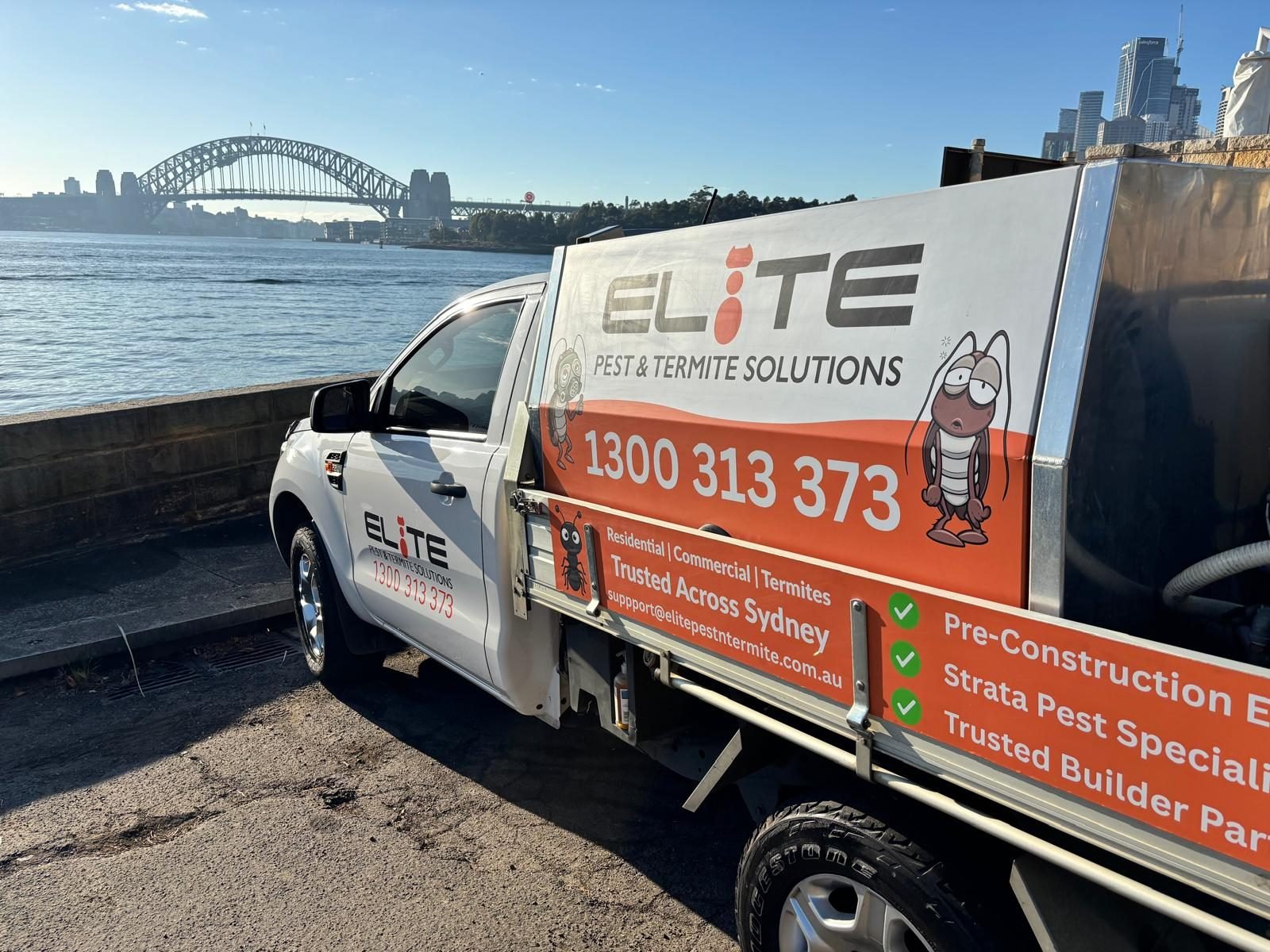
Properly applied, pest treatment is safe for families and pets. The products are APVMA-registered and used at label rates by a licensed technician, and most of what is applied goes into cracks, voids and secured stations rather than anywhere a child or animal reaches. Re-entry is normally once treated surfaces are dry.
- Start by working out what you have
- The early signs people miss
- The cost of leaving it
- How the treatments differ
- How professional treatment works
- What this means if you have kids or animals
- Houses, units and townhouses
- If this is a business or a strata building
- How quickly do you need to act?
- Questions worth asking first
- Warranty and follow-up
- Frequently asked questions
Start by working out what you have
Most of the cost in dealing with pests comes from doing it twice. Getting the identification and the source right the first time is what makes the difference between one treatment and a recurring expense.
Get that sequence right and a single treatment generally holds. Get it wrong and you are treating the same thing next month.
Key points
- Ask what the warranty covers and for how long.
- A fixed quote should come before any work starts.
- Identify the species before treating - the right product depends on it.
- Early action is consistently cheaper than waiting for certainty.
How that is done in practice is covered under our full range of pest control services.
The early signs people miss
Catching this early is the difference between a routine treatment and an expensive one. These are the signs our technicians see most often in Sydney:
- Entry-point evidence at weep holes, pipe penetrations and door seals.
- A sharp rise in sightings after rain or a run of humid weather.
- Trails or runways repeated along the same route day after day.
- An unexplained musty, oily or ammonia-like smell in a closed space.
- Insects visible in daylight, which usually means harbourage is full.
One of these on its own may mean nothing. Two or more in the same area is worth a professional look, and it is better not to disturb the site before someone has seen it.
If you are not certain which pest you are dealing with, the full range of treatments we carry out lists what we treat and the signs that point to each.
The cost of leaving it
Pest problems rarely stay the same size. Most of what Elite Pest treats in Sydney homes would have been cheaper, faster and less invasive a month or two earlier, because breeding continues while you decide. The health, structural and contamination risks all scale with how long the population has been established.
Put plainly: the problem does not stay the same size while you decide.
The method itself, product by product, is explained on our page about how our full range of pest control services works.
How the treatments differ
Worth understanding before you compare quotes, because two companies may be quoting different methods entirely:
| Method | Works well for | Limitations |
|---|---|---|
| Residual treatment to harbourage | Treats runways, voids and entry points | Surface work alone rarely clears a population |
| Inspection and identification | Establishes species, extent and cause | Detection, not treatment |
| Proofing and exclusion | Stops the problem returning | Needs the building cleared first |
| Scheduled program | Keeps pressure down at higher-risk sites | Ongoing service rather than one visit |
Ask which of these is being proposed and why. A technician who cannot answer that is guessing.
There is a fuller explanation of professional our full range of pest control services, including what is and is not included.
How professional treatment works
What distinguishes professional treatment is sequencing, not chemistry. It runs like this:
- Inspect and identify. Work out the species and find where the population actually sits - usually not where it was seen.
- Treat the source. Apply the right method for that species - gel bait, dust, residual, baiting system or trapping - where it does the most work and the least harm.
- Allow the method to run. Baits and colony treatments work over days to weeks; re-spraying during that window undoes them.
- Close the conditions. Identify and remove what caused it, otherwise the treatment is only a reset.
The work is logged, and if covered pests return inside the warranty period we come back at no charge.
We set out the full process, timelines and warranty terms under what the treatment involves.
What this means if you have kids or animals
Fair question, and worth more than a one-word answer. Professional treatment is safe around families and pets because of how it is applied, not because the products are inert:
- You are given a specific re-entry time, usually just until treated surfaces are dry.
- Baits, gels and dusts go into cracks, voids and secured stations - not across open surfaces.
- Nothing is applied to food preparation surfaces or anywhere food is stored.
- Where a household has asthma, allergies or a newborn, the method is adjusted on request.
Mention any health considerations at the booking stage and the technician plans around them.
Anyone you let into your home for this work should be licensed and insured, and who actually turns up sets out ours.
Houses, units and townhouses
The building matters as much as the pest. The same species is treated differently in a freestanding house, a unit and a terrace, mostly because of what a technician can reach:
- Apartments and units. Shared walls, services and risers mean the source is often outside your lot - partial treatment just moves it.
- New builds. Tighter sealing helps, but landscaping against the slab and construction debris are common early problems.
- Older Sydney housing. Deeper gaps, timber framing and subfloor moisture raise both termite and rodent exposure.
- Terraces and semis. Party walls and shared subfloors let populations travel; treating one side alone rarely holds.
Where a building is shared, the honest advice is often to raise it with the owners corporation rather than treat your lot repeatedly.
The approach in a unit differs enough that we cover apartment pest control separately.
If this is a business or a strata building
Commercial and strata work carries requirements a domestic job does not:
- Coordination across multiple lots so the population cannot simply relocate.
- After-hours or pre-opening access so trading is not disrupted.
- Safety data sheets and licence documentation held on site.
- Scheduled servicing rather than reactive call-outs, with visit dates set in advance.
- Treatment of common property - risers, voids, bin rooms, roof spaces - not just individual lots.
For a food business in particular, pest records are among the first things an inspector asks for - which makes the documentation as valuable as the treatment.
For owners corporations, strata pest control deals with the risers, voids and common areas individual treatments cannot reach.
How quickly do you need to act?
Not everything needs a same-day visit, and it is reasonable to want to know which this is. Treat it as urgent when:
- There are young children or pets with access to the affected area.
- The species is one capable of a medically significant bite.
- You have found live termite activity in or against the building.
- A tenancy, sale or inspection is imminent.
If none of those apply, there is no need to panic - but there is also no advantage in waiting, since populations keep breeding either way.
If your suburb is not mentioned above, the Sydney suburbs we cover will confirm whether we are out that way.
Questions worth asking first
Pest control is licensed work in New South Wales, and the gap between operators is wider than the price difference suggests. Before you book anyone:
- Ask what the warranty covers, what voids it, and how long it runs.
- Ask which method they intend to use and why that one.
- Get the quote in writing, fixed, before any work starts.
- For termite work, ask whether you receive a written timber pest report.
- Confirm they hold current public liability insurance.
If someone will not put the quote or the warranty in writing, that is your answer.
You can see our licensing and insurance and the qualifications behind the work.
Warranty and follow-up
Our general treatments are backed for six months. That is a re-treatment guarantee rather than a refund, which is what actually helps.
The exclusions are the ordinary ones - a new pest is a new job, and a recurrence traced to an unfixed cause sits outside the cover. Termite barriers and baiting programs have their own longer warranties, conditional on annual monitoring.
You should receive the terms with your paperwork on the day rather than having to request them.
If this is the second or third time you have dealt with it, a regular residential program costs less over a year than repeated call-outs.
Common questions
What will treating pests cost?
General pest treatments start from $89 and timber pest inspections from $159. Termite treatments and barriers are quoted after an inspection because the price depends on the construction and the extent of the activity. You get a fixed figure before any work begins.
Are your products safe around kids and animals?
Yes - and if anyone in the household has asthma, allergies or there is a newborn, tell us when booking and the technician adjusts the method. Re-entry is normally once treated surfaces have dried, and you are told the exact time on the day.
What qualifications do your technicians hold?
Licensed and insured, and happy to show either. If you are comparing quotes, ask each company for the licence number of the person actually attending rather than just the business name.
What brings pests indoors?
Food, water and shelter, in roughly that order. In most Sydney homes it comes down to accessible food or bins, a moisture source such as a leak or blocked gutter, and a gap big enough to get through. Remove any one of the three and the property gets much less attractive.
How can I keep pests away long term?
Maintenance rather than pest control: fix the water, close the gaps, cut the food supply and reduce clutter where things can shelter. Households that would rather not think about it move onto a regular program instead.
Who pays in a rental or strata building?
If the source is common property, it is a building-level job rather than yours. We are happy to provide a written report for an agent or owners corporation setting out where the activity is and what it will take to resolve.
How long before the treatment works?
For a general treatment you should see a drop within 24 to 72 hours. Where baiting is used it takes one to three weeks, because the aim is the colony rather than the foragers. A short increase in sightings early on means the bait is being taken.
Can you come today?
Usually within a day or two, and same-day where there is a safety issue - a sting allergy in the household, young children with access, or live termite activity. We quote most jobs in about thirty minutes over the phone.
Sydney pest control, booked today
One call gets you a fixed price, usually inside 30 minutes. Licensed technicians, 650+ Sydney suburbs covered, child and pet-safe treatments, and a 6-month warranty on general work.