
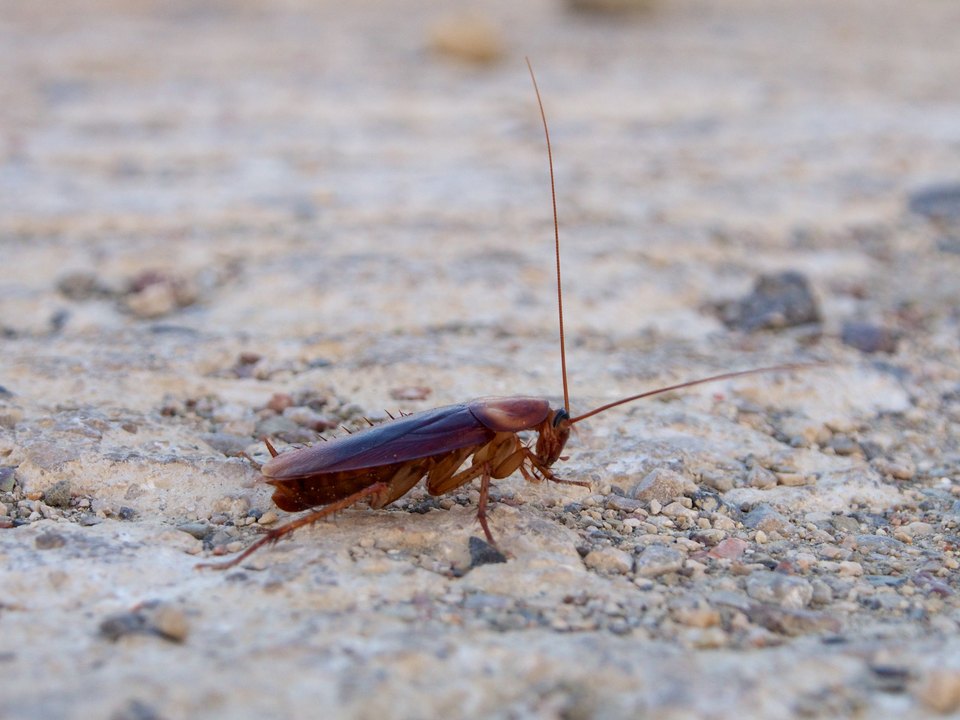
Elite Pest treats cockroaches across Penrith with licensed, insured technicians and a 6-month warranty on general work. General treatments start from $89 and timber pest inspections from $159. Most Penrith jobs are quoted in about thirty minutes and booked within a day or two.
- Start by working out what you have
- What to look for
- Local conditions in Penrith
- The seasonal pattern
- How professional treatment works
- Preparation that makes it work better
- Doing it yourself: the honest version
- What not to do
- Four things you can stop worrying about
- How the building affects the treatment
- Nearby suburbs we cover
- Frequently asked questions
Start by working out what you have
The useful question is not which spray to buy but where the population actually lives. With cockroaches, what you see moving is a small fraction of what is there, and treating only that fraction is why problems come back.
So the sequence matters: identify, locate, treat the source, then close the conditions. Skip a step and you are paying again within weeks.
Key points
- A fixed quote should come before any work starts.
- Identify the species before treating - the right product depends on it.
- Ask what the warranty covers and for how long.
- Treat the source, not the sightings: the nest or harbourage is the target.
What that looks like on the ground in this part of Sydney is set out under cockroach control work in Penrith.
What to look for
The early evidence is usually subtle, and most of it is found in places nobody looks. Worth checking for:
- A cockroach in plain view in daylight, which usually means harbourage is full.
- Shed skins in warm cavities behind the fridge, oven or dishwasher.
- Live insects in a dishwasher door seal or the gap beside a built-in oven.
- Brown, oval egg cases glued into hinges, cupboard seams or behind kickboards.
- Movement when you switch a kitchen light on at night.
The more of these you can tick off, the longer it has been going on - which affects both the method and the price.
It is worth a look through the services we offer across Sydney, since what you are seeing may not be what you think it is.
Local conditions in Penrith
Penrith (2750) sits about 50km west of the CBD, and the local housing mix is a reasonable predictor of what we find there. Cockroach activity in the area tends to follow the same few conditions we see across comparable suburbs.
Older stock means deeper gaps, timber framing and subfloors that hold moisture; newer estates are tighter but often have landscaping built hard against the slab. Either way the treatment is the same in principle and different in the detail.
If you are weighing up who to call locally, what we treat in Penrith covers what we do in the area and how quickly we can get there.
The seasonal pattern
The seasonal pattern worth knowing is that summer drives numbers and winter drives location. Through the warmer months activity spreads; once it cools, the population contracts around warmth and moisture indoors. Treating in winter is often more effective for that reason, because harbourage is concentrated.
None of it changes the method much, but it does change how urgent the booking is.
How professional treatment works
There is a defined process behind it, and knowing it makes the invoice easier to read:
- Inspect and identify. Establish what it is, how far it has spread, and which conditions on site are feeding it.
- Treat the source. Apply the right method for that species - gel bait, dust, residual, baiting system or trapping - where it does the most work and the least harm.
- Allow the method to run. Expect a timeline rather than an instant result, and avoid adding anything of your own in the meantime.
- Close the conditions. Identify and remove what caused it, otherwise the treatment is only a reset.
Every Elite Pest treatment is carried out by a licensed, insured technician and general pest work carries a 6-month warranty.
The method itself, product by product, is explained on our page about cockroach control.
Preparation that makes it work better
Treatments work better when the technician can reach things. Before the appointment:
- Vacuum carpets and hard floors, then empty the vacuum outside.
- Make a note of where you have seen activity and when.
- Put food, utensils and pet bowls away or in sealed containers.
- Clear a path to the roof void or subfloor access if there is one.
- Cover or move fish tanks and turn off their air pumps.
Avoid washing down treated areas for at least a week, and resist adding your own spray on top.
Doing it yourself: the honest version
Retail products have a place. For one insect in a room they are fine, and nobody needs a technician for that. For an established population they tend to fail, and sometimes make things worse:
- Without identification there is no way to know whether it is working or just scattering.
- Spraying over bait placements makes them unpalatable and wastes the treatment.
- Surface application misses the voids and cracks where the population actually lives.
- Retail products kill what they touch and leave the nest or harbourage producing.
If you have already tried something and it returned, that is the signal rather than a reason to try again harder.
The rest of what we handle is set out under the pest control services page.
What not to do
These come up often enough to be worth listing. Each one either prolongs the problem or makes it harder to treat:
- Stopping after the first improvement, before the egg cases have hatched.
- Surface-spraying skirtings, which kills foragers while harbourage keeps producing.
- Treating only the kitchen when the source is a bathroom void or shared riser.
- Spraying over gel bait placements and making them unpalatable.
None of these are unrecoverable - but tell the technician what has already been tried, because it affects what will work now.
Four things you can stop worrying about
Some of these are harmless. Others actively cost people money, which is why they are worth correcting:
- They only live in kitchens. Bathrooms, laundries, wall voids and shared risers are all common harbourage.
- Cockroaches mean a dirty house. German cockroaches arrive in appliances, cartons and shared plumbing. Spotless kitchens get them too.
- Seeing one is nothing. They are nocturnal and shelter-seeking. Daytime sightings usually mean harbourage is full.
- A bomb or fogger clears a kitchen. Foggers push cockroaches deeper into wall voids and make the problem harder to reach.
If you are not certain which pest you are dealing with, everything we treat lists what we treat and the signs that point to each.
How the building affects the treatment
Two neighbours with identical problems can get quite different treatments, and the reason is usually construction rather than preference:
- Townhouses. Common walls plus private courtyards, so internal and external work both matter.
- Commercial premises. Documentation, scheduling and after-hours access become part of the job.
- Older Sydney housing. Deeper gaps, timber framing and subfloor moisture raise both termite and rodent exposure.
- Freestanding houses. Full external access, subfloor and roof void available, so the source can usually be treated directly.
Where a building is shared, the honest advice is often to raise it with the owners corporation rather than treat your lot repeatedly.
The approach in a unit differs enough that we cover how apartments are treated separately.
Nearby suburbs we cover
The same van services the neighbouring suburbs, which means comparable availability in South Penrith, Cambridge Gardens, Jamisontown, Regentville.
We cover the whole basin rather than a few postcodes - our full service area has the full list.
Questions we get asked
How much does it cost to get rid of cockroaches in Penrith?
Starting prices are $89 for a general treatment and $159 for an inspection with a written report. Anything larger is quoted on inspection rather than over the phone. The quote is fixed, so the invoice matches what you were told.
Why do I have cockroaches in a clean kitchen?
Not at all. The common indoor species need warmth, moisture and a crack to hide in, all of which exist behind a clean fridge or dishwasher. In apartments they also move between units through shared walls and services.
How well do you know Penrith?
Yes - Penrith (2750) is part of our regular run, along with the suburbs around it, so availability is normally a day or two. Call 1300 313 373 for a fixed price in about thirty minutes.
What qualifications do your technicians hold?
Licensed and insured, and happy to show either. If you are comparing quotes, ask each company for the licence number of the person actually attending rather than just the business name.
Is DIY worth trying first?
It is worth a try for a one-off sighting and generally a waste of money beyond that. Concentrations are lower, residual life is shorter, and surface application misses the voids where the population actually lives.
How long before the treatment works?
Residual treatments start working within hours, but colony and baiting treatments are deliberately slower - the product has to be carried back to the nest. Expect a clear reduction within a week to two, and do not be alarmed if activity briefly rises first.
Is there a guarantee on the work?
General pest treatments carry a 6-month warranty. If covered pests return within that period we re-treat at no charge. The terms go on your invoice, so there is no ambiguity about what was covered.
Is the treatment safe for children and pets?
Yes. We use APVMA-registered, low-toxicity products applied at label rates, and most of what goes down is placed in cracks, voids and secured stations rather than on open surfaces. You are given a specific re-entry time, usually just until treated surfaces are dry.
Dealing with cockroaches right now?
We treat cockroaches across 650+ suburbs of Sydney. Fixed quote up front, licensed and insured technicians, child and pet-safe application, and general treatments backed for six months.