
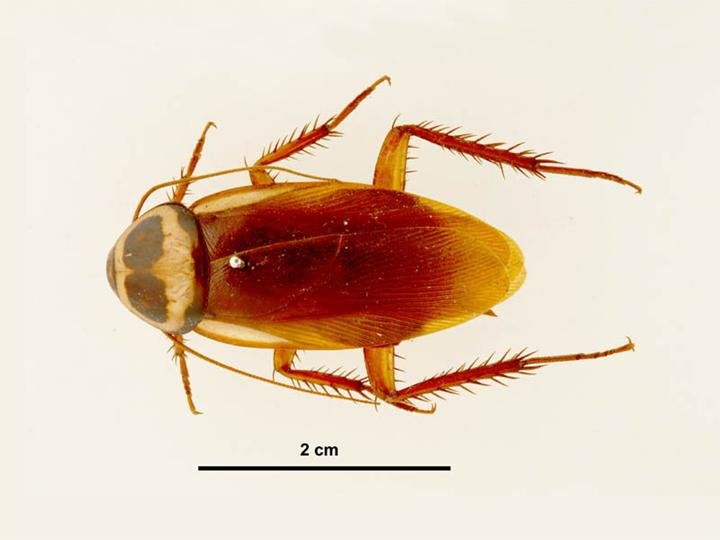
The honest version: cockroaches come back when the cause is left in place. What follows covers how to tell what you are dealing with, what a licensed technician will actually do about it, realistic Sydney prices, and the prevention that makes the result hold. General treatments start from $89 with a 6-month warranty.
- What you are actually dealing with
- Signs worth acting on
- What is actually at stake
- What to do before we arrive
- Is it safe for children and pets?
- Does your type of property change things?
- If this is a business or a strata building
- How quickly do you need to act?
- How to tell a good operator from a cheap one
- What happens if it comes back
- Keeping it gone
- Frequently asked questions
What you are actually dealing with
There is a reason professional treatment looks different from a trip to the hardware store. A cockroach problem has a source - a nest, a harbourage, an entry point - and until that is found and treated, numbers rebuild.
A licensed technician works through that in order, which is why the first part of a visit is looking rather than spraying.
Key points
- A fixed quote should come before any work starts.
- Ask what the warranty covers and for how long.
- Early action is consistently cheaper than waiting for certainty.
- Identify the species before treating - the right product depends on it.
There is a fuller explanation of the cockroach control page, including what is and is not included.
Signs worth acting on
You rarely see the population itself first - you see what it leaves behind. The signs that matter:
- Chewed paper, cardboard or book bindings in a damp storage cupboard.
- Brown, oval egg cases glued into hinges, cupboard seams or behind kickboards.
- Shed skins in warm cavities behind the fridge, oven or dishwasher.
- A cockroach in plain view in daylight, which usually means harbourage is full.
- Dark staining around motor housings at the back of appliances.
If more than one of those applies, treat it as confirmed rather than possible. Disturbing the area first makes identification harder.
It is worth a look through the pest control services page, since what you are seeing may not be what you think it is.
What is actually at stake
The reason cockroaches are worth treating properly is that the visible insects are the smallest part of the problem. Droppings, shed skins and egg cases build up in voids and become an allergen reservoir that affects air quality, which is why households with asthma often notice symptoms before they notice insects.
Which is why the advice is always to treat it while it is small, however tempting it is to wait and see.
We set out the full process, timelines and warranty terms under what the treatment involves.
What to do before we arrive
Treatments work better when the technician can reach things. Before the appointment:
- Make a note of where you have seen activity and when.
- Put food, utensils and pet bowls away or in sealed containers.
- Arrange for pets to be out of the way for a couple of hours.
- Cover or move fish tanks and turn off their air pumps.
- Clear a path to the roof void or subfloor access if there is one.
Afterwards, hold off on mopping treated skirtings and perimeters for a week or so - washing the treatment off is the most common reason a job underperforms.
Is it safe for children and pets?
This is the most common question we get, and the answer is yes - with the important qualifier that it depends on correct application. The reasons it is safe:
- Where a household has asthma, allergies or a newborn, the method is adjusted on request.
- Products are APVMA-registered and applied at label rates by a licensed technician.
- Nothing is applied to food preparation surfaces or anywhere food is stored.
- You are given a specific re-entry time, usually just until treated surfaces are dry.
Mention any health considerations at the booking stage and the technician plans around them.
That is worth checking before you book anyone, including us - about the team covers our licensing, insurance and how long we have been doing this.
Does your type of property change things?
Two neighbours with identical problems can get quite different treatments, and the reason is usually construction rather than preference:
- Townhouses. Common walls plus private courtyards, so internal and external work both matter.
- Older Sydney housing. Deeper gaps, timber framing and subfloor moisture raise both termite and rodent exposure.
- Terraces and semis. Party walls and shared subfloors let populations travel; treating one side alone rarely holds.
- Freestanding houses. Full external access, subfloor and roof void available, so the source can usually be treated directly.
If you are in a unit or a terrace and the problem keeps returning after treatment, the source is very likely not inside your own walls.
Units bring their own constraints - shared walls, shared plumbing, limited external access - and how apartments are treated is set up around them.
If this is a business or a strata building
Once more than one occupier is involved, the job changes shape. The treatment may be similar; everything around it is not:
- Coordination across multiple lots so the population cannot simply relocate.
- Food-safety alignment for kitchens, cafes and childcare premises.
- Scheduled servicing rather than reactive call-outs, with visit dates set in advance.
- Treatment of common property - risers, voids, bin rooms, roof spaces - not just individual lots.
- Safety data sheets and licence documentation held on site.
At an audit the question is rarely whether you have pests; it is whether you can show a managed program. That is what the reporting is for.
Food premises carry the tightest requirements, which is what restaurant and cafe pest control is designed around.
How quickly do you need to act?
A fair question, and the answer is genuinely "it depends". Move quickly if:
- A tenancy, sale or inspection is imminent.
- There are young children or pets with access to the affected area.
- The species is one capable of a medically significant bite.
- There is damage to structural timber, cabling or insulation.
If none of those apply, there is no need to panic - but there is also no advantage in waiting, since populations keep breeding either way.
If your suburb is not mentioned above, the suburbs on our run will confirm whether we are out that way.
How to tell a good operator from a cheap one
A short list of checks that filters out most of the problems:
- For termite work, ask whether you receive a written timber pest report.
- Be wary of a price quoted over the phone without any questions about the property.
- Ask for the technician's NSW pest management licence number, not just the company name.
- Ask what the warranty covers, what voids it, and how long it runs.
- Confirm they hold current public liability insurance.
A good operator will answer all of those without hesitation. Hesitation on any of them is useful information.
You can see our licensing and insurance and the qualifications behind the work.
What happens if it comes back
The warranty on general pest work runs six months. Covered pests returning in that time are re-treated free - no argument, no second call-out fee.
What it does not cover: a different species arriving later, a re-introduction you bring in yourself, or a recurrence driven by an unaddressed cause such as a leak or a gap we flagged. Termite work is warranted separately, with terms linked to ongoing inspection.
You should receive the terms with your paperwork on the day rather than having to request them.
Most of the homes we look after are on an ongoing residential service rather than calling when something appears.
Keeping it gone
Treatment resets the problem. Prevention is what keeps it solved, and most of it is maintenance rather than pest control:
- Break down and remove cardboard rather than storing it in a damp cupboard.
- Store dry goods in sealed containers rather than opened packets.
- Check second-hand appliances and cartons before bringing them inside.
- Fix dripping taps and improve ventilation in wet areas.
- Pour water down unused floor wastes so the trap keeps its seal.
Even a couple of these makes a measurable difference, particularly anything involving moisture.
If this is the second or third time you have dealt with it, routine residential pest control costs less over a year than repeated call-outs.
Common questions
What do you charge for cockroaches in Sydney?
General pest treatments start from $89 and timber pest inspections from $159. Termite treatments and barriers are quoted after an inspection because the price depends on the construction and the extent of the activity. You get a fixed figure before any work begins.
Why do I have cockroaches in a clean kitchen?
Not at all. The common indoor species need warmth, moisture and a crack to hide in, all of which exist behind a clean fridge or dishwasher. In apartments they also move between units through shared walls and services.
Can you just treat it without looking?
For general pest work the inspection happens as part of the visit and is not charged separately. For anything termite-related it is essential and is the deliverable in its own right, because the report determines the treatment and gives you a written record.
How quickly will I see a difference?
Residual treatments start working within hours, but colony and baiting treatments are deliberately slower - the product has to be carried back to the nest. Expect a clear reduction within a week to two, and do not be alarmed if activity briefly rises first.
Can I treat this myself?
It is worth a try for a one-off sighting and generally a waste of money beyond that. Concentrations are lower, residual life is shorter, and surface application misses the voids where the population actually lives.
What qualifications do your technicians hold?
All of our technicians are licensed under NSW pest management requirements and insured. Pest control is licensed work in this state, so an operator who cannot produce a licence number should not be in your home.
What prevents a repeat?
The treatment resets it; prevention keeps it. Sealed food storage, lidded bins, no overnight pet bowls, repaired leaks, clear gutters, and mulch and timber kept clear of the slab. Your technician will tell you which two or three actually matter for your building.
Do we need to leave the house during treatment?
It is safe when applied correctly, which is most of what a licence is for. Baits and dusts go where children and pets do not reach, fish tanks are covered and pet bowls moved. For general treatments you do not need to leave the property.
Get a fixed price on cockroaches
We treat cockroaches across 650+ suburbs of Sydney. Fixed quote up front, licensed and insured technicians, child and pet-safe application, and general treatments backed for six months.