
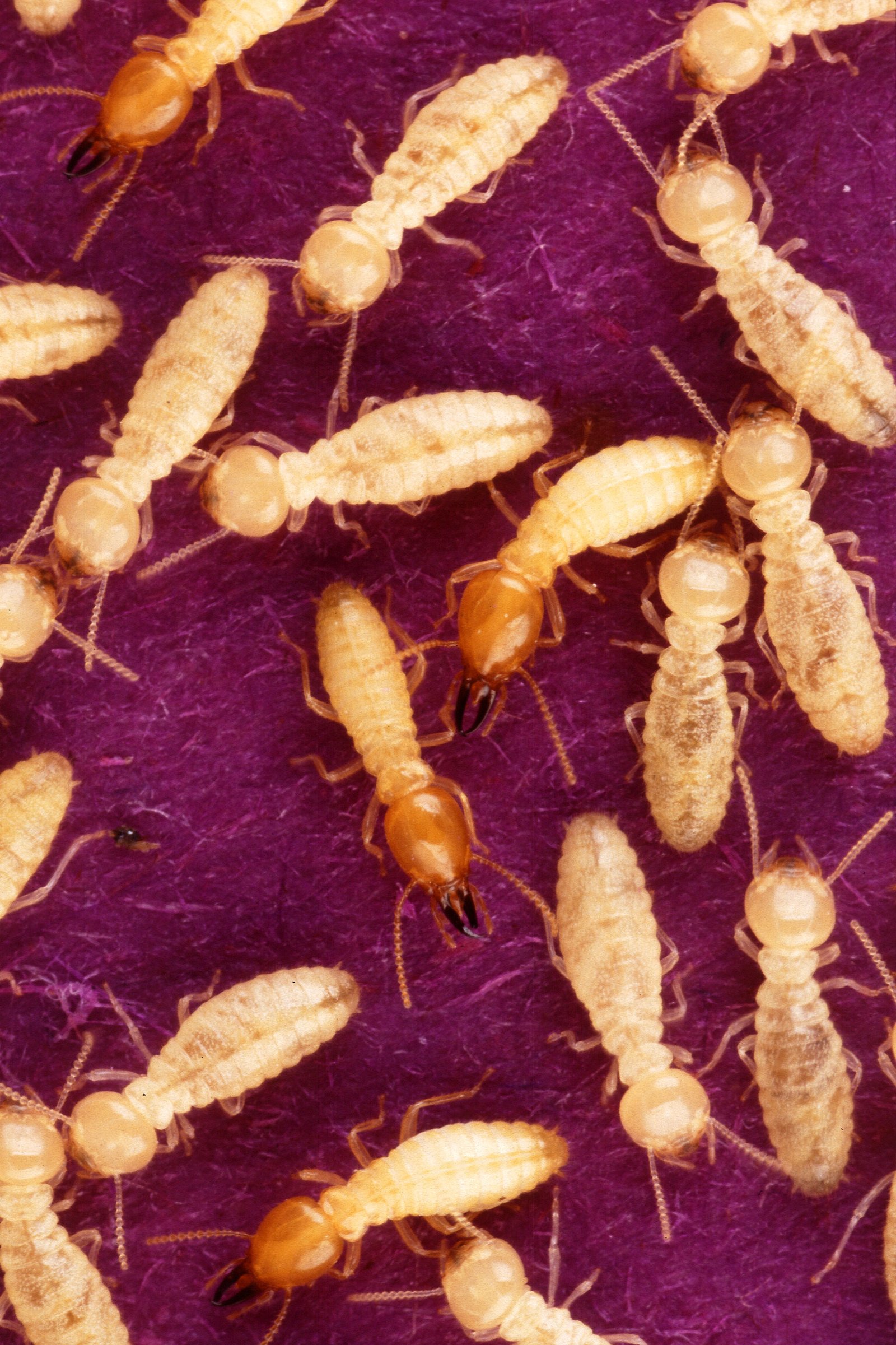
Termite control is an inspection problem before it is a treatment problem. A colony works inside timber for months before anything shows, which is why an annual inspection from $159 is the standard advice. If activity is found, a barrier or baiting system is quoted on the day. Do not disturb live workings.
- Start by working out what you have
- What to look for
- Why this property and not the one next door
- Why it is worth dealing with
- Which method suits which situation
- How professional treatment works
- Getting ready for the treatment
- Honest pricing
- Mistakes that make it worse
- What people believe that is not true
- What to do once it is sorted
- Frequently asked questions
Start by working out what you have
There is a reason professional treatment looks different from a trip to the hardware store. A termite problem has a source - a nest, a harbourage, an entry point - and until that is found and treated, numbers rebuild.
So the sequence matters: identify, locate, treat the source, then close the conditions. Skip a step and you are paying again within weeks.
Key points
- Treat the source, not the sightings: the nest or harbourage is the target.
- Ask what the warranty covers and for how long.
- Fix the conditions - moisture, food, entry points - or it returns.
- Identify the species before treating - the right product depends on it.
We set out the full process, timelines and warranty terms under the termite control page.
What to look for
Catching this early is the difference between a routine treatment and an expensive one. These are the signs our technicians see most often in Sydney:
- Paint or plaster that bubbles, ripples or cracks with no plumbing leak nearby.
- A faint musty, earthy smell in a closed room or subfloor.
- Floorboards that feel spongy underfoot, particularly near wet areas.
- Mud packing visible in the weep holes along an external brick course.
- Doors and windows that start sticking without any change in the weather.
If more than one of those applies, treat it as confirmed rather than possible. Disturbing the area first makes identification harder.
That is the case for booking a timber pest inspection rather than waiting for something to become obvious: it is the only stage at which the cost is small.
Why this property and not the one next door
Treatment deals with the population; this list is what decides whether it comes back. The usual contributors:
- Garden beds, mulch or soil built up above the slab edge, bridging the barrier.
- Tree stumps and buried form-work left on the block after construction.
- An untreated or breached physical barrier on an older Sydney build.
- Air vents to the subfloor blocked by a deck, paving or landscaping.
- Dense planting and irrigation holding damp soil hard against the brickwork.
A technician will walk you through whichever of these apply to your place as part of the visit.
Why it is worth dealing with
The financial exposure with termites is unusual because it sits outside your insurance. Repair bills on Sydney homes routinely run into tens of thousands, and the work is structural rather than cosmetic. Activity found at inspection is a manageable job; activity found when a floor flexes is a building repair with a pest treatment attached.
None of that is scaremongering - it is simply the reason the price goes up the longer it is left.
This is the sort of thing a full timber pest report is designed to catch before it becomes a repair bill.
Which method suits which situation
There is rarely one correct method. What follows is what each approach does well and where it falls short:
| Method | Works well for | Limitations |
|---|---|---|
| In-ground baiting system | Eliminates the colony, low disruption | Works over weeks to months; needs monitoring |
| Above-ground baiting | Targets active workings directly | Only where live activity is accessible |
| Dusting active workings | Fast knock-down on a found trail | A first step, not a complete solution |
| Chemical soil barrier | Full perimeter protection, long service life | Needs trenching or drilling; priced after inspection |
When comparing quotes, compare methods rather than prices - that is normally where the difference sits.
How that is done in practice is covered under what the treatment involves.
How professional treatment works
What distinguishes professional treatment is sequencing, not chemistry. It runs like this:
- Inspect and identify. Work out the species and find where the population actually sits - usually not where it was seen.
- Treat the source. Apply the right method for that species - gel bait, dust, residual, baiting system or trapping - where it does the most work and the least harm.
- Allow the method to run. Expect a timeline rather than an instant result, and avoid adding anything of your own in the meantime.
- Close the conditions. The gaps to seal, the moisture to fix and the habits to change - this is what makes the result last.
Every Elite Pest treatment is carried out by a licensed, insured technician and general pest work carries a 6-month warranty.
The method itself, product by product, is explained on our page about termite control.
Getting ready for the treatment
A little preparation makes a measurable difference to the result, and none of it takes long:
- Clear a path to the roof void or subfloor access if there is one.
- Make a note of where you have seen activity and when.
- Vacuum carpets and hard floors, then empty the vacuum outside.
- Tell the technician what you have already applied yourself.
- Put food, utensils and pet bowls away or in sealed containers.
Avoid washing down treated areas for at least a week, and resist adding your own spray on top.
Honest pricing
Nobody can give a final figure sight-unseen, but the starting ranges are not a secret. Current rates:
| Service | From | Notes |
|---|---|---|
| Timber pest inspection with report | from $159 | Annual check; the report is the deliverable |
| Termite treatment or barrier | quoted on inspection | Depends on construction, soil and extent of activity |
| Flea treatment (internal) | from $160 | Preparation and vacuuming required beforehand |
| Rodent treatment and proofing | from $150 | Baiting or trapping, plus entry-point work |
| Possum removal and proofing | from $250 | One-way exclusion, then sealing the entry |
Nothing is charged beyond the quoted figure. Where a job turns out to need more than expected, you are told before it is done, not after.
If you want to see how the treatment is actually carried out, how termite control works walks through each stage.
Mistakes that make it worse
Worth avoiding, because each of these costs time or money later:
- Treating visible damage as the extent of it, when the nest may be metres away.
- Assuming a previous treatment is still protecting the house years later.
- Spraying or disturbing a live termite trail, which scatters the colony and hides the problem.
- Breaking open mud tubing to look inside before a technician has assessed it.
Mentioning what you have already applied saves time and avoids a product conflict.
What people believe that is not true
Some of these are harmless. Others actively cost people money, which is why they are worth correcting:
- You would see them. Termites work inside timber and inside mud tubes. Most owners see damage long before they see an insect.
- One treatment lasts forever. Barriers and baiting systems have a service life and need monitoring. An old treatment is not current protection.
- A brick house cannot get termites. Almost every Sydney home has structural timber in the roof, frame or floor. Brick veneer is a skin over a timber frame.
- Insurance will cover it. Standard home insurance excludes termite damage. That is the main reason inspections matter.
The rest of what we handle is set out under everything we treat.
What to do once it is sorted
This is the part that decides whether you see us again. None of it is complicated:
- Grind out or remove stumps rather than leaving them in the ground.
- Fix leaking taps, overflows and air-conditioning condensate promptly.
- Keep subfloor vents clear so air moves under the building.
- Store firewood and timber off the ground and away from the house.
- Keep soil, mulch and garden beds clear of the slab edge and weep holes.
You will not do all of those, and you do not need to. Pick the two or three that apply most to your place.
Most of the homes we look after are on an ongoing residential service rather than calling when something appears.
Common questions
How much does it cost to get rid of termites in Sydney?
Starting prices are $89 for a general treatment and $159 for an inspection with a written report. Anything larger is quoted on inspection rather than over the phone. The quote is fixed, so the invoice matches what you were told.
How often do termite inspections need doing?
Every twelve months, and that is the minimum rather than a precaution. A colony can work inside timber for months without any visible sign, and insurance will not cover the repair, so the inspection is the only point at which this is inexpensive.
What brings termites indoors?
Usually something fixable: an unsealed food source, standing water, mulch or timber against the wall, or a gap at a weep hole or pipe penetration. A technician will point out which apply to your property.
Are your products safe around kids and animals?
Yes. We use APVMA-registered, low-toxicity products applied at label rates, and most of what goes down is placed in cracks, voids and secured stations rather than on open surfaces. You are given a specific re-entry time, usually just until treated surfaces are dry.
Do I need an inspection first?
For general pest work the inspection happens as part of the visit and is not charged separately. For anything termite-related it is essential and is the deliverable in its own right, because the report determines the treatment and gives you a written record.
Will a supermarket spray work?
If you have treated it once and it came back, that is the signal to call someone rather than to try again. Tell the technician what you have already applied - it affects which products can be used next.
How do I stop them coming back?
Maintenance rather than pest control: fix the water, close the gaps, cut the food supply and reduce clutter where things can shelter. Households that would rather not think about it move onto a regular program instead.
How long before the treatment works?
Most households notice a difference in the first few days, with the full effect over one to three weeks depending on the method. If nothing has changed by the timeframe your technician gave you, call us - that is what the warranty is for.
Need someone to look at it?
Elite Pest & Termite Solutions covers 650+ Sydney suburbs with licensed, insured technicians, child and pet-safe methods and a 6-month warranty on general treatments. Fixed quote in about 30 minutes.