
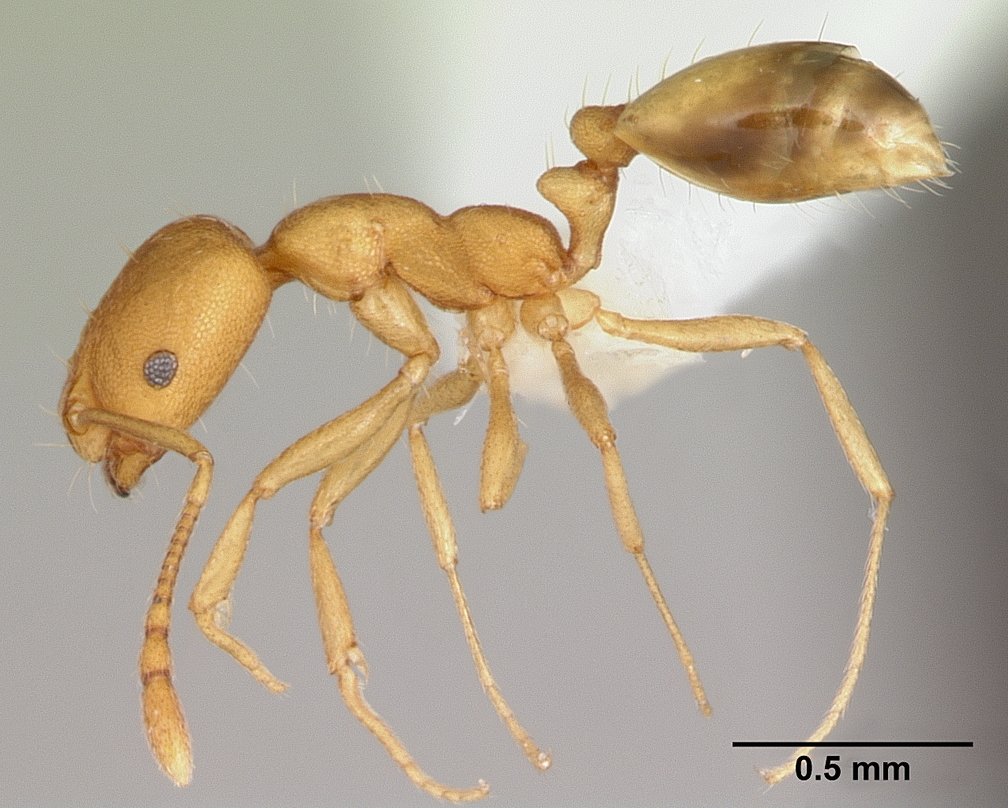
Getting rid of ants properly means finding where they are living and breeding, treating that, and closing the conditions that invited them. This guide covers the signs, the treatment options, honest Sydney costs and the prevention that keeps it solved - written by the licensed technicians who do the work.
- Start by working out what you have
- Signs worth acting on
- Why they are in your home
- Sydney's weather and ants
- Treatment options compared
- What a licensed technician actually does
- The safety question, answered properly
- Doing it yourself: the honest version
- Myths worth dropping
- When it is not a single home
- Stopping it coming back
- Frequently asked questions
Start by working out what you have
It helps to separate two things: what is making you call someone, and what is causing it. The visible ants are the first; the moisture, the gap or the food source behind them is the second, and only the second decides whether the result holds.
That is why an inspection comes before any product. It establishes the species, how far the population has spread, and which conditions on the property are sustaining it.
Key points
- Fix the conditions - moisture, food, entry points - or it returns.
- Ask what the warranty covers and for how long.
- Early action is consistently cheaper than waiting for certainty.
- Treat the source, not the sightings: the nest or harbourage is the target.
We set out the full process, timelines and warranty terms under how ant control works.
Signs worth acting on
You rarely see the population itself first - you see what it leaves behind. The signs that matter:
- Ants appearing in a bathroom or ensuite with no food present.
- Hollow, papery sounds from decking timber where a carpenter ant nest has formed.
- Nesting activity in wall cavities heard as a faint rustling on a quiet night.
- A sudden indoor surge after heavy rain, when nests flood and relocate.
- Winged ants indoors on a humid evening, which signals a mature nest nearby.
The more of these you can tick off, the longer it has been going on - which affects both the method and the price.
It is worth a look through everything we treat, since what you are seeing may not be what you think it is.
Why they are in your home
The question worth answering is why here. These are the conditions that bring ants in, and the ones a technician will point out on the day:
- Mulch and damp timber sitting directly against the house.
- Pet bowls and birdseed providing a dependable food source.
- Pavers, retaining walls and planter boxes offering dry, protected nest space.
- Expansion gaps and weep holes giving an easy, sheltered route inside.
- Heavy rain flooding established outdoor nests and pushing them indoors.
None of that requires a trade - it is mostly maintenance - but it is the part that determines whether you call us again.
Sydney's weather and ants
Ant pressure in Sydney tracks rainfall as much as temperature. A wet week pushes nests out of garden beds, retaining walls and paving and into kitchens and bathrooms, which is why indoor trails often appear suddenly after a storm. Treating the nest rather than the trail is what prevents the next one.
None of it changes the method much, but it does change how urgent the booking is.
Treatment options compared
The honest trade-offs:
| Method | Works well for | Limitations |
|---|---|---|
| Dust to wall voids | Reaches nests inside cavities | Needs void access |
| Direct nest treatment | Immediate result where the nest is accessible | Only when the nest can be located |
| Species-matched gel or liquid bait | Taken back to the nest; removes the colony | Needs days to weeks; do not spray trails |
| Granular bait outdoors | Covers nests in lawn, beds and paving | Reapplication after heavy rain |
When comparing quotes, compare methods rather than prices - that is normally where the difference sits.
The method itself, product by product, is explained on our page about ant control.
What a licensed technician actually does
A licensed technician follows a repeatable process rather than blanket-spraying a property. In order:
- Inspect and identify. Confirm the species, locate nests and harbourage, and note the conditions sustaining them.
- Treat the source. Use the method the species responds to, placed where the population lives rather than where it was seen.
- Allow the method to run. Colony treatments take time by design. The technician will say how long before you should expect a change.
- Close the conditions. The gaps to seal, the moisture to fix and the habits to change - this is what makes the result last.
Every Elite Pest treatment is carried out by a licensed, insured technician and general pest work carries a 6-month warranty.
How that is done in practice is covered under what the treatment involves.
The safety question, answered properly
It is the right thing to ask. What makes a professional treatment safe is where the product goes and how much of it is used:
- Products are APVMA-registered and applied at label rates by a licensed technician.
- You are given a specific re-entry time, usually just until treated surfaces are dry.
- Where a household has asthma, allergies or a newborn, the method is adjusted on request.
- Nothing is applied to food preparation surfaces or anywhere food is stored.
We would rather adjust the approach than have you worry about it afterwards, so raise it on the phone.
That is worth checking before you book anyone, including us - our licensing and insurance covers our licensing, insurance and how long we have been doing this.
Doing it yourself: the honest version
Retail products have a place. For one insect in a room they are fine, and nobody needs a technician for that. For an established population they tend to fail, and sometimes make things worse:
- Surface application misses the voids and cracks where the population actually lives.
- Retail products kill what they touch and leave the nest or harbourage producing.
- Without identification there is no way to know whether it is working or just scattering.
- Repellent sprays can split colonies - with ants especially - turning one nest into several.
Where it crosses over is roughly when you have treated twice and it has come back, or when the species itself is a safety question.
The rest of what we handle is set out under the full range of treatments we carry out.
Myths worth dropping
The received wisdom on this is unusually wrong:
- All ants take the same bait. Bait preference varies by species and season. The wrong bait is simply ignored.
- A nest indoors is unlikely. Wall cavities, subfloors and potted plants all host nests inside the building envelope.
- Spraying the trail solves it. Repellent sprays kill foragers and can split the colony into several nests, making things worse.
- Clean benches mean no ants. Many species come indoors for moisture, and others follow honeydew from garden plants.
If you are not certain which pest you are dealing with, the pest control services page lists what we treat and the signs that point to each.
When it is not a single home
Once more than one occupier is involved, the job changes shape. The treatment may be similar; everything around it is not:
- Scheduled servicing rather than reactive call-outs, with visit dates set in advance.
- A site plan showing monitored station locations.
- Treatment of common property - risers, voids, bin rooms, roof spaces - not just individual lots.
- Coordination across multiple lots so the population cannot simply relocate.
- Food-safety alignment for kitchens, cafes and childcare premises.
Treating individual lots in a strata building without addressing common property is the most common reason these problems persist for years.
Where common property is involved, strata and common-property work avoids the situation where each owner treats their own lot and the problem simply moves.
Stopping it coming back
This is the part that decides whether you see us again. None of it is complicated:
- Fix leaks and dry out damp areas around taps and shower recesses.
- Wipe sugary residue from benches, bins and recycling.
- Lift pet bowls and sweep around them after feeding.
- Treat aphids and scale on garden plants to remove the honeydew supply.
- Seal expansion gaps and entry points at doors and windows.
You will not do all of those, and you do not need to. Pick the two or three that apply most to your place.
Households that would rather not think about it tend to move to an ongoing residential service, which catches problems at the point they are still small.
Frequently asked questions
How much does it cost to get rid of ants in Sydney?
From $89 for general pest work in Sydney, and from $159 for a timber pest inspection. Termite barriers, baiting systems and commercial programs are priced after a site visit. Nothing is charged above the quoted figure without your agreement.
Should I spray the ants I can see?
Better not to. Wiping or spraying a trail removes the evidence a technician follows to find the nest, and repellent products can fragment the colony. If you can, leave the trail alone until it has been seen.
What brings ants indoors?
Almost always a combination of moisture and an easy entry point. Leaks, condensation, blocked gutters and irrigation do more to attract pests than untidiness does, which is why spotless homes get them too.
What qualifications do your technicians hold?
Licensed and insured, and happy to show either. If you are comparing quotes, ask each company for the licence number of the person actually attending rather than just the business name.
How can I keep ants away long term?
The treatment resets it; prevention keeps it. Sealed food storage, lidded bins, no overnight pet bowls, repaired leaks, clear gutters, and mulch and timber kept clear of the slab. Your technician will tell you which two or three actually matter for your building.
Do we need to leave the house during treatment?
Yes - and if anyone in the household has asthma, allergies or there is a newborn, tell us when booking and the technician adjusts the method. Re-entry is normally once treated surfaces have dried, and you are told the exact time on the day.
What happens if they come back?
Yes - six months on general pest work. A recurrence of the treated pest inside that window is a free return visit. A different species arriving later is a new job, and a recurrence traced to an unfixed cause such as a leak sits outside the cover.
Is an inspection really necessary?
Yes, at least briefly. We would rather spend fifteen minutes finding the source than apply the wrong product well. For timber pests the inspection is the job, and you receive a written report.
Need someone to look at it?
Elite Pest & Termite Solutions covers 650+ Sydney suburbs with licensed, insured technicians, child and pet-safe methods and a 6-month warranty on general treatments. Fixed quote in about 30 minutes.