
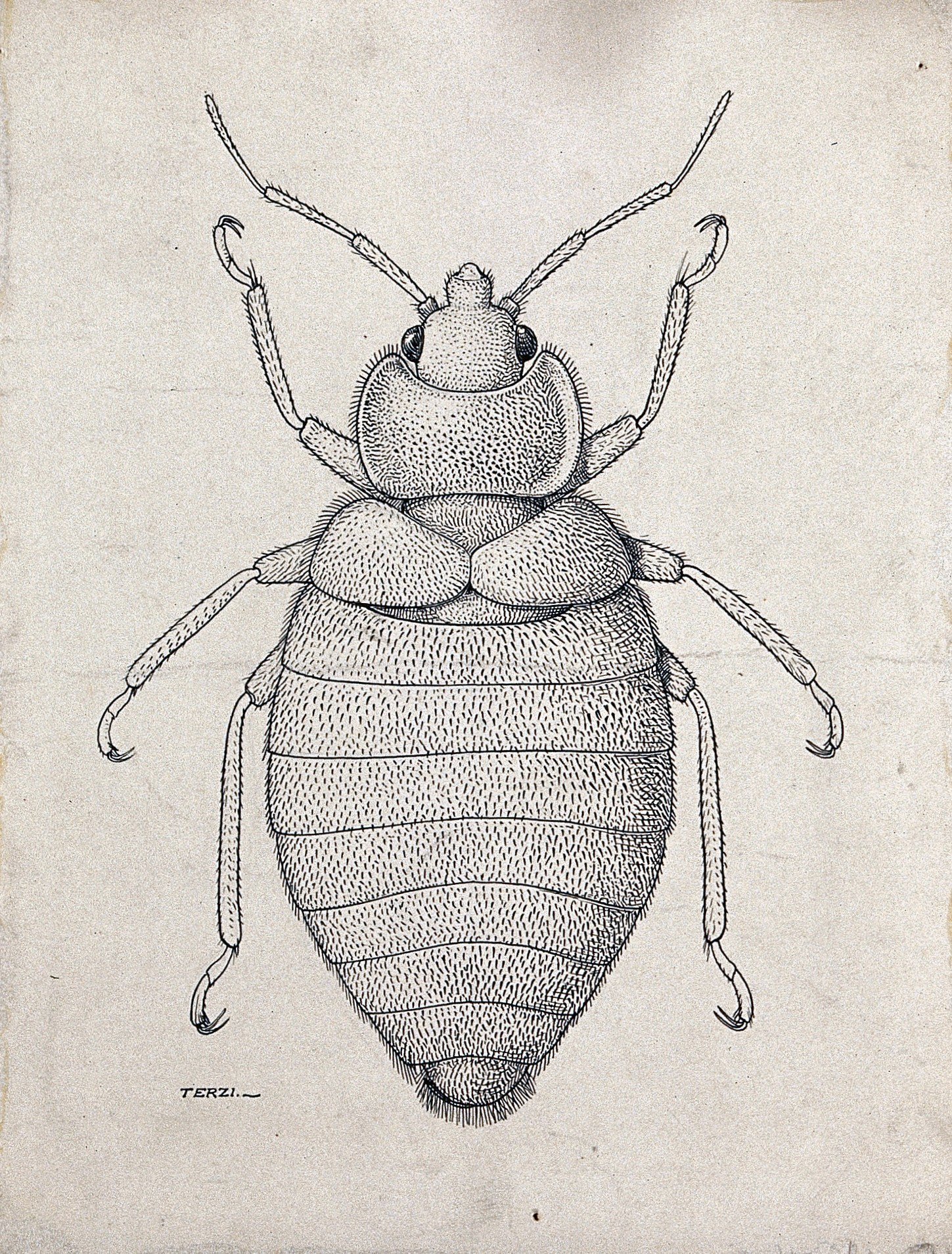
The honest version: bed bugs come back when the cause is left in place. What follows covers how to tell what you are dealing with, what a licensed technician will actually do about it, realistic Sydney prices, and the prevention that makes the result hold. General treatments start from $89 with a 6-month warranty.
- Start by working out what you have
- What to look for
- Timing: when this peaks
- What you are paying for
- Getting ready for the treatment
- Sydney prices, without the runaround
- DIY or call someone?
- Mistakes that make it worse
- Timing: today, this week, or whenever
- Questions worth asking first
- What to do once it is sorted
- Frequently asked questions
Start by working out what you have
It helps to separate two things: what is making you call someone, and what is causing it. The visible bed bugs are the first; the moisture, the gap or the food source behind them is the second, and only the second decides whether the result holds.
That is why an inspection comes before any product. It establishes the species, how far the population has spread, and which conditions on the property are sustaining it.
Key points
- Ask what the warranty covers and for how long.
- A fixed quote should come before any work starts.
- Identify the species before treating - the right product depends on it.
- Treat the source, not the sightings: the nest or harbourage is the target.
There is a fuller explanation of professional bed bug treatment, including what is and is not included.
What to look for
The early evidence is usually subtle, and most of it is found in places nobody looks. Worth checking for:
- Bites recurring night after night in the same bed but not elsewhere.
- Activity that began within days of travel, a delivery or second-hand furniture.
- Dark specks along the stitching of an upholstered bedhead or valance.
- Translucent shed skins and pale eggs in a bed frame joint or screw hole.
- Small dark ink-dot spotting along mattress seams and piping.
The more of these you can tick off, the longer it has been going on - which affects both the method and the price.
It is worth a look through the pest control services page, since what you are seeing may not be what you think it is.
Timing: when this peaks
There is no useful season with bed bugs, which is worth saying plainly because people often wait for one. Climate-controlled bedrooms mean a steady cycle year-round; the only pattern is in how they arrive, which follows travel and second-hand furniture rather than the weather.
That pattern is why timing a treatment well can do more than increasing the dose.
What you are paying for
What distinguishes professional treatment is sequencing, not chemistry. It runs like this:
- Inspect and identify. Work out the species and find where the population actually sits - usually not where it was seen.
- Treat the source. Apply the right method for that species - gel bait, dust, residual, baiting system or trapping - where it does the most work and the least harm.
- Allow the method to run. Expect a timeline rather than an instant result, and avoid adding anything of your own in the meantime.
- Close the conditions. Identify and remove what caused it, otherwise the treatment is only a reset.
All of that is done by a licensed and insured technician, with general treatments backed for six months.
If you want to see how the treatment is actually carried out, how bed bug treatment works walks through each stage.
Getting ready for the treatment
Nothing elaborate, but these few things genuinely affect how well it works:
- Arrange for pets to be out of the way for a couple of hours.
- Clear access to kickboards, under sinks and around appliances.
- Cover or move fish tanks and turn off their air pumps.
- Vacuum carpets and hard floors, then empty the vacuum outside.
- Put food, utensils and pet bowls away or in sealed containers.
Afterwards, hold off on mopping treated skirtings and perimeters for a week or so - washing the treatment off is the most common reason a job underperforms.
Sydney prices, without the runaround
What follows is where pricing begins. An inspection sets the final number, but this is the honest bracket:
| Service | From | Notes |
|---|---|---|
| Bed bug treatment (per room) | from $280 | Usually includes a follow-up visit |
| Wasp or bee nest treatment | from $150 | Priced on access and nest location |
| Timber pest inspection with report | from $159 | Annual check; the report is the deliverable |
| General pest treatment (internal & external) | from $89 | Covers cockroaches, ants, spiders and silverfish |
| Commercial program | quoted per site | Scheduled servicing with documented reports |
You get a fixed quote before anything starts - not an estimate that moves on the day. General treatments include a 6-month warranty, so covered pests returning in that window are re-treated at no charge.
We set out the full process, timelines and warranty terms under what the treatment involves.
DIY or call someone?
There is no sense paying for a call-out you do not need. But the reasons DIY fails on a real infestation are consistent:
- Surface application misses the voids and cracks where the population actually lives.
- Concentrations are lower and residual life shorter than professional-grade equivalents.
- Guessing the species usually means the wrong product entirely.
- Without identification there is no way to know whether it is working or just scattering.
Where it crosses over is roughly when you have treated twice and it has come back, or when the species itself is a safety question.
If you are not certain which pest you are dealing with, everything we treat lists what we treat and the signs that point to each.
Mistakes that make it worse
These come up often enough to be worth listing. Each one either prolongs the problem or makes it harder to treat:
- Moving to another bedroom, which spreads the problem through the house.
- Throwing out the mattress but leaving the bed frame and room untreated.
- Bagging up clothing and storing it in a wardrobe without laundering it.
- Treating once and stopping, when a follow-up is almost always needed.
None of these are unrecoverable - but tell the technician what has already been tried, because it affects what will work now.
Timing: today, this week, or whenever
Not everything needs a same-day visit, and it is reasonable to want to know which this is. Treat it as urgent when:
- Numbers have visibly increased over a week or two.
- It is a food business, childcare centre, medical premises or aged care.
- You have found live termite activity in or against the building.
- A tenancy, sale or inspection is imminent.
Outside those, a booking in the next few days is generally fine. Waiting a month is where it starts getting more expensive.
We cover the whole basin rather than a few postcodes - the Sydney suburbs we cover has the full list.
Questions worth asking first
A short list of checks that filters out most of the problems:
- Ask which method they intend to use and why that one.
- Confirm they hold current public liability insurance.
- Check whether a follow-up visit is included or charged separately.
- Ask what the warranty covers, what voids it, and how long it runs.
- Be wary of a price quoted over the phone without any questions about the property.
If someone will not put the quote or the warranty in writing, that is your answer.
You can see licensed and insured technicians and the qualifications behind the work.
What to do once it is sorted
Having dealt with the population, the job is to make the property less worth moving into:
- In a strata building, report activity early so adjoining units can be checked.
- Wash and hot-tumble travel laundry as soon as you get home.
- Use a zipped, bed-bug-rated mattress and base encasement.
- Inspect second-hand furniture and mattresses carefully before they come in.
- Keep luggage off the bed and inspect it after travel.
Even a couple of these makes a measurable difference, particularly anything involving moisture.
The alternative to treating reactively is an ongoing residential service, timed around the seasons above.
Frequently asked questions
What will treating bed bugs cost?
From $89 for general pest work in Sydney, and from $159 for a timber pest inspection. Termite barriers, baiting systems and commercial programs are priced after a site visit. Nothing is charged above the quoted figure without your agreement.
How many visits do bed bugs take?
Plan on two visits. The first treats the active population, the second catches what hatches afterwards. Treating once and stopping is the most common reason bed bug jobs fail, closely followed by moving to another bedroom and spreading it.
Are your products safe around kids and animals?
Yes - and if anyone in the household has asthma, allergies or there is a newborn, tell us when booking and the technician adjusts the method. Re-entry is normally once treated surfaces have dried, and you are told the exact time on the day.
Will a supermarket spray work?
For a single insect, yes. For an established population, retail products usually fail because they kill what they touch and leave the nest producing. Repellent sprays can also split ant colonies, which turns one problem into several.
What happens if they come back?
Covered pests returning within six months are re-treated free. Termite barriers and baiting systems have their own longer warranties, generally conditional on annual monitoring. You get the terms in writing on the day.
Do I need an inspection first?
An inspection is what tells a technician the species, the extent and the cause. Treating without it is guesswork, and guesswork is the main reason jobs get repeated. On general treatments it is built into the appointment.
Why have bed bugs come into my home?
Almost always a combination of moisture and an easy entry point. Leaks, condensation, blocked gutters and irrigation do more to attract pests than untidiness does, which is why spotless homes get them too.
How can I keep bed bugs away long term?
The treatment resets it; prevention keeps it. Sealed food storage, lidded bins, no overnight pet bowls, repaired leaks, clear gutters, and mulch and timber kept clear of the slab. Your technician will tell you which two or three actually matter for your building.
Dealing with bed bugs right now?
Licensed, insured and working across 650+ Sydney suburbs. You get a fixed price before anything starts, a 6-month warranty on general pest work, and a technician who explains what they found.