
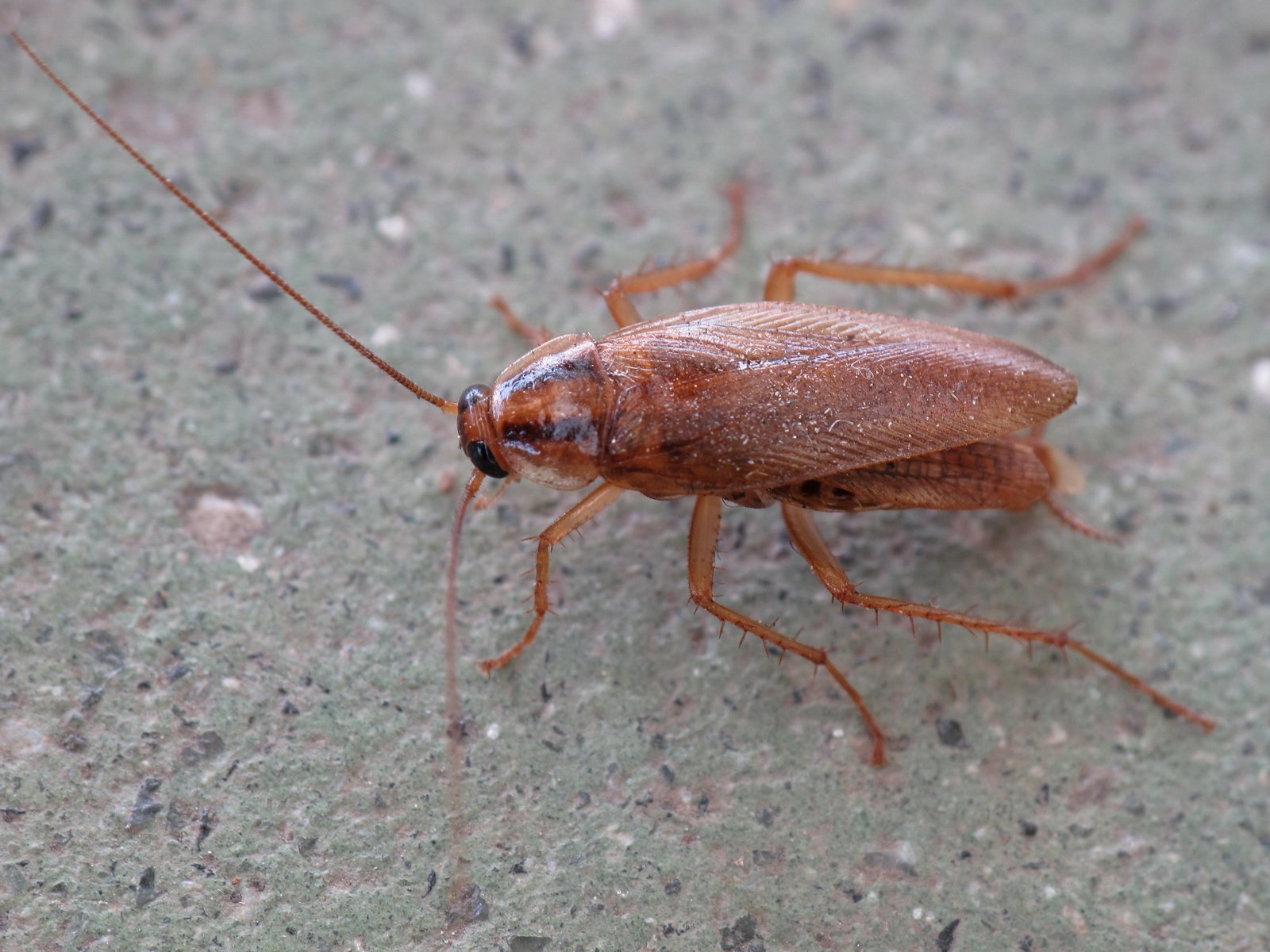
Getting rid of cockroaches properly means finding where they are living and breeding, treating that, and closing the conditions that invited them. This guide covers the signs, the treatment options, honest Sydney costs and the prevention that keeps it solved - written by the licensed technicians who do the work.
- What you are actually dealing with
- The early signs people miss
- Why it is worth dealing with
- The options, and what each is good for
- What to do before we arrive
- What it costs in Sydney
- Is it safe for children and pets?
- What people believe that is not true
- How the building affects the treatment
- After the treatment
- Stopping it coming back
- Frequently asked questions
What you are actually dealing with
It helps to separate two things: what is making you call someone, and what is causing it. The visible cockroaches are the first; the moisture, the gap or the food source behind them is the second, and only the second decides whether the result holds.
That is why an inspection comes before any product. It establishes the species, how far the population has spread, and which conditions on the property are sustaining it.
Key points
- Ask what the warranty covers and for how long.
- Fix the conditions - moisture, food, entry points - or it returns.
- Treat the source, not the sightings: the nest or harbourage is the target.
- Identify the species before treating - the right product depends on it.
The method itself, product by product, is explained on our page about the cockroach control page.
The early signs people miss
You rarely see the population itself first - you see what it leaves behind. The signs that matter:
- Movement when you switch a kitchen light on at night.
- Shed skins in warm cavities behind the fridge, oven or dishwasher.
- Live insects in a dishwasher door seal or the gap beside a built-in oven.
- Brown, oval egg cases glued into hinges, cupboard seams or behind kickboards.
- Smear marks along skirtings where surfaces stay damp.
Where several of these show up together, the population is established rather than passing through, and the treatment needed changes accordingly.
It is worth a look through everything we treat, since what you are seeing may not be what you think it is.
Why it is worth dealing with
The reason cockroaches are worth treating properly is that the visible insects are the smallest part of the problem. Droppings, shed skins and egg cases build up in voids and become an allergen reservoir that affects air quality, which is why households with asthma often notice symptoms before they notice insects.
None of that is scaremongering - it is simply the reason the price goes up the longer it is left.
We set out the full process, timelines and warranty terms under what the treatment involves.
The options, and what each is good for
There is rarely one correct method. What follows is what each approach does well and where it falls short:
| Method | Works well for | Limitations |
|---|---|---|
| Gel bait in harbourage | Carried back to the harbourage; very effective on German cockroach | Must not be sprayed over |
| Monitoring traps | Confirms species and whether numbers are falling | Monitoring, not control |
| Targeted residual spray | Treats runways and entry points | Surface work alone rarely clears a population |
| Insect growth regulator | Stops nymphs reaching breeding age | Slow on its own; used alongside bait |
In practice they are used together. A single method on its own is usually a sign the job has been underscoped.
If you want to see how the treatment is actually carried out, professional cockroach control walks through each stage.
What to do before we arrive
A little preparation makes a measurable difference to the result, and none of it takes long:
- Arrange for pets to be out of the way for a couple of hours.
- Make a note of where you have seen activity and when.
- Tell the technician what you have already applied yourself.
- Clear a path to the roof void or subfloor access if there is one.
- Vacuum carpets and hard floors, then empty the vacuum outside.
The main thing afterwards is not to clean the treated surfaces for about a week. That one habit undoes more treatments than anything else.
What it costs in Sydney
Price depends on the property size, the species and how established the population is. These are the starting figures Elite Pest works to in 2026:
| Service | From | Notes |
|---|---|---|
| General pest treatment (internal & external) | from $89 | Covers cockroaches, ants, spiders and silverfish |
| Possum removal and proofing | from $250 | One-way exclusion, then sealing the entry |
| Termite treatment or barrier | quoted on inspection | Depends on construction, soil and extent of activity |
| Rodent treatment and proofing | from $150 | Baiting or trapping, plus entry-point work |
| Flea treatment (internal) | from $160 | Preparation and vacuuming required beforehand |
Two things worth asking any company: is the quote fixed, and what does the warranty actually cover. Ours is fixed, and general work is covered for six months.
How that is done in practice is covered under how cockroach control works.
Is it safe for children and pets?
Short answer, yes. The longer answer is about method:
- Quantities are measured to the area rather than applied until the bottle is empty.
- Nothing is applied to food preparation surfaces or anywhere food is stored.
- Where a household has asthma, allergies or a newborn, the method is adjusted on request.
- Products are APVMA-registered and applied at label rates by a licensed technician.
If anyone in the house has a specific sensitivity, tell us when you book - it changes which products we bring, not whether we can help.
Anyone you let into your home for this work should be licensed and insured, and who actually turns up sets out ours.
What people believe that is not true
The received wisdom on this is unusually wrong:
- Surface spray fixes it. Spray kills foragers. The harbourage and egg cases keep producing, so numbers rebound in weeks.
- A bomb or fogger clears a kitchen. Foggers push cockroaches deeper into wall voids and make the problem harder to reach.
- Seeing one is nothing. They are nocturnal and shelter-seeking. Daytime sightings usually mean harbourage is full.
- Cockroaches mean a dirty house. German cockroaches arrive in appliances, cartons and shared plumbing. Spotless kitchens get them too.
The rest of what we handle is set out under the pest control services page.
How the building affects the treatment
The building matters as much as the pest. The same species is treated differently in a freestanding house, a unit and a terrace, mostly because of what a technician can reach:
- Freestanding houses. Full external access, subfloor and roof void available, so the source can usually be treated directly.
- Townhouses. Common walls plus private courtyards, so internal and external work both matter.
- Terraces and semis. Party walls and shared subfloors let populations travel; treating one side alone rarely holds.
- Apartments and units. Shared walls, services and risers mean the source is often outside your lot - partial treatment just moves it.
If you are in a unit or a terrace and the problem keeps returning after treatment, the source is very likely not inside your own walls.
Units bring their own constraints - shared walls, shared plumbing, limited external access - and unit and apartment treatments is set up around them.
After the treatment
Our general treatments are backed for six months. That is a re-treatment guarantee rather than a refund, which is what actually helps.
The exclusions are the ordinary ones - a new pest is a new job, and a recurrence traced to an unfixed cause sits outside the cover. Termite barriers and baiting programs have their own longer warranties, conditional on annual monitoring.
Ask for it in writing. Any operator who will not put the warranty terms on the invoice is worth passing on.
If this is the second or third time you have dealt with it, routine residential pest control costs less over a year than repeated call-outs.
Stopping it coming back
The treatment buys you a clean slate. These keep it:
- Fix dripping taps and improve ventilation in wet areas.
- Clean grease from kickboards, filters and the gaps beside appliances.
- Check second-hand appliances and cartons before bringing them inside.
- Empty bins and lift pet bowls overnight.
- Break down and remove cardboard rather than storing it in a damp cupboard.
A technician will tell you which of these are actually relevant to your building rather than leaving you a generic list.
Most of the homes we look after are on an ongoing residential service rather than calling when something appears.
Frequently asked questions
What do you charge for cockroaches in Sydney?
Starting prices are $89 for a general treatment and $159 for an inspection with a written report. Anything larger is quoted on inspection rather than over the phone. The quote is fixed, so the invoice matches what you were told.
Why do I have cockroaches in a clean kitchen?
Not at all. The common indoor species need warmth, moisture and a crack to hide in, all of which exist behind a clean fridge or dishwasher. In apartments they also move between units through shared walls and services.
Are your products safe around kids and animals?
Yes - and if anyone in the household has asthma, allergies or there is a newborn, tell us when booking and the technician adjusts the method. Re-entry is normally once treated surfaces have dried, and you are told the exact time on the day.
Will a supermarket spray work?
It is worth a try for a one-off sighting and generally a waste of money beyond that. Concentrations are lower, residual life is shorter, and surface application misses the voids where the population actually lives.
Can you come today?
Most bookings in Sydney are filled within 48 hours. Urgent situations are prioritised, and we will tell you honestly if yours is not urgent rather than selling you a priority visit.
How quickly will I see a difference?
For a general treatment you should see a drop within 24 to 72 hours. Where baiting is used it takes one to three weeks, because the aim is the colony rather than the foragers. A short increase in sightings early on means the bait is being taken.
Is an inspection really necessary?
Yes, at least briefly. We would rather spend fifteen minutes finding the source than apply the wrong product well. For timber pests the inspection is the job, and you receive a written report.
What happens if they come back?
Yes - six months on general pest work. A recurrence of the treated pest inside that window is a free return visit. A different species arriving later is a new job, and a recurrence traced to an unfixed cause such as a leak sits outside the cover.
Want this sorted properly?
Licensed, insured and working across 650+ Sydney suburbs. You get a fixed price before anything starts, a 6-month warranty on general pest work, and a technician who explains what they found.