
The honest version: spiders come back when the cause is left in place. What follows covers how to tell what you are dealing with, what a licensed technician will actually do about it, realistic Sydney prices, and the prevention that makes the result hold. General treatments start from $89 with a 6-month warranty.
- Start by working out what you have
- How to tell you have a problem
- The conditions behind it
- What you should expect to pay
- DIY or call someone?
- Common missteps
- What people believe that is not true
- Businesses, strata and shared buildings
- Is this urgent?
- Choosing a pest controller in Sydney
- After the treatment
- Frequently asked questions
Start by working out what you have
Most of the cost in dealing with spiders comes from doing it twice. Getting the identification and the source right the first time is what makes the difference between one treatment and a recurring expense.
So the sequence matters: identify, locate, treat the source, then close the conditions. Skip a step and you are paying again within weeks.
Key points
- Identify the species before treating - the right product depends on it.
- Treat the source, not the sightings: the nest or harbourage is the target.
- A fixed quote should come before any work starts.
- Fix the conditions - moisture, food, entry points - or it returns.
How that is done in practice is covered under spider control.
How to tell you have a problem
Catching this early is the difference between a routine treatment and an expensive one. These are the signs our technicians see most often in Sydney:
- Shed exoskeletons in a shed, carport or roof void.
- Spiders found in a pool skimmer box or laundry trough in the morning.
- A trapdoor-style burrow in damp soil near a wall or path edge.
- Active webs clustered around outdoor lighting, where insect prey gathers.
- Untidy webs in window reveals, eaves and the corners of a garage.
Where several of these show up together, the population is established rather than passing through, and the treatment needed changes accordingly.
The rest of what we handle is set out under the pest control services page.
The conditions behind it
Nothing moves in without a reason. Spiders turn up where there is food, water or shelter available, and in most Sydney homes it is a short list of the same culprits:
- Warm, humid weather driving a seasonal surge in activity.
- Leaf litter in gutters, garden beds and window reveals.
- Clutter in a garage, shed or subfloor giving undisturbed web space.
- Firewood, pot stacks and stored timber against the house.
- A pool, pond or water feature concentrating insect activity after dark.
A technician will walk you through whichever of these apply to your place as part of the visit.
What you should expect to pay
Price depends on the property size, the species and how established the population is. These are the starting figures Elite Pest works to in 2026:
| Service | From | Notes |
|---|---|---|
| General pest treatment (internal & external) | from $89 | Covers cockroaches, ants, spiders and silverfish |
| Bed bug treatment (per room) | from $280 | Usually includes a follow-up visit |
| Timber pest inspection with report | from $159 | Annual check; the report is the deliverable |
| Possum removal and proofing | from $250 | One-way exclusion, then sealing the entry |
| Rodent treatment and proofing | from $150 | Baiting or trapping, plus entry-point work |
Two things worth asking any company: is the quote fixed, and what does the warranty actually cover. Ours is fixed, and general work is covered for six months.
The method itself, product by product, is explained on our page about the spider control page.
DIY or call someone?
Retail products have a place. For one insect in a room they are fine, and nobody needs a technician for that. For an established population they tend to fail, and sometimes make things worse:
- Without identification there is no way to know whether it is working or just scattering.
- Surface application misses the voids and cracks where the population actually lives.
- Retail products kill what they touch and leave the nest or harbourage producing.
- Spraying over bait placements makes them unpalatable and wastes the treatment.
If you have already tried something and it returned, that is the signal rather than a reason to try again harder.
If you are not certain which pest you are dealing with, the services we offer across Sydney lists what we treat and the signs that point to each.
Common missteps
These come up often enough to be worth listing. Each one either prolongs the problem or makes it harder to treat:
- Spraying a burrow entrance and assuming the spider is dead.
- Skipping eaves, subfloors and garages, which is where most of the population sits.
- Clearing webs without treating the harbourage, so they rebuild within days.
- Attempting to handle or relocate a funnel-web or mouse spider.
If you have already done one of these, say so when you book. It changes the approach rather than causing offence.
What people believe that is not true
Worth clearing up, because acting on these makes the problem harder:
- A spider in the pool is drowned. Funnel-webs can survive submerged for hours. Treat anything you cannot identify as live.
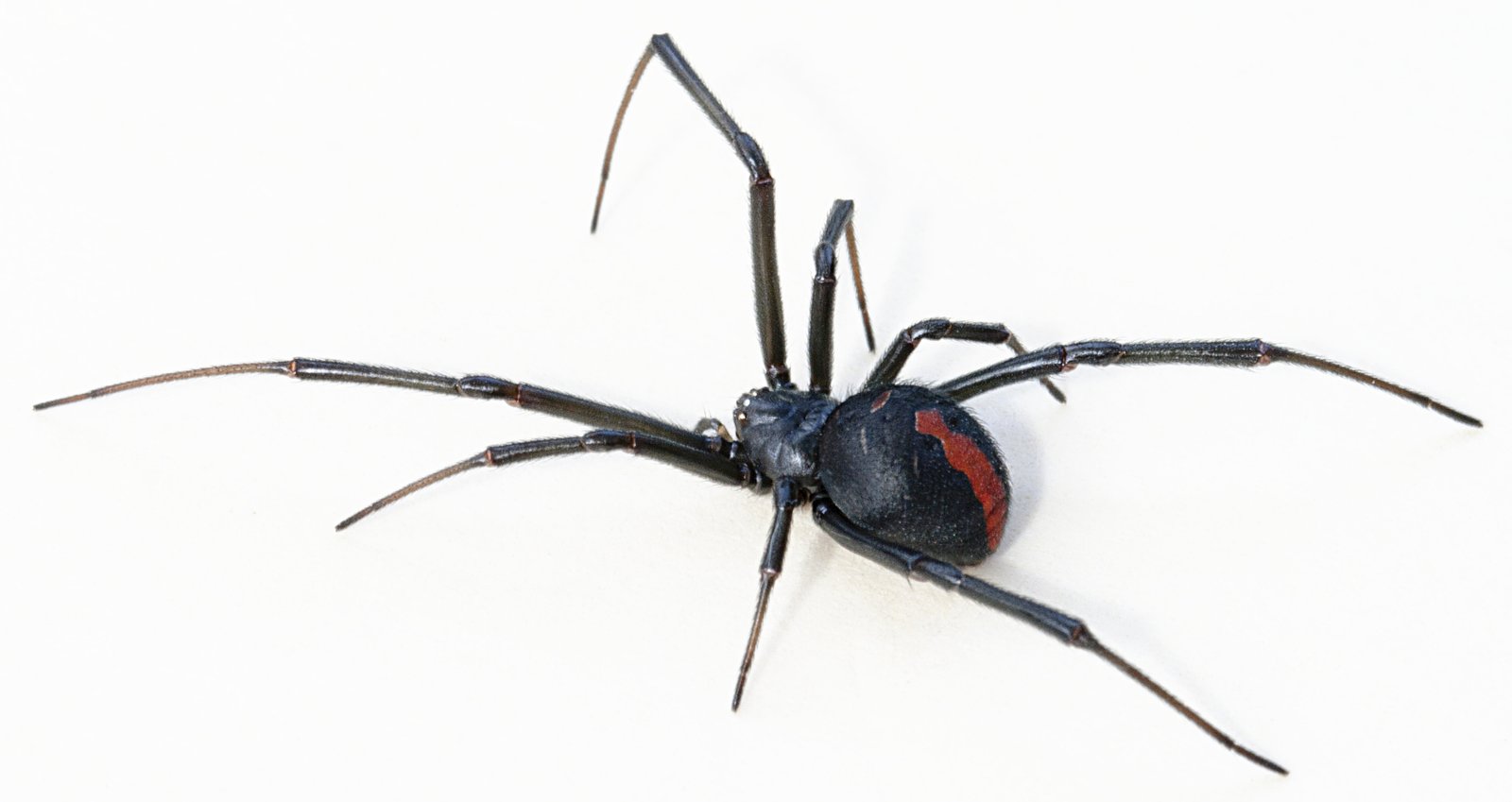
- All big spiders are dangerous. Huntsmans are harmless and useful. The species that matter in Sydney are funnel-webs, mouse spiders and redbacks.
- Funnel-webs only live in bushland. They occur across the Sydney basin, including dense suburbs, wherever soil stays damp.
- Spiders avoid clean homes. They follow prey insects, which follow lighting and moisture rather than untidiness.
It is worth a look through everything we treat, since what you are seeing may not be what you think it is.
Businesses, strata and shared buildings
For a business or an owners corporation the deliverable includes paperwork, not just a result:
- Written service reports an auditor or committee can follow.
- After-hours or pre-opening access so trading is not disrupted.
- Scheduled servicing rather than reactive call-outs, with visit dates set in advance.
- Treatment of common property - risers, voids, bin rooms, roof spaces - not just individual lots.
- Coordination across multiple lots so the population cannot simply relocate.
At an audit the question is rarely whether you have pests; it is whether you can show a managed program. That is what the reporting is for.
Food premises carry the tightest requirements, which is what kitchen and food-area servicing is designed around.
Is this urgent?
Not everything needs a same-day visit, and it is reasonable to want to know which this is. Treat it as urgent when:
- You have found live termite activity in or against the building.
- It is a food business, childcare centre, medical premises or aged care.
- Numbers have visibly increased over a week or two.
- There are young children or pets with access to the affected area.
If none of those apply, there is no need to panic - but there is also no advantage in waiting, since populations keep breeding either way.
We cover the whole basin rather than a few postcodes - the suburbs on our run has the full list.
Choosing a pest controller in Sydney
The cheapest quote is often the one that gets repeated. Things worth confirming:
- Get the quote in writing, fixed, before any work starts.
- Ask what the warranty covers, what voids it, and how long it runs.
- Ask which method they intend to use and why that one.
- Be wary of a price quoted over the phone without any questions about the property.
- Confirm they hold current public liability insurance.
None of those questions are unreasonable, and the answers tend to sort operators quickly.
That is worth checking before you book anyone, including us - about the team covers our licensing, insurance and how long we have been doing this.
After the treatment
Our general treatments are backed for six months. That is a re-treatment guarantee rather than a refund, which is what actually helps.
The exclusions are the ordinary ones - a new pest is a new job, and a recurrence traced to an unfixed cause sits outside the cover. Termite barriers and baiting programs have their own longer warranties, conditional on annual monitoring.
You should receive the terms with your paperwork on the day rather than having to request them.
Most of the homes we look after are on an ongoing residential service rather than calling when something appears.
Frequently asked questions
What will treating spiders cost?
General pest treatments start from $89 and timber pest inspections from $159. Termite treatments and barriers are quoted after an inspection because the price depends on the construction and the extent of the activity. You get a fixed figure before any work begins.
Which Sydney spiders are actually dangerous?
In the Sydney basin the ones that matter are the Sydney funnel-web, mouse spiders and redbacks. Huntsmans and most web-builders are harmless and useful. Treat any large dark ground-dwelling spider as a funnel-web until identified, and never handle one - including one found in a pool, since they survive submerged for hours.
How can I keep spiders away long term?
The treatment resets it; prevention keeps it. Sealed food storage, lidded bins, no overnight pet bowls, repaired leaks, clear gutters, and mulch and timber kept clear of the slab. Your technician will tell you which two or three actually matter for your building.
What if the problem is coming from next door?
In a tenancy it usually depends on whether the problem existed at the start of the lease and on the terms of the agreement - raise it with the agent in writing either way. In a strata building, anything in common property such as risers, voids and bin rooms is the owners corporation's responsibility.
How long before the treatment works?
Residual treatments start working within hours, but colony and baiting treatments are deliberately slower - the product has to be carried back to the nest. Expect a clear reduction within a week to two, and do not be alarmed if activity briefly rises first.
What attracts spiders to a house?
Usually something fixable: an unsealed food source, standing water, mulch or timber against the wall, or a gap at a weep hole or pipe penetration. A technician will point out which apply to your property.
Is there a guarantee on the work?
Covered pests returning within six months are re-treated free. Termite barriers and baiting systems have their own longer warranties, generally conditional on annual monitoring. You get the terms in writing on the day.
Are your technicians licensed and insured?
Yes - every technician holds a current NSW pest management licence and we carry public liability insurance. You are entitled to ask any operator for both, and it is worth doing. Ours are available on request.
Need someone to look at it?
We treat spiders across 650+ suburbs of Sydney. Fixed quote up front, licensed and insured technicians, child and pet-safe application, and general treatments backed for six months.