
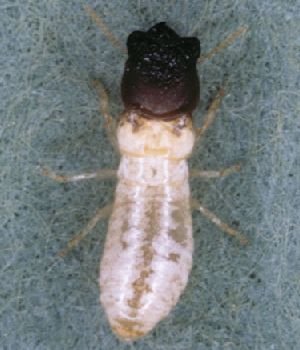
Termites damage more Australian homes each year than fire, storm and flood combined, and home insurance almost never covers it. The reliable approach is a timber pest inspection every twelve months, from $159, followed by a barrier or baiting program if activity is found. Never spray or break open a live termite trail - it scatters the colony.
- Before you treat anything
- What to look for
- When termites are worst in Sydney
- What a licensed technician actually does
- What to expect from the visit
- What you should expect to pay
- Mistakes that make it worse
- Houses, units and townhouses
- What to check before you book
- Warranty and follow-up
- Keeping it gone
- Frequently asked questions
Before you treat anything
It helps to separate two things: what is making you call someone, and what is causing it. The visible termites are the first; the moisture, the gap or the food source behind them is the second, and only the second decides whether the result holds.
A licensed technician works through that in order, which is why the first part of a visit is looking rather than spraying.
Key points
- Identify the species before treating - the right product depends on it.
- Fix the conditions - moisture, food, entry points - or it returns.
- A fixed quote should come before any work starts.
- Treat the source, not the sightings: the nest or harbourage is the target.
There is a fuller explanation of professional termite control, including what is and is not included.
What to look for
The early evidence is usually subtle, and most of it is found in places nobody looks. Worth checking for:
- Paint or plaster that bubbles, ripples or cracks with no plumbing leak nearby.
- Thin mud veneer filling cracks in skirtings, architraves or door frames.
- Small piles of discarded wings on windowsills after a warm, humid evening.
- A faint musty, earthy smell in a closed room or subfloor.
- Mud packing visible in the weep holes along an external brick course.
The more of these you can tick off, the longer it has been going on - which affects both the method and the price.
A technician carrying out a full timber pest report is looking for exactly these conditions, and documents them whether or not there is live activity.
When termites are worst in Sydney
Sydney's mild winters mean termite colonies never fully shut down the way they do further south. Swarming peaks in late spring and summer after humid evenings, which is when most homeowners first see discarded wings. The practical consequence is that an annual inspection can sit at any time of year, so long as it actually happens.
It also explains the sudden appearances - the weather changed before the population did.
What a licensed technician actually does
There is a defined process behind it, and knowing it makes the invoice easier to read:
- Inspect and identify. Work out the species and find where the population actually sits - usually not where it was seen.
- Treat the source. Apply the right method for that species - gel bait, dust, residual, baiting system or trapping - where it does the most work and the least harm.
- Allow the method to run. Expect a timeline rather than an instant result, and avoid adding anything of your own in the meantime.
- Close the conditions. Identify and remove what caused it, otherwise the treatment is only a reset.
Every Elite Pest treatment is carried out by a licensed, insured technician and general pest work carries a 6-month warranty.
We set out the full process, timelines and warranty terms under how termite control works.
What to expect from the visit
There is not much mystery to it, and most of it is quicker than people expect:
- First look. Ten to twenty minutes looking - inside, outside, roof void or subfloor if relevant - then a plain explanation of what is going on.
- Agreeing the work. You hear the fixed price and what is included before work begins. If you would rather not proceed, that is fine.
- The work itself. Typically under an hour and a half for a standard home; longer where a roof void, subfloor or large yard is involved.
- Handover. Re-entry time, what to expect over the next fortnight, the prevention that matters for your place, and the warranty in writing.
One thing worth knowing: with baiting and colony treatments, activity often rises briefly before it drops. That is the treatment working, not failing.
What you should expect to pay
Price depends on the property size, the species and how established the population is. These are the starting figures Elite Pest works to in 2026:
| Service | From | Notes |
|---|---|---|
| Timber pest inspection with report | from $159 | Annual check; the report is the deliverable |
| Termite treatment or barrier | quoted on inspection | Depends on construction, soil and extent of activity |
| General pest treatment (internal & external) | from $89 | Covers cockroaches, ants, spiders and silverfish |
| Flea treatment (internal) | from $160 | Preparation and vacuuming required beforehand |
| Bed bug treatment (per room) | from $280 | Usually includes a follow-up visit |
Two things worth asking any company: is the quote fixed, and what does the warranty actually cover. Ours is fixed, and general work is covered for six months.
The method itself, product by product, is explained on our page about the termite control page.
Mistakes that make it worse
Most of the difficult jobs we attend were straightforward a few weeks earlier. The usual reasons:
- Spraying or disturbing a live termite trail, which scatters the colony and hides the problem.
- Assuming a previous treatment is still protecting the house years later.
- Relying on a hardware store product against a colony of hundreds of thousands.
- Treating visible damage as the extent of it, when the nest may be metres away.
If you have already done one of these, say so when you book. It changes the approach rather than causing offence.
Houses, units and townhouses
Access decides a lot. What is straightforward in a house can be the hard part in an apartment:
- New builds. Tighter sealing helps, but landscaping against the slab and construction debris are common early problems.
- Townhouses. Common walls plus private courtyards, so internal and external work both matter.
- Terraces and semis. Party walls and shared subfloors let populations travel; treating one side alone rarely holds.
- Apartments and units. Shared walls, services and risers mean the source is often outside your lot - partial treatment just moves it.
If you are in a unit or a terrace and the problem keeps returning after treatment, the source is very likely not inside your own walls.
The approach in a unit differs enough that we cover unit and apartment treatments separately.
What to check before you book
The cheapest quote is often the one that gets repeated. Things worth confirming:
- Confirm they hold current public liability insurance.
- Get the quote in writing, fixed, before any work starts.
- Be wary of a price quoted over the phone without any questions about the property.
- Check whether a follow-up visit is included or charged separately.
- For termite work, ask whether you receive a written timber pest report.
A good operator will answer all of those without hesitation. Hesitation on any of them is useful information.
That is worth checking before you book anyone, including us - about the team covers our licensing, insurance and how long we have been doing this.
Warranty and follow-up
Our general treatments are backed for six months. That is a re-treatment guarantee rather than a refund, which is what actually helps.
The exclusions are the ordinary ones - a new pest is a new job, and a recurrence traced to an unfixed cause sits outside the cover. Termite barriers and baiting programs have their own longer warranties, conditional on annual monitoring.
It goes on the invoice, so there is no ambiguity about what was covered six months later.
If this is the second or third time you have dealt with it, an ongoing residential service costs less over a year than repeated call-outs.
Keeping it gone
Treatment resets the problem. Prevention is what keeps it solved, and most of it is maintenance rather than pest control:
- Keep a baiting or barrier system monitored rather than installed and forgotten.
- Grind out or remove stumps rather than leaving them in the ground.
- Keep soil, mulch and garden beds clear of the slab edge and weep holes.
- Store firewood and timber off the ground and away from the house.
- Fix leaking taps, overflows and air-conditioning condensate promptly.
A technician will tell you which of these are actually relevant to your building rather than leaving you a generic list.
Most of the homes we look after are on a regular residential program rather than calling when something appears.
Common questions
How much does it cost to get rid of termites in Sydney?
General pest treatments start from $89 and timber pest inspections from $159. Termite treatments and barriers are quoted after an inspection because the price depends on the construction and the extent of the activity. You get a fixed figure before any work begins.
How often do termite inspections need doing?
Annually is the standard advice for Sydney, and more often for high-risk properties - those with a history of activity, a subfloor that holds moisture, or heavy planting against the walls. Termite damage is excluded from almost every home insurance policy, which is why the annual check is the cheap part.
What brings termites indoors?
Almost always a combination of moisture and an easy entry point. Leaks, condensation, blocked gutters and irrigation do more to attract pests than untidiness does, which is why spotless homes get them too.
Can I treat this myself?
It is worth a try for a one-off sighting and generally a waste of money beyond that. Concentrations are lower, residual life is shorter, and surface application misses the voids where the population actually lives.
Is everyone who attends licensed?
Yes - every technician holds a current NSW pest management licence and we carry public liability insurance. You are entitled to ask any operator for both, and it is worth doing. Ours are available on request.
What prevents a repeat?
Remove the food, remove the water, seal the gaps and keep vegetation off the walls. Of those, moisture matters most - fixing a leak or clearing a gutter prevents more problems than any spray. A scheduled annual service catches anything that slips through.
Can you just treat it without looking?
Yes, at least briefly. We would rather spend fifteen minutes finding the source than apply the wrong product well. For timber pests the inspection is the job, and you receive a written report.
How long before the treatment works?
Most households notice a difference in the first few days, with the full effect over one to three weeks depending on the method. If nothing has changed by the timeframe your technician gave you, call us - that is what the warranty is for.
Sydney pest control, booked today
Elite Pest & Termite Solutions covers 650+ Sydney suburbs with licensed, insured technicians, child and pet-safe methods and a 6-month warranty on general treatments. Fixed quote in about 30 minutes.