
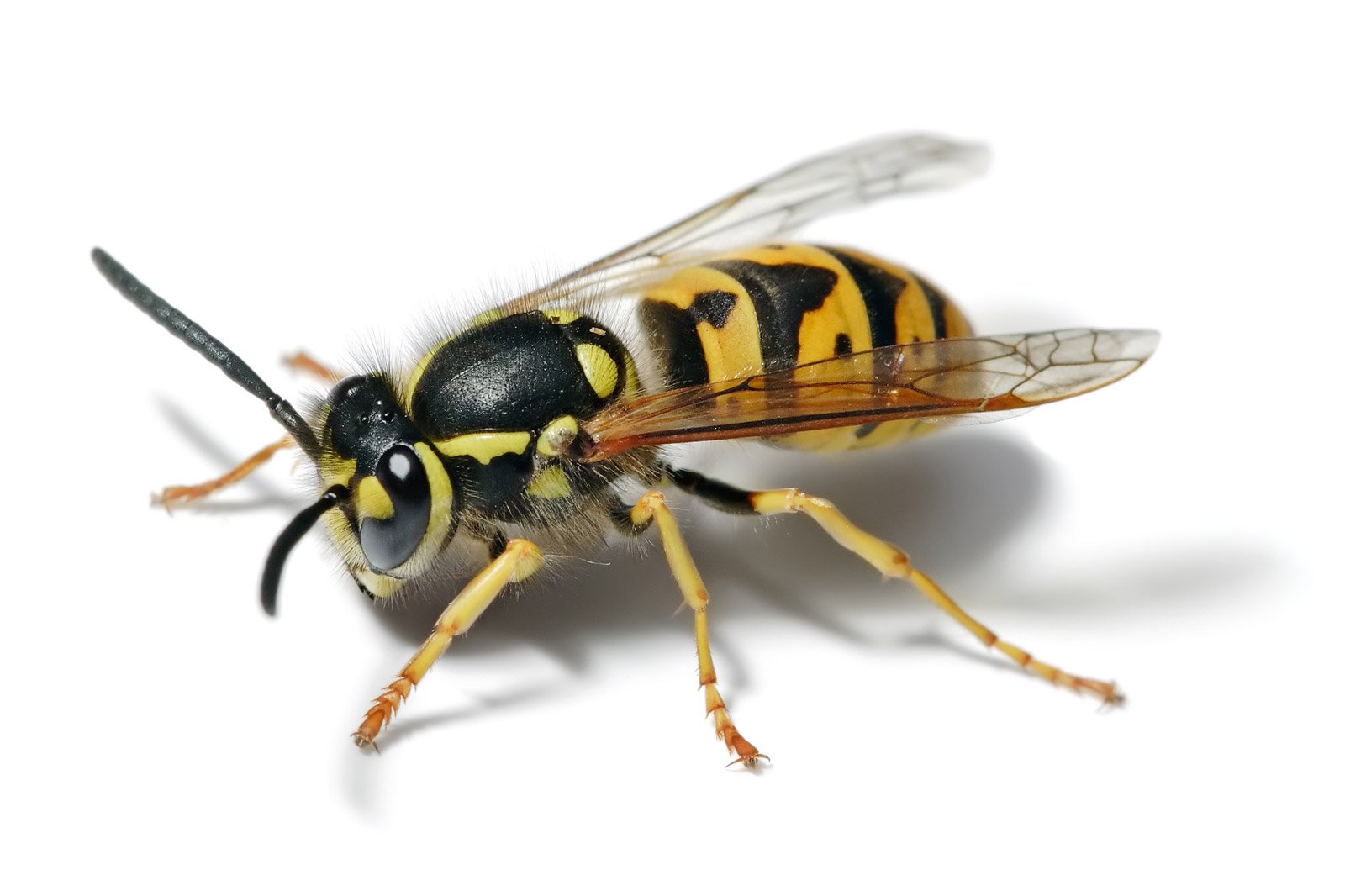
The honest version: wasps come back when the cause is left in place. What follows covers how to tell what you are dealing with, what a licensed technician will actually do about it, realistic Sydney prices, and the prevention that makes the result hold. General treatments start from $89 with a 6-month warranty.
- Start by working out what you have
- The early signs people miss
- Which method suits which situation
- The process, step by step
- How the appointment runs
- What to do before we arrive
- Sydney prices, without the runaround
- What not to do
- What people believe that is not true
- Houses, units and townhouses
- Is this urgent?
- Frequently asked questions
Start by working out what you have
Almost every unsuccessful treatment starts the same way: the wrong product aimed at the wrong place. Wasps are not a single problem with a single answer - the species, the entry point and the conditions around the building all change what works.
That is why an inspection comes before any product. It establishes the species, how far the population has spread, and which conditions on the property are sustaining it.
Key points
- Early action is consistently cheaper than waiting for certainty.
- Identify the species before treating - the right product depends on it.
- Fix the conditions - moisture, food, entry points - or it returns.
- A fixed quote should come before any work starts.
We set out the full process, timelines and warranty terms under what the treatment involves.
The early signs people miss
The early evidence is usually subtle, and most of it is found in places nobody looks. Worth checking for:
- Honeycomb visible in a wall cavity, chimney or roof void.
- A mud nest cell on a wall, window frame or ceiling of a carport.
- Bees clustered on a branch or fence while a swarm is deciding where to move.
- Insects entering through a weep hole or a gap in a soffit vent.
- Aggressive behaviour when you mow, prune or work near one spot.
One of these on its own may mean nothing. Two or more in the same area is worth a professional look, and it is better not to disturb the site before someone has seen it.
If you are not certain which pest you are dealing with, the full range of treatments we carry out lists what we treat and the signs that point to each.
Which method suits which situation
A technician chooses between these based on the species, the building and how established the population is:
| Method | Works well for | Limitations |
|---|---|---|
| Dust to cavity entry | Reaches a nest inside a wall or roof void | Needs the entry point identified |
| Direct nest treatment | Treats the colony including returning foragers | Requires protective equipment and access |
| Bee swarm relocation | Live removal where the colony can be rehomed | Not always possible in a cavity |
| Nest removal after treatment | Prevents reuse and secondary pests | Only once the colony is dead |
In practice they are used together. A single method on its own is usually a sign the job has been underscoped.
If you want to see how the treatment is actually carried out, the wasp and bee control page walks through each stage.
The process, step by step
A licensed technician follows a repeatable process rather than blanket-spraying a property. In order:
- Inspect and identify. Confirm the species, locate nests and harbourage, and note the conditions sustaining them.
- Treat the source. Apply the right method for that species - gel bait, dust, residual, baiting system or trapping - where it does the most work and the least harm.
- Allow the method to run. Expect a timeline rather than an instant result, and avoid adding anything of your own in the meantime.
- Close the conditions. Proofing and maintenance advice specific to your building, which is the part that prevents a repeat.
The work is logged, and if covered pests return inside the warranty period we come back at no charge.
How that is done in practice is covered under professional wasp and bee control.
How the appointment runs
So you can plan your day around it:
- Inspection on arrival. The technician inspects inside and out, confirms the species and shows you what they have found before anything is applied.
- Price confirmed. You hear the fixed price and what is included before work begins. If you would rather not proceed, that is fine.
- Treatment. Most general treatments take 45 to 90 minutes depending on the property size and how much access is involved.
- What you are told. You get the timeline, the aftercare, the specific fixes for your property and your paperwork.
One thing worth knowing: with baiting and colony treatments, activity often rises briefly before it drops. That is the treatment working, not failing.
What to do before we arrive
Nothing elaborate, but these few things genuinely affect how well it works:
- Make a note of where you have seen activity and when.
- Clear a path to the roof void or subfloor access if there is one.
- Tell the technician what you have already applied yourself.
- Put food, utensils and pet bowls away or in sealed containers.
- Vacuum carpets and hard floors, then empty the vacuum outside.
Afterwards, hold off on mopping treated skirtings and perimeters for a week or so - washing the treatment off is the most common reason a job underperforms.
Sydney prices, without the runaround
Our rates are published rather than quoted on the spot. Starting points:
| Service | From | Notes |
|---|---|---|
| Wasp or bee nest treatment | from $150 | Priced on access and nest location |
| Termite treatment or barrier | quoted on inspection | Depends on construction, soil and extent of activity |
| Possum removal and proofing | from $250 | One-way exclusion, then sealing the entry |
| Timber pest inspection with report | from $159 | Annual check; the report is the deliverable |
| General pest treatment (internal & external) | from $89 | Covers cockroaches, ants, spiders and silverfish |
Nothing is charged beyond the quoted figure. Where a job turns out to need more than expected, you are told before it is done, not after.
There is a fuller explanation of wasp and bee control, including what is and is not included.
What not to do
These come up often enough to be worth listing. Each one either prolongs the problem or makes it harder to treat:
- Approaching a nest without protective equipment.
- Blocking a wall-cavity entry and forcing bees or wasps inside the building.
- Treating a nest in daylight when the colony is most active.
- Leaving honeycomb in a cavity after removing bees, which attracts other pests.
If you have already done one of these, say so when you book. It changes the approach rather than causing offence.
What people believe that is not true
A few of these come up on nearly every job:
- Winter kills the nest. Mild Sydney winters let some colonies carry over and start the next season larger.
- Wasps and bees are treated the same. Bees are often relocated live; wasps are treated. Identification determines the approach.
- Knocking the nest down ends it. Returning foragers rebuild nearby, and disturbing a nest provokes a defensive response.
- One sting means one wasp. European wasps can sting repeatedly and recruit others to defend the nest.
The rest of what we handle is set out under the services we offer across Sydney.
Houses, units and townhouses
The building matters as much as the pest. The same species is treated differently in a freestanding house, a unit and a terrace, mostly because of what a technician can reach:
- Apartments and units. Shared walls, services and risers mean the source is often outside your lot - partial treatment just moves it.
- Freestanding houses. Full external access, subfloor and roof void available, so the source can usually be treated directly.
- New builds. Tighter sealing helps, but landscaping against the slab and construction debris are common early problems.
- Townhouses. Common walls plus private courtyards, so internal and external work both matter.
If you are in a unit or a terrace and the problem keeps returning after treatment, the source is very likely not inside your own walls.
If you are in a unit rather than a house, how apartments are treated explains what can be treated inside your own lot.
Is this urgent?
Some of this can wait a fortnight. Some of it cannot. The dividing line:
- Anyone in the household has a known allergy to stings.
- A tenancy, sale or inspection is imminent.
- There are young children or pets with access to the affected area.
- Numbers have visibly increased over a week or two.
If none of those apply, there is no need to panic - but there is also no advantage in waiting, since populations keep breeding either way.
We cover the whole basin rather than a few postcodes - the Sydney suburbs we cover has the full list.
Questions we get asked
What do you charge for wasps in Sydney?
Starting prices are $89 for a general treatment and $159 for an inspection with a written report. Anything larger is quoted on inspection rather than over the phone. The quote is fixed, so the invoice matches what you were told.
Can I knock the nest down myself?
Leave it alone and get it treated, particularly if it is near a doorway, clothesline, pool or play equipment, or if anyone in the household has a sting allergy. Bees are often relocated live; wasps are treated. Identification decides which.
I am renting - whose responsibility is this?
For renters, report it to the agent in writing promptly, since that is often what decides responsibility. In a unit block the source is frequently outside your lot, and treating your own apartment repeatedly will not fix a population living in common property.
Can you come today?
We cover Sydney regularly, so availability is normally a day or two out. Call 1300 313 373 and we will give you the next slot and a fixed price at the same time.
What brings wasps indoors?
Food, water and shelter, in roughly that order. In most Sydney homes it comes down to accessible food or bins, a moisture source such as a leak or blocked gutter, and a gap big enough to get through. Remove any one of the three and the property gets much less attractive.
Is an inspection really necessary?
Yes, at least briefly. We would rather spend fifteen minutes finding the source than apply the wrong product well. For timber pests the inspection is the job, and you receive a written report.
Is there a guarantee on the work?
Yes - six months on general pest work. A recurrence of the treated pest inside that window is a free return visit. A different species arriving later is a new job, and a recurrence traced to an unfixed cause such as a leak sits outside the cover.
Are your products safe around kids and animals?
It is safe when applied correctly, which is most of what a licence is for. Baits and dusts go where children and pets do not reach, fish tanks are covered and pet bowls moved. For general treatments you do not need to leave the property.
Want this sorted properly?
Licensed, insured and working across 650+ Sydney suburbs. You get a fixed price before anything starts, a 6-month warranty on general pest work, and a technician who explains what they found.