
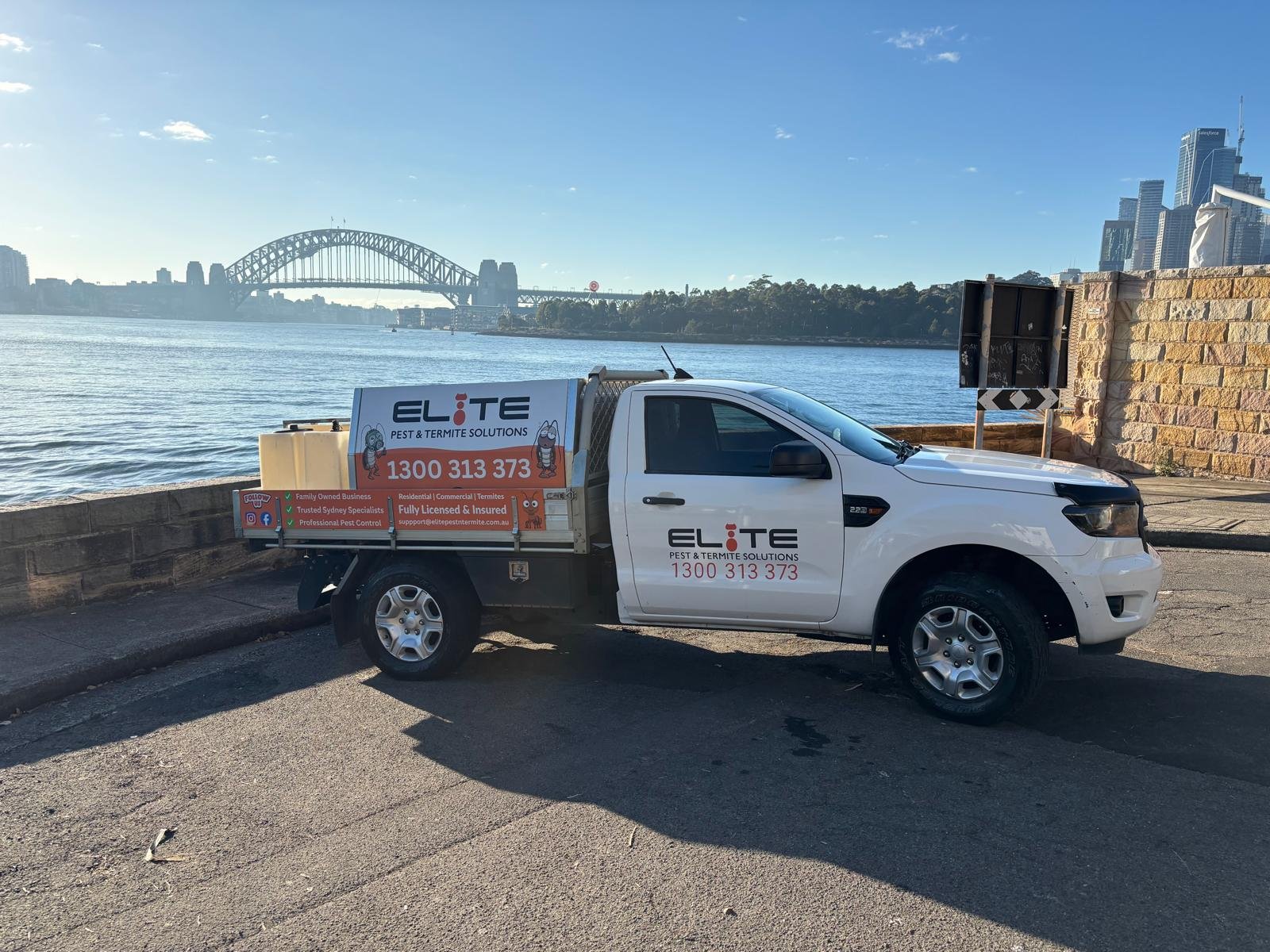
The honest version: pests come back when the cause is left in place. What follows covers how to tell what you are dealing with, what a licensed technician will actually do about it, realistic Sydney prices, and the prevention that makes the result hold. General treatments start from $89 with a 6-month warranty.
- Start by working out what you have
- Signs worth acting on
- Why they are in your home
- Timing: when this peaks
- The process, step by step
- How the appointment runs
- Is it safe for children and pets?
- DIY or call someone?
- The things that set people back
- How the building affects the treatment
- Businesses, strata and shared buildings
- Frequently asked questions
Start by working out what you have
Most of the cost in dealing with pests comes from doing it twice. Getting the identification and the source right the first time is what makes the difference between one treatment and a recurring expense.
That is why an inspection comes before any product. It establishes the species, how far the population has spread, and which conditions on the property are sustaining it.
Key points
- Ask what the warranty covers and for how long.
- Treat the source, not the sightings: the nest or harbourage is the target.
- Fix the conditions - moisture, food, entry points - or it returns.
- A fixed quote should come before any work starts.
If you want to see how the treatment is actually carried out, how our full range of pest control services works walks through each stage.
Signs worth acting on
The early evidence is usually subtle, and most of it is found in places nobody looks. Worth checking for:
- Damage to packaging, timber, fabric or cabling with no other explanation.
- An unexplained musty, oily or ammonia-like smell in a closed space.
- A sharp rise in sightings after rain or a run of humid weather.
- Entry-point evidence at weep holes, pipe penetrations and door seals.
- Insects visible in daylight, which usually means harbourage is full.
The more of these you can tick off, the longer it has been going on - which affects both the method and the price.
If you are not certain which pest you are dealing with, the pest control services page lists what we treat and the signs that point to each.
Why they are in your home
Nothing moves in without a reason. Pests turn up where there is food, water or shelter available, and in most Sydney homes it is a short list of the same culprits:
- Moisture from leaks, poor drainage or blocked gutters.
- Gaps at weep holes, pipe penetrations, door seals and roof junctions.
- Warm, humid Sydney weather accelerating breeding cycles.
- Delay, which turns a small introduction into an established problem.
- Accessible food in bins, pantries, compost and pet bowls.
None of that requires a trade - it is mostly maintenance - but it is the part that determines whether you call us again.
Timing: when this peaks
Most pests in Sydney follow heat and water. The humid months raise numbers across the board, the cooling months move animals indoors, and the wet weeks in between trigger the sudden indoor surges people report after a storm. Knowing which phase you are in explains most of what you are seeing.
That pattern is why timing a treatment well can do more than increasing the dose.
The process, step by step
A licensed technician follows a repeatable process rather than blanket-spraying a property. In order:
- Inspect and identify. Establish what it is, how far it has spread, and which conditions on site are feeding it.
- Treat the source. Match the method to the species and place it in the harbourage rather than across open surfaces.
- Allow the method to run. Colony treatments take time by design. The technician will say how long before you should expect a change.
- Close the conditions. Identify and remove what caused it, otherwise the treatment is only a reset.
Every Elite Pest treatment is carried out by a licensed, insured technician and general pest work carries a 6-month warranty.
How that is done in practice is covered under what the treatment involves.
How the appointment runs
For a typical residential job, the appointment looks like this:
- Arrival and walk-through. Ten to twenty minutes looking - inside, outside, roof void or subfloor if relevant - then a plain explanation of what is going on.
- Confirming the quote. The figure is confirmed against what was actually found, and you decide from there.
- The work itself. Most general treatments take 45 to 90 minutes depending on the property size and how much access is involved.
- Handover. Re-entry time, what to expect over the next fortnight, the prevention that matters for your place, and the warranty in writing.
Expect a short increase in sightings after a bait treatment. It means the bait is being carried, which is the point.
Is it safe for children and pets?
It is the right thing to ask. What makes a professional treatment safe is where the product goes and how much of it is used:
- You are given a specific re-entry time, usually just until treated surfaces are dry.
- Where a household has asthma, allergies or a newborn, the method is adjusted on request.
- Fish tanks are covered and pet bowls and bedding moved before any treatment.
- Products are APVMA-registered and applied at label rates by a licensed technician.
If anyone in the house has a specific sensitivity, tell us when you book - it changes which products we bring, not whether we can help.
You can see who actually turns up and the qualifications behind the work.
DIY or call someone?
Retail products have a place. For one insect in a room they are fine, and nobody needs a technician for that. For an established population they tend to fail, and sometimes make things worse:
- Repellent sprays can split colonies - with ants especially - turning one nest into several.
- Surface application misses the voids and cracks where the population actually lives.
- Guessing the species usually means the wrong product entirely.
- Spraying over bait placements makes them unpalatable and wastes the treatment.
If you have already tried something and it returned, that is the signal rather than a reason to try again harder.
It is worth a look through the services we offer across Sydney, since what you are seeing may not be what you think it is.
The things that set people back
These come up often enough to be worth listing. Each one either prolongs the problem or makes it harder to treat:
- Treating what you can see instead of the source.
- Stopping at the first sign of improvement.
- Using a repellent product where a bait is needed.
- Guessing the species, which means the wrong product.
None of these are unrecoverable - but tell the technician what has already been tried, because it affects what will work now.
How the building affects the treatment
Access decides a lot. What is straightforward in a house can be the hard part in an apartment:
- Older Sydney housing. Deeper gaps, timber framing and subfloor moisture raise both termite and rodent exposure.
- Commercial premises. Documentation, scheduling and after-hours access become part of the job.
- Apartments and units. Shared walls, services and risers mean the source is often outside your lot - partial treatment just moves it.
- New builds. Tighter sealing helps, but landscaping against the slab and construction debris are common early problems.
Where a building is shared, the honest advice is often to raise it with the owners corporation rather than treat your lot repeatedly.
If you are in a unit rather than a house, how apartments are treated explains what can be treated inside your own lot.
Businesses, strata and shared buildings
Once more than one occupier is involved, the job changes shape. The treatment may be similar; everything around it is not:
- Safety data sheets and licence documentation held on site.
- Treatment of common property - risers, voids, bin rooms, roof spaces - not just individual lots.
- Coordination across multiple lots so the population cannot simply relocate.
- After-hours or pre-opening access so trading is not disrupted.
- A site plan showing monitored station locations.
At an audit the question is rarely whether you have pests; it is whether you can show a managed program. That is what the reporting is for.
Food premises carry the tightest requirements, which is what restaurant and cafe pest control is designed around.
Common questions
How much does it cost to get rid of pests in Sydney?
General pest treatments start from $89 and timber pest inspections from $159. Termite treatments and barriers are quoted after an inspection because the price depends on the construction and the extent of the activity. You get a fixed figure before any work begins.
What happens if they come back?
Covered pests returning within six months are re-treated free. Termite barriers and baiting systems have their own longer warranties, generally conditional on annual monitoring. You get the terms in writing on the day.
Are your technicians licensed and insured?
All of our technicians are licensed under NSW pest management requirements and insured. Pest control is licensed work in this state, so an operator who cannot produce a licence number should not be in your home.
What attracts pests to a house?
Almost always a combination of moisture and an easy entry point. Leaks, condensation, blocked gutters and irrigation do more to attract pests than untidiness does, which is why spotless homes get them too.
What prevents a repeat?
Maintenance rather than pest control: fix the water, close the gaps, cut the food supply and reduce clutter where things can shelter. Households that would rather not think about it move onto a regular program instead.
Is DIY worth trying first?
If you have treated it once and it came back, that is the signal to call someone rather than to try again. Tell the technician what you have already applied - it affects which products can be used next.
How soon can you get here?
We cover Sydney regularly, so availability is normally a day or two out. Call 1300 313 373 and we will give you the next slot and a fixed price at the same time.
How quickly will I see a difference?
Residual treatments start working within hours, but colony and baiting treatments are deliberately slower - the product has to be carried back to the nest. Expect a clear reduction within a week to two, and do not be alarmed if activity briefly rises first.
Dealing with pests right now?
Elite Pest & Termite Solutions covers 650+ Sydney suburbs with licensed, insured technicians, child and pet-safe methods and a 6-month warranty on general treatments. Fixed quote in about 30 minutes.