
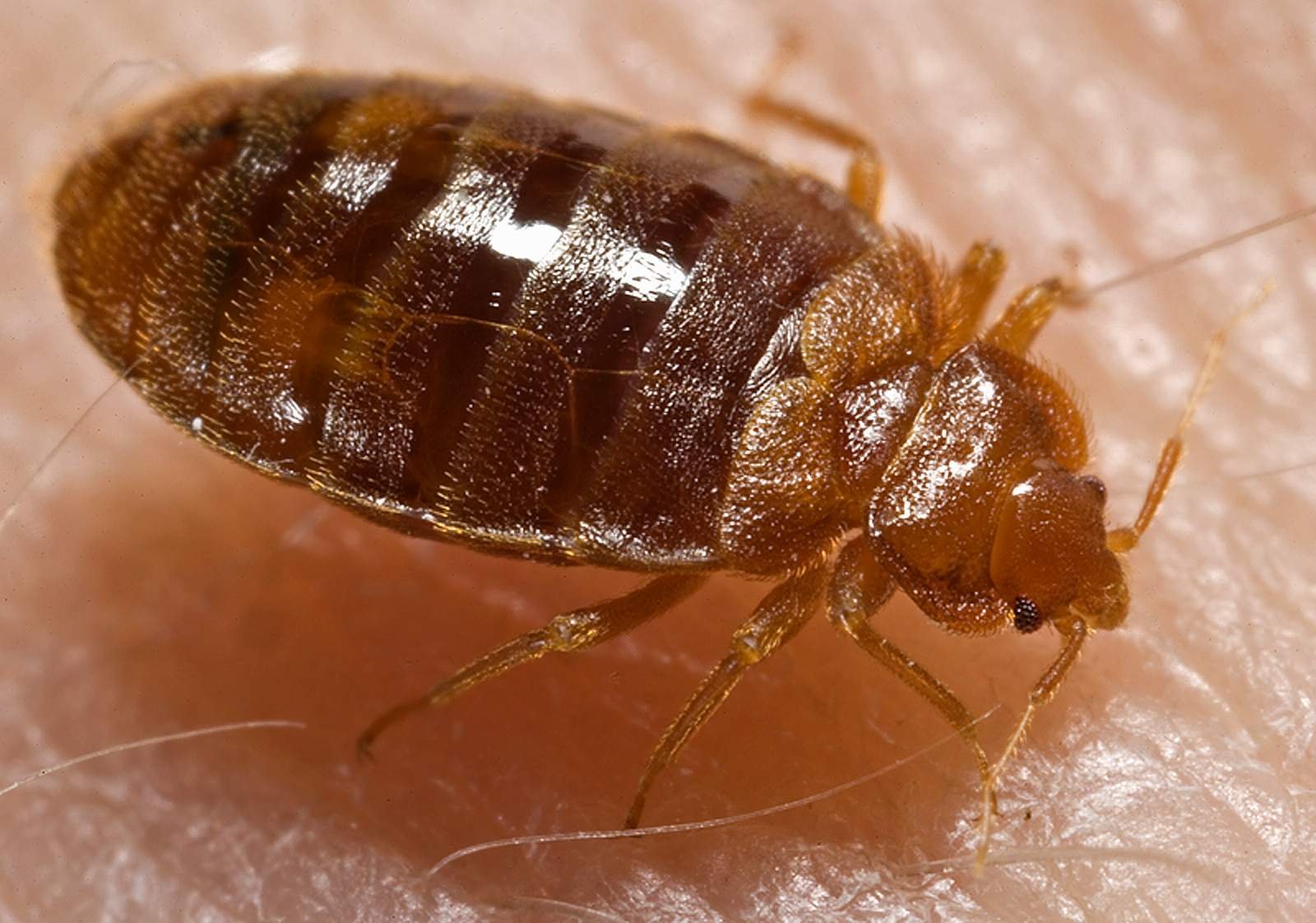
The honest version: bed bugs come back when the cause is left in place. What follows covers how to tell what you are dealing with, what a licensed technician will actually do about it, realistic Sydney prices, and the prevention that makes the result hold. General treatments start from $89 with a 6-month warranty.
- Start by working out what you have
- How to tell you have a problem
- What is attracting them
- The seasonal pattern
- How the appointment runs
- How to prepare for the visit
- What you should expect to pay
- The things that set people back
- What people believe that is not true
- If this is a business or a strata building
- Questions worth asking first
- Frequently asked questions
Start by working out what you have
Almost every unsuccessful treatment starts the same way: the wrong product aimed at the wrong place. Bed bugs are not a single problem with a single answer - the species, the entry point and the conditions around the building all change what works.
Get that sequence right and a single treatment generally holds. Get it wrong and you are treating the same thing next month.
Key points
- Fix the conditions - moisture, food, entry points - or it returns.
- Treat the source, not the sightings: the nest or harbourage is the target.
- Identify the species before treating - the right product depends on it.
- A fixed quote should come before any work starts.
We set out the full process, timelines and warranty terms under professional bed bug treatment.
How to tell you have a problem
You rarely see the population itself first - you see what it leaves behind. The signs that matter:
- Translucent shed skins and pale eggs in a bed frame joint or screw hole.
- Spotting on a wall or skirting immediately behind the bedhead.
- Activity that began within days of travel, a delivery or second-hand furniture.
- Bites recurring night after night in the same bed but not elsewhere.
- Dark specks along the stitching of an upholstered bedhead or valance.
If more than one of those applies, treat it as confirmed rather than possible. Disturbing the area first makes identification harder.
If you are not certain which pest you are dealing with, everything we treat lists what we treat and the signs that point to each.
What is attracting them
Treatment deals with the population; this list is what decides whether it comes back. The usual contributors:
- Delayed action, which lets a small introduction become an established harbourage.
- Luggage placed on a bed or upholstered chair after travel.
- Shared walls and services in apartments, hotels and student housing.
- Second-hand mattresses, bed bases, bedheads or lounges brought in.
- Unsealed cracks in a bedhead, bed frame or adjacent skirting.
Addressing even two or three of these significantly reduces the chance of a repeat.
The seasonal pattern
There is no useful season with bed bugs, which is worth saying plainly because people often wait for one. Climate-controlled bedrooms mean a steady cycle year-round; the only pattern is in how they arrive, which follows travel and second-hand furniture rather than the weather.
None of it changes the method much, but it does change how urgent the booking is.
How the appointment runs
Knowing the shape of the appointment makes it easier to plan around. A standard visit runs roughly like this:
- Arrival and walk-through. Ten to twenty minutes looking - inside, outside, roof void or subfloor if relevant - then a plain explanation of what is going on.
- Confirming the quote. No work starts until you have agreed the price and know what it covers.
- The work itself. Allow an hour to two hours. You do not need to leave for most general work.
- Before we leave. You get the timeline, the aftercare, the specific fixes for your property and your paperwork.
If activity seems worse for a few days, that is normal for colony work - call us if it has not changed within the timeframe you were given.
How to prepare for the visit
A little preparation makes a measurable difference to the result, and none of it takes long:
- Put food, utensils and pet bowls away or in sealed containers.
- Cover or move fish tanks and turn off their air pumps.
- Vacuum carpets and hard floors, then empty the vacuum outside.
- Clear a path to the roof void or subfloor access if there is one.
- Tell the technician what you have already applied yourself.
The main thing afterwards is not to clean the treated surfaces for about a week. That one habit undoes more treatments than anything else.
What you should expect to pay
Our rates are published rather than quoted on the spot. Starting points:
| Service | From | Notes |
|---|---|---|
| Bed bug treatment (per room) | from $280 | Usually includes a follow-up visit |
| Wasp or bee nest treatment | from $150 | Priced on access and nest location |
| General pest treatment (internal & external) | from $89 | Covers cockroaches, ants, spiders and silverfish |
| Rodent treatment and proofing | from $150 | Baiting or trapping, plus entry-point work |
| Commercial program | quoted per site | Scheduled servicing with documented reports |
Nothing is charged beyond the quoted figure. Where a job turns out to need more than expected, you are told before it is done, not after.
How that is done in practice is covered under the bed bug treatment page.
The things that set people back
Things we routinely arrive to find, and what they cost:
- Throwing out the mattress but leaving the bed frame and room untreated.
- Waiting for certainty rather than acting on the first signs.
- Treating once and stopping, when a follow-up is almost always needed.
- Using a supermarket spray, which scatters them deeper into cracks.
If you have already done one of these, say so when you book. It changes the approach rather than causing offence.
What people believe that is not true
A few of these come up on nearly every job:
- One treatment is always enough. Eggs hatch after treatment, so a follow-up is normal and expected.
- They carry disease. They do not transmit disease. The costs are sleep, skin reactions and replacement of furnishings.
- Bed bugs mean poor hygiene. They are introduced by travel and second-hand furniture and occur in every standard of accommodation.
- You can treat it yourself. Retail sprays scatter them deeper into cracks and are a common reason infestations persist.
It is worth a look through the full range of treatments we carry out, since what you are seeing may not be what you think it is.
If this is a business or a strata building
Once more than one occupier is involved, the job changes shape. The treatment may be similar; everything around it is not:
- Safety data sheets and licence documentation held on site.
- Scheduled servicing rather than reactive call-outs, with visit dates set in advance.
- Treatment of common property - risers, voids, bin rooms, roof spaces - not just individual lots.
- Coordination across multiple lots so the population cannot simply relocate.
- A site plan showing monitored station locations.
For a food business in particular, pest records are among the first things an inspector asks for - which makes the documentation as valuable as the treatment.
In a strata building the cause is often outside the affected unit, which is why strata pest control is handled at building level.
Questions worth asking first
This is a licensed trade, so there are specific things you are entitled to ask:
- For termite work, ask whether you receive a written timber pest report.
- Ask what the warranty covers, what voids it, and how long it runs.
- Ask which method they intend to use and why that one.
- Confirm they hold current public liability insurance.
- Ask for the technician's NSW pest management licence number, not just the company name.
None of those questions are unreasonable, and the answers tend to sort operators quickly.
That is worth checking before you book anyone, including us - our licensing and insurance covers our licensing, insurance and how long we have been doing this.
Frequently asked questions
What will treating bed bugs cost?
Starting prices are $89 for a general treatment and $159 for an inspection with a written report. Anything larger is quoted on inspection rather than over the phone. The quote is fixed, so the invoice matches what you were told.
How many visits do bed bugs take?
Plan on two visits. The first treats the active population, the second catches what hatches afterwards. Treating once and stopping is the most common reason bed bug jobs fail, closely followed by moving to another bedroom and spreading it.
Is DIY worth trying first?
It is worth a try for a one-off sighting and generally a waste of money beyond that. Concentrations are lower, residual life is shorter, and surface application misses the voids where the population actually lives.
Are your technicians licensed and insured?
Licensed and insured, and happy to show either. If you are comparing quotes, ask each company for the licence number of the person actually attending rather than just the business name.
What attracts bed bugs to a house?
Food, water and shelter, in roughly that order. In most Sydney homes it comes down to accessible food or bins, a moisture source such as a leak or blocked gutter, and a gap big enough to get through. Remove any one of the three and the property gets much less attractive.
Do I need an inspection first?
Yes, at least briefly. We would rather spend fifteen minutes finding the source than apply the wrong product well. For timber pests the inspection is the job, and you receive a written report.
Who pays in a rental or strata building?
In a tenancy it usually depends on whether the problem existed at the start of the lease and on the terms of the agreement - raise it with the agent in writing either way. In a strata building, anything in common property such as risers, voids and bin rooms is the owners corporation's responsibility.
What happens if they come back?
General pest treatments carry a 6-month warranty. If covered pests return within that period we re-treat at no charge. The terms go on your invoice, so there is no ambiguity about what was covered.
Get a fixed price on bed bugs
One call gets you a fixed price, usually inside 30 minutes. Licensed technicians, 650+ Sydney suburbs covered, child and pet-safe treatments, and a 6-month warranty on general work.