
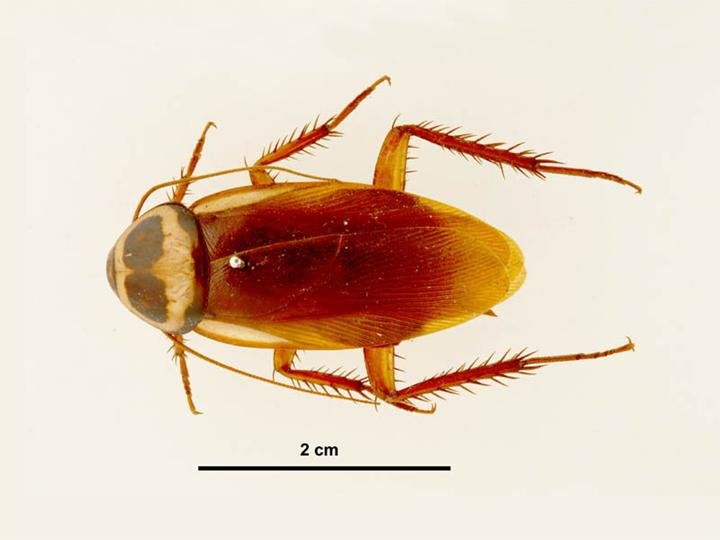
A cockroach problem is faster and cheaper to resolve when the treatment targets the source instead of the sightings. Below, Elite Pest's licensed Sydney technicians set out the signs worth acting on, which treatments actually work for cockroaches, what it costs here, and how to stop it recurring. Fixed quote, usually within thirty minutes.
- What you are actually dealing with
- The early signs people miss
- Which method suits which situation
- What to expect from the visit
- Preparation that makes it work better
- What it costs in Sydney
- What people believe that is not true
- If this is a business or a strata building
- Is this urgent?
- What happens if it comes back
- Keeping it gone
- Frequently asked questions
What you are actually dealing with
The useful question is not which spray to buy but where the population actually lives. With cockroaches, what you see moving is a small fraction of what is there, and treating only that fraction is why problems come back.
That is why an inspection comes before any product. It establishes the species, how far the population has spread, and which conditions on the property are sustaining it.
Key points
- Identify the species before treating - the right product depends on it.
- A fixed quote should come before any work starts.
- Treat the source, not the sightings: the nest or harbourage is the target.
- Ask what the warranty covers and for how long.
The method itself, product by product, is explained on our page about what the treatment involves.
The early signs people miss
You rarely see the population itself first - you see what it leaves behind. The signs that matter:
- A sharp, oily, musty smell that lingers in cupboards under the sink.
- A cockroach in plain view in daylight, which usually means harbourage is full.
- Dark staining around motor housings at the back of appliances.
- Droppings like coarse black pepper in cutlery drawers and pantry corners.
- Brown, oval egg cases glued into hinges, cupboard seams or behind kickboards.
If more than one of those applies, treat it as confirmed rather than possible. Disturbing the area first makes identification harder.
It is worth a look through everything we treat, since what you are seeing may not be what you think it is.
Which method suits which situation
The honest trade-offs:
| Method | Works well for | Limitations |
|---|---|---|
| Insect growth regulator | Stops nymphs reaching breeding age | Slow on its own; used alongside bait |
| Targeted residual spray | Treats runways and entry points | Surface work alone rarely clears a population |
| Gel bait in harbourage | Carried back to the harbourage; very effective on German cockroach | Must not be sprayed over |
| Monitoring traps | Confirms species and whether numbers are falling | Monitoring, not control |
Ask which of these is being proposed and why. A technician who cannot answer that is guessing.
There is a fuller explanation of cockroach control, including what is and is not included.
What to expect from the visit
There is not much mystery to it, and most of it is quicker than people expect:
- First look. A proper look first, including the places you have not checked, and a straight answer about what you are dealing with.
- Confirming the quote. You hear the fixed price and what is included before work begins. If you would rather not proceed, that is fine.
- Treatment. Allow an hour to two hours. You do not need to leave for most general work.
- Handover. You get the timeline, the aftercare, the specific fixes for your property and your paperwork.
One thing worth knowing: with baiting and colony treatments, activity often rises briefly before it drops. That is the treatment working, not failing.
Preparation that makes it work better
Treatments work better when the technician can reach things. Before the appointment:
- Put food, utensils and pet bowls away or in sealed containers.
- Tell the technician what you have already applied yourself.
- Clear a path to the roof void or subfloor access if there is one.
- Vacuum carpets and hard floors, then empty the vacuum outside.
- Cover or move fish tanks and turn off their air pumps.
The main thing afterwards is not to clean the treated surfaces for about a week. That one habit undoes more treatments than anything else.
What it costs in Sydney
Price depends on the property size, the species and how established the population is. These are the starting figures Elite Pest works to in 2026:
| Service | From | Notes |
|---|---|---|
| General pest treatment (internal & external) | from $89 | Covers cockroaches, ants, spiders and silverfish |
| Wasp or bee nest treatment | from $150 | Priced on access and nest location |
| Termite treatment or barrier | quoted on inspection | Depends on construction, soil and extent of activity |
| Bed bug treatment (per room) | from $280 | Usually includes a follow-up visit |
| Possum removal and proofing | from $250 | One-way exclusion, then sealing the entry |
You get a fixed quote before anything starts - not an estimate that moves on the day. General treatments include a 6-month warranty, so covered pests returning in that window are re-treated at no charge.
How that is done in practice is covered under professional cockroach control.
What people believe that is not true
Some of these are harmless. Others actively cost people money, which is why they are worth correcting:
- A bomb or fogger clears a kitchen. Foggers push cockroaches deeper into wall voids and make the problem harder to reach.
- Cockroaches mean a dirty house. German cockroaches arrive in appliances, cartons and shared plumbing. Spotless kitchens get them too.
- Surface spray fixes it. Spray kills foragers. The harbourage and egg cases keep producing, so numbers rebound in weeks.
- They only live in kitchens. Bathrooms, laundries, wall voids and shared risers are all common harbourage.
The rest of what we handle is set out under the services we offer across Sydney.
If this is a business or a strata building
Commercial and strata work carries requirements a domestic job does not:
- A site plan showing monitored station locations.
- Treatment of common property - risers, voids, bin rooms, roof spaces - not just individual lots.
- Coordination across multiple lots so the population cannot simply relocate.
- Written service reports an auditor or committee can follow.
- Safety data sheets and licence documentation held on site.
For a food business in particular, pest records are among the first things an inspector asks for - which makes the documentation as valuable as the treatment.
In a commercial kitchen the same problem becomes a compliance issue, and kitchen and food-area servicing covers the servicing and records involved.
Is this urgent?
Not everything needs a same-day visit, and it is reasonable to want to know which this is. Treat it as urgent when:
- There is damage to structural timber, cabling or insulation.
- You have found live termite activity in or against the building.
- Numbers have visibly increased over a week or two.
- A tenancy, sale or inspection is imminent.
Outside those, a booking in the next few days is generally fine. Waiting a month is where it starts getting more expensive.
If your suburb is not mentioned above, the Sydney suburbs we cover will confirm whether we are out that way.
What happens if it comes back
Our general treatments are backed for six months. That is a re-treatment guarantee rather than a refund, which is what actually helps.
The exclusions are the ordinary ones - a new pest is a new job, and a recurrence traced to an unfixed cause sits outside the cover. Termite barriers and baiting programs have their own longer warranties, conditional on annual monitoring.
It goes on the invoice, so there is no ambiguity about what was covered six months later.
Most of the homes we look after are on a scheduled home service rather than calling when something appears.
Keeping it gone
Having dealt with the population, the job is to make the property less worth moving into:
- Empty bins and lift pet bowls overnight.
- Break down and remove cardboard rather than storing it in a damp cupboard.
- Fix dripping taps and improve ventilation in wet areas.
- Seal gaps around pipework under sinks and behind built-in cabinetry.
- Check second-hand appliances and cartons before bringing them inside.
A technician will tell you which of these are actually relevant to your building rather than leaving you a generic list.
The alternative to treating reactively is a regular residential program, timed around the seasons above.
Common questions
How much does it cost to get rid of cockroaches in Sydney?
Starting prices are $89 for a general treatment and $159 for an inspection with a written report. Anything larger is quoted on inspection rather than over the phone. The quote is fixed, so the invoice matches what you were told.
Why do I have cockroaches in a clean kitchen?
Not at all. The common indoor species need warmth, moisture and a crack to hide in, all of which exist behind a clean fridge or dishwasher. In apartments they also move between units through shared walls and services.
How quickly will I see a difference?
For a general treatment you should see a drop within 24 to 72 hours. Where baiting is used it takes one to three weeks, because the aim is the colony rather than the foragers. A short increase in sightings early on means the bait is being taken.
Can I treat this myself?
It is worth a try for a one-off sighting and generally a waste of money beyond that. Concentrations are lower, residual life is shorter, and surface application misses the voids where the population actually lives.
Who pays in a rental or strata building?
If the source is common property, it is a building-level job rather than yours. We are happy to provide a written report for an agent or owners corporation setting out where the activity is and what it will take to resolve.
Is there a guarantee on the work?
Covered pests returning within six months are re-treated free. Termite barriers and baiting systems have their own longer warranties, generally conditional on annual monitoring. You get the terms in writing on the day.
Do we need to leave the house during treatment?
Yes - and if anyone in the household has asthma, allergies or there is a newborn, tell us when booking and the technician adjusts the method. Re-entry is normally once treated surfaces have dried, and you are told the exact time on the day.
What brings cockroaches indoors?
Almost always a combination of moisture and an easy entry point. Leaks, condensation, blocked gutters and irrigation do more to attract pests than untidiness does, which is why spotless homes get them too.
Sydney pest control, booked today
Elite Pest & Termite Solutions covers 650+ Sydney suburbs with licensed, insured technicians, child and pet-safe methods and a 6-month warranty on general treatments. Fixed quote in about 30 minutes.