
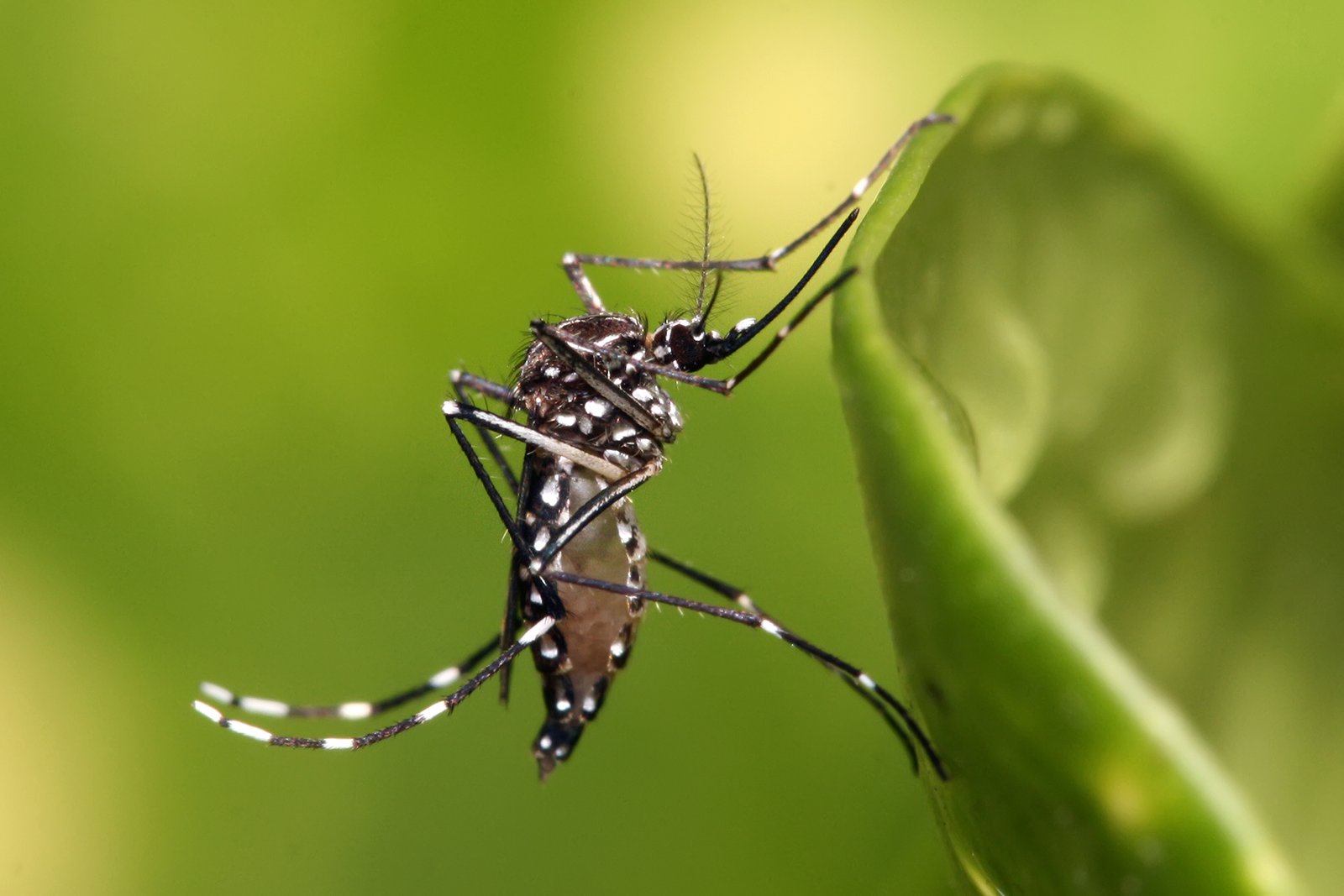
The honest version: mosquitoes come back when the cause is left in place. What follows covers how to tell what you are dealing with, what a licensed technician will actually do about it, realistic Sydney prices, and the prevention that makes the result hold. General treatments start from $89 with a 6-month warranty.
- Start by working out what you have
- The early signs people miss
- What is attracting them
- What is actually at stake
- The options, and what each is good for
- What to expect from the visit
- Preparation that makes it work better
- What this means if you have kids or animals
- Doing it yourself: the honest version
- Houses, units and townhouses
- Stopping it coming back
- Frequently asked questions
Start by working out what you have
It helps to separate two things: what is making you call someone, and what is causing it. The visible mosquitoes are the first; the moisture, the gap or the food source behind them is the second, and only the second decides whether the result holds.
Get that sequence right and a single treatment generally holds. Get it wrong and you are treating the same thing next month.
Key points
- A fixed quote should come before any work starts.
- Ask what the warranty covers and for how long.
- Treat the source, not the sightings: the nest or harbourage is the target.
- Identify the species before treating - the right product depends on it.
There is a fuller explanation of professional mosquito control, including what is and is not included.
The early signs people miss
Before numbers become obvious there is almost always a quieter stage. What to look for:
- Larvae wriggling in standing water in pot saucers, buckets or a blocked gutter.
- Biting concentrated at dusk and dawn around doors and outdoor seating.
- Resting adults on shaded walls, under eaves or in dense shrubbery.
- Water sitting in a plant-pot saucer, tarpaulin fold or disused tyre.
- A sharp rise in numbers a week to ten days after heavy rain.
Where several of these show up together, the population is established rather than passing through, and the treatment needed changes accordingly.
It is worth a look through the full range of treatments we carry out, since what you are seeing may not be what you think it is.
What is attracting them
Nothing moves in without a reason. Mosquitoes turn up where there is food, water or shelter available, and in most Sydney homes it is a short list of the same culprits:
- Low-lying ground, a creek line or wetland reserve nearby.
- Rainwater tanks with damaged or missing insect screens.
- Warm, humid Sydney summers shortening the breeding cycle to about a week.
- Irrigation or air-conditioning condensate pooling beside the house.
- Standing water in pot saucers, buckets, toys, tarpaulins and tyres.
A technician will walk you through whichever of these apply to your place as part of the visit.
What is actually at stake
Beyond the biting, mosquitoes in New South Wales transmit Ross River and Barmah Forest virus, and the state runs arbovirus surveillance each summer for exactly that reason. Both can cause joint pain and fatigue lasting months. Properties near wetlands, creek lines and estuaries carry the highest exposure.
That is the argument for acting on the early signs rather than waiting until there is no doubt.
How that is done in practice is covered under the mosquito control page.
The options, and what each is good for
The honest trade-offs:
| Method | Works well for | Limitations |
|---|---|---|
| Screening and proofing | Keeps adults out of the building | Does not reduce yard numbers |
| Larvicide to standing water | Stops larvae before they emerge | Only where water cannot be drained |
| Seasonal program | Maintains pressure across summer | Ongoing service rather than one visit |
| Source reduction | Removes the breeding sites producing the adults | Needs occupier follow-through |
Ask which of these is being proposed and why. A technician who cannot answer that is guessing.
We set out the full process, timelines and warranty terms under mosquito control.
What to expect from the visit
Knowing the shape of the appointment makes it easier to plan around. A standard visit runs roughly like this:
- Inspection on arrival. A proper look first, including the places you have not checked, and a straight answer about what you are dealing with.
- Agreeing the work. The figure is confirmed against what was actually found, and you decide from there.
- The work itself. Most general treatments take 45 to 90 minutes depending on the property size and how much access is involved.
- Handover. Re-entry time, what to expect over the next fortnight, the prevention that matters for your place, and the warranty in writing.
If activity seems worse for a few days, that is normal for colony work - call us if it has not changed within the timeframe you were given.
Preparation that makes it work better
Treatments work better when the technician can reach things. Before the appointment:
- Clear access to kickboards, under sinks and around appliances.
- Put food, utensils and pet bowls away or in sealed containers.
- Tell the technician what you have already applied yourself.
- Cover or move fish tanks and turn off their air pumps.
- Clear a path to the roof void or subfloor access if there is one.
Avoid washing down treated areas for at least a week, and resist adding your own spray on top.
What this means if you have kids or animals
Fair question, and worth more than a one-word answer. Professional treatment is safe around families and pets because of how it is applied, not because the products are inert:
- Where a household has asthma, allergies or a newborn, the method is adjusted on request.
- You are given a specific re-entry time, usually just until treated surfaces are dry.
- Nothing is applied to food preparation surfaces or anywhere food is stored.
- Quantities are measured to the area rather than applied until the bottle is empty.
If anyone in the house has a specific sensitivity, tell us when you book - it changes which products we bring, not whether we can help.
That is worth checking before you book anyone, including us - who actually turns up covers our licensing, insurance and how long we have been doing this.
Doing it yourself: the honest version
There is no sense paying for a call-out you do not need. But the reasons DIY fails on a real infestation are consistent:
- Concentrations are lower and residual life shorter than professional-grade equivalents.
- Without identification there is no way to know whether it is working or just scattering.
- Retail products kill what they touch and leave the nest or harbourage producing.
- Spraying over bait placements makes them unpalatable and wastes the treatment.
Where it crosses over is roughly when you have treated twice and it has come back, or when the species itself is a safety question.
The rest of what we handle is set out under the services we offer across Sydney.
Houses, units and townhouses
The building matters as much as the pest. The same species is treated differently in a freestanding house, a unit and a terrace, mostly because of what a technician can reach:
- Commercial premises. Documentation, scheduling and after-hours access become part of the job.
- Freestanding houses. Full external access, subfloor and roof void available, so the source can usually be treated directly.
- New builds. Tighter sealing helps, but landscaping against the slab and construction debris are common early problems.
- Terraces and semis. Party walls and shared subfloors let populations travel; treating one side alone rarely holds.
If you are in a unit or a terrace and the problem keeps returning after treatment, the source is very likely not inside your own walls.
If you are in a unit rather than a house, how apartments are treated explains what can be treated inside your own lot.
Stopping it coming back
The treatment buys you a clean slate. These keep it:
- Clear gutters and downpipes so water cannot sit.
- Keep pools chlorinated and circulating, and screen rainwater tanks.
- Empty and refresh pet water bowls and bird baths every few days.
- Tip and scrub pot saucers, buckets, toys and tarpaulins weekly.
- Drain irrigation and condensate away from the house.
A technician will tell you which of these are actually relevant to your building rather than leaving you a generic list.
If this is the second or third time you have dealt with it, an ongoing residential service costs less over a year than repeated call-outs.
Common questions
What will treating mosquitoes cost?
From $89 for general pest work in Sydney, and from $159 for a timber pest inspection. Termite barriers, baiting systems and commercial programs are priced after a site visit. Nothing is charged above the quoted figure without your agreement.
Can you stop mosquitoes in my yard?
Almost always on the property rather than the nearby creek. Blocked gutters, pot saucers, buckets, tarpaulin folds and an unscreened rainwater tank are the usual sources, and a container the size of a saucer is enough. Source reduction changes numbers far more than spraying adults.
I am renting - whose responsibility is this?
For renters, report it to the agent in writing promptly, since that is often what decides responsibility. In a unit block the source is frequently outside your lot, and treating your own apartment repeatedly will not fix a population living in common property.
How quickly can you come out to Sydney?
We cover Sydney regularly, so availability is normally a day or two out. Call 1300 313 373 and we will give you the next slot and a fixed price at the same time.
How can I keep mosquitoes away long term?
Maintenance rather than pest control: fix the water, close the gaps, cut the food supply and reduce clutter where things can shelter. Households that would rather not think about it move onto a regular program instead.
Why have mosquitoes come into my home?
Almost always a combination of moisture and an easy entry point. Leaks, condensation, blocked gutters and irrigation do more to attract pests than untidiness does, which is why spotless homes get them too.
Do we need to leave the house during treatment?
It is safe when applied correctly, which is most of what a licence is for. Baits and dusts go where children and pets do not reach, fish tanks are covered and pet bowls moved. For general treatments you do not need to leave the property.
What happens if they come back?
Covered pests returning within six months are re-treated free. Termite barriers and baiting systems have their own longer warranties, generally conditional on annual monitoring. You get the terms in writing on the day.
Dealing with mosquitoes right now?
Elite Pest & Termite Solutions covers 650+ Sydney suburbs with licensed, insured technicians, child and pet-safe methods and a 6-month warranty on general treatments. Fixed quote in about 30 minutes.