
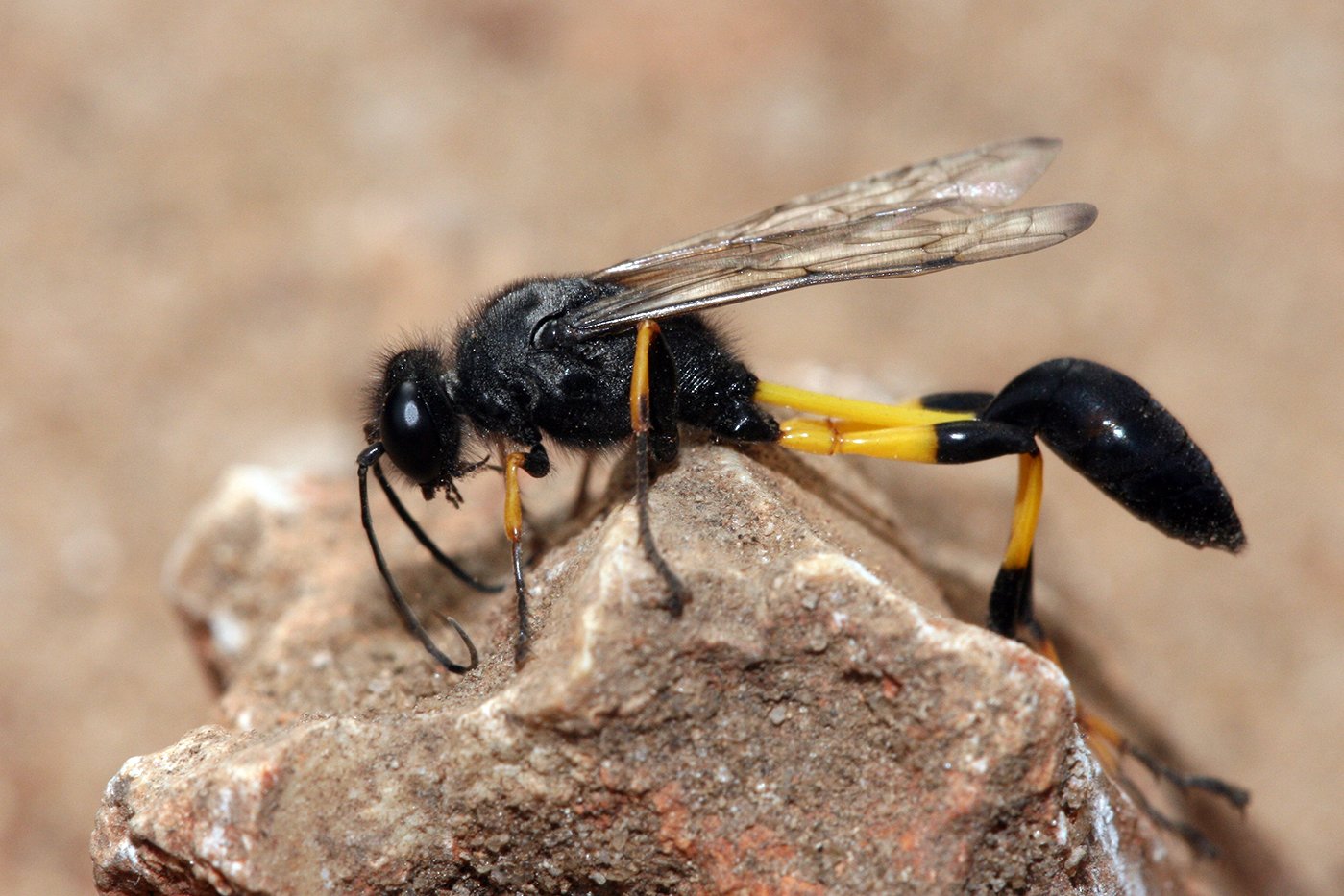
Getting rid of wasps properly means finding where they are living and breeding, treating that, and closing the conditions that invited them. This guide covers the signs, the treatment options, honest Sydney costs and the prevention that keeps it solved - written by the licensed technicians who do the work.
- Before you treat anything
- Signs worth acting on
- Why it is worth dealing with
- Treatment options compared
- The process, step by step
- What to expect from the visit
- What to do before we arrive
- What this means if you have kids or animals
- Myths worth dropping
- Commercial and common-property situations
- Choosing a pest controller in Sydney
- Frequently asked questions
Before you treat anything
There is a reason professional treatment looks different from a trip to the hardware store. A wasp nest has a source - a nest, a harbourage, an entry point - and until that is found and treated, numbers rebuild.
That is why an inspection comes before any product. It establishes the species, how far the population has spread, and which conditions on the property are sustaining it.
Key points
- Treat the source, not the sightings: the nest or harbourage is the target.
- Fix the conditions - moisture, food, entry points - or it returns.
- Early action is consistently cheaper than waiting for certainty.
- Identify the species before treating - the right product depends on it.
We set out the full process, timelines and warranty terms under wasp and bee control.
Signs worth acting on
Catching this early is the difference between a routine treatment and an expensive one. These are the signs our technicians see most often in Sydney:
- A mud nest cell on a wall, window frame or ceiling of a carport.
- A papery grey nest under eaves, in a pergola or inside a letterbox.
- Steady traffic of insects in and out of one small gap in a wall or roof.
- Insects entering through a weep hole or a gap in a soffit vent.
- Bees clustered on a branch or fence while a swarm is deciding where to move.
One of these on its own may mean nothing. Two or more in the same area is worth a professional look, and it is better not to disturb the site before someone has seen it.
If you are not certain which pest you are dealing with, the pest control services page lists what we treat and the signs that point to each.
Why it is worth dealing with
The risk with a wall-cavity colony is twofold: the stings, and what is left behind. Honeycomb abandoned in a cavity ferments, stains ceilings and attracts other pests, so removal matters as much as treatment. Nests near a doorway, a clothesline or a letterbox need prompt attention rather than monitoring.
That is the argument for acting on the early signs rather than waiting until there is no doubt.
There is a fuller explanation of professional wasp and bee control, including what is and is not included.
Treatment options compared
A technician chooses between these based on the species, the building and how established the population is:
| Method | Works well for | Limitations |
|---|---|---|
| Comb removal and clean-up | Avoids fermentation, staining and secondary pests | May need trade access |
| Nest removal after treatment | Prevents reuse and secondary pests | Only once the colony is dead |
| Bee swarm relocation | Live removal where the colony can be rehomed | Not always possible in a cavity |
| Dust to cavity entry | Reaches a nest inside a wall or roof void | Needs the entry point identified |
Ask which of these is being proposed and why. A technician who cannot answer that is guessing.
The method itself, product by product, is explained on our page about what the treatment involves.
The process, step by step
A licensed technician follows a repeatable process rather than blanket-spraying a property. In order:
- Inspect and identify. Establish what it is, how far it has spread, and which conditions on site are feeding it.
- Treat the source. Use the method the species responds to, placed where the population lives rather than where it was seen.
- Allow the method to run. Colony treatments take time by design. The technician will say how long before you should expect a change.
- Close the conditions. Identify and remove what caused it, otherwise the treatment is only a reset.
All of that is done by a licensed and insured technician, with general treatments backed for six months.
If you want to see how the treatment is actually carried out, the wasp and bee control page walks through each stage.
What to expect from the visit
For a typical residential job, the appointment looks like this:
- Arrival and walk-through. A proper look first, including the places you have not checked, and a straight answer about what you are dealing with.
- Price confirmed. No work starts until you have agreed the price and know what it covers.
- Treatment. Allow an hour to two hours. You do not need to leave for most general work.
- What you are told. Re-entry time, what to expect over the next fortnight, the prevention that matters for your place, and the warranty in writing.
Expect a short increase in sightings after a bait treatment. It means the bait is being carried, which is the point.
What to do before we arrive
Nothing elaborate, but these few things genuinely affect how well it works:
- Cover or move fish tanks and turn off their air pumps.
- Arrange for pets to be out of the way for a couple of hours.
- Tell the technician what you have already applied yourself.
- Vacuum carpets and hard floors, then empty the vacuum outside.
- Put food, utensils and pet bowls away or in sealed containers.
The main thing afterwards is not to clean the treated surfaces for about a week. That one habit undoes more treatments than anything else.
What this means if you have kids or animals
Fair question, and worth more than a one-word answer. Professional treatment is safe around families and pets because of how it is applied, not because the products are inert:
- Fish tanks are covered and pet bowls and bedding moved before any treatment.
- You are given a specific re-entry time, usually just until treated surfaces are dry.
- Nothing is applied to food preparation surfaces or anywhere food is stored.
- Baits, gels and dusts go into cracks, voids and secured stations - not across open surfaces.
We would rather adjust the approach than have you worry about it afterwards, so raise it on the phone.
Anyone you let into your home for this work should be licensed and insured, and who actually turns up sets out ours.
Myths worth dropping
The received wisdom on this is unusually wrong:
- Knocking the nest down ends it. Returning foragers rebuild nearby, and disturbing a nest provokes a defensive response.
- Winter kills the nest. Mild Sydney winters let some colonies carry over and start the next season larger.
- One sting means one wasp. European wasps can sting repeatedly and recruit others to defend the nest.
- Bees in a wall will move on. A cavity colony usually stays and leaves comb that ferments and stains ceilings.
The rest of what we handle is set out under the services we offer across Sydney.
Commercial and common-property situations
Once more than one occupier is involved, the job changes shape. The treatment may be similar; everything around it is not:
- Written service reports an auditor or committee can follow.
- Food-safety alignment for kitchens, cafes and childcare premises.
- Coordination across multiple lots so the population cannot simply relocate.
- After-hours or pre-opening access so trading is not disrupted.
- Safety data sheets and licence documentation held on site.
At an audit the question is rarely whether you have pests; it is whether you can show a managed program. That is what the reporting is for.
In a commercial kitchen the same problem becomes a compliance issue, and food-premises pest programs covers the servicing and records involved.
Choosing a pest controller in Sydney
This is a licensed trade, so there are specific things you are entitled to ask:
- Check whether a follow-up visit is included or charged separately.
- Ask what the warranty covers, what voids it, and how long it runs.
- Confirm they hold current public liability insurance.
- Ask which method they intend to use and why that one.
- For termite work, ask whether you receive a written timber pest report.
A good operator will answer all of those without hesitation. Hesitation on any of them is useful information.
You can see our licensing and insurance and the qualifications behind the work.
Frequently asked questions
How much does it cost to get rid of wasps in Sydney?
Starting prices are $89 for a general treatment and $159 for an inspection with a written report. Anything larger is quoted on inspection rather than over the phone. The quote is fixed, so the invoice matches what you were told.
Can I knock the nest down myself?
Please do not. Knocking a nest down leaves returning foragers to rebuild nearby and provokes a defensive response - European wasps can sting repeatedly. A treated nest kills the colony including the foragers, and should then be removed so the site is not reused.
What if the problem is coming from next door?
If the source is common property, it is a building-level job rather than yours. We are happy to provide a written report for an agent or owners corporation setting out where the activity is and what it will take to resolve.
Can you come today?
Usually within a day or two, and same-day where there is a safety issue - a sting allergy in the household, young children with access, or live termite activity. We quote most jobs in about thirty minutes over the phone.
Is DIY worth trying first?
For a single insect, yes. For an established population, retail products usually fail because they kill what they touch and leave the nest producing. Repellent sprays can also split ant colonies, which turns one problem into several.
When should the wasps be gone?
Most households notice a difference in the first few days, with the full effect over one to three weeks depending on the method. If nothing has changed by the timeframe your technician gave you, call us - that is what the warranty is for.
Are your products safe around kids and animals?
It is safe when applied correctly, which is most of what a licence is for. Baits and dusts go where children and pets do not reach, fish tanks are covered and pet bowls moved. For general treatments you do not need to leave the property.
Are your technicians licensed and insured?
All of our technicians are licensed under NSW pest management requirements and insured. Pest control is licensed work in this state, so an operator who cannot produce a licence number should not be in your home.
Dealing with wasps right now?
We treat wasps across 650+ suburbs of Sydney. Fixed quote up front, licensed and insured technicians, child and pet-safe application, and general treatments backed for six months.