
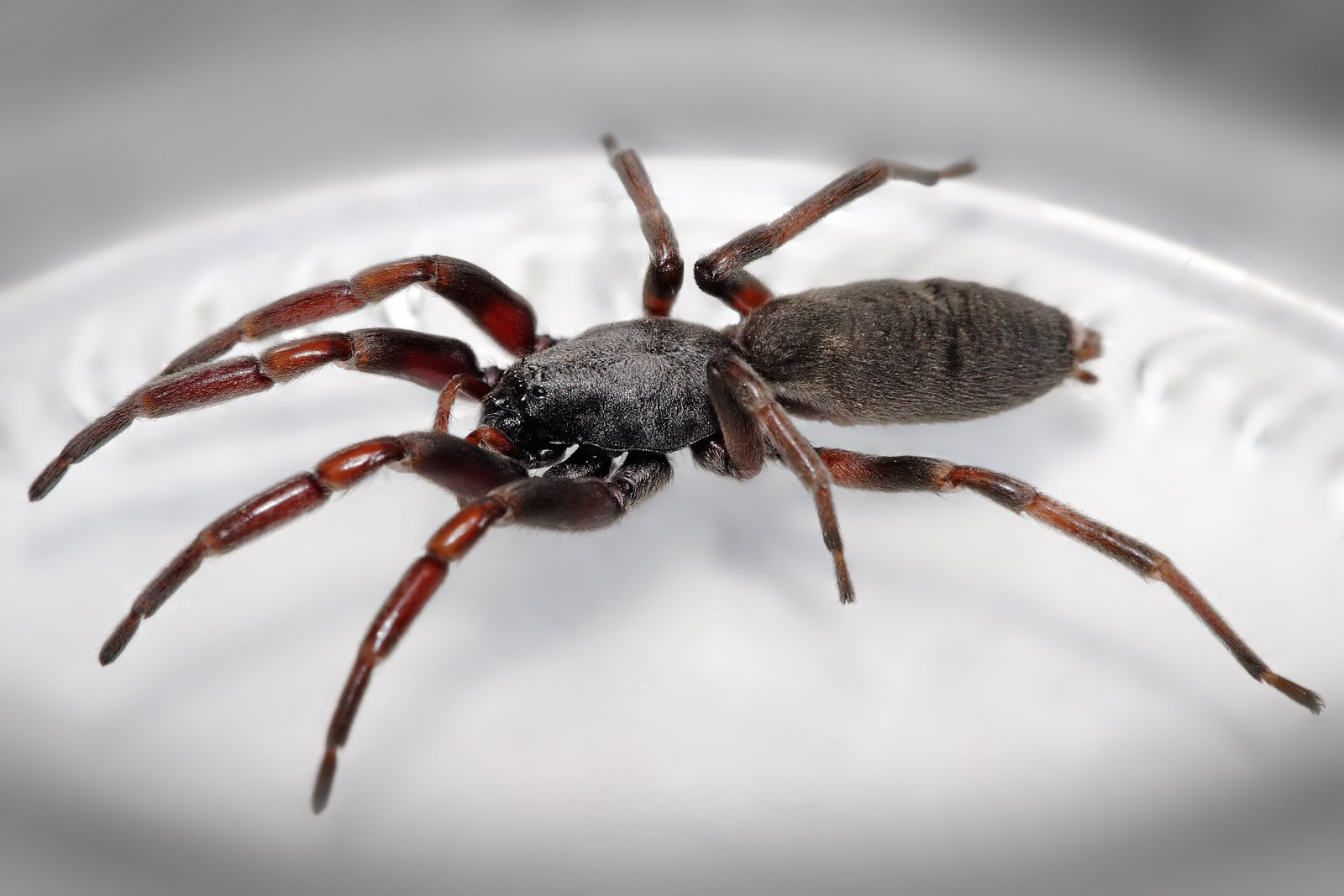
Getting rid of spiders properly means finding where they are living and breeding, treating that, and closing the conditions that invited them. This guide covers the signs, the treatment options, honest Sydney costs and the prevention that keeps it solved - written by the licensed technicians who do the work.
- The part most people get wrong
- How to tell you have a problem
- The conditions behind it
- What is actually at stake
- Which method suits which situation
- The visit itself
- What it costs in Sydney
- Common missteps
- What people believe that is not true
- Questions worth asking first
- The guarantee, in plain terms
- Frequently asked questions
The part most people get wrong
There is a reason professional treatment looks different from a trip to the hardware store. A spider problem has a source - a nest, a harbourage, an entry point - and until that is found and treated, numbers rebuild.
A licensed technician works through that in order, which is why the first part of a visit is looking rather than spraying.
Key points
- Fix the conditions - moisture, food, entry points - or it returns.
- Identify the species before treating - the right product depends on it.
- Ask what the warranty covers and for how long.
- Treat the source, not the sightings: the nest or harbourage is the target.
How that is done in practice is covered under how spider control works.
How to tell you have a problem
Before numbers become obvious there is almost always a quieter stage. What to look for:
- Funnel-shaped webs in retaining walls, rockeries and garden bed edges.
- A sudden rise in sightings after warm, humid weather or heavy rain.
- Spiders found in a pool skimmer box or laundry trough in the morning.
- Webbing across a doorway or clothesline rebuilt overnight after clearing.
- Shed exoskeletons in a shed, carport or roof void.
One of these on its own may mean nothing. Two or more in the same area is worth a professional look, and it is better not to disturb the site before someone has seen it.
If you are not certain which pest you are dealing with, everything we treat lists what we treat and the signs that point to each.
The conditions behind it
The question worth answering is why here. These are the conditions that bring spiders in, and the ones a technician will point out on the day:
- Leaf litter in gutters, garden beds and window reveals.
- Rockeries, retaining walls and dense groundcover offering burrow sites.
- Warm, humid weather driving a seasonal surge in activity.
- Irrigation keeping soil damp enough for ground-dwelling species.
- Clutter in a garage, shed or subfloor giving undisturbed web space.
Addressing even two or three of these significantly reduces the chance of a repeat.
What is actually at stake
Sydney is the one city where spider control is a genuine safety matter rather than a comfort one. Sydney funnel-web and mouse spiders both occur across the basin and both can deliver a medically significant bite, and funnel-webs are most active through the warm, humid months when they wander. Redbacks are widespread in sheds, pot stacks and outdoor furniture.
Put plainly: the problem does not stay the same size while you decide.
We set out the full process, timelines and warranty terms under professional spider control.
Which method suits which situation
There is rarely one correct method. What follows is what each approach does well and where it falls short:
| Method | Works well for | Limitations |
|---|---|---|
| Targeted burrow treatment | Addresses funnel-web and mouse spider burrows | Needs the burrow to be located |
| Perimeter and garden treatment | Reduces the prey base and harbourage | Not for sensitive plantings |
| External residual to harbourage | Treats eaves, reveals, subfloor and garage | Reapplication after heavy weather |
| Web removal with treatment | Immediate visual result; slows rebuilding | Web removal alone achieves little |
When comparing quotes, compare methods rather than prices - that is normally where the difference sits.
There is a fuller explanation of the spider control page, including what is and is not included.
The visit itself
So you can plan your day around it:
- First look. A proper look first, including the places you have not checked, and a straight answer about what you are dealing with.
- Price confirmed. You hear the fixed price and what is included before work begins. If you would rather not proceed, that is fine.
- Application. Most general treatments take 45 to 90 minutes depending on the property size and how much access is involved.
- Handover. You get the timeline, the aftercare, the specific fixes for your property and your paperwork.
Expect a short increase in sightings after a bait treatment. It means the bait is being carried, which is the point.
What it costs in Sydney
Our rates are published rather than quoted on the spot. Starting points:
| Service | From | Notes |
|---|---|---|
| General pest treatment (internal & external) | from $89 | Covers cockroaches, ants, spiders and silverfish |
| Rodent treatment and proofing | from $150 | Baiting or trapping, plus entry-point work |
| Bed bug treatment (per room) | from $280 | Usually includes a follow-up visit |
| Possum removal and proofing | from $250 | One-way exclusion, then sealing the entry |
| Flea treatment (internal) | from $160 | Preparation and vacuuming required beforehand |
Nothing is charged beyond the quoted figure. Where a job turns out to need more than expected, you are told before it is done, not after.
If you want to see how the treatment is actually carried out, what the treatment involves walks through each stage.
Common missteps
Worth avoiding, because each of these costs time or money later:
- Leaving bright white outdoor lighting on, which keeps feeding the food chain.
- Attempting to handle or relocate a funnel-web or mouse spider.
- Spraying a burrow entrance and assuming the spider is dead.
- Clearing webs without treating the harbourage, so they rebuild within days.
If you have already done one of these, say so when you book. It changes the approach rather than causing offence.
What people believe that is not true
A few of these come up on nearly every job:
- Clearing webs is enough. Webs rebuild within days unless the harbourage itself is treated.
- Funnel-webs only live in bushland. They occur across the Sydney basin, including dense suburbs, wherever soil stays damp.
- All big spiders are dangerous. Huntsmans are harmless and useful. The species that matter in Sydney are funnel-webs, mouse spiders and redbacks.
- A spider in the pool is drowned. Funnel-webs can survive submerged for hours. Treat anything you cannot identify as live.
The rest of what we handle is set out under the services we offer across Sydney.
Questions worth asking first
This is a licensed trade, so there are specific things you are entitled to ask:
- Get the quote in writing, fixed, before any work starts.
- Check whether a follow-up visit is included or charged separately.
- For termite work, ask whether you receive a written timber pest report.
- Ask for the technician's NSW pest management licence number, not just the company name.
- Ask which method they intend to use and why that one.
If someone will not put the quote or the warranty in writing, that is your answer.
That is worth checking before you book anyone, including us - our licensing and insurance covers our licensing, insurance and how long we have been doing this.
The guarantee, in plain terms
The warranty on general pest work runs six months. Covered pests returning in that time are re-treated free - no argument, no second call-out fee.
There are limits worth knowing rather than discovering later. The warranty covers the pests treated, not a new and different problem, and it assumes the prevention advice was followed - leaving an open food source or an unrepaired leak is outside it. Termite barriers and baiting systems carry their own separate terms, usually tied to annual monitoring.
It goes on the invoice, so there is no ambiguity about what was covered six months later.
The alternative to treating reactively is an ongoing residential service, timed around the seasons above.
Common questions
What will treating spiders cost?
General pest treatments start from $89 and timber pest inspections from $159. Termite treatments and barriers are quoted after an inspection because the price depends on the construction and the extent of the activity. You get a fixed figure before any work begins.
Do I need to worry about every spider I see?
Most are harmless. The exceptions are funnel-webs and mouse spiders, which are ground-dwelling and most active on warm humid nights, and redbacks in sheds, pot stacks and outdoor furniture. If you cannot identify it, do not handle it.
Can you just treat it without looking?
Yes, at least briefly. We would rather spend fifteen minutes finding the source than apply the wrong product well. For timber pests the inspection is the job, and you receive a written report.
How quickly will I see a difference?
For a general treatment you should see a drop within 24 to 72 hours. Where baiting is used it takes one to three weeks, because the aim is the colony rather than the foragers. A short increase in sightings early on means the bait is being taken.
What happens if they come back?
Yes - six months on general pest work. A recurrence of the treated pest inside that window is a free return visit. A different species arriving later is a new job, and a recurrence traced to an unfixed cause such as a leak sits outside the cover.
What if the problem is coming from next door?
For renters, report it to the agent in writing promptly, since that is often what decides responsibility. In a unit block the source is frequently outside your lot, and treating your own apartment repeatedly will not fix a population living in common property.
Is everyone who attends licensed?
All of our technicians are licensed under NSW pest management requirements and insured. Pest control is licensed work in this state, so an operator who cannot produce a licence number should not be in your home.
How quickly can you come out to Sydney?
Most bookings in Sydney are filled within 48 hours. Urgent situations are prioritised, and we will tell you honestly if yours is not urgent rather than selling you a priority visit.
Need someone to look at it?
Licensed, insured and working across 650+ Sydney suburbs. You get a fixed price before anything starts, a 6-month warranty on general pest work, and a technician who explains what they found.