
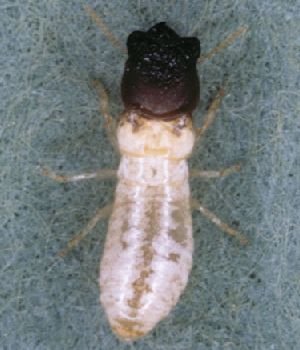
Termites damage more Australian homes each year than fire, storm and flood combined, and home insurance almost never covers it. The reliable approach is a timber pest inspection every twelve months, from $159, followed by a barrier or baiting program if activity is found. Never spray or break open a live termite trail - it scatters the colony.
- The part most people get wrong
- Signs worth acting on
- What we see in Hurstville
- The cost of leaving it
- How professional treatment works
- Preparation that makes it work better
- When a supermarket spray is enough
- Setting a few things straight
- Houses, units and townhouses
- Keeping it gone
- If you are not in Hurstville itself
- Frequently asked questions
The part most people get wrong
There is a reason professional treatment looks different from a trip to the hardware store. A termite problem has a source - a nest, a harbourage, an entry point - and until that is found and treated, numbers rebuild.
A licensed technician works through that in order, which is why the first part of a visit is looking rather than spraying.
Key points
- Treat the source, not the sightings: the nest or harbourage is the target.
- Identify the species before treating - the right product depends on it.
- A fixed quote should come before any work starts.
- Ask what the warranty covers and for how long.
If you want the specifics for your own street rather than general advice, how we treat termites in Hurstville covers the local conditions and what a treatment there usually involves.
Signs worth acting on
Before numbers become obvious there is almost always a quieter stage. What to look for:
- Timber that sounds hollow or papery when you tap along it with a knuckle.
- Doors and windows that start sticking without any change in the weather.
- Small piles of discarded wings on windowsills after a warm, humid evening.
- Pencil-width mud tubes running up foundations, piers or brick walls.
- Mud packing visible in the weep holes along an external brick course.
Where several of these show up together, the population is established rather than passing through, and the treatment needed changes accordingly.
This is the sort of thing the inspection itself is designed to catch before it becomes a repair bill.
What we see in Hurstville
Working in Hurstville (2220) - about 15km south-west of the CBD - the pattern is fairly consistent. Termite activity here is driven less by the suburb itself than by the age of the building stock and how water moves around it.
Practically, that affects where a technician spends their time on site rather than which products come out of the van.
If you are weighing up who to call locally, pest control in Hurstville covers what we do in the area and how quickly we can get there.
The cost of leaving it
The financial exposure with termites is unusual because it sits outside your insurance. Repair bills on Sydney homes routinely run into tens of thousands, and the work is structural rather than cosmetic. Activity found at inspection is a manageable job; activity found when a floor flexes is a building repair with a pest treatment attached.
Which is why the advice is always to treat it while it is small, however tempting it is to wait and see.
A technician carrying out a timber pest inspection is looking for exactly these conditions, and documents them whether or not there is live activity.
How professional treatment works
The work is more methodical than most people expect, and very little of it involves a spray wand. The sequence:
- Inspect and identify. Establish what it is, how far it has spread, and which conditions on site are feeding it.
- Treat the source. Apply the right method for that species - gel bait, dust, residual, baiting system or trapping - where it does the most work and the least harm.
- Allow the method to run. Baits and colony treatments work over days to weeks; re-spraying during that window undoes them.
- Close the conditions. The gaps to seal, the moisture to fix and the habits to change - this is what makes the result last.
The work is logged, and if covered pests return inside the warranty period we come back at no charge.
We set out the full process, timelines and warranty terms under the termite control page.
Preparation that makes it work better
Nothing elaborate, but these few things genuinely affect how well it works:
- Clear access to kickboards, under sinks and around appliances.
- Tell the technician what you have already applied yourself.
- Clear a path to the roof void or subfloor access if there is one.
- Put food, utensils and pet bowls away or in sealed containers.
- Make a note of where you have seen activity and when.
Afterwards, hold off on mopping treated skirtings and perimeters for a week or so - washing the treatment off is the most common reason a job underperforms.
When a supermarket spray is enough
This is worth being straight about, because DIY is not always the wrong answer. It is the wrong answer once a population is established, for reasons that are fairly mechanical:
- Spraying over bait placements makes them unpalatable and wastes the treatment.
- Without identification there is no way to know whether it is working or just scattering.
- Surface application misses the voids and cracks where the population actually lives.
- Concentrations are lower and residual life shorter than professional-grade equivalents.
The rule of thumb: a single sighting, try it yourself. Recurring activity, structural risk, anything venomous, or a food business - get a licensed technician in.
If you are not certain which pest you are dealing with, the services we offer across Sydney lists what we treat and the signs that point to each.
Setting a few things straight
Worth clearing up, because acting on these makes the problem harder:
- A brick house cannot get termites. Almost every Sydney home has structural timber in the roof, frame or floor. Brick veneer is a skin over a timber frame.
- A spray from the hardware store will do. Surface products kill the few termites they touch and leave a colony of hundreds of thousands intact.
- You would see them. Termites work inside timber and inside mud tubes. Most owners see damage long before they see an insect.
- Insurance will cover it. Standard home insurance excludes termite damage. That is the main reason inspections matter.
The rest of what we handle is set out under the full range of treatments we carry out.
Houses, units and townhouses
The building matters as much as the pest. The same species is treated differently in a freestanding house, a unit and a terrace, mostly because of what a technician can reach:
- Townhouses. Common walls plus private courtyards, so internal and external work both matter.
- Freestanding houses. Full external access, subfloor and roof void available, so the source can usually be treated directly.
- Older Sydney housing. Deeper gaps, timber framing and subfloor moisture raise both termite and rodent exposure.
- Apartments and units. Shared walls, services and risers mean the source is often outside your lot - partial treatment just moves it.
The recurring-problem-in-a-unit pattern almost always means the population is living in common property.
Units bring their own constraints - shared walls, shared plumbing, limited external access - and how apartments are treated is set up around them.
Keeping it gone
This is the part that decides whether you see us again. None of it is complicated:
- Fix leaking taps, overflows and air-conditioning condensate promptly.
- Keep subfloor vents clear so air moves under the building.
- Store firewood and timber off the ground and away from the house.
- Direct downpipes and surface water well away from the footings.
- Keep a baiting or barrier system monitored rather than installed and forgotten.
You will not do all of those, and you do not need to. Pick the two or three that apply most to your place.
Most of the homes we look after are on routine residential pest control rather than calling when something appears.
If you are not in Hurstville itself
If your place sits just outside Hurstville, these are the adjoining suburbs we service: South Hurstville, Penshurst, Allawah, Hurstville Grove.
We cover the whole basin rather than a few postcodes - the suburbs on our run has the full list.
Questions we get asked
What do you charge for termites in Hurstville?
From $89 for general pest work in Hurstville, and from $159 for a timber pest inspection. Termite barriers, baiting systems and commercial programs are priced after a site visit. Nothing is charged above the quoted figure without your agreement.
How often should I have a termite inspection?
Every twelve months, and that is the minimum rather than a precaution. A colony can work inside timber for months without any visible sign, and insurance will not cover the repair, so the inspection is the only point at which this is inexpensive.
Are you based near Hurstville?
We work Hurstville and the 2220 area regularly rather than occasionally, which means the technician already knows the local housing stock and where to look first. That usually shortens the inspection.
What brings termites indoors?
Food, water and shelter, in roughly that order. In most Sydney homes it comes down to accessible food or bins, a moisture source such as a leak or blocked gutter, and a gap big enough to get through. Remove any one of the three and the property gets much less attractive.
Is everyone who attends licensed?
All of our technicians are licensed under NSW pest management requirements and insured. Pest control is licensed work in this state, so an operator who cannot produce a licence number should not be in your home.
Do you offer a warranty?
Covered pests returning within six months are re-treated free. Termite barriers and baiting systems have their own longer warranties, generally conditional on annual monitoring. You get the terms in writing on the day.
How quickly will I see a difference?
For a general treatment you should see a drop within 24 to 72 hours. Where baiting is used it takes one to three weeks, because the aim is the colony rather than the foragers. A short increase in sightings early on means the bait is being taken.
How do I stop them coming back?
Maintenance rather than pest control: fix the water, close the gaps, cut the food supply and reduce clutter where things can shelter. Households that would rather not think about it move onto a regular program instead.
Hurstville pest control, booked today
Elite Pest & Termite Solutions covers 650+ Sydney suburbs with licensed, insured technicians, child and pet-safe methods and a 6-month warranty on general treatments. Fixed quote in about 30 minutes.