
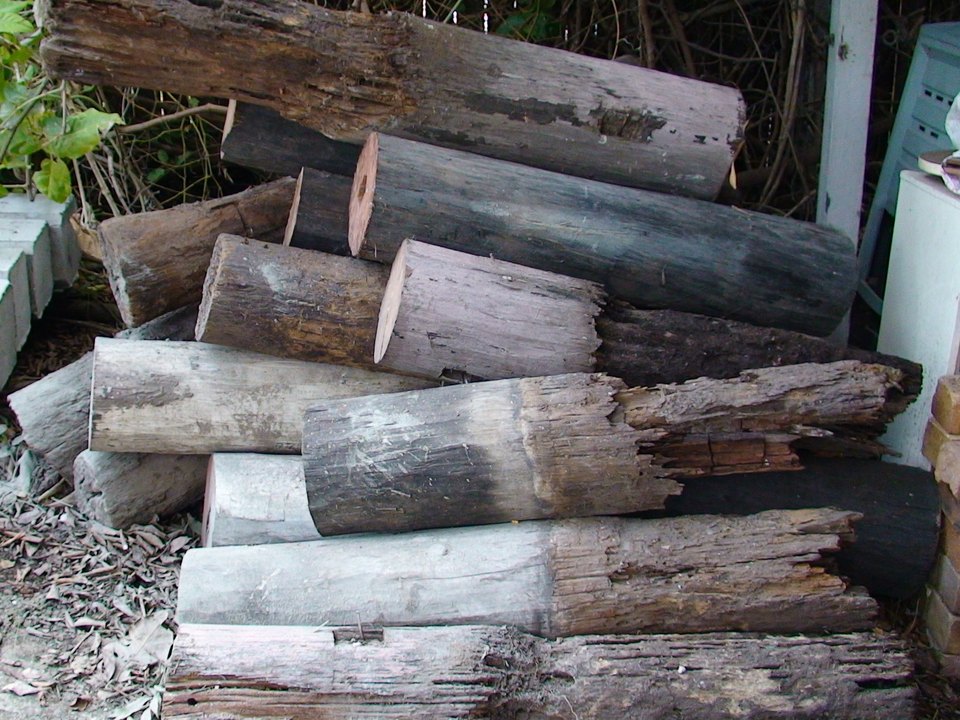
Termite control is an inspection problem before it is a treatment problem. A colony works inside timber for months before anything shows, which is why an annual inspection from $159 is the standard advice. If activity is found, a barrier or baiting system is quoted on the day. Do not disturb live workings.
- What you are actually dealing with
- Signs worth acting on
- Termites in Manly: the local picture
- What is actually at stake
- Timing: when this peaks
- The visit itself
- Getting ready for the treatment
- Houses, units and townhouses
- Commercial and common-property situations
- How quickly do you need to act?
- The surrounding area
- Frequently asked questions
What you are actually dealing with
There is a reason professional treatment looks different from a trip to the hardware store. A termite problem has a source - a nest, a harbourage, an entry point - and until that is found and treated, numbers rebuild.
A licensed technician works through that in order, which is why the first part of a visit is looking rather than spraying.
Key points
- Treat the source, not the sightings: the nest or harbourage is the target.
- Identify the species before treating - the right product depends on it.
- Ask what the warranty covers and for how long.
- Fix the conditions - moisture, food, entry points - or it returns.
The treatment plan for a Manly property is set out in detail on our page covering termite control work in Manly, including the construction types we see locally.
Signs worth acting on
You rarely see the population itself first - you see what it leaves behind. The signs that matter:
- A faint musty, earthy smell in a closed room or subfloor.
- Sagging or blistered cornices where a nest has worked up inside a wall.
- Paint or plaster that bubbles, ripples or cracks with no plumbing leak nearby.
- Floorboards that feel spongy underfoot, particularly near wet areas.
- Pencil-width mud tubes running up foundations, piers or brick walls.
Where several of these show up together, the population is established rather than passing through, and the treatment needed changes accordingly.
That is the case for booking a full timber pest report rather than waiting for something to become obvious: it is the only stage at which the cost is small.
Termites in Manly: the local picture
Working in Manly (2095) - about 11km north-east of the CBD - the pattern is fairly consistent. Termite activity here is driven less by the suburb itself than by the age of the building stock and how water moves around it.
The useful consequence is that a technician who works the area regularly knows where to look first, which shortens the inspection.
Our coverage here is set out on the page for our work across Manly, along with the other pests we deal with in the same suburb.
What is actually at stake
The financial exposure with termites is unusual because it sits outside your insurance. Repair bills on Sydney homes routinely run into tens of thousands, and the work is structural rather than cosmetic. Activity found at inspection is a manageable job; activity found when a floor flexes is a building repair with a pest treatment attached.
None of that is scaremongering - it is simply the reason the price goes up the longer it is left.
A technician carrying out the inspection itself is looking for exactly these conditions, and documents them whether or not there is live activity.
Timing: when this peaks
Termites stay active in Sydney all year, but the warm, humid stretch from October to March is when colonies expand fastest and when alates swarm after rain. Autumn and winter are the better months for inspection work: activity is slower, so evidence sits undisturbed and a technician can read the history of a subfloor more clearly.
None of it changes the method much, but it does change how urgent the booking is.
The visit itself
For a typical residential job, the appointment looks like this:
- First look. The technician inspects inside and out, confirms the species and shows you what they have found before anything is applied.
- Price confirmed. The figure is confirmed against what was actually found, and you decide from there.
- The work itself. Allow an hour to two hours. You do not need to leave for most general work.
- What you are told. A clear explanation of what happens next, so an increase in activity a few days later does not alarm you.
Expect a short increase in sightings after a bait treatment. It means the bait is being carried, which is the point.
Getting ready for the treatment
Treatments work better when the technician can reach things. Before the appointment:
- Tell the technician what you have already applied yourself.
- Clear access to kickboards, under sinks and around appliances.
- Arrange for pets to be out of the way for a couple of hours.
- Put food, utensils and pet bowls away or in sealed containers.
- Vacuum carpets and hard floors, then empty the vacuum outside.
The main thing afterwards is not to clean the treated surfaces for about a week. That one habit undoes more treatments than anything else.
Houses, units and townhouses
The building matters as much as the pest. The same species is treated differently in a freestanding house, a unit and a terrace, mostly because of what a technician can reach:
- Terraces and semis. Party walls and shared subfloors let populations travel; treating one side alone rarely holds.
- Older Sydney housing. Deeper gaps, timber framing and subfloor moisture raise both termite and rodent exposure.
- New builds. Tighter sealing helps, but landscaping against the slab and construction debris are common early problems.
- Freestanding houses. Full external access, subfloor and roof void available, so the source can usually be treated directly.
The recurring-problem-in-a-unit pattern almost always means the population is living in common property.
If you are in a unit rather than a house, how apartments are treated explains what can be treated inside your own lot.
Commercial and common-property situations
For a business or an owners corporation the deliverable includes paperwork, not just a result:
- Treatment of common property - risers, voids, bin rooms, roof spaces - not just individual lots.
- Coordination across multiple lots so the population cannot simply relocate.
- Scheduled servicing rather than reactive call-outs, with visit dates set in advance.
- Food-safety alignment for kitchens, cafes and childcare premises.
- A site plan showing monitored station locations.
At an audit the question is rarely whether you have pests; it is whether you can show a managed program. That is what the reporting is for.
Food premises carry the tightest requirements, which is what kitchen and food-area servicing is designed around.
How quickly do you need to act?
A fair question, and the answer is genuinely "it depends". Move quickly if:
- There is damage to structural timber, cabling or insulation.
- You have found live termite activity in or against the building.
- The species is one capable of a medically significant bite.
- A tenancy, sale or inspection is imminent.
Where it is not urgent, we will say so rather than selling you a priority call-out.
We work across this area regularly - the Manly service page lists the treatments we carry out locally and the response times we hold to.
The surrounding area
The same van services the neighbouring suburbs, which means comparable availability in Balgowlah, Fairlight, Queenscliff, Balgowlah Heights.
We cover the whole basin rather than a few postcodes - our full service area has the full list.
Questions we get asked
What will treating termites cost?
From $89 for general pest work in Manly, and from $159 for a timber pest inspection. Termite barriers, baiting systems and commercial programs are priced after a site visit. Nothing is charged above the quoted figure without your agreement.
How often should I have a termite inspection?
Every twelve months, and that is the minimum rather than a precaution. A colony can work inside timber for months without any visible sign, and insurance will not cover the repair, so the inspection is the only point at which this is inexpensive.
Are you based near Manly?
We work Manly and the 2095 area regularly rather than occasionally, which means the technician already knows the local housing stock and where to look first. That usually shortens the inspection.
Is there a guarantee on the work?
Yes - six months on general pest work. A recurrence of the treated pest inside that window is a free return visit. A different species arriving later is a new job, and a recurrence traced to an unfixed cause such as a leak sits outside the cover.
How do I stop them coming back?
Remove the food, remove the water, seal the gaps and keep vegetation off the walls. Of those, moisture matters most - fixing a leak or clearing a gutter prevents more problems than any spray. A scheduled annual service catches anything that slips through.
Is the treatment safe for children and pets?
Yes. We use APVMA-registered, low-toxicity products applied at label rates, and most of what goes down is placed in cracks, voids and secured stations rather than on open surfaces. You are given a specific re-entry time, usually just until treated surfaces are dry.
Is DIY worth trying first?
It is worth a try for a one-off sighting and generally a waste of money beyond that. Concentrations are lower, residual life is shorter, and surface application misses the voids where the population actually lives.
Are your technicians licensed and insured?
Licensed and insured, and happy to show either. If you are comparing quotes, ask each company for the licence number of the person actually attending rather than just the business name.
Need someone to look at it?
One call gets you a fixed price, usually inside 30 minutes. Licensed technicians, 650+ Sydney suburbs covered, child and pet-safe treatments, and a 6-month warranty on general work.