
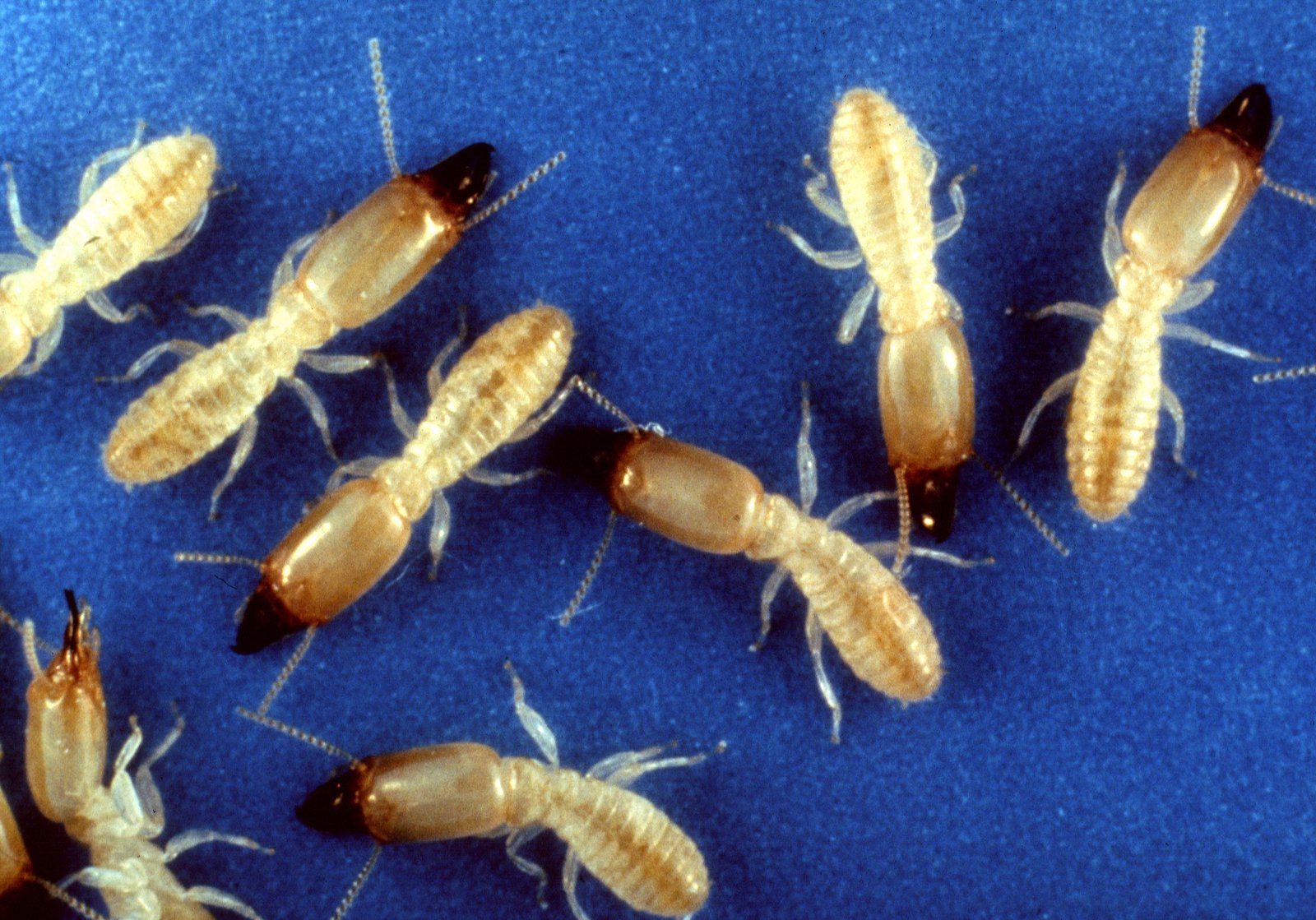
Termite control is an inspection problem before it is a treatment problem. A colony works inside timber for months before anything shows, which is why an annual inspection from $159 is the standard advice. If activity is found, a barrier or baiting system is quoted on the day. Do not disturb live workings.
- Before you treat anything
- The early signs people miss
- What is attracting them
- Local conditions in Penrith
- How the treatments differ
- How to prepare for the visit
- What you should expect to pay
- Common missteps
- How the building affects the treatment
- What happens if it comes back
- If you are not in Penrith itself
- Frequently asked questions
Before you treat anything
Almost every unsuccessful treatment starts the same way: the wrong product aimed at the wrong place. Termites are not a single problem with a single answer - the species, the entry point and the conditions around the building all change what works.
A licensed technician works through that in order, which is why the first part of a visit is looking rather than spraying.
Key points
- A fixed quote should come before any work starts.
- Identify the species before treating - the right product depends on it.
- Early action is consistently cheaper than waiting for certainty.
- Fix the conditions - moisture, food, entry points - or it returns.
The treatment plan for a Penrith property is set out in detail on our page covering termite control in Penrith, including the construction types we see locally.
The early signs people miss
Catching this early is the difference between a routine treatment and an expensive one. These are the signs our technicians see most often in Penrith:
- Small piles of discarded wings on windowsills after a warm, humid evening.
- A faint musty, earthy smell in a closed room or subfloor.
- Timber that sounds hollow or papery when you tap along it with a knuckle.
- Paint or plaster that bubbles, ripples or cracks with no plumbing leak nearby.
- Sagging or blistered cornices where a nest has worked up inside a wall.
The more of these you can tick off, the longer it has been going on - which affects both the method and the price.
This is the sort of thing an annual termite inspection is designed to catch before it becomes a repair bill.
What is attracting them
The question worth answering is why here. These are the conditions that bring termites in, and the ones a technician will point out on the day:
- A hot-water overflow or air-conditioning condensate discharging beside the footing.
- Stored timber, firewood or offcuts stacked against an external wall.
- Air vents to the subfloor blocked by a deck, paving or landscaping.
- Tree stumps and buried form-work left on the block after construction.
- Dense planting and irrigation holding damp soil hard against the brickwork.
Addressing even two or three of these significantly reduces the chance of a repeat.
Local conditions in Penrith
Working in Penrith (2750) - about 50km west of the CBD - the pattern is fairly consistent. Termite activity here is driven less by the suburb itself than by the age of the building stock and how water moves around it.
What changes locally is access rather than method - whether there is a subfloor, how the roof void is reached, and how much external perimeter there is to treat.
The local page for Penrith pest control has the rest of what we treat nearby.
How the treatments differ
The honest trade-offs:
| Method | Works well for | Limitations |
|---|---|---|
| Chemical soil barrier | Full perimeter protection, long service life | Needs trenching or drilling; priced after inspection |
| Annual timber pest inspection | Finds activity while it is still cheap | Detection, not treatment |
| Above-ground baiting | Targets active workings directly | Only where live activity is accessible |
| In-ground baiting system | Eliminates the colony, low disruption | Works over weeks to months; needs monitoring |
In practice they are used together. A single method on its own is usually a sign the job has been underscoped.
The method itself, product by product, is explained on our page about the termite control page.
How to prepare for the visit
Treatments work better when the technician can reach things. Before the appointment:
- Clear access to kickboards, under sinks and around appliances.
- Clear a path to the roof void or subfloor access if there is one.
- Put food, utensils and pet bowls away or in sealed containers.
- Make a note of where you have seen activity and when.
- Cover or move fish tanks and turn off their air pumps.
The main thing afterwards is not to clean the treated surfaces for about a week. That one habit undoes more treatments than anything else.
What you should expect to pay
Nobody can give a final figure sight-unseen, but the starting ranges are not a secret. Current rates:
| Service | From | Notes |
|---|---|---|
| Timber pest inspection with report | from $159 | Annual check; the report is the deliverable |
| Termite treatment or barrier | quoted on inspection | Depends on construction, soil and extent of activity |
| Rodent treatment and proofing | from $150 | Baiting or trapping, plus entry-point work |
| Wasp or bee nest treatment | from $150 | Priced on access and nest location |
| General pest treatment (internal & external) | from $89 | Covers cockroaches, ants, spiders and silverfish |
You get a fixed quote before anything starts - not an estimate that moves on the day. General treatments include a 6-month warranty, so covered pests returning in that window are re-treated at no charge.
What that looks like on the ground in this part of Sydney is set out under how we treat termites in Penrith.
Common missteps
These come up often enough to be worth listing. Each one either prolongs the problem or makes it harder to treat:
- Letting an annual inspection lapse because nothing looked wrong.
- Spraying or disturbing a live termite trail, which scatters the colony and hides the problem.
- Assuming a previous treatment is still protecting the house years later.
- Relying on a hardware store product against a colony of hundreds of thousands.
Mentioning what you have already applied saves time and avoids a product conflict.
How the building affects the treatment
The building matters as much as the pest. The same species is treated differently in a freestanding house, a unit and a terrace, mostly because of what a technician can reach:
- Townhouses. Common walls plus private courtyards, so internal and external work both matter.
- Terraces and semis. Party walls and shared subfloors let populations travel; treating one side alone rarely holds.
- Apartments and units. Shared walls, services and risers mean the source is often outside your lot - partial treatment just moves it.
- New builds. Tighter sealing helps, but landscaping against the slab and construction debris are common early problems.
If you are in a unit or a terrace and the problem keeps returning after treatment, the source is very likely not inside your own walls.
If you are in a unit rather than a house, unit and apartment treatments explains what can be treated inside your own lot.
What happens if it comes back
The warranty on general pest work runs six months. Covered pests returning in that time are re-treated free - no argument, no second call-out fee.
There are limits worth knowing rather than discovering later. The warranty covers the pests treated, not a new and different problem, and it assumes the prevention advice was followed - leaving an open food source or an unrepaired leak is outside it. Termite barriers and baiting systems carry their own separate terms, usually tied to annual monitoring.
It goes on the invoice, so there is no ambiguity about what was covered six months later.
If this is the second or third time you have dealt with it, a regular residential program costs less over a year than repeated call-outs.
If you are not in Penrith itself
If your place sits just outside Penrith, these are the adjoining suburbs we service: Cambridge Gardens, South Penrith, Jamisontown, Regentville.
If your suburb is not mentioned above, the Sydney suburbs we cover will confirm whether we are out that way.
Questions we get asked
How much does it cost to get rid of termites in Penrith?
From $89 for general pest work in Penrith, and from $159 for a timber pest inspection. Termite barriers, baiting systems and commercial programs are priced after a site visit. Nothing is charged above the quoted figure without your agreement.
How often do termite inspections need doing?
Annually is the standard advice for Sydney, and more often for high-risk properties - those with a history of activity, a subfloor that holds moisture, or heavy planting against the walls. Termite damage is excluded from almost every home insurance policy, which is why the annual check is the cheap part.
How well do you know Penrith?
Regularly. Penrith sits on an established route for us, so we can normally be there within 48 hours and same-day where there is a safety issue.
Who pays in a rental or strata building?
In a tenancy it usually depends on whether the problem existed at the start of the lease and on the terms of the agreement - raise it with the agent in writing either way. In a strata building, anything in common property such as risers, voids and bin rooms is the owners corporation's responsibility.
What prevents a repeat?
Remove the food, remove the water, seal the gaps and keep vegetation off the walls. Of those, moisture matters most - fixing a leak or clearing a gutter prevents more problems than any spray. A scheduled annual service catches anything that slips through.
Is everyone who attends licensed?
Yes - every technician holds a current NSW pest management licence and we carry public liability insurance. You are entitled to ask any operator for both, and it is worth doing. Ours are available on request.
When should the termites be gone?
Most households notice a difference in the first few days, with the full effect over one to three weeks depending on the method. If nothing has changed by the timeframe your technician gave you, call us - that is what the warranty is for.
How soon can you get here?
We cover Penrith regularly, so availability is normally a day or two out. Call 1300 313 373 and we will give you the next slot and a fixed price at the same time.
Want this sorted properly?
Licensed, insured and working across 650+ Sydney suburbs. You get a fixed price before anything starts, a 6-month warranty on general pest work, and a technician who explains what they found.