
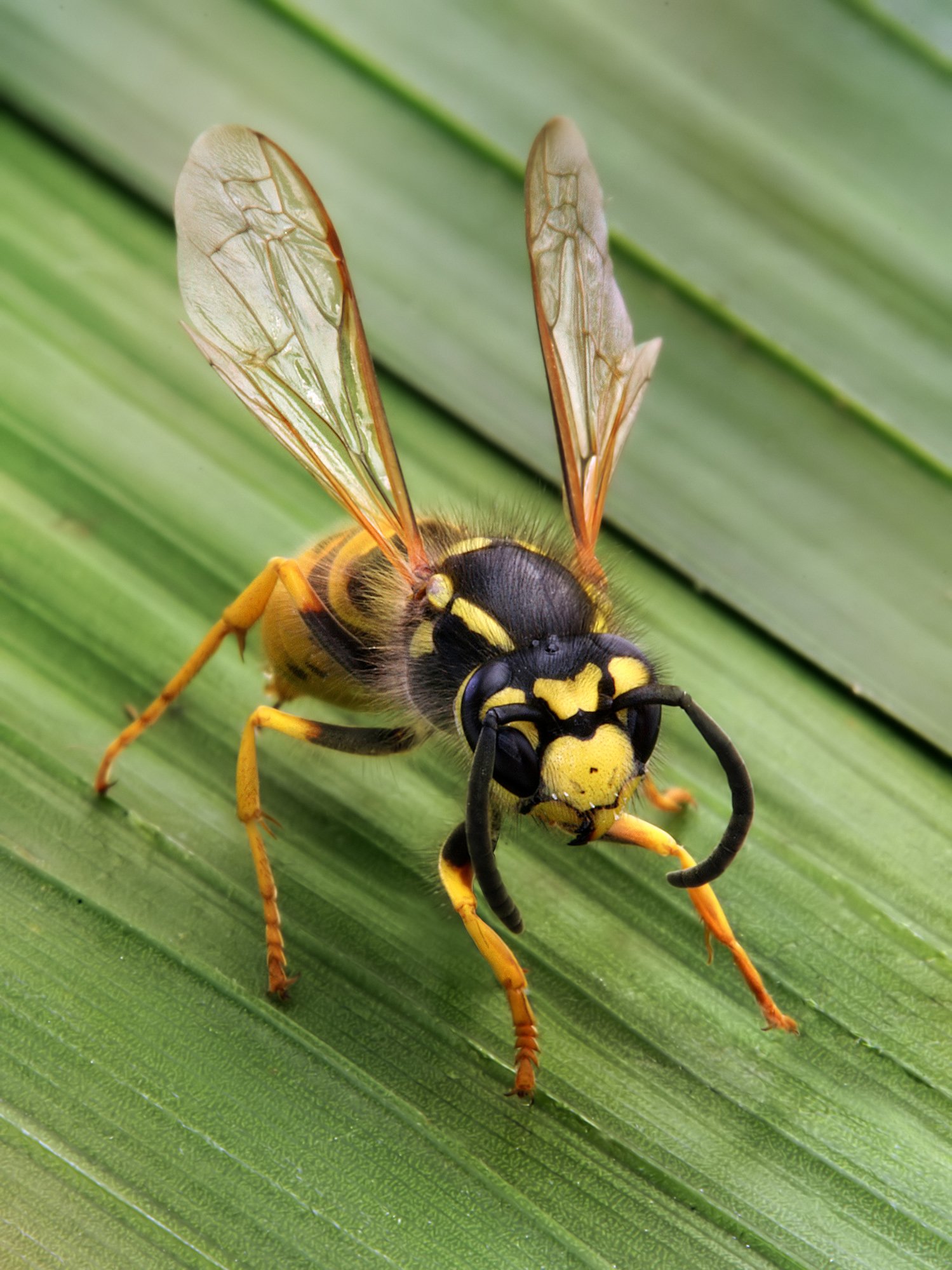
The honest version: wasps come back when the cause is left in place. What follows covers how to tell what you are dealing with, what a licensed technician will actually do about it, realistic Sydney prices, and the prevention that makes the result hold. General treatments start from $89 with a 6-month warranty.
- Before you treat anything
- Signs worth acting on
- How the treatments differ
- What a licensed technician actually does
- Honest pricing
- When a supermarket spray is enough
- Common missteps
- Houses, units and townhouses
- If this is a business or a strata building
- Warranty and follow-up
- Keeping it gone
- Frequently asked questions
Before you treat anything
It helps to separate two things: what is making you call someone, and what is causing it. The visible wasps are the first; the moisture, the gap or the food source behind them is the second, and only the second decides whether the result holds.
Get that sequence right and a single treatment generally holds. Get it wrong and you are treating the same thing next month.
Key points
- Identify the species before treating - the right product depends on it.
- A fixed quote should come before any work starts.
- Early action is consistently cheaper than waiting for certainty.
- Treat the source, not the sightings: the nest or harbourage is the target.
The method itself, product by product, is explained on our page about what the treatment involves.
Signs worth acting on
Before numbers become obvious there is almost always a quieter stage. What to look for:
- A papery grey nest under eaves, in a pergola or inside a letterbox.
- Wasps working a bin, barbecue or fallen fruit in late summer.
- Honeycomb visible in a wall cavity, chimney or roof void.
- Aggressive behaviour when you mow, prune or work near one spot.
- Insects entering through a weep hole or a gap in a soffit vent.
If more than one of those applies, treat it as confirmed rather than possible. Disturbing the area first makes identification harder.
The rest of what we handle is set out under the pest control services page.
How the treatments differ
The honest trade-offs:
| Method | Works well for | Limitations |
|---|---|---|
| Direct nest treatment | Treats the colony including returning foragers | Requires protective equipment and access |
| Bee swarm relocation | Live removal where the colony can be rehomed | Not always possible in a cavity |
| Comb removal and clean-up | Avoids fermentation, staining and secondary pests | May need trade access |
| Nest removal after treatment | Prevents reuse and secondary pests | Only once the colony is dead |
Most real jobs combine two of these rather than relying on one. If a quote only mentions a spray, it is worth asking what else is planned.
If you want to see how the treatment is actually carried out, the wasp and bee control page walks through each stage.
What a licensed technician actually does
There is a defined process behind it, and knowing it makes the invoice easier to read:
- Inspect and identify. Establish what it is, how far it has spread, and which conditions on site are feeding it.
- Treat the source. Apply the right method for that species - gel bait, dust, residual, baiting system or trapping - where it does the most work and the least harm.
- Allow the method to run. Colony treatments take time by design. The technician will say how long before you should expect a change.
- Close the conditions. Identify and remove what caused it, otherwise the treatment is only a reset.
The work is logged, and if covered pests return inside the warranty period we come back at no charge.
How that is done in practice is covered under professional wasp and bee control.
Honest pricing
Price depends on the property size, the species and how established the population is. These are the starting figures Elite Pest works to in 2026:
| Service | From | Notes |
|---|---|---|
| Wasp or bee nest treatment | from $150 | Priced on access and nest location |
| Timber pest inspection with report | from $159 | Annual check; the report is the deliverable |
| Possum removal and proofing | from $250 | One-way exclusion, then sealing the entry |
| Bed bug treatment (per room) | from $280 | Usually includes a follow-up visit |
| Rodent treatment and proofing | from $150 | Baiting or trapping, plus entry-point work |
The quote is confirmed before work begins and does not change unless you ask for more work. General pest treatments carry a six-month warranty.
We set out the full process, timelines and warranty terms under how wasp and bee control works.
When a supermarket spray is enough
Retail products have a place. For one insect in a room they are fine, and nobody needs a technician for that. For an established population they tend to fail, and sometimes make things worse:
- Guessing the species usually means the wrong product entirely.
- Concentrations are lower and residual life shorter than professional-grade equivalents.
- Repellent sprays can split colonies - with ants especially - turning one nest into several.
- Retail products kill what they touch and leave the nest or harbourage producing.
If you have already tried something and it returned, that is the signal rather than a reason to try again harder.
It is worth a look through the services we offer across Sydney, since what you are seeing may not be what you think it is.
Common missteps
These come up often enough to be worth listing. Each one either prolongs the problem or makes it harder to treat:
- Treating a nest in daylight when the colony is most active.
- Knocking down a nest, which leaves returning foragers and provokes defence.
- Approaching a nest without protective equipment.
- Using a hose or fire to deal with a nest.
Mentioning what you have already applied saves time and avoids a product conflict.
Houses, units and townhouses
Two neighbours with identical problems can get quite different treatments, and the reason is usually construction rather than preference:
- Apartments and units. Shared walls, services and risers mean the source is often outside your lot - partial treatment just moves it.
- Older Sydney housing. Deeper gaps, timber framing and subfloor moisture raise both termite and rodent exposure.
- Freestanding houses. Full external access, subfloor and roof void available, so the source can usually be treated directly.
- Terraces and semis. Party walls and shared subfloors let populations travel; treating one side alone rarely holds.
If you are in a unit or a terrace and the problem keeps returning after treatment, the source is very likely not inside your own walls.
Units bring their own constraints - shared walls, shared plumbing, limited external access - and how apartments are treated is set up around them.
If this is a business or a strata building
For a business or an owners corporation the deliverable includes paperwork, not just a result:
- Treatment of common property - risers, voids, bin rooms, roof spaces - not just individual lots.
- A site plan showing monitored station locations.
- Food-safety alignment for kitchens, cafes and childcare premises.
- Scheduled servicing rather than reactive call-outs, with visit dates set in advance.
- Safety data sheets and licence documentation held on site.
For a food business in particular, pest records are among the first things an inspector asks for - which makes the documentation as valuable as the treatment.
Food premises carry the tightest requirements, which is what food-premises pest programs is designed around.
Warranty and follow-up
General pest treatments from Elite Pest carry a 6-month warranty: if covered pests return inside that period, we come back and re-treat at no charge.
The exclusions are the ordinary ones - a new pest is a new job, and a recurrence traced to an unfixed cause sits outside the cover. Termite barriers and baiting programs have their own longer warranties, conditional on annual monitoring.
It goes on the invoice, so there is no ambiguity about what was covered six months later.
Most of the homes we look after are on a regular residential program rather than calling when something appears.
Keeping it gone
Having dealt with the population, the job is to make the property less worth moving into:
- Keep bins closed and clear food from outdoor tables promptly.
- Pick up fallen fruit through late summer.
- Check letterboxes, pergolas and play equipment early in the season.
- Have a nest treated rather than knocked down, so returning foragers are controlled.
- Seal gaps at eaves, soffits and meter boxes before spring.
The moisture items matter most. If you only do one thing, fix the water.
The alternative to treating reactively is an ongoing residential service, timed around the seasons above.
Frequently asked questions
What do you charge for wasps in Sydney?
Starting prices are $89 for a general treatment and $159 for an inspection with a written report. Anything larger is quoted on inspection rather than over the phone. The quote is fixed, so the invoice matches what you were told.
What should I do about a wasp nest?
Leave it alone and get it treated, particularly if it is near a doorway, clothesline, pool or play equipment, or if anyone in the household has a sting allergy. Bees are often relocated live; wasps are treated. Identification decides which.
What if the problem is coming from next door?
For renters, report it to the agent in writing promptly, since that is often what decides responsibility. In a unit block the source is frequently outside your lot, and treating your own apartment repeatedly will not fix a population living in common property.
Can you come today?
Usually within a day or two, and same-day where there is a safety issue - a sting allergy in the household, young children with access, or live termite activity. We quote most jobs in about thirty minutes over the phone.
Is the treatment safe for children and pets?
Yes. We use APVMA-registered, low-toxicity products applied at label rates, and most of what goes down is placed in cracks, voids and secured stations rather than on open surfaces. You are given a specific re-entry time, usually just until treated surfaces are dry.
How do I stop them coming back?
Maintenance rather than pest control: fix the water, close the gaps, cut the food supply and reduce clutter where things can shelter. Households that would rather not think about it move onto a regular program instead.
Is an inspection really necessary?
For general pest work the inspection happens as part of the visit and is not charged separately. For anything termite-related it is essential and is the deliverable in its own right, because the report determines the treatment and gives you a written record.
Are your technicians licensed and insured?
Licensed and insured, and happy to show either. If you are comparing quotes, ask each company for the licence number of the person actually attending rather than just the business name.
Sydney pest control, booked today
We treat wasps across 650+ suburbs of Sydney. Fixed quote up front, licensed and insured technicians, child and pet-safe application, and general treatments backed for six months.