
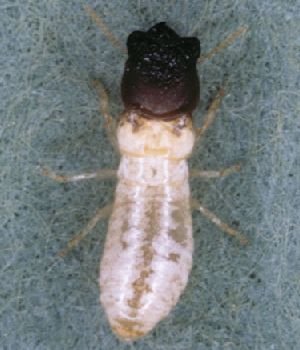
Termite control is an inspection problem before it is a treatment problem. A colony works inside timber for months before anything shows, which is why an annual inspection from $159 is the standard advice. If activity is found, a barrier or baiting system is quoted on the day. Do not disturb live workings.
- The part most people get wrong
- How to tell you have a problem
- The conditions behind it
- Why it is worth dealing with
- When termites are worst in Sydney
- Which method suits which situation
- How professional treatment works
- What happens on the day
- Preparation that makes it work better
- The things that set people back
- How to tell a good operator from a cheap one
- Frequently asked questions
The part most people get wrong
It helps to separate two things: what is making you call someone, and what is causing it. The visible termites are the first; the moisture, the gap or the food source behind them is the second, and only the second decides whether the result holds.
That is why an inspection comes before any product. It establishes the species, how far the population has spread, and which conditions on the property are sustaining it.
Key points
- Fix the conditions - moisture, food, entry points - or it returns.
- Ask what the warranty covers and for how long.
- Identify the species before treating - the right product depends on it.
- A fixed quote should come before any work starts.
There is a fuller explanation of the termite control page, including what is and is not included.
How to tell you have a problem
The early evidence is usually subtle, and most of it is found in places nobody looks. Worth checking for:
- Timber that sounds hollow or papery when you tap along it with a knuckle.
- Small piles of discarded wings on windowsills after a warm, humid evening.
- Thin mud veneer filling cracks in skirtings, architraves or door frames.
- Sagging or blistered cornices where a nest has worked up inside a wall.
- A faint musty, earthy smell in a closed room or subfloor.
The more of these you can tick off, the longer it has been going on - which affects both the method and the price.
This is the sort of thing a timber pest inspection is designed to catch before it becomes a repair bill.
The conditions behind it
There is almost always something on the property doing the inviting. Most commonly:
- An untreated or breached physical barrier on an older Sydney build.
- Tree stumps and buried form-work left on the block after construction.
- Air vents to the subfloor blocked by a deck, paving or landscaping.
- Subfloor moisture from a leaking pipe, a failed shower base or poor drainage.
- Dense planting and irrigation holding damp soil hard against the brickwork.
A technician will walk you through whichever of these apply to your place as part of the visit.
Why it is worth dealing with
Termites do more damage to Australian homes each year than fire, storm and flood together, and standard home insurance almost never covers it. A colony works inside timber, so by the time a cornice sags or a skirting gives under your thumb the structural work has been going on for months. That is the whole argument for an annual inspection: it is the only point at which the cost is small.
Put plainly: the problem does not stay the same size while you decide.
A technician carrying out a full timber pest report is looking for exactly these conditions, and documents them whether or not there is live activity.
When termites are worst in Sydney
Sydney's mild winters mean termite colonies never fully shut down the way they do further south. Swarming peaks in late spring and summer after humid evenings, which is when most homeowners first see discarded wings. The practical consequence is that an annual inspection can sit at any time of year, so long as it actually happens.
None of it changes the method much, but it does change how urgent the booking is.
Which method suits which situation
There is rarely one correct method. What follows is what each approach does well and where it falls short:
| Method | Works well for | Limitations |
|---|---|---|
| Annual timber pest inspection | Finds activity while it is still cheap | Detection, not treatment |
| Chemical soil barrier | Full perimeter protection, long service life | Needs trenching or drilling; priced after inspection |
| Dusting active workings | Fast knock-down on a found trail | A first step, not a complete solution |
| In-ground baiting system | Eliminates the colony, low disruption | Works over weeks to months; needs monitoring |
Ask which of these is being proposed and why. A technician who cannot answer that is guessing.
We set out the full process, timelines and warranty terms under what the treatment involves.
How professional treatment works
The work is more methodical than most people expect, and very little of it involves a spray wand. The sequence:
- Inspect and identify. Work out the species and find where the population actually sits - usually not where it was seen.
- Treat the source. Match the method to the species and place it in the harbourage rather than across open surfaces.
- Allow the method to run. Expect a timeline rather than an instant result, and avoid adding anything of your own in the meantime.
- Close the conditions. The gaps to seal, the moisture to fix and the habits to change - this is what makes the result last.
Every Elite Pest treatment is carried out by a licensed, insured technician and general pest work carries a 6-month warranty.
If you want to see how the treatment is actually carried out, termite control walks through each stage.
What happens on the day
There is not much mystery to it, and most of it is quicker than people expect:
- First look. The technician inspects inside and out, confirms the species and shows you what they have found before anything is applied.
- Agreeing the work. The figure is confirmed against what was actually found, and you decide from there.
- Application. Most general treatments take 45 to 90 minutes depending on the property size and how much access is involved.
- Handover. A clear explanation of what happens next, so an increase in activity a few days later does not alarm you.
If activity seems worse for a few days, that is normal for colony work - call us if it has not changed within the timeframe you were given.
Preparation that makes it work better
Treatments work better when the technician can reach things. Before the appointment:
- Cover or move fish tanks and turn off their air pumps.
- Make a note of where you have seen activity and when.
- Tell the technician what you have already applied yourself.
- Vacuum carpets and hard floors, then empty the vacuum outside.
- Clear access to kickboards, under sinks and around appliances.
The main thing afterwards is not to clean the treated surfaces for about a week. That one habit undoes more treatments than anything else.
The things that set people back
Worth avoiding, because each of these costs time or money later:
- Treating visible damage as the extent of it, when the nest may be metres away.
- Breaking open mud tubing to look inside before a technician has assessed it.
- Letting an annual inspection lapse because nothing looked wrong.
- Assuming a previous treatment is still protecting the house years later.
If you have already done one of these, say so when you book. It changes the approach rather than causing offence.
How to tell a good operator from a cheap one
The cheapest quote is often the one that gets repeated. Things worth confirming:
- Confirm they hold current public liability insurance.
- Be wary of a price quoted over the phone without any questions about the property.
- Ask what the warranty covers, what voids it, and how long it runs.
- Get the quote in writing, fixed, before any work starts.
- For termite work, ask whether you receive a written timber pest report.
None of those questions are unreasonable, and the answers tend to sort operators quickly.
That is worth checking before you book anyone, including us - about the team covers our licensing, insurance and how long we have been doing this.
Questions we get asked
What will treating termites cost?
Starting prices are $89 for a general treatment and $159 for an inspection with a written report. Anything larger is quoted on inspection rather than over the phone. The quote is fixed, so the invoice matches what you were told.
How often do termite inspections need doing?
Annually is the standard advice for Sydney, and more often for high-risk properties - those with a history of activity, a subfloor that holds moisture, or heavy planting against the walls. Termite damage is excluded from almost every home insurance policy, which is why the annual check is the cheap part.
Is everyone who attends licensed?
All of our technicians are licensed under NSW pest management requirements and insured. Pest control is licensed work in this state, so an operator who cannot produce a licence number should not be in your home.
Who pays in a rental or strata building?
In a tenancy it usually depends on whether the problem existed at the start of the lease and on the terms of the agreement - raise it with the agent in writing either way. In a strata building, anything in common property such as risers, voids and bin rooms is the owners corporation's responsibility.
How do I stop them coming back?
The treatment resets it; prevention keeps it. Sealed food storage, lidded bins, no overnight pet bowls, repaired leaks, clear gutters, and mulch and timber kept clear of the slab. Your technician will tell you which two or three actually matter for your building.
Why have termites come into my home?
Almost always a combination of moisture and an easy entry point. Leaks, condensation, blocked gutters and irrigation do more to attract pests than untidiness does, which is why spotless homes get them too.
Do you offer a warranty?
Covered pests returning within six months are re-treated free. Termite barriers and baiting systems have their own longer warranties, generally conditional on annual monitoring. You get the terms in writing on the day.
Can you just treat it without looking?
An inspection is what tells a technician the species, the extent and the cause. Treating without it is guesswork, and guesswork is the main reason jobs get repeated. On general treatments it is built into the appointment.
Get a fixed price on termites
Elite Pest & Termite Solutions covers 650+ Sydney suburbs with licensed, insured technicians, child and pet-safe methods and a 6-month warranty on general treatments. Fixed quote in about 30 minutes.