Works well for
Web builders settling onto the surfaces we treat: black house spiders, redbacks and daddy long-legs in the garage.
- Fewer webs on the house
- Egg sacs removed before hatching
- Fewer redbacks round the furniture and fences

Spider Control in Bondi 2026 — local technicians, fixed prices and a written report. Spider treatment starts from $89.
Real, verified feedback from people we've helped — straight from Google.
What we cover in Bondi, and how quickly we can get there.
If you are in Bondi or anywhere else in 2026, you are in our Eastern Suburbs patch, 5.4 km south-east of the CBD. Our technicians are through Bondi most days, so same-day attendance is usually available.
Most weeks we are somewhere between Bondi Junction station and Bronte-Coogee Aquatic Reserve in Bondi, and Tamarama Beach is close enough to be on the same run.
This is the Waverley, Randwick and Woollahra area, and our runs here also take in Tamarama, Waverley and Bondi Junction. Being this close to the coast, sub-floors and ground-floor bathrooms stay damp most of the year, which is the condition that keeps activity going.
Around Bondi the pattern is fairly consistent: apartments where the problem is really in the building rather than the flat. Tell us which it is on the phone and we will come prepared for it.
We also work the streets near Westfield Bondi Junction and across toward Royal Sydney Golf Club - the whole of 2026 is covered.
The 2026 run is set the day before and you are given an arrival time. Where Tamarama and Waverley fall on the same round, we can usually bring the visit forward.
The Eastern Suburbs pattern is a build-up from September, heaviest through January and February, easing by April. Treating before the build-up is far more effective.
Timing a treatment just before the spring hatch does far more for a Bondi property than treating in midsummer once the spiderlings have already dispersed.
Redbacks want dry, sheltered, undisturbed spots - the underside of outdoor furniture, pot rims, letterboxes, the shed, the meter box. Around Bondi that is where we concentrate rather than on the house walls.
Two of these warrant real care. The rest are mostly a nuisance, but they are why webs reappear.
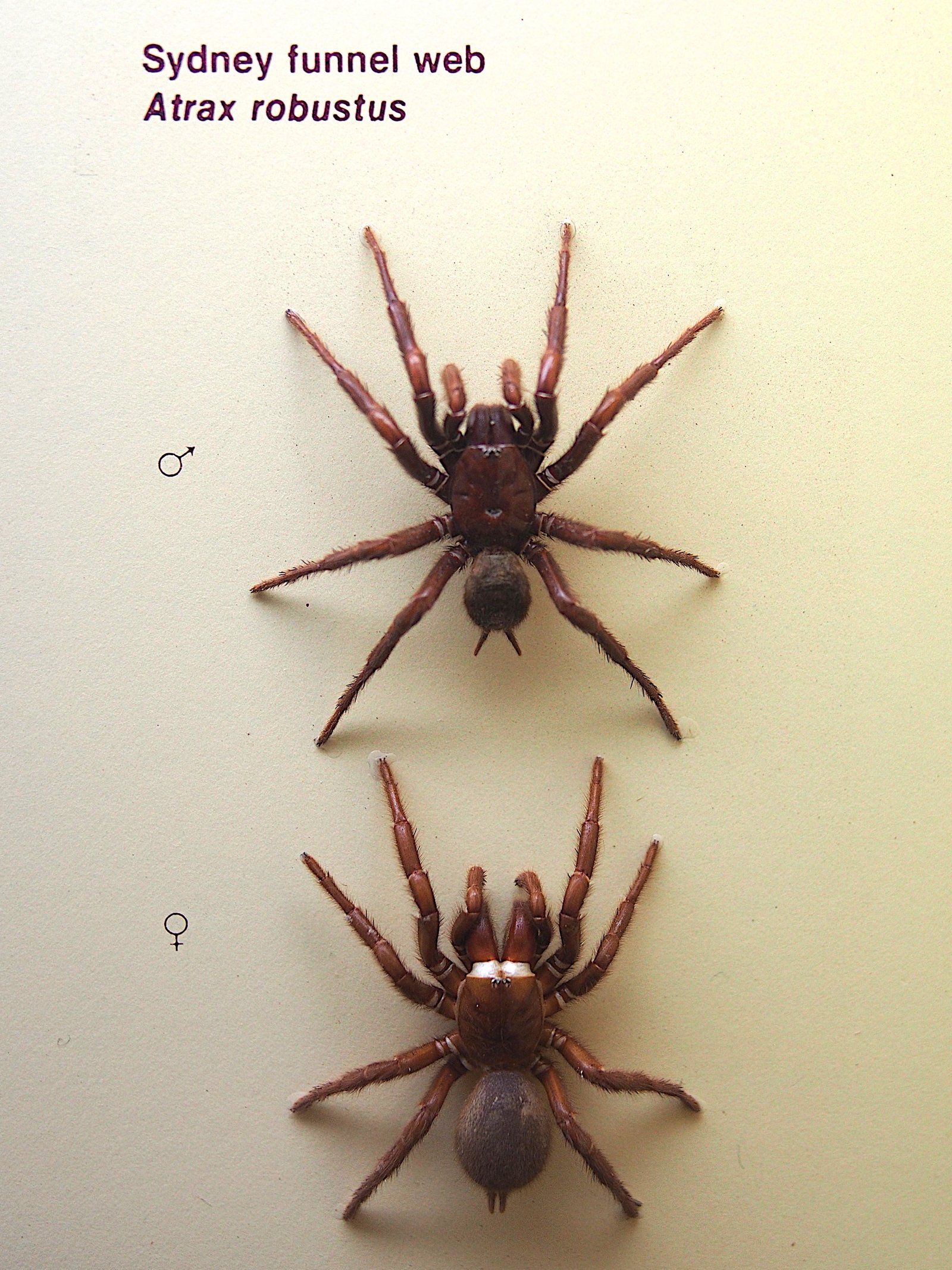
Between 2 and 4 cm, glossy black, and burrowing into cool sheltered ground beneath rocks, logs and buildings with a silk lining. Males are out looking for females in summer and autumn. Treat any bite as a medical emergency.
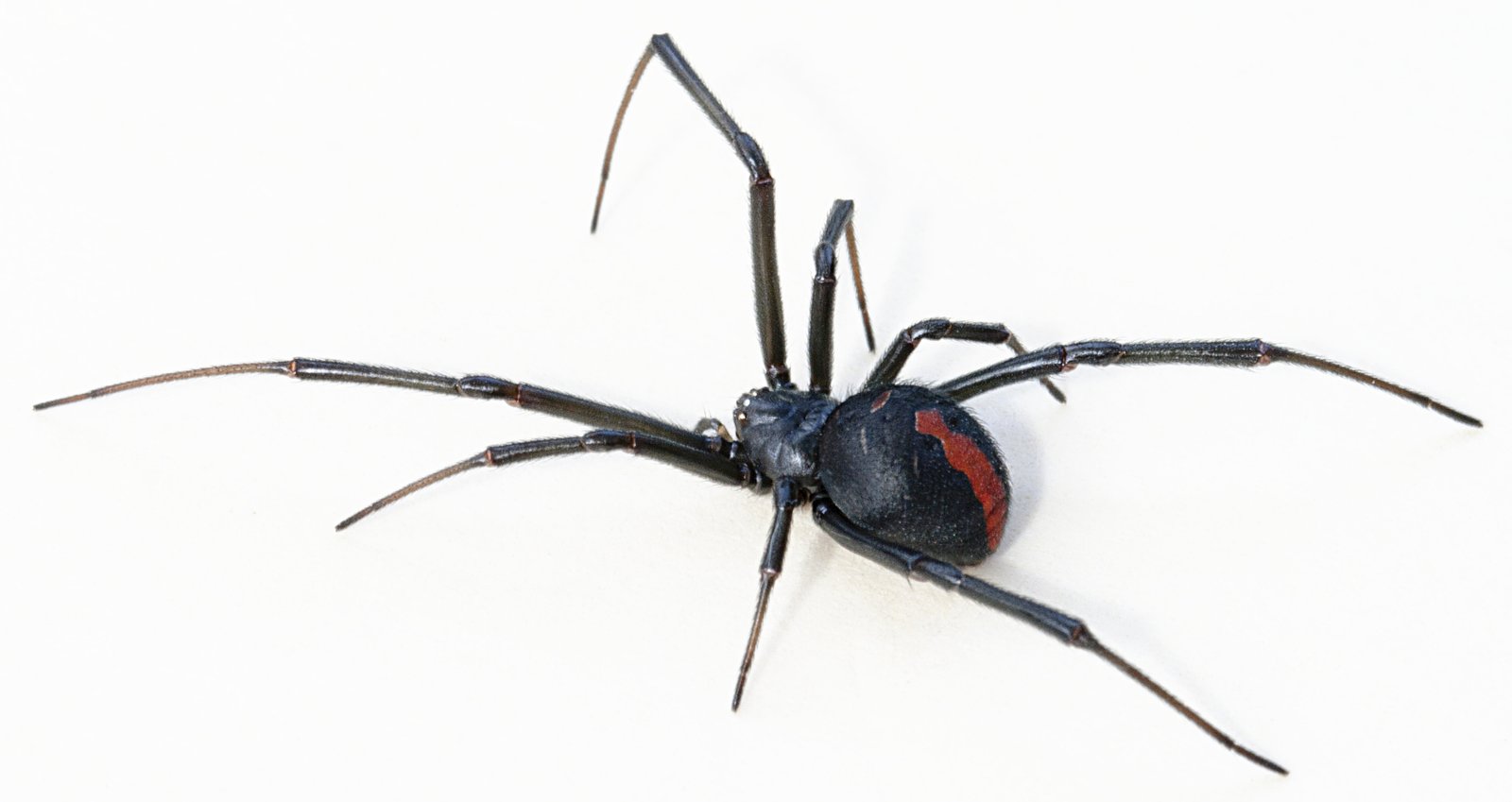
You will know the female by the red stripe on a black body. The webs are untidy and always in dry sheltered spots - outdoor chairs, letterboxes, pot rims, pool fences, sheds. Bites can hurt badly and need medical advice.
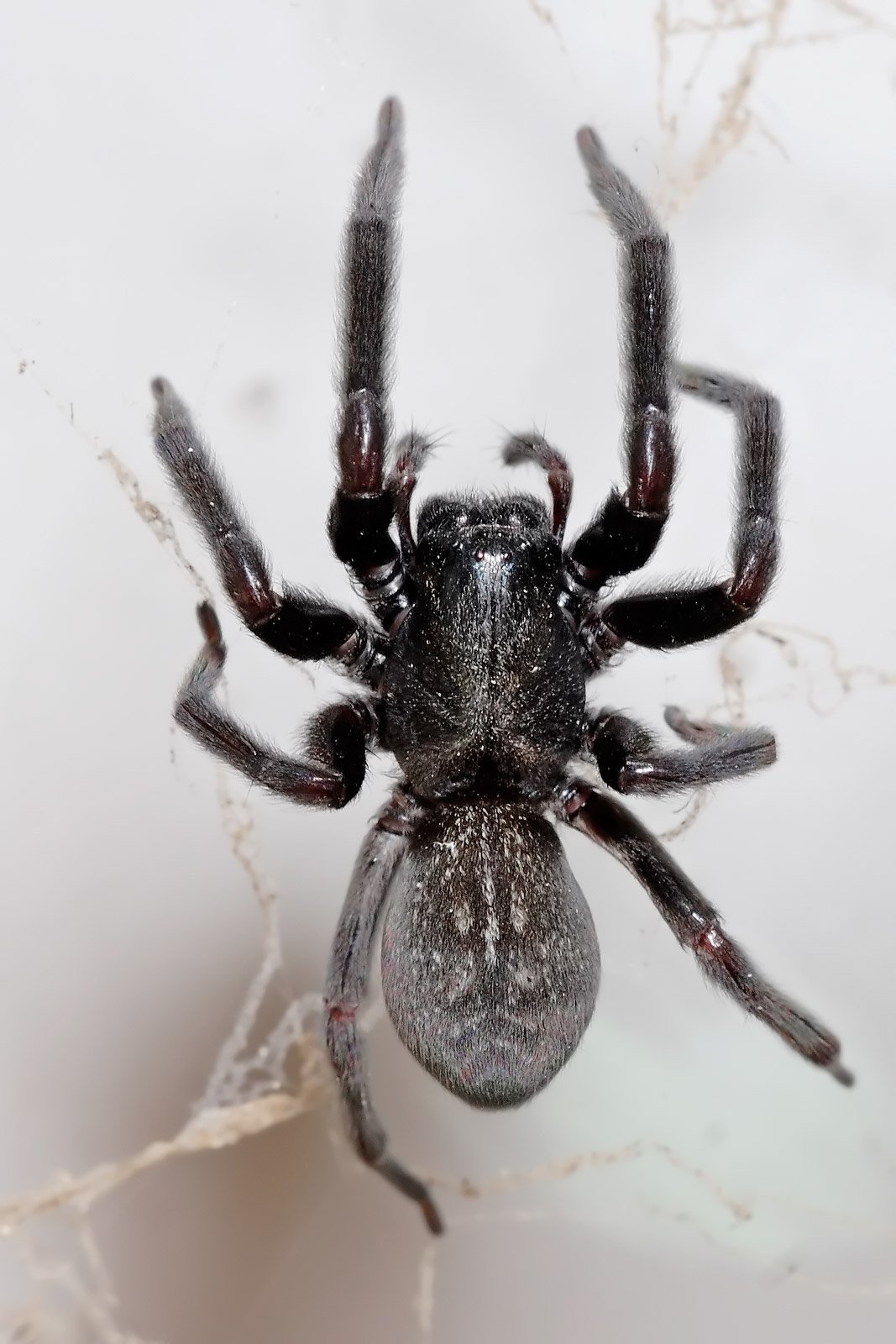
Stocky and dark, spinning lacy funnel webs into window frames, gaps in brickwork and eaves. It is a shy spider, but the webs collect dust and rebuild quickly without treatment.
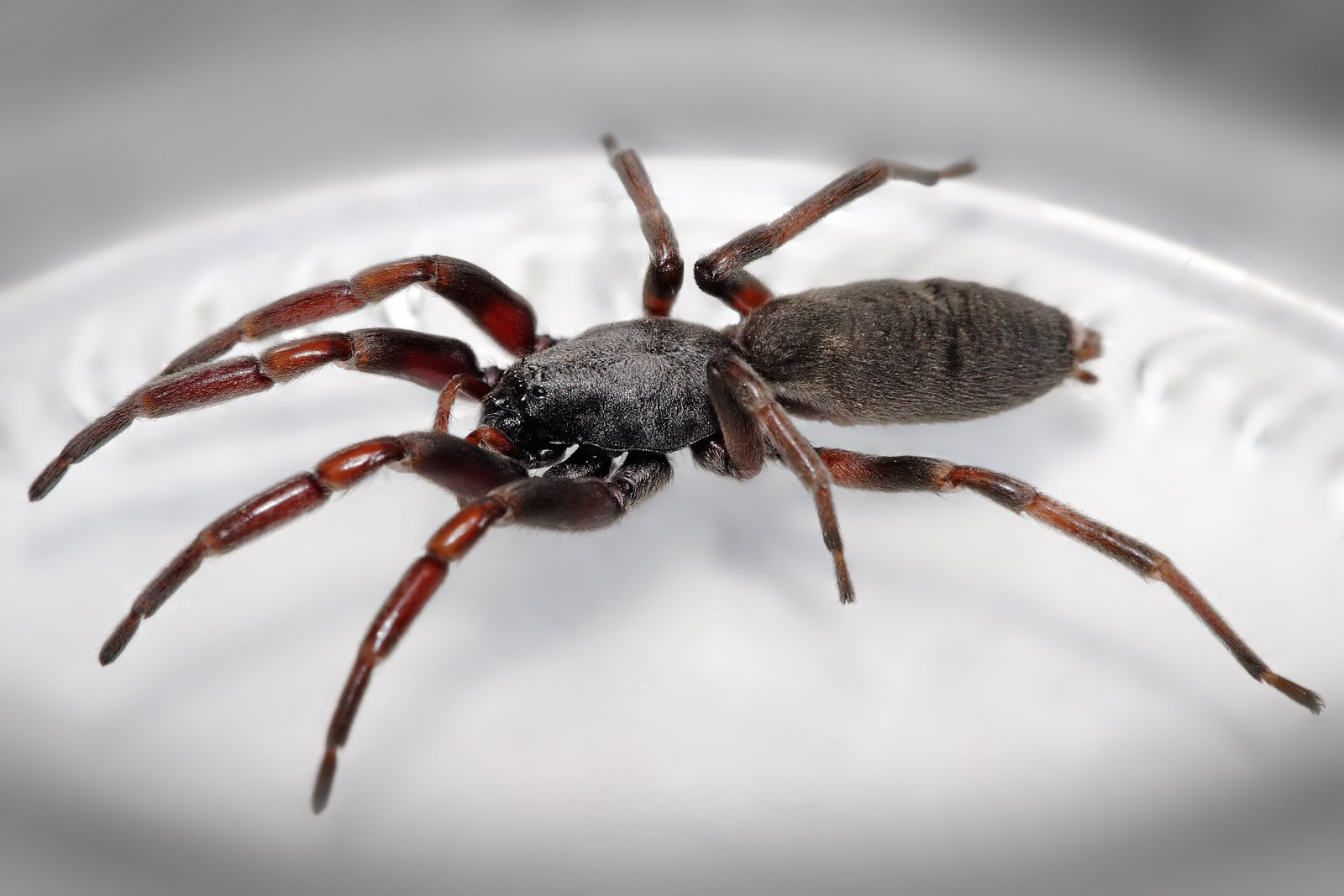
Slim and dark with a pale-tipped abdomen, this one hunts rather than webs. It comes indoors at night after other spiders, sometimes into bedding and clothing. Bites hurt, but a large study found no ulcers.
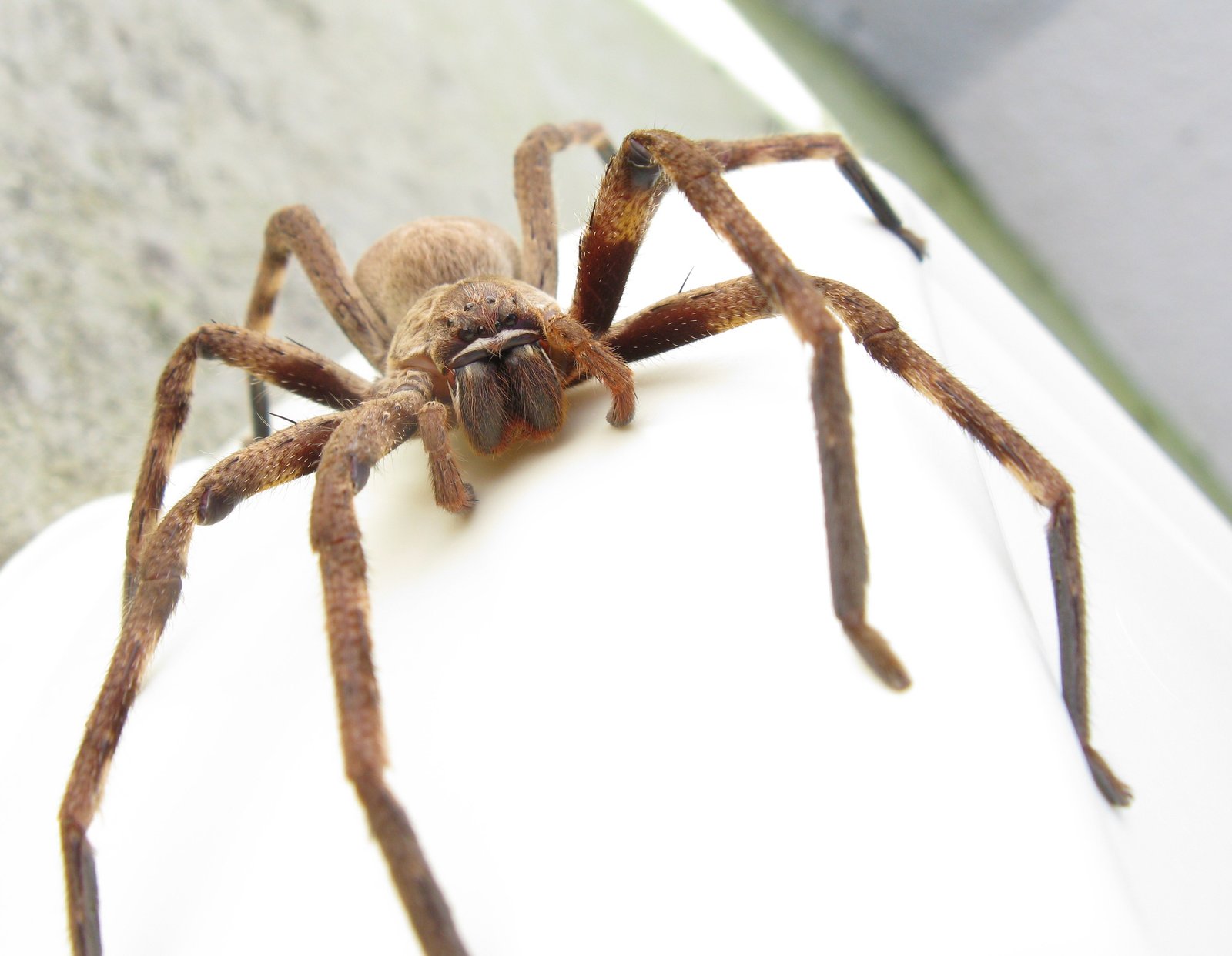
The big flat fast one, found under bark, in wall cavities and behind curtains. Startling but shy. It hunts rather than spinning webs, so controlling the insects it eats means fewer come back.

From one of our jobs - a huntsman found on an exterior inspection in Sydney. Eaves, window heads, meter boxes and garden edges all get checked before any treatment.
General guidance based on Australian Museum and healthdirect advice. It is not a substitute for medical care. In an emergency call 000, and for advice call the Poisons Information Centre on 13 11 26.
| Spider | Risk | First aid | Get help |
|---|---|---|---|
| Sydney funnel-web | Neurotoxic venom that can be life-threatening | Apply pressure immobilisation as for a snake bite and keep the patient still | Call 000 immediately |
| Mouse spider | Seldom bites, but serious funnel-web-like effects have occurred | Treat as a funnel-web bite - pressure immobilisation - for any big black spider | Call 000 immediately |
| Redback | Increasingly severe pain, sweating and feeling unwell; antivenom exists | Do NOT apply a pressure bandage. Wash the area, then a cloth-wrapped cold pack | Seek medical care if pain is severe or symptoms develop |
| White-tailed spider | A painful bite with local redness and itching; a study of 130 confirmed bites found no ulcers | Wash the bite and apply a cold pack | See a doctor if symptoms worsen or persist |
| Black house spider, huntsman and others | Mostly local pain and swelling only | Clean the area and use a cold pack | See a doctor if you feel unwell or symptoms persist |
If you are not sure what bit you and it was a large black spider, assume funnel-web and call 000. A pest treatment reduces spider numbers; it cannot guarantee a funnel-web will never wander in.
A licensed Sydney technician will talk it through and give you a fixed quote within half an hour.
Per the Australian Museum, it is summer and autumn when male funnel-webs leave the burrow in search of females, and that is when most people come across one.
Humid nights after rain bring more wandering males. They shelter in shoes left outside, laundry on the floor, garages and gaps under doors.
Backyard pools catch wandering males, and they survive underwater for hours. Use the skimmer net every time, never your hand.
Its range runs from the Central Coast south as far as the Georges River, and west to about Baulkham Hills, concentrated in bushy sheltered suburbs.
Outside first, because that is where most spiders live and breed.
We go round the property with you, looking at eaves, window frames, fences, rockeries, retaining walls, subfloor vents and the garden edges.
We brush webs and egg sacs off the eaves, pergolas, outdoor furniture and garages, so no spiderlings hatch into the area we have treated.
A residual goes where spiders actually sit: external walls, eaves, the frames of windows and doors, and the weep holes.
On properties where funnel-webs are a risk we treat the cool sheltered ground beside the house - rockeries, retaining walls, sleepers, subfloor edges.
Corners, skirting boards and wardrobes get spot treatment if required, and the roof void and subfloor are dusted where accessible.
Web builders settling onto the surfaces we treat: black house spiders, redbacks and daddy long-legs in the garage.
Hunters like huntsmen and white-tails contact fewer treated surfaces. Reducing the insects and spiders they feed on brings their numbers down over time.
Nobody can promise a wandering male funnel-web will never cross the yard on a humid night. Treatment reduces harbourage near the house - first aid and sensible habits do the rest.
Orb weavers webbing across garden paths do no harm. Webs near doors and walkways come down, but some left in the garden help control flying insects.
Simple habits that matter most in funnel-web and redback country.
| Season | What spiders are doing | What to do |
|---|---|---|
| Spring (Sept to Nov) | Egg sacs open and web numbers climb on eaves and fences | Treat early and remove webs before the young scatter |
| Summer (Dec to Feb) | Males of the funnel-web start to wander; redbacks busy around outdoor seating | Check the pool and shoes, inspect outdoor areas, keep door seals working |
| Autumn (Mar to May) | Wandering funnel-webs remain active, particularly post-rain | Stay alert on humid nights and keep gardening gloves on |
| Winter (Jun to Aug) | Outdoor webs become scarce while huntsmen shelter indoors and in cars | A good window for proofing gaps before spring |
We treat the fence line and the first few metres of garden on a bush-backed Bondi block, because that is the crossing point.
Huntsmen come inside for shelter when it gets hot or wet, not to nest. Seal the gaps under external doors on a Bondi house and the number you find indoors drops noticeably.
Treatment reduces risk; it does not remove the need for habits. Children should know not to pick spiders up and not to reach into a pool or a woodpile by hand.
We tell you what we found and what each species means for the people living there.
Ground harbourage beside the building is part of it, not only the eaves above.
Straight advice about what treatment achieves, wandering funnel-web males included.
A general spider treatment carries 6 months. If webs rebuild inside that, so do we.
Everything you need to know before you book. Still unsure? Call us — we're happy to help.
Get a Free QuoteSpider treatment starts from $89. There is no call-out charge in Bondi 2026. The final number comes down to the property itself, and it is fixed before we begin. Every general treatment carries a 6-month warranty.
Same-day attendance is usually available. We are about 5.4 km south-east of the city here, and Bondi is covered by the Eastern Suburbs team.
Being near the water means humidity that never really drops. Sub-floors stay moist, lower levels stay cool and damp, and spiders do well in both.
Coastal housing here is a mix, but the damp lower level is consistent across most of it.
We do all of those. A good share of the Bondi jobs we run are tenanted or strata properties, so the written record comes as standard.
It is, as long as you follow what we tell you on the day - usually keeping off treated surfaces for a couple of hours. Let us know at booking about young children, pets or an aquarium.
In the great majority of jobs, no. If one area needs to be left for an hour or two we say so before we start rather than after.
An hour to two hours covers most jobs. The size of the building and the extent of the problem are what change it.
Every general treatment carries a 6-month warranty. So if they turn up again within the warranty, ring us and we will attend.
We cover the whole of Bondi, from the streets around Bronte-Coogee Aquatic Reserve out to the suburb boundary and on into Tamarama.
Photographs from Elite jobs across Sydney — not stock imagery.
Insured, licensed technicians and a straight quote within 30 minutes - no obligation either way.