Works well for
Web builders resting on the treated walls, eaves and frames: black house spiders, redbacks and daddy long-legs in the garage.
- Less webbing on the house
- Egg sacs removed ahead of hatching
- Fewer redbacks around furniture and fences

Spider Control in Canley Vale 2166 — local technicians, fixed prices and a written report. Spider treatment starts from $89.
Real, verified feedback from people we've helped — straight from Google.
What we cover in Canley Vale, and how quickly we can get there.
Canley Vale sits about 24.4 km west of the CBD in the South West Sydney, and postcode 2166 is one we are in most weeks. We run Canley Vale on a regular route, and same-day attendance is usually available.
If you are near Canley Vale station, Johnston Park or Lennox Reserve, that is ground we cover constantly - it is the busiest part of Canley Vale for us.
This is the Liverpool, Fairfield and Cumberland area, and our runs here also take in Canley Heights, Fairfield and Fairfield Heights. Estate blocks are compact with narrow side passages, so access and the perimeter are where most of the work happens.
What we see in Canley Vale is newer homes on small blocks where next door has the same problem. Describing it accurately when you book saves a second visit.
We also work the streets near Eora Beach and across toward Cabramatta Plaza - the whole of 2166 is covered.
Your appointment is confirmed the day before with a real arrival time. Because Canley Heights and Fairfield are covered on the same round, 2166 often has an earlier slot available.
A white outdoor light draws flying insects from a long way off, and the spiders follow them to the wall it is mounted on. Switching a Canley Vale entry light to a warm or yellow globe makes a visible difference within weeks.
We treat the fence line and the first few metres of garden on a bush-backed Canley Vale block, because that is the crossing point.
One egg sac can hold hundreds of spiderlings. Removing sacs from the eaves of a Canley Vale house before they open is the difference between treating one generation and treating three.
Two of these warrant real care. The rest are mostly a nuisance, but they are why webs reappear.
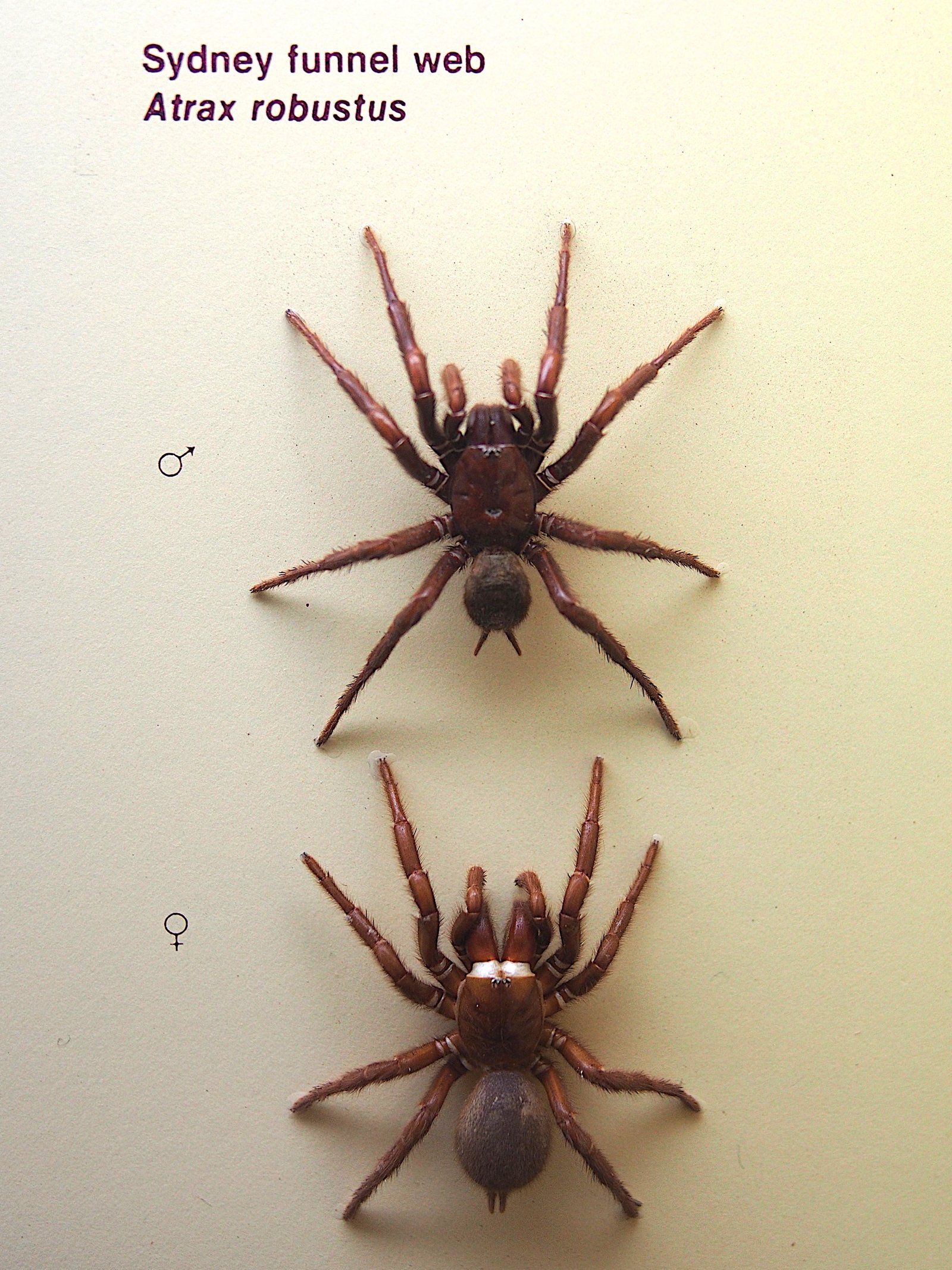
A 2 to 4 cm glossy black spider that burrows into cool shaded ground - under rocks, logs, houses - lining the burrow with silk. Wandering males appear in summer and autumn, and a bite is a medical emergency.
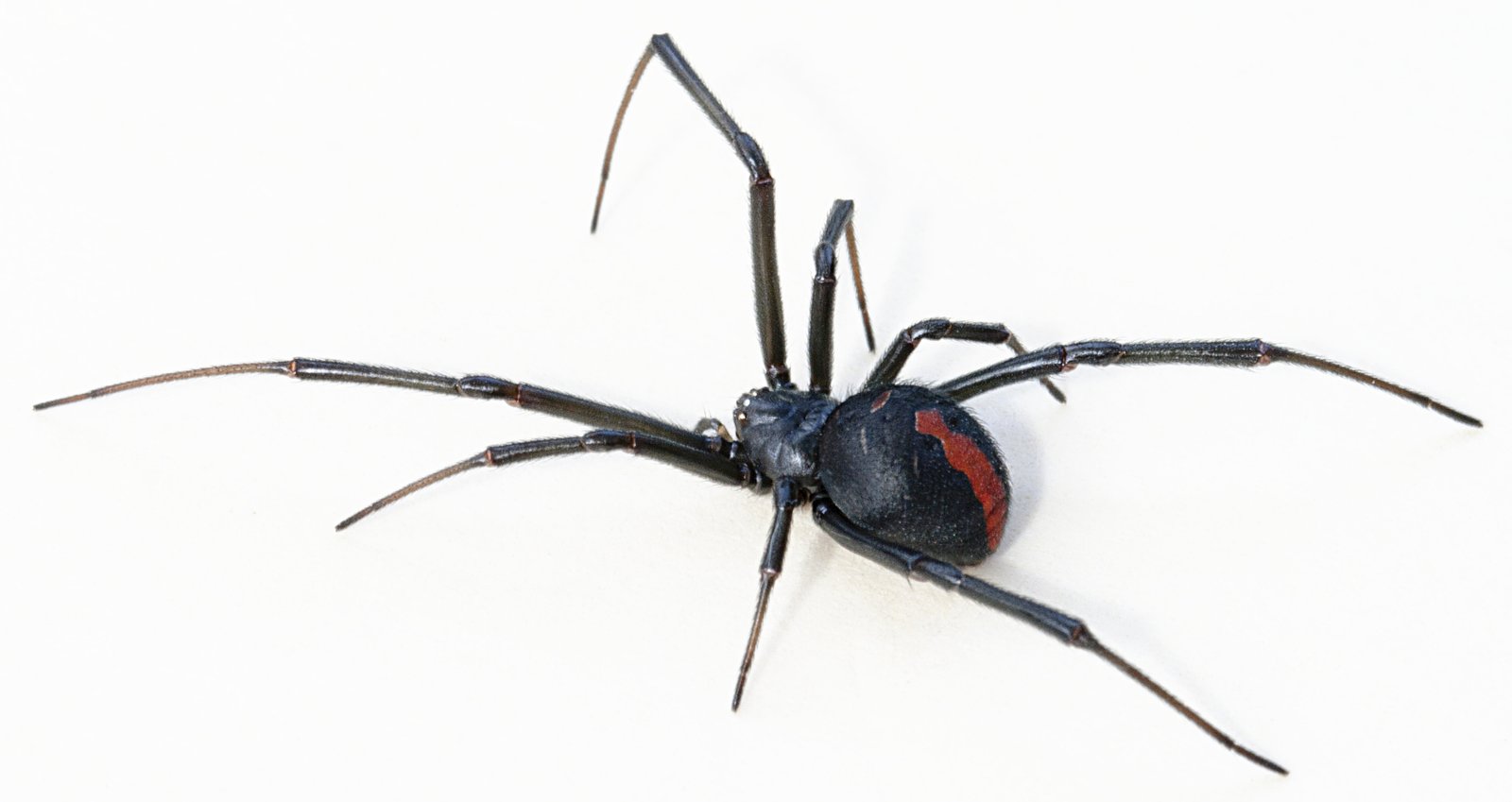
Black, with the red stripe on the female's back, and untidy webbing in dry sheltered positions - under outdoor seating, letterboxes, pot rims, pool fencing and sheds. Bites can be severely painful; seek medical advice.
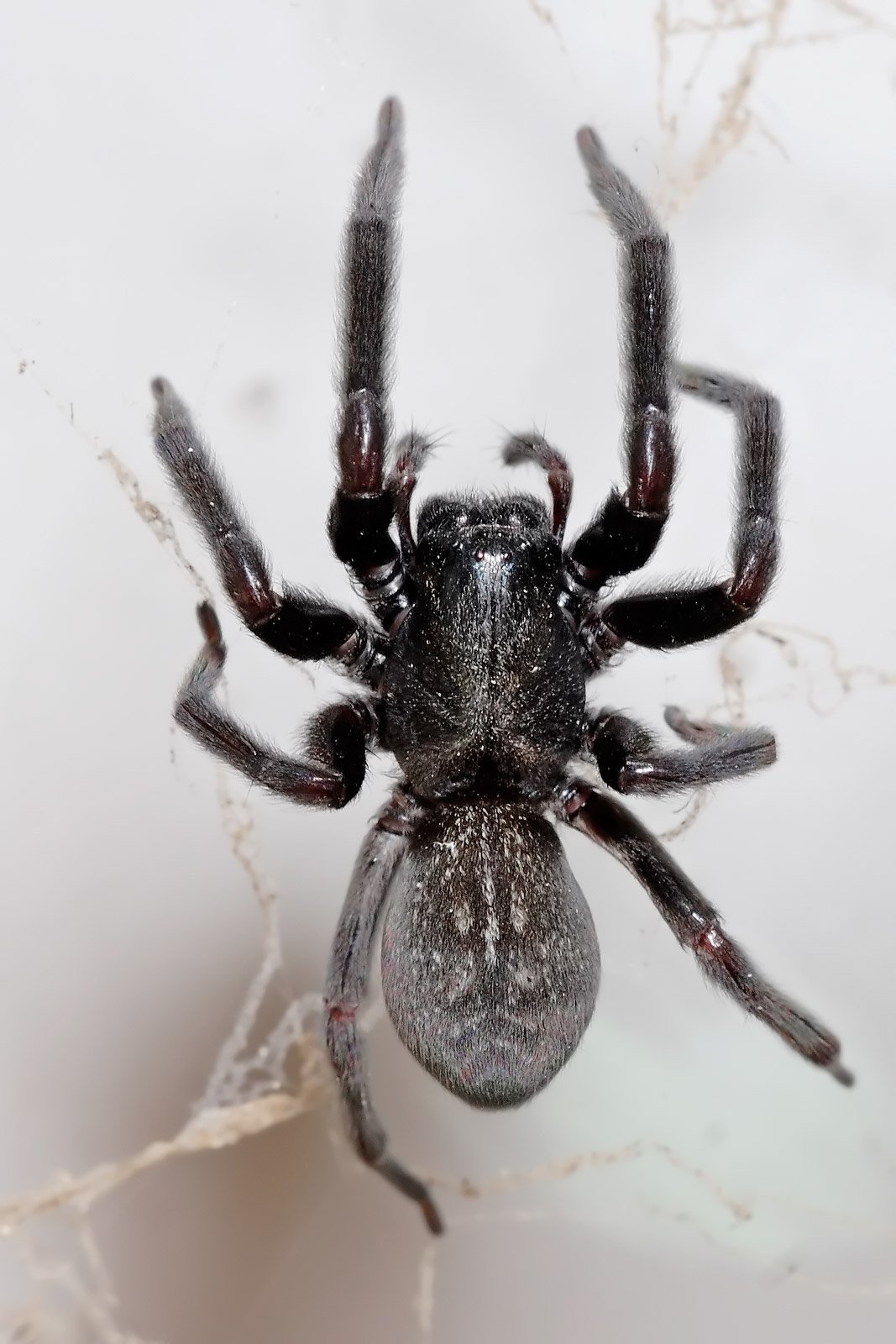
Dark and solidly built, with lacy funnel-shaped webs in window frames, brick gaps and under eaves. Timid, but the webs attract dust and return quickly if nothing is done.
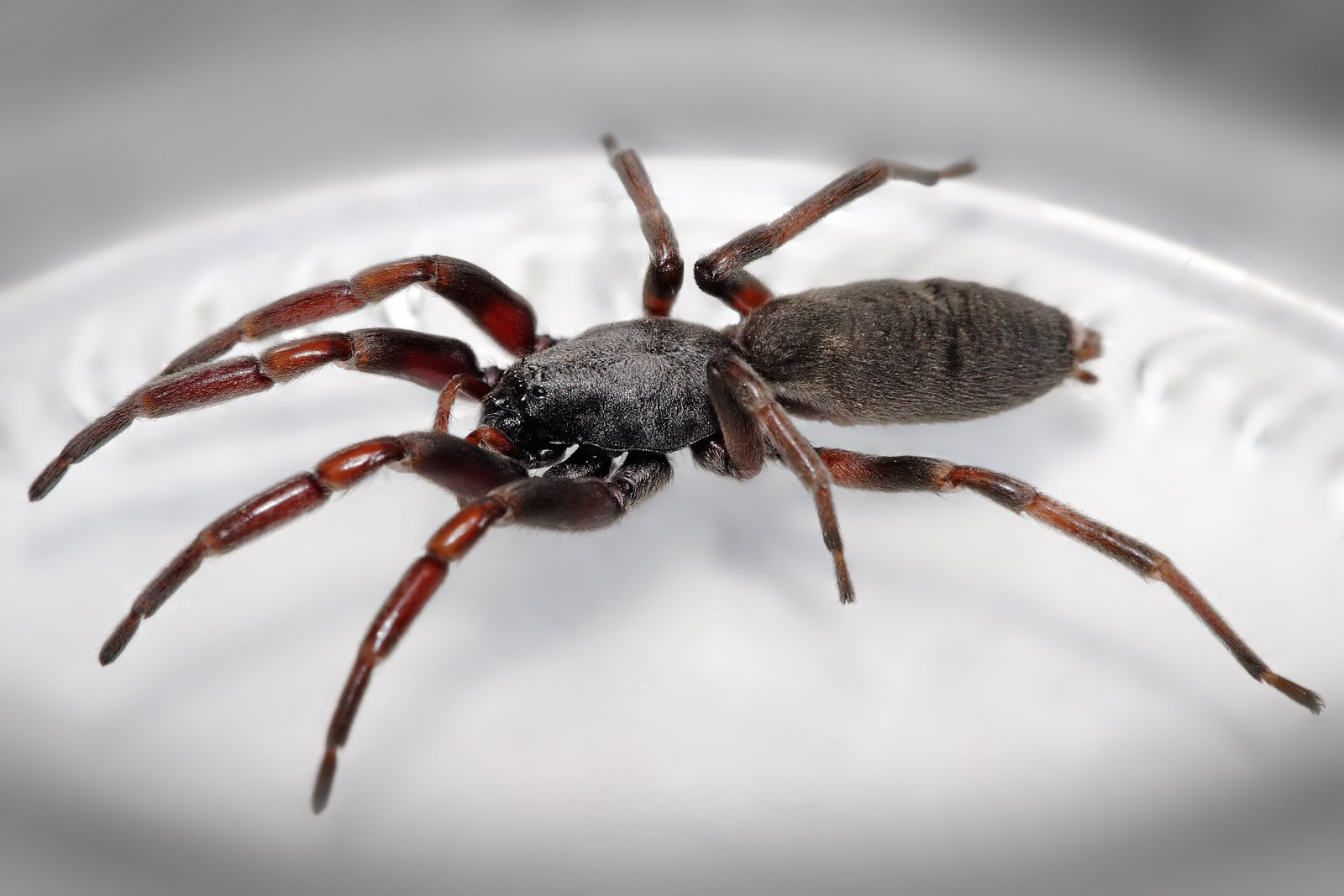
Slim and dark with a pale-tipped abdomen, this one hunts rather than webs. It comes indoors at night after other spiders, sometimes into bedding and clothing. Bites hurt, but a large study found no ulcers.
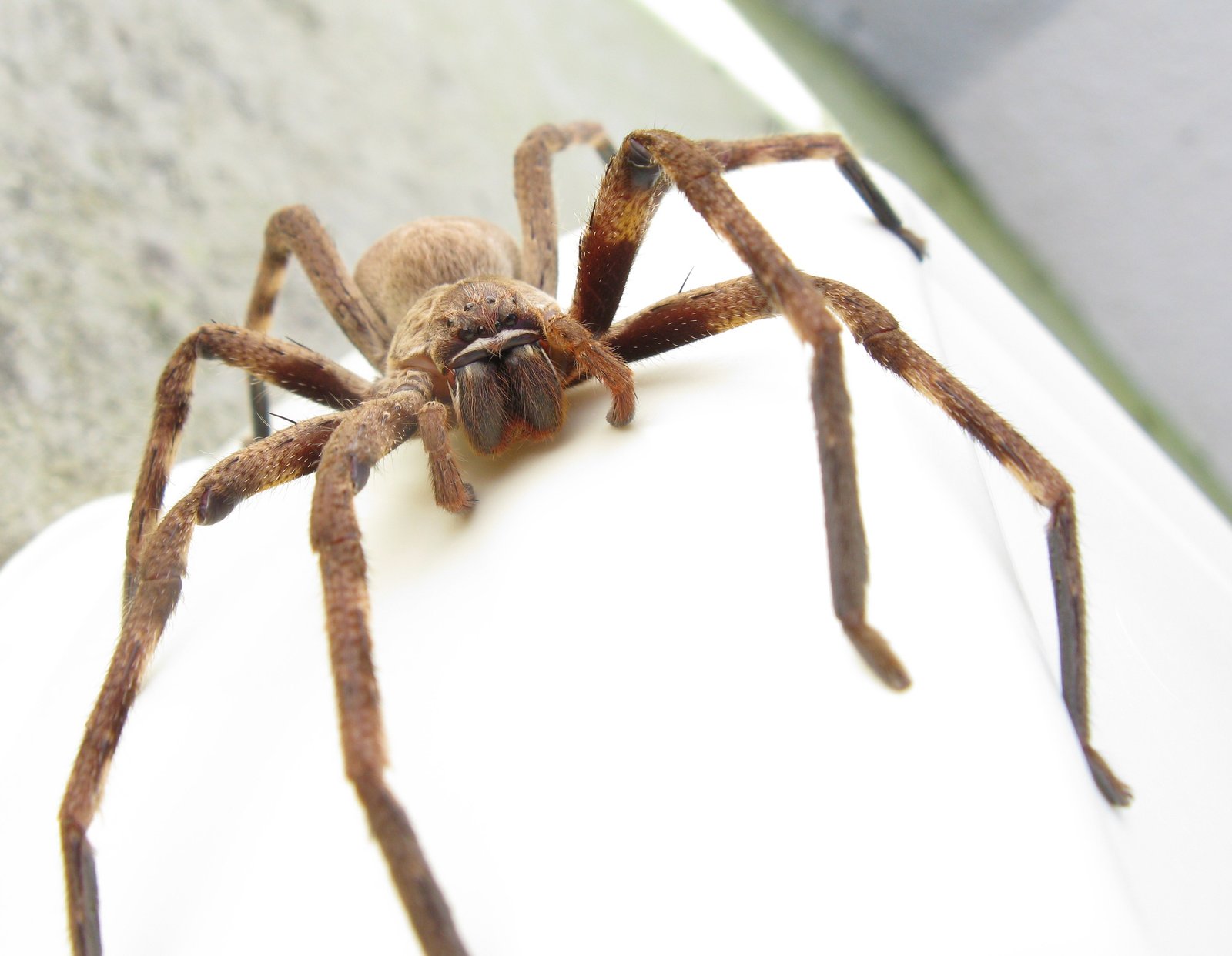
Big, flat and quick, found under bark, in wall cavities and behind curtains. Startling in a car or a bedroom, but shy. Because it hunts rather than webs, controlling the insects it eats reduces how many return.

An Elite photo: a huntsman found inspecting the exterior of a Sydney home. Eaves, window heads, meter boxes and garden edges come before treatment.
General guidance based on Australian Museum and healthdirect advice. It is not a substitute for medical care. In an emergency call 000, and for advice call the Poisons Information Centre on 13 11 26.
| Spider | Risk | First aid | Get help |
|---|---|---|---|
| Sydney funnel-web | Potentially fatal venom that affects the nervous system | Pressure immobilisation bandage, snake-bite style, and keep them from moving | Call 000 immediately |
| Mouse spider | Rarely bites, though serious funnel-web-type effects have been recorded | Treat a bite from any big black spider as funnel-web: pressure immobilisation bandage | Call 000 immediately |
| Redback | Bites often become very painful, with sweating and feeling generally unwell; antivenom is available | Do NOT apply a pressure bandage. Wash the bite and apply a cloth-wrapped cold pack | Seek medical care if pain is severe or symptoms develop |
| White-tailed spider | Painful, with redness and itch; research on 130 confirmed bites found no ulcers | Wash the site, then apply a cold pack | See a doctor if symptoms worsen or persist |
| Black house spider, huntsman and others | Mostly local pain and swelling only | Clean the area and use a cold pack | See a doctor if you feel unwell or symptoms persist |
If you are not sure what bit you and it was a large black spider, assume funnel-web and call 000. A pest treatment reduces spider numbers; it cannot guarantee a funnel-web will never wander in.
A licensed Sydney technician will talk it through and give you a fixed quote within half an hour.
Per the Australian Museum, it is summer and autumn when male funnel-webs leave the burrow in search of females, and that is when most people come across one.
After rain, on a humid night, more males are moving - and they shelter in outdoor shoes, floor laundry, garages and door gaps.
Backyard pools catch wandering males, and they survive underwater for hours. Use the skimmer net every time, never your hand.
From the Central Coast down to the Georges River, and west to around Baulkham Hills - mostly in the bushier, more sheltered suburbs.
Outside first, because that is where most spiders live and breed.
A walk of the property together, checking eaves and window frames, fences, rockeries, retaining walls, subfloor vents and garden edges.
We take the webbing and egg sacs down from eaves, pergola, furniture and garage before treating, which stops a fresh hatch landing in the treatment.
A residual is applied to the external walls, eaves, window and door frames, weep holes and wherever spiders rest.
Funnel-web risk brings the ground into scope - the sheltered strip beside the house, rockeries, retaining walls, sleepers and subfloor edges.
Where required, corners, skirting and wardrobes are spot treated, and we dust the roof void and subfloor if accessible.
Web builders resting on the treated walls, eaves and frames: black house spiders, redbacks and daddy long-legs in the garage.
Huntsmen and white-tails hunt rather than web, so they touch less of the treatment. Controlling their prey is what reduces them over time.
Nobody can promise a wandering male funnel-web will never cross the yard on a humid night. Treatment reduces harbourage near the house - first aid and sensible habits do the rest.
Orb weavers webbing across garden paths do no harm. Webs near doors and walkways come down, but some left in the garden help control flying insects.
Simple habits that matter most in funnel-web and redback country.
| Season | What spiders are doing | What to do |
|---|---|---|
| Spring (Sept to Nov) | Egg sacs open and webbing spreads over eaves and fences | Treat and clear webs before the spiderlings disperse |
| Summer (Dec to Feb) | Males of the funnel-web start to wander; redbacks busy around outdoor seating | Check the pool and shoes, inspect outdoor areas, keep door seals working |
| Autumn (Mar to May) | Funnel-web wandering carries on, increasing after rain | Be careful on humid nights, and garden in gloves |
| Winter (Jun to Aug) | Fewer webs outdoors, with huntsmen sheltering inside and in cars | Ideal timing for proofing gaps before spring |
Most spiders found indoors in Canley Vale homes came in by accident - under a door, through a vent, or on something carried in. They are not establishing; they are lost, which is why door seals do more than spraying skirting boards.
We are around Lennox Reserve regularly, including the bush-backed streets where funnel-web activity is highest.
Activity climbs through spring and peaks in the warm, humid months. Funnel-web wandering is worst after heavy summer rain, which is also when Canley Vale households find them indoors.
We identify what is on the property and explain what it means for your family.
Not just the eaves - the ground harbourage next to the house is treated too.
Clear guidance on what treatment delivers, including with wandering funnel-web males.
General treatments are covered for 6 months - webs back within it means we return.
Everything you need to know before you book. Still unsure? Call us — we're happy to help.
Get a Free QuoteSpider treatment starts from $89. Two things move it: how big the place is, and how far it has already spread. We work that out on the phone or on site and tell you the figure before anything starts in Canley Vale. Every general treatment carries a 6-month warranty.
Same-day attendance is usually available. We are about 24.4 km west of the city here, and Canley Vale is covered by the South West Sydney team.
Two things drive it on an estate: compact blocks with narrow side passages, and ground that was cleared and rebuilt recently, which displaces whatever was living in it.
Newer detached homes on compact blocks, so access down the side and the shared fence line shape how we work.
We do all of those. A good share of the Canley Vale jobs we run are tenanted or strata properties, so the written record comes as standard.
It is, as long as you follow what we tell you on the day - usually keeping off treated surfaces for a couple of hours. Let us know at booking about young children, pets or an aquarium.
You do not normally need to leave. Anything requiring an empty room is short, and you will know about it before the work starts.
Allow one to two hours for a typical Canley Vale property. Larger homes, or ones where the problem has spread, take longer and we will say so when we quote.
Every general treatment carries a 6-month warranty. Call us if activity picks up again and we will arrange the return visit.
Yes - we work right across the Liverpool, Fairfield and Cumberland area, which takes in Canley Vale and the suburbs around it.
Photographs from Elite jobs across Sydney — not stock imagery.
Friendly, fully insured technicians and a no-obligation quote inside 30 minutes.