Works well for
Web builders settling onto the surfaces we treat: black house spiders, redbacks and daddy long-legs in the garage.
- Less webbing on the house
- Egg sacs removed ahead of hatching
- Fewer redbacks on the furniture and along the fences

Spider Control in Glenhaven 2156 — local technicians, fixed prices and a written report. Spider treatment starts from $89.
Real, verified feedback from people we've helped — straight from Google.
What we cover in Glenhaven, and how quickly we can get there.
Glenhaven sits about 26.3 km north-west of the CBD in the Hills District, and postcode 2156 is one we are in most weeks. We cover Glenhaven on scheduled runs through the Hills District, and we will give you a firm time rather than a window.
Our Glenhaven work takes in the streets by Castle Hill Lions Park and Glendale Park, through to Farmridge Way Reserve at the other end.
We cover Castle Hill, Dural and Kenthurst on the same runs as Glenhaven, which helps when spider problems are moving between neighbouring properties. Bush edges keep re-supplying the problem, which is why we treat the boundary rather than only the interior.
What we see in Glenhaven is homes on sloping blocks with a sub-floor and bush on the boundary. Describing it accurately when you book saves a second visit.
The rest of 2156 is covered too, including the pockets around Dural Nature Reserve and Dural Golf Driving Range.
Bookings for 2156 are confirmed the day before with a set arrival time, not an all-day window. Jobs at Castle Hill and Dural often share the same run, which is how earlier slots come up.
Spiders go where the food is. A Glenhaven house with webs returning within days of clearing them has a flying-insect population feeding them, and treating that is what keeps the webs away.
Most spiders found indoors in Glenhaven homes came in by accident - under a door, through a vent, or on something carried in. They are not establishing; they are lost, which is why door seals do more than spraying skirting boards.
The Hills District pattern is a build-up from September, heaviest through January and February, easing by April. Treating before the build-up is far more effective.
Two of these warrant real care. The rest are mostly a nuisance, but they are why webs reappear.
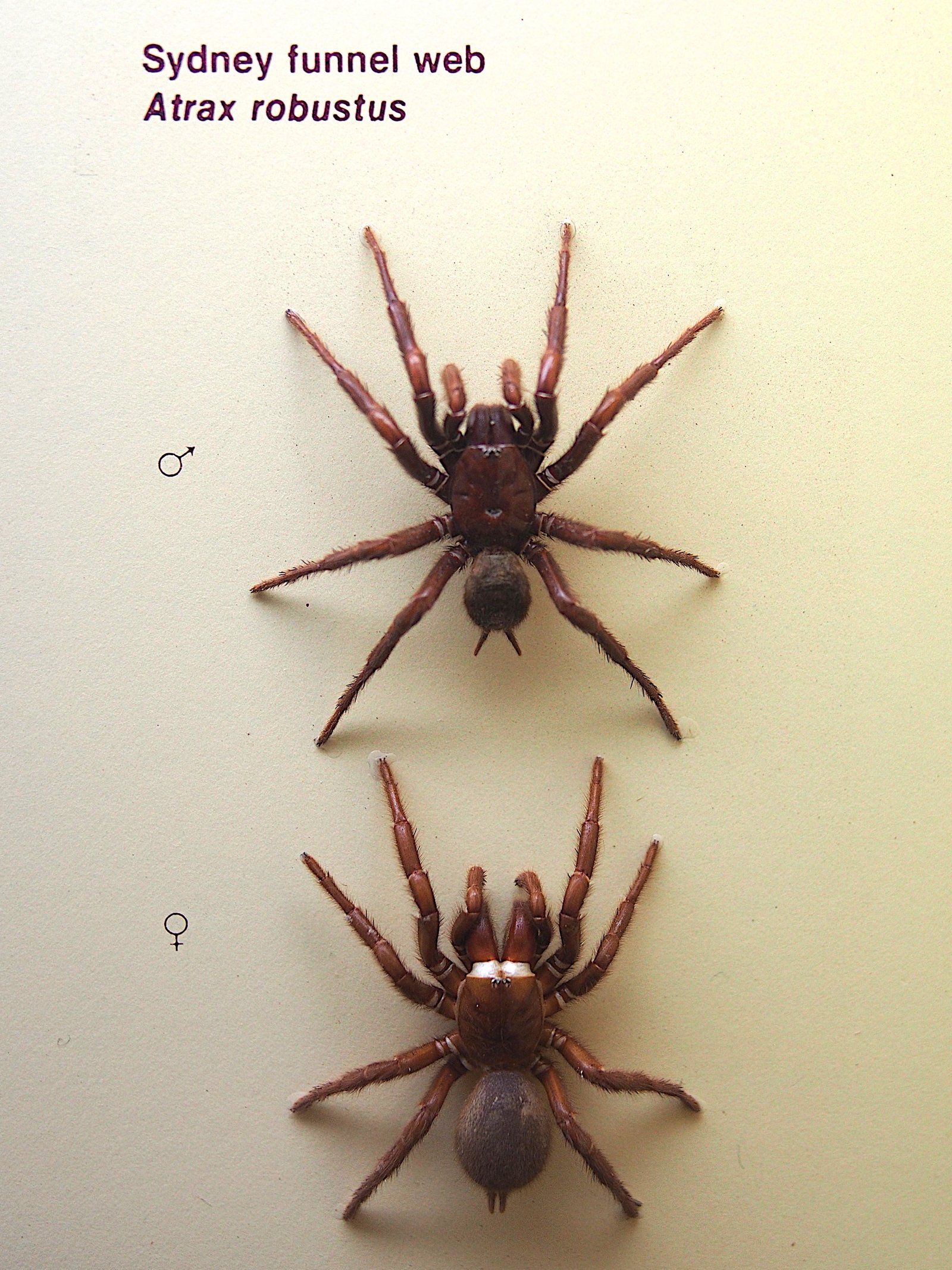
This is the glossy black one, 2 to 4 cm, in a silk-lined burrow in cool sheltered ground beneath rocks, logs or the house itself. Males wander summer and autumn. A bite is a medical emergency.
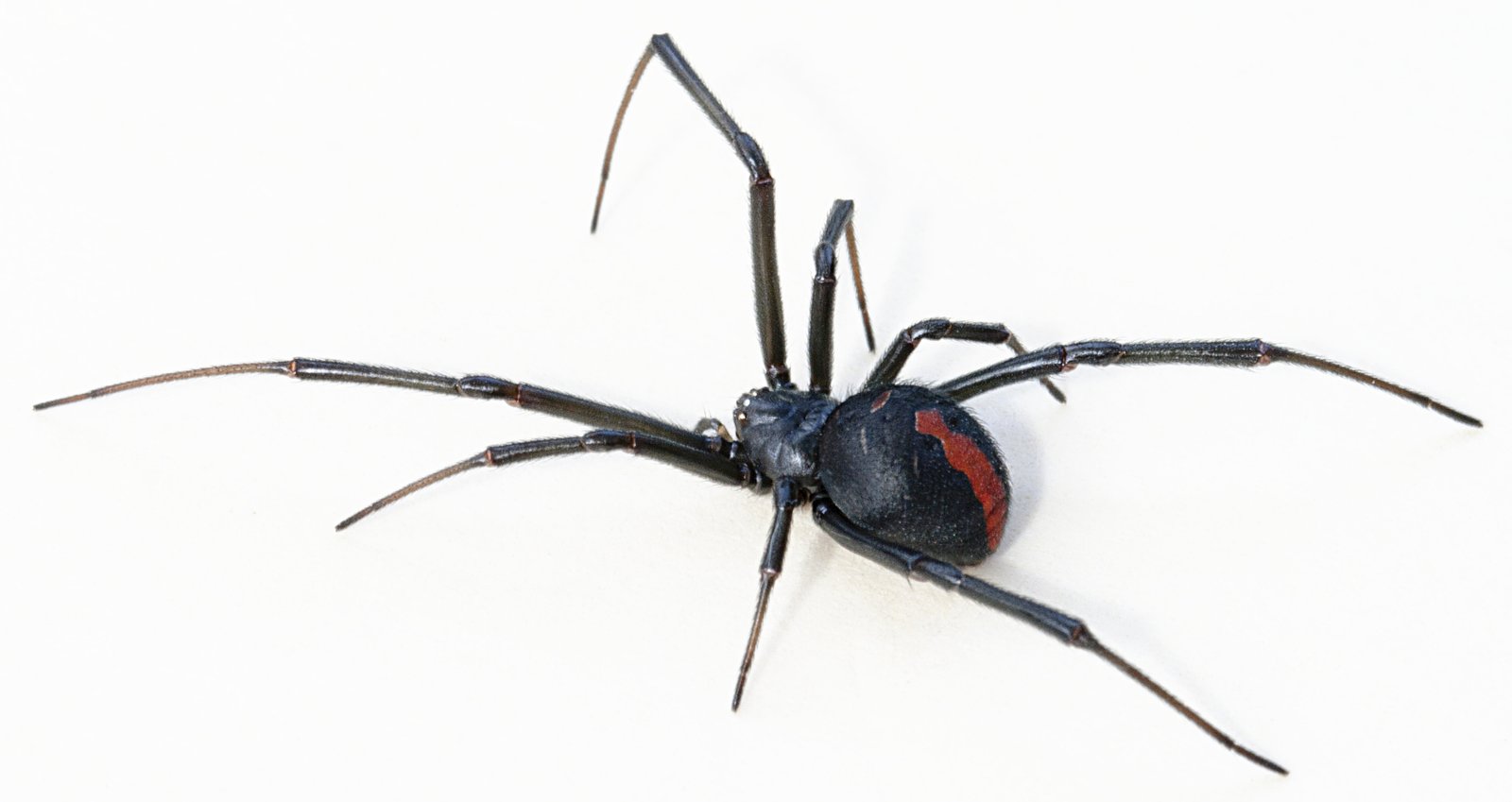
You will know the female by the red stripe on a black body. The webs are untidy and always in dry sheltered spots - outdoor chairs, letterboxes, pot rims, pool fences, sheds. Bites can hurt badly and need medical advice.
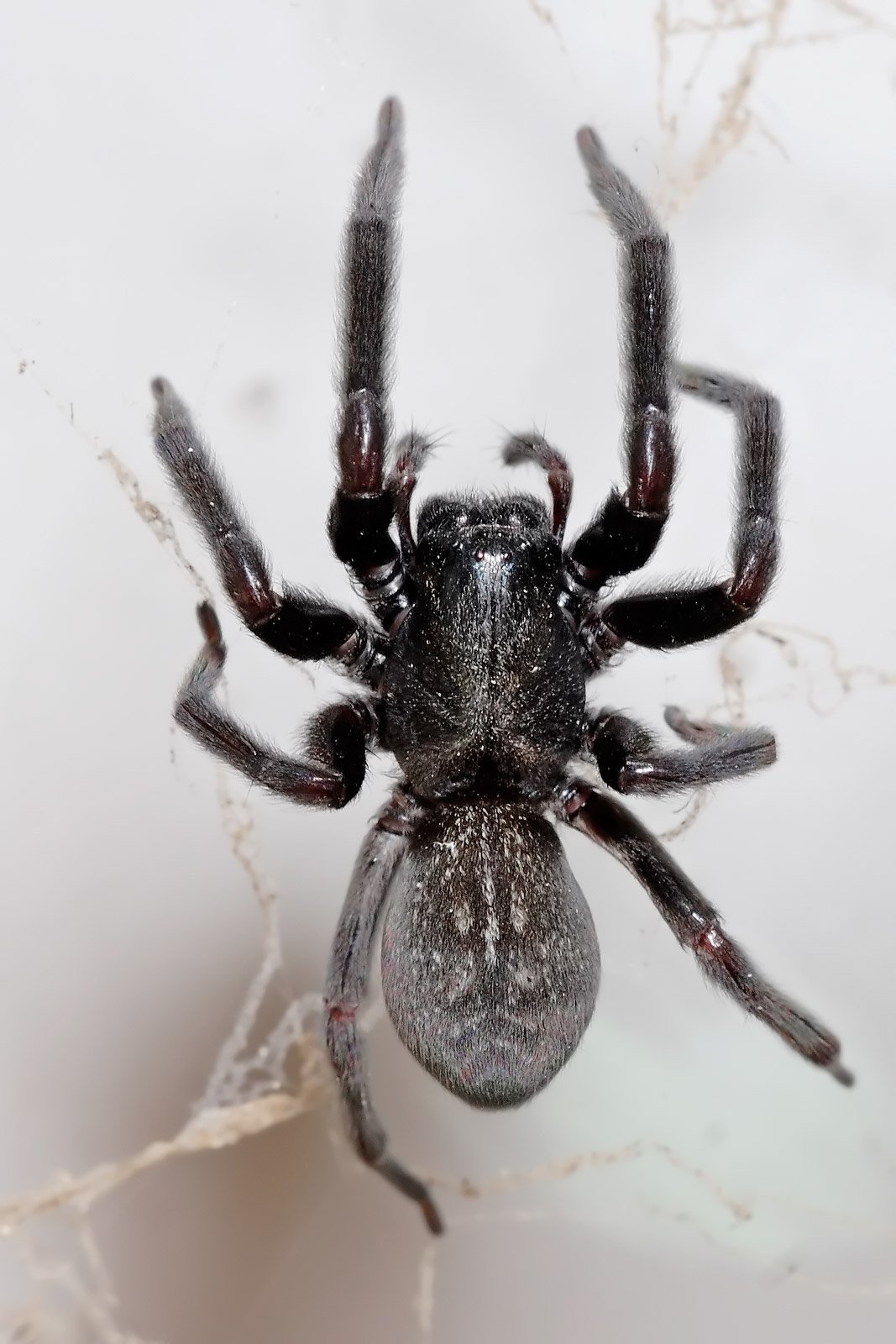
A dark, stocky spider whose lacy funnel-shaped webs appear in window frames, brick gaps and eaves. Timid by nature, though the webs gather dust and come back fast if untreated.
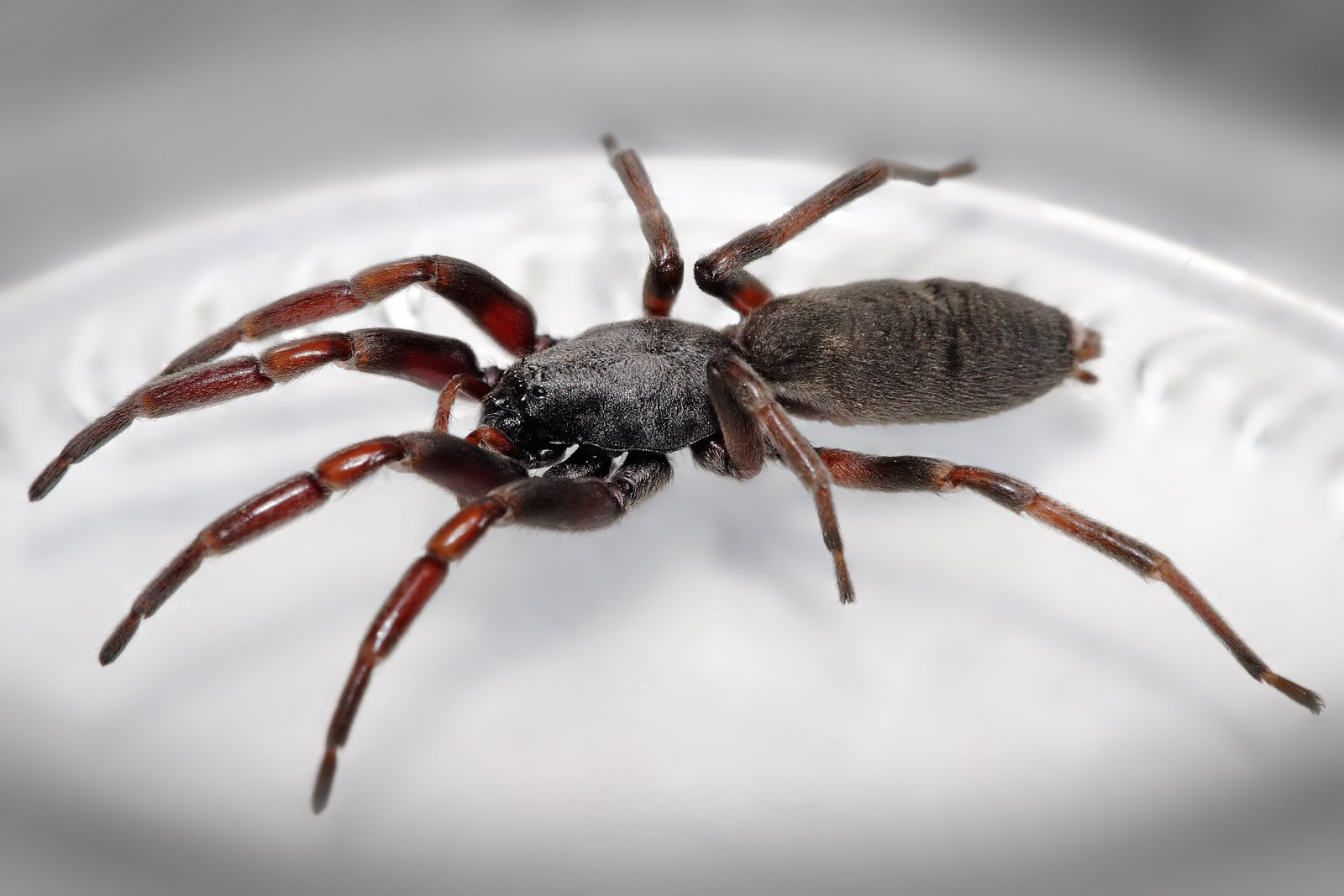
This is the slim dark spider with a pale abdomen tip. It hunts other spiders indoors at night and can end up in bedding or clothes. Bites are painful, and a large study found no ulcers.
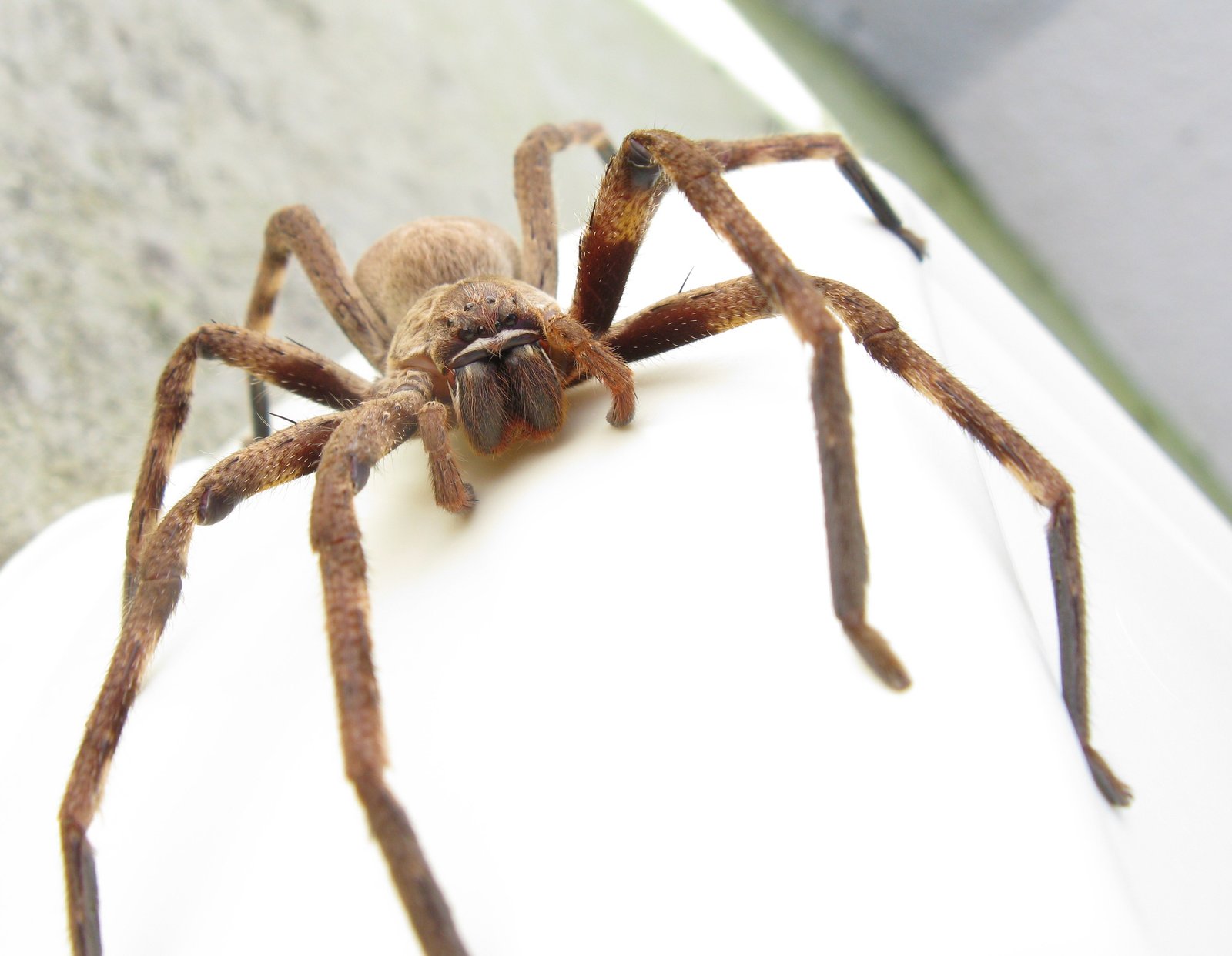
Large, flattened and fast-moving, sheltering under bark, in wall cavities and behind curtains. Alarming to find in the car or bedroom, yet timid. It hunts instead of webbing, so fewer come back once their prey insects are controlled.

A huntsman found on an Elite exterior inspection in Sydney. We work through eaves, window heads, meter boxes and garden edges before anything is applied.
General guidance based on Australian Museum and healthdirect advice. It is not a substitute for medical care. In an emergency call 000, and for advice call the Poisons Information Centre on 13 11 26.
| Spider | Risk | First aid | Get help |
|---|---|---|---|
| Sydney funnel-web | Potentially fatal venom that affects the nervous system | Pressure immobilisation bandage, snake-bite style, and keep them from moving | Call 000 immediately |
| Mouse spider | Bites are uncommon but have caused serious, funnel-web-like effects | Assume funnel-web for any large black spider bite and apply pressure immobilisation | Call 000 immediately |
| Redback | Bites often become very painful, with sweating and feeling generally unwell; antivenom is available | Do NOT apply a pressure bandage. Wash the bite and apply a cloth-wrapped cold pack | Seek medical care if pain is severe or symptoms develop |
| White-tailed spider | Painful bite, redness and itch; no ulcers in a study of 130 confirmed bites | Wash the area and use a cold pack | See a doctor if symptoms worsen or persist |
| Black house spider, huntsman and others | Local pain and swelling is the usual extent | Wash the bite and put a cold pack on it | See a doctor if you feel unwell or symptoms persist |
If you are not sure what bit you and it was a large black spider, assume funnel-web and call 000. A pest treatment reduces spider numbers; it cannot guarantee a funnel-web will never wander in.
A licensed Sydney technician will talk it through and give you a fixed quote within half an hour.
Summer and autumn is when males leave the burrow hunting for females, according to the Australian Museum, and when most people will meet one.
Wandering increases on humid post-rain nights. Shoes left outside, laundry on the floor, garages and gaps under doors are where they end up.
Males wandering at night fall into backyard pools and can stay alive for hours underwater. Use the skimmer net - never your hand.
Central Coast in the north, the Georges River in the south, and west to roughly Baulkham Hills - mostly bushy, sheltered suburbs.
Outside first, because that is where most spiders live and breed.
We go round the property with you, looking at eaves, window frames, fences, rockeries, retaining walls, subfloor vents and the garden edges.
Webs and egg sacs are brushed off the eaves, the pergola, the outdoor furniture and the garage, so nothing hatches into ground we have just treated.
Residual product covers external walls, eaves, window and door frames, weep holes and the spots spiders rest in.
Where funnel-webs are a risk, we treat sheltered ground beside the house: rockeries, retaining walls, sleepers and subfloor edges.
Spot treatments go into corners, skirting and wardrobes where they are needed, and accessible roof voids and subfloors are dusted.
Web builders settling onto the surfaces we treat: black house spiders, redbacks and daddy long-legs in the garage.
Hunting spiders such as huntsmen and white-tails contact less of the treated area. Reducing their prey is the lever that works over time.
That a wandering male funnel-web won't cross the yard on a humid night. Treatment reduces harbourage close to the house; first aid and habits cover the rest.
The orb weavers stringing webs across a garden path are harmless. We clear the ones by doors and walkways and leave the rest, because they eat flying insects.
Simple habits that matter most in funnel-web and redback country.
| Season | What spiders are doing | What to do |
|---|---|---|
| Spring (Sept to Nov) | Hatching egg sacs, with webs appearing fast on eaves and fences | Get a treatment booked and webs cleared before spiderlings spread |
| Summer (Dec to Feb) | Males of the funnel-web start to wander; redbacks busy around outdoor seating | Check the pool and shoes, inspect outdoor areas, keep door seals working |
| Autumn (Mar to May) | Funnel-web wandering continues, especially after rain | Stay alert on humid nights; keep gardening gloves on |
| Winter (Jun to Aug) | Fewer webs outside, with huntsmen moving indoors and into vehicles | Use the quiet season to proof gaps ahead of spring |
We treat the fence line and the first few metres of garden on a bush-backed Glenhaven block, because that is the crossing point.
Funnel-webs regularly end up in pools and survive hours underwater. Do not assume one floating in a Glenhaven pool is dead.
We are around Kellyville Village regularly, including the bush-backed streets where funnel-web activity is highest.
Which spiders we found, and what they actually mean for your family - you get both.
The sheltered ground beside the house is treated, not just what you can see up top.
Honest about the limits, particularly where wandering funnel-web males are concerned.
Covered for 6 months on a general treatment - if the webs come back, we come back.
Everything you need to know before you book. Still unsure? Call us — we're happy to help.
Get a Free QuoteSpider treatment starts from $89. What changes the figure is the size of the building, how many areas are affected and the access. You get that number up front for Glenhaven 2156, with no call-out fee. Every general treatment carries a 6-month warranty.
At roughly 26.3 km north-west of the city, Glenhaven is on a route we run regularly. We cover it on scheduled runs, so a day's notice gets you the best slot. You will be given a time, not a window.
The reserve next door is a permanent population you cannot treat. All that is in question is how easily spiders cross from it into the building, which is a perimeter problem.
Free-standing homes with gardens running into bush. We treat the boundary as seriously as the building.
Yes. Houses, townhouses, units, strata common property, rentals and commercial sites in Glenhaven 2156 are all part of what we do, and the paperwork is the kind agents accept.
Yes. Everything we use is registered for the purpose and applied at label rates, and we place product where people and animals do not go. Tell us about pets, aquariums or anyone with a respiratory condition at booking.
Normally you can stay. Some treatments mean keeping out of a particular room briefly, and we will flag that when we arrive so you can plan around it.
For a standard Glenhaven home, one to two hours. We would rather tell you it will take longer up front than rush it.
Every general treatment carries a 6-month warranty. That is the point of the warranty - you do not pay twice for the same problem.
Yes. As well as Glenhaven we cover Castle Hill, Dural, Kenthurst and Cherrybrook on the same runs, so a job that crosses a boundary can be handled in one visit.
Photographs from Elite jobs across Sydney — not stock imagery.
Friendly, fully insured technicians and a no-obligation quote inside 30 minutes.