
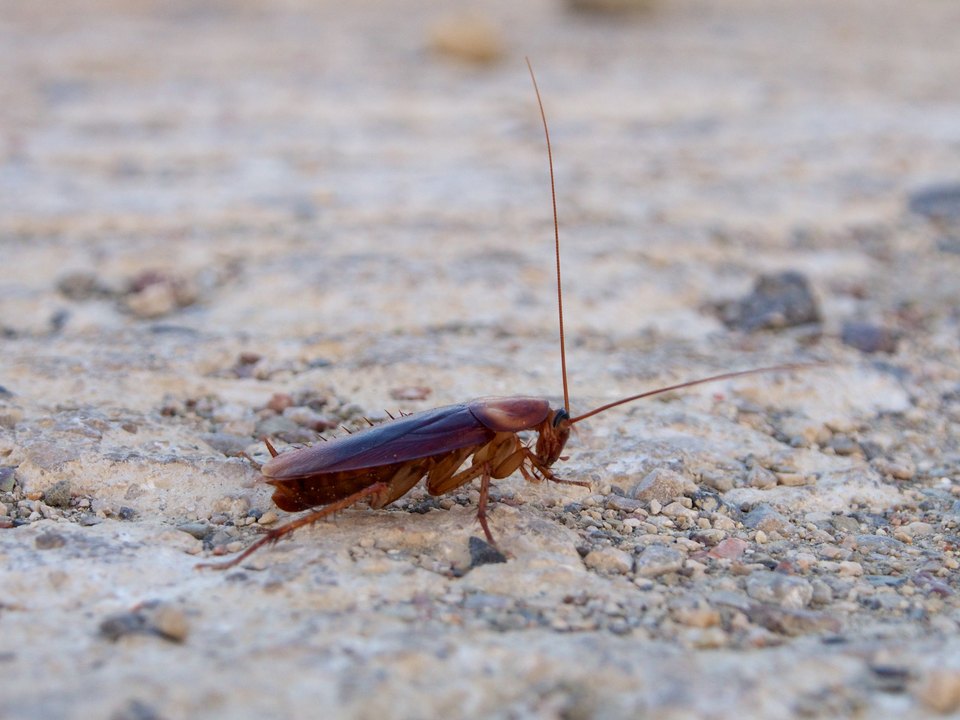
Cronulla properties get the same process every time: inspect, identify the species, treat the source rather than the sightings, then seal the conditions that caused it. Treatments start from $89, inspections from $159, and general work carries a 6-month warranty. Licensed and insured, with a fixed quote first.
- What you are actually dealing with
- Signs worth acting on
- Local conditions in Cronulla
- The process, step by step
- Preparation that makes it work better
- The safety question, answered properly
- Where DIY stops working
- The things that set people back
- What to check before you book
- Warranty and follow-up
- If you are not in Cronulla itself
- Frequently asked questions
What you are actually dealing with
Most of the cost in dealing with cockroaches comes from doing it twice. Getting the identification and the source right the first time is what makes the difference between one treatment and a recurring expense.
So the sequence matters: identify, locate, treat the source, then close the conditions. Skip a step and you are paying again within weeks.
Key points
- Identify the species before treating - the right product depends on it.
- Ask what the warranty covers and for how long.
- Treat the source, not the sightings: the nest or harbourage is the target.
- A fixed quote should come before any work starts.
If you want the specifics for your own street rather than general advice, cockroaches in Cronulla covers the local conditions and what a treatment there usually involves.
Signs worth acting on
The early evidence is usually subtle, and most of it is found in places nobody looks. Worth checking for:
- Chewed paper, cardboard or book bindings in a damp storage cupboard.
- Shed skins in warm cavities behind the fridge, oven or dishwasher.
- A cockroach in plain view in daylight, which usually means harbourage is full.
- Dark staining around motor housings at the back of appliances.
- A sharp, oily, musty smell that lingers in cupboards under the sink.
One of these on its own may mean nothing. Two or more in the same area is worth a professional look, and it is better not to disturb the site before someone has seen it.
If you are not certain which pest you are dealing with, the pest control services page lists what we treat and the signs that point to each.
Local conditions in Cronulla
We are in Cronulla (2230) regularly. Being about 22km south of the CBD, it shares the conditions of the suburbs around it, and cockroach activity here follows the same drivers.
Practically, that affects where a technician spends their time on site rather than which products come out of the van.
If you are weighing up who to call locally, pest control in Cronulla covers what we do in the area and how quickly we can get there.
The process, step by step
The work is more methodical than most people expect, and very little of it involves a spray wand. The sequence:
- Inspect and identify. Work out the species and find where the population actually sits - usually not where it was seen.
- Treat the source. Use the method the species responds to, placed where the population lives rather than where it was seen.
- Allow the method to run. Expect a timeline rather than an instant result, and avoid adding anything of your own in the meantime.
- Close the conditions. Proofing and maintenance advice specific to your building, which is the part that prevents a repeat.
All of that is done by a licensed and insured technician, with general treatments backed for six months.
How that is done in practice is covered under how cockroach control works.
Preparation that makes it work better
A little preparation makes a measurable difference to the result, and none of it takes long:
- Arrange for pets to be out of the way for a couple of hours.
- Make a note of where you have seen activity and when.
- Clear access to kickboards, under sinks and around appliances.
- Clear a path to the roof void or subfloor access if there is one.
- Cover or move fish tanks and turn off their air pumps.
Avoid washing down treated areas for at least a week, and resist adding your own spray on top.
The safety question, answered properly
Fair question, and worth more than a one-word answer. Professional treatment is safe around families and pets because of how it is applied, not because the products are inert:
- Where a household has asthma, allergies or a newborn, the method is adjusted on request.
- Baits, gels and dusts go into cracks, voids and secured stations - not across open surfaces.
- Nothing is applied to food preparation surfaces or anywhere food is stored.
- Quantities are measured to the area rather than applied until the bottle is empty.
We would rather adjust the approach than have you worry about it afterwards, so raise it on the phone.
That is worth checking before you book anyone, including us - who actually turns up covers our licensing, insurance and how long we have been doing this.
Where DIY stops working
There is no sense paying for a call-out you do not need. But the reasons DIY fails on a real infestation are consistent:
- Guessing the species usually means the wrong product entirely.
- Retail products kill what they touch and leave the nest or harbourage producing.
- Concentrations are lower and residual life shorter than professional-grade equivalents.
- Repellent sprays can split colonies - with ants especially - turning one nest into several.
If you have already tried something and it returned, that is the signal rather than a reason to try again harder.
The rest of what we handle is set out under everything we treat.
The things that set people back
Most of the difficult jobs we attend were straightforward a few weeks earlier. The usual reasons:
- Surface-spraying skirtings, which kills foragers while harbourage keeps producing.
- Using a fogger, which drives insects deeper into wall cavities.
- Leaving cardboard storage in place, which is both food and shelter.
- Treating only the kitchen when the source is a bathroom void or shared riser.
If you have already done one of these, say so when you book. It changes the approach rather than causing offence.
What to check before you book
A short list of checks that filters out most of the problems:
- Ask what the warranty covers, what voids it, and how long it runs.
- Ask for the technician's NSW pest management licence number, not just the company name.
- Check whether a follow-up visit is included or charged separately.
- Confirm they hold current public liability insurance.
- Ask which method they intend to use and why that one.
None of those questions are unreasonable, and the answers tend to sort operators quickly.
You can see our licensing and insurance and the qualifications behind the work.
Warranty and follow-up
General pest treatments from Elite Pest carry a 6-month warranty: if covered pests return inside that period, we come back and re-treat at no charge.
What it does not cover: a different species arriving later, a re-introduction you bring in yourself, or a recurrence driven by an unaddressed cause such as a leak or a gap we flagged. Termite work is warranted separately, with terms linked to ongoing inspection.
It goes on the invoice, so there is no ambiguity about what was covered six months later.
Households that would rather not think about it tend to move to routine residential pest control, which catches problems at the point they are still small.
If you are not in Cronulla itself
The same van services the neighbouring suburbs, which means comparable availability in Dolans Bay, Port Hacking, Bundeena, Burraneer.
We cover the whole basin rather than a few postcodes - the Sydney suburbs we cover has the full list.
Frequently asked questions
What will treating cockroaches cost?
General pest treatments start from $89 and timber pest inspections from $159. Termite treatments and barriers are quoted after an inspection because the price depends on the construction and the extent of the activity. You get a fixed figure before any work begins.
Does seeing cockroaches mean my house is dirty?
Not at all. The common indoor species need warmth, moisture and a crack to hide in, all of which exist behind a clean fridge or dishwasher. In apartments they also move between units through shared walls and services.
Do you service Cronulla?
Regularly. Cronulla sits on an established route for us, so we can normally be there within 48 hours and same-day where there is a safety issue.
How long before the treatment works?
Most households notice a difference in the first few days, with the full effect over one to three weeks depending on the method. If nothing has changed by the timeframe your technician gave you, call us - that is what the warranty is for.
What qualifications do your technicians hold?
All of our technicians are licensed under NSW pest management requirements and insured. Pest control is licensed work in this state, so an operator who cannot produce a licence number should not be in your home.
Is there a guarantee on the work?
Yes - six months on general pest work. A recurrence of the treated pest inside that window is a free return visit. A different species arriving later is a new job, and a recurrence traced to an unfixed cause such as a leak sits outside the cover.
Can you just treat it without looking?
An inspection is what tells a technician the species, the extent and the cause. Treating without it is guesswork, and guesswork is the main reason jobs get repeated. On general treatments it is built into the appointment.
Can you come today?
Usually within a day or two, and same-day where there is a safety issue - a sting allergy in the household, young children with access, or live termite activity. We quote most jobs in about thirty minutes over the phone.
Get a fixed price on cockroaches
We treat cockroaches across 650+ suburbs of Sydney. Fixed quote up front, licensed and insured technicians, child and pet-safe application, and general treatments backed for six months.